Mr. Jensen's U.S. History Website
  • U.S. History Blog
    • U.S. History Blog (May 2026 - May 2027)
    • U.S. History Blog (May 2025 - May 2026)
    • U.S. History Blog (May 2024 - May 2025)
    • U.S. History Blog (May 2023 - May 2024)
    • U.S. History Blog (May 2022 - May 2023)
    • U.S. History Blog (May 2021 - May 2022)
    • U.S. History Blog (May 2020 - May 2021)
    • U.S. History Blog (May 2019 - May 2020)
    • U.S. History Blog (May 2018 - May 2019)
    • U.S. History Blog (May 2017 - May 2018)
    • U.S. History Blog (May 2016 - May 2017)
    • U.S. History Blog (May 2015 - May 2016)
    • U.S. History Blog (May, 2014 - May, 2015)
  • About

Washington's Farewell Address, Part Two

10/19/2019

0 Comments

 
  Source: Joseph J. Ellis. Founding Brothers - The Revolutionary Generation (2000)
Picture
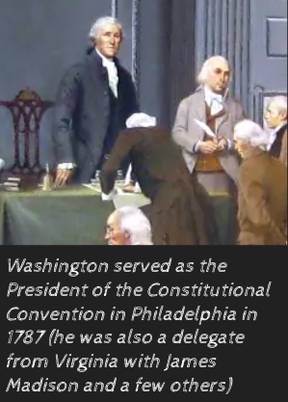
     There was a constitutional crisis in terms of ratifying the Jay Treaty in 1795. Washington had the secret minutes of the Constitutional Convention in his possession by agreement of all those that participated. According to Washington, those minutes stipulated that treaties were negotiated by the President, and ratified by 2/3’s of the Senate. James Madison had his own notes of the convention, and he went to Monticello to consult with Jefferson. They discovered that Washington was correct, and also that Madison had been one of the staunchest supporters of a strong Executive. 
     Nonetheless, Jefferson concluded that the House was an equal partner in the proceedings concerning the Jay Treaty; if Jefferson had his way, there would have been the kind of gridlock/inaction that he had decried from afar while in France.  Hearings on the House took place in the Fall/Winter of 1795 under Madison’s direction as well as his more narrow interpretation of the Constitution. Madison argued that the House was involved in the ratification of the Jay Treaty in terms of funding. Madison was able to block the treaty while avoiding a frontal assault on the Executive branch. As 1796 dawned, Madison’s bloc of opposition to the Jay Treaty in the House looked to be beyond-solid, but James Madison soon discovered that anyone that went head to head with Washington was bound to lose.
Picture
   Madison’s majority in the House started to melt during March 1796, and he lost the vote in the next month. James Madison blamed the banking interests and the Anglophiles. Jefferson concluded that the Jay Treaty passed in the House due to the immense prestige and influence of President Washington. What was strong Executive leadership that took into account the national interest in the long run looked to Jefferson and Madison as the arbitrary decisions of a king, and the betrayal of the principles of the Revolutionary War. To Jefferson, his vision of the world would only be achieved when the last king was strangled with the entrails of the last priest. 
     As early as 1790, Jefferson believed that the Revolution as he understood it had been hijacked by hostile forces from within, and the chief enemy was the Secretary of the Treasury, Alexander Hamilton.  Initially, Jefferson didn’t see Washington as being anything other than a Colonel Blake (MASH) that wondered what was happening around him, and Jefferson also knew that Washington was untouchable in terms of criticism. But all that changed with the Whiskey Rebellion (1794), where a federal law was enforced for the first time. Jefferson believed that Hamilton had taken over the Executive and that Washington had become senile.
Picture
  Still, Jefferson wasn’t directly accusing Washington of anything, and he did not say or write any criticisms about the President publicly. But his private letters to those that were in his Circle of Trust show that the Jay Treaty was the breaking point for former Secretary of State. Jefferson saw the French Revolution as a continuation of the American Revolution as well as a continuing chapter in the global revolution. Where Washington did not see the war between Britain and France as a threat to the nation’s vital interests (other than trade), Jefferson saw the war in Europe as vital to the future of America.  Jefferson consistently either ignored or glossed over the horrors of the French Revolution, seeing France as a Revolutionary hero and Britain as the counterrevolutionary villain.
Picture
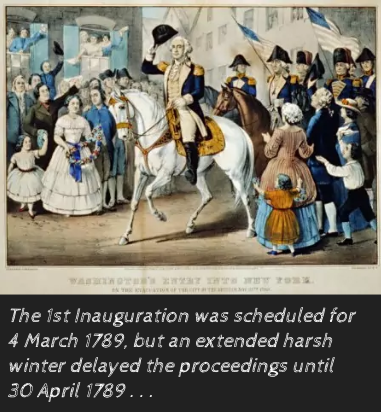
  To Jefferson, Britain was an inherently corrupt society, the bastion of monarchical power. Jefferson’s Anglophobia and other-worldly support of the French Revolution was virulent because it was based on philosophy/theory. Jefferson simply believed that the Jay Treaty put the US on the wrong side of history. For Washington, part of why he left the Presidency after two terms was that he was done with the shenanigans and machinations of fellow Elites such as Jefferson. Washington wanted to harness the energies of the US after the Revolution to nation-building, while Jefferson saw that effort/focus as a betrayal of the Revolution. 
   Washington wanted to accomplish three things with his Farewell Address. First, he wanted to demonstrate that he was still very much in charge and nowhere near senile. Second, he wanted to chart a middle course in order to push his critics to the fringes of the ongoing debate over what the Revolution meant. Third, Washington, the master of grand exits, wanted to explain what the Revolution really meant, especially coming together as an increasingly unified nation (much like how the Continental Army hung in there during the Revolutionary War).
Picture
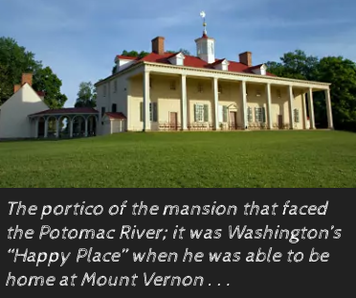
     Washington planted his standard squarely in the field of political combat, inviting citizens to rally behind him even though he was retiring to Mount Vernon. The words of the Farewell Address may have mostly been Madison’s (from 1792 when Washington seriously considered going home) and Hamilton’s, but the ideas were all Washington’s (Hamilton gave nearly perfect wording, phrasing, and tone to Washington’s ideas). Washington strongly hinted that in his absence the federal government would need to become more powerful. 
     Reactions to his Farewell Address in public was overwhelmingly positive, with much tearful exuberance, missing the man but embracing his message. Republican newspapers that were a mouthpiece for Jefferson dismissed it as the “loathings of a sick mind”. Washington’s last years at Mount Vernon were spent knowing he was right, but he was also apprehensive that his wisdom would be ignored. Part of Washington’s problem was that his beloved Mount Vernon was located in Virginia, which was the headquarters for Jefferson, Madison, Monroe, and the Republicans . . . in effect, Mount Vernon was an enclave in enemy territory.
0 Comments

Washington's Farewell Address, Part One

10/19/2019

0 Comments

 
  Source: Joseph J. Ellis. Founding Brothers - The Revolutionary Generation (2000)
Picture
    Since 1776, George Washington had been the center of gravity that kept the nation from flying into random orbits and decaying. For twenty years, Washington, from the Revolutionary War and the crucial years afterward, Washington had been at the center of the ring. On September 1796, in the American Daily Advertiser (Philadelphia’s #1 newspaper), Washington announced that he wasn’t going to serve a 3rd term as President. The Courier of New Hampshire gave the article the title of “Washington’s Farewell Address”. Over time, the Farewell Address joined the Declaration of Independence and the Gettysburg Address in the pantheon of America’s documents that outlined the principles of the nation. While historians have many interpretations of what Washington stated, in 1796 the only major takeaway was that Washington was done and going home.
     Washington told Americans that they were on their own since he was going home, and he had some other things to say in addition to his retirement from public life. By the Spring of 1796, the government elites had known Washington was probably leaving  the Presidency. But did Washington actually mean it, since he had, like every other major politician (other than Aaron Burr), had used the Cincinnatus model of appearing to not want the job . . . doing so had become a rhetorical ritual among the political elites. 
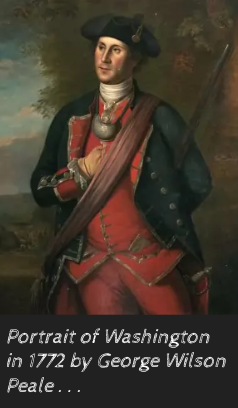
    At 6’ 4” and 200 pounds, Washington was always the tallest man in any room. Washington, in almost any other setting or era, would come off as an ugly ogre: he had a pockmarked face (from smallpox), decaying teeth, oversized eye sockets, a massive nose, heavy hips, and huge feet and hands. But the full package that was Washington oozed majesty. Washington didn’t just occupy space, he organized the space around him with an electric presence.

Picture
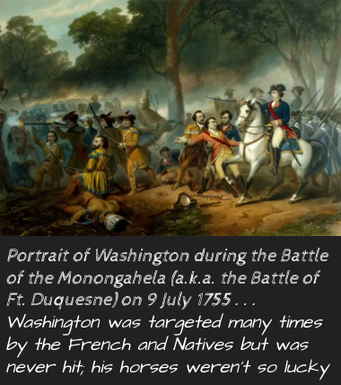
      During the French & Indian War and the Revolutionary War, Washington was constantly targeted and fired upon, but amazingly was never hit (the same couldn’t be said for his horses), and he never got sick while others dropped like flies around him. Washington had an unmatched aura and incredible stamina, and he also had the gift of eloquent silence. It wasn’t until before the Constitutional Convention in 1787 that Washington really had to deal with an illness (not counting his bout with smallpox before the F & I War), and then in 1790, he nearly died of complications from influenza. Washington needed to have a carbuncle removed (a cyst) from his upper thigh in his 1st term, and in 1794 he wrenched his back horseriding when he was touring the area that would become the District of Columbia. So, Washington’s age and health were primary reasons why he wanted to retire and go home to Mount Vernon. 
     By leaving after two terms, Washington established a precedent that the office should outlive the man, which was not the global tradition. In addition to age/health, Washington wanted to leave the Presidency since he had been politically wounded by the harsh political rhetoric in newspapers and pamphlets, the result of the rival political parties (Federalists v. Republicans).

Picture
   Even though egomaniacal idiots like Thomas Paine accused Washington of being a traitor during the Revolutionary War, and that Benedict Arnold beat him to the punch, it was only a vocal minority that criticized Washington. The surest way to destroy one’s reputation as to attack Washington, as Paine soon discovered. Part of the reason Washington was very touchy about any criticism that came his way (after the Revolutionary War) was that he had been on Mount Olympus for so long, and hadn’t faced much if any public criticism for many years. But the attacks by 1795 were harsh and more numerous, and sometimes preposterous (e.g. Paine).
     Washington was an obsessive reader of newspapers, not books, subscribing to ten newspapers at Mount Vernon. The main charge levied against Washington was that he had made himself a quasi-king. Washington’s natural aloofness and excellent manners fed these charges, most of which were false (it was true that Washington didn’t like shaking hands). Also in play was that the Declaration of Independence had planted into the American bloodstream that all kings were inherently evil.
     In his Farewell Address, Washington wanted to give his fellow citizens advice on how to maintain/improve national unity without him, or a king. 
Washington, after stating he was done serving as President, went on for a few paragraphs about the need for national unity, especially on how the two political parties were focusing on the partisan/sectional instead of the national. Washington then spent time advocating strict neutrality concerning Europe (the phrase “Entangling Alliances” was from Jefferson during his first Inaugural Address). The sum total of Washington’s Farewell Address was that he was going home, and that unity at home and independence abroad were of paramount importance. ​

Picture
    So much can be read into Washington’s Farewell Address since the landscape has dramatically changed since 1796, but when taken in the context of 1796, the address was firmly grounded on the principles of the Revolutionary Era. Also in play was Washington’s extraordinary ability to make a great exit (e.g. going home after the Revolutionary War). 
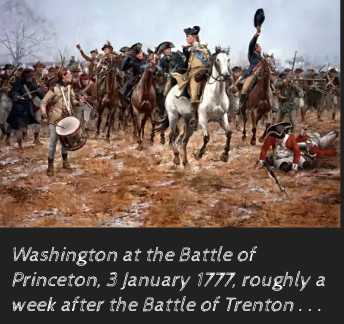
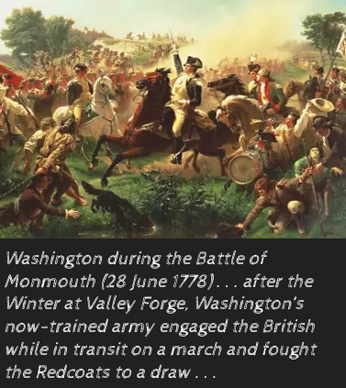
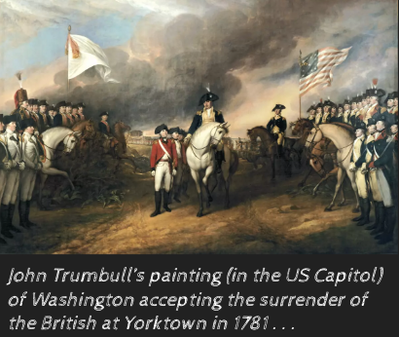
     Speaking of the Revolutionary War, it wasn’t until 1778 that General Washington truly understood the strategy of keeping his army from being captured. The British could take and hold New York City, Philadelphia, and other cities . . . so what. The British could bombard the American seaports . . . so what. The British could force the Continental Congress to run for their lives . . . so what. As long as Washington’s armies stayed in the field as an effective fighting force, he knew the British would eventually tire of fighting the war. Hannibal, Napoleon, and Robert E. Lee were all eventually defeated because they thought in order to win a war they had to win battles. Washington’s goal was space and time, not winning battles, until he could gain an advantage (e.g. Yorktown 1781). Also, Washington knew that virtue alone wasn’t enough to win the Revolutionary War, when in 1778 the Patriots started to seriously churn out their propaganda. As a result of all his experiences on-and-off the battlefields, Washington knew there was so such thing as a permanent national alliance, only permanent national interests. Also, Washington had the character trait of seeing things for what they really were, not for what he would wish them to be.

Picture
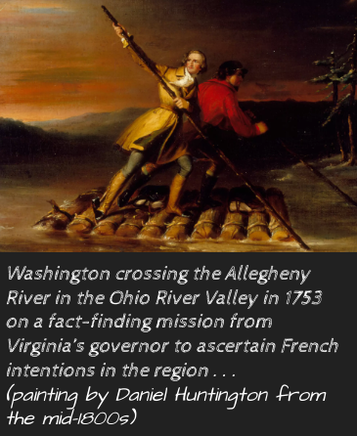
  Washington believed that the main national interest was expanding to the west; he had come to that conclusion by 1783 due to the forests he had explored/surveyed as a young man starting in the 1750s. So the last thing that Washington wanted for the nation was a war that would interfere with expanding west, which in large part explained his policy of neutrality towards the French Revolution. 
    The Jay Treaty (1795), while incredibly unpopular with the masses, was sheer genius on the part of Washington, in that he gambled that Britain and its Royal Navy would prevail against France, which would lead to tremendous benefits from trade with Britain. In other words, national security and economic development were advanced due to the British navy. But all that was invisible to 99%+ of Americans in 1795; any agreement with the British was seen as a betrayal of the Revolution.

0 Comments

The Congressional Debate on Slavery in 1790, Part One

10/5/2019

0 Comments

 
  Source: Joseph J. Ellis. Founding Brothers - The Revolutionary Generation (2000)  
Picture
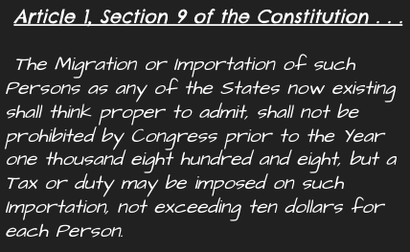
    On 11 February 1790, two Quaker delegations (from MA and NY) presented petitions to the House to immediately abolish the African Slave Trade. Most members of Congress considered the petition an embarrassing interruption to their debates on assumption and residency. The Constitution specifically prohibited Congress from passing any law restricting/abolishing the slave trade until 1808. Although protected by the Constitution, Southern representatives were apoplectic and made many speeches against the petitions, accusing the Quakers of trying to force the nation towards emancipation. 
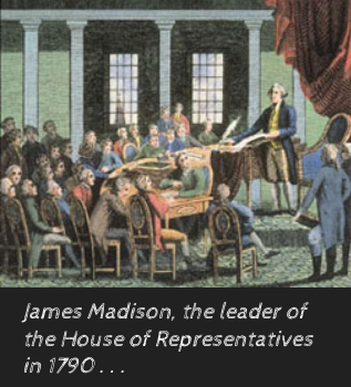
     James Madison (the leader of the House) again was the voice of reason, saying that those freaking out, while impassioned and sincere, were actually stirring up the pot for no reason. Madison suggested that the petitions be forwarded to the proper committee and dealt with like any other petition, believing that the scurrilous hoo-haw would evaporate. Madison counseled those that were up in arms that they were actually playing into the hands of the Quakers, in that the issue of slavery would be openly debated for the first time. On 12 February 1790, another petition arrived in Congress from the Pennsylvania Abolition Society, and just as some Southern representatives had predicted the previous day, the slave trade was linked to the abolition of slavery.

Picture
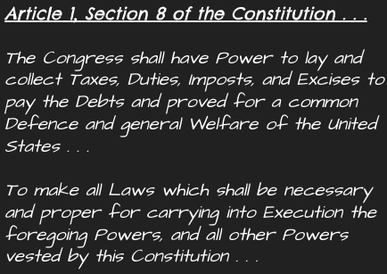
   The Pennsylvania petition argued that slavery ran counter to the principles of the Revolutionary War, and also stated that the “general welfare” and the “necessary and proper” clauses of the Constitution allowed Congress to restrict/abolish slavery before 1808. And to top it off, the petition was signed by Benjamin Franklin, which meant that Madison’s strategy of ignoring the petitions was not going to work. Already, Southern members in Congress accused the petitioners of blowing the trumpets of sedition, and even civil war. 
   As far as those Southern representatives were concerned, the Constitution meant that the petitions were not even supposed to be read aloud on the floor and entered into the public record, which was an argument they were destined to lose. Representative Thomas Scott (PA) spoke on behalf of the petitioners, and admitted that the Constitution kept Congress from abolishing the slave trade until 1808. but not slavery itself. Representative James Jackson (GA), the most outspoken of the Southerners in the House, countered that slavery was God’s will and that the Southern economy couldn’t function without slavery. Jackson went on to argue that every white person in the South automatically understood those two basic points, and that no white Southerner would do the worst of the work that African slaves did (e.g. draining swamps). 

Picture
   Representative William Loughton (SC) stated that the delegates at the
Constitutional Convention had come to an understanding in that the Northern delegates agreed to not interfere with the property rights of the South. Loughton went on to say that all of the Southern states ratified the Constitution with the knowledge that the new federal government couldn’t touch slavery, at least until 1808. The sum argument of the Southern representatives was that the Bible and the Constitution sanctioned slavery; interestingly, the position of the Virginia delegation in the House was equivocal. 

     Despite the sharp sectional debate, the vote to send the petitions to committee was
​43 - 11, with 7 of the negative votes from Georgia and South Carolina, and no member from those states was willing to serve on the committee that would deal with those petitions. The differing perspectives on slavery were largely rooted on which founding moment the person focused, the Declaration of Independence (1776), or the Constitutional Convention and Ratification (1787-88), as well as geography. 

     In 1782, Virginia passed a law that gave planters the ability to free their slaves, and by 1790 there were 12.000 Free Blacks in Virginia. In the only book that Jefferson had published,
Notes on the State of Virginia (1784), he outlined a plan that slaves would eventually be freed if they were born after 1800.  So then, to many Americans in 1790, it appeared that slavery was on its descendancy, given its tremendous cost and expense, and it was a question of when, not if, slavery would come to an end.

Picture
​     By 1790, the African Slave Trade was seen by most as a criminal enterprise, slavery was dead/dying in northern states, and the expansion of slavery to the West seemed uncertain. In addition, Virginia looked to be the forerunner of the rising anti-slavery impulses in the South. Therefore, looking back, it seemed to be the right time to match the ideals of the Revolutionary War with the post-war realities. 
     All that being said, slavery in fact was too intertwined on too many levels, including in the North, at least indirectly (e.g. textile mills). The false optimism of  the inevitable decline of slavery led to inaction. Also, the major Revolutionary War problems were political, not economic like slavery, which to many Northerners was also seen as a property rights issue. 
    With the passage of the Northwest Ordinance of 1787 (under the Articles of Confederation), slavery was prohibited north of the Ohio River, which was interpreted by the South as an endorsement of the spread of slavery below the Ohio in the future. The NW Ordinance of 1787 was probably the main reason why the Northern and Southern delegates at the Constitutional Convention felt that they didn’t have to directly deal with slavery. 
     The “Great Compromise” (a.k.a. the “Sectional Compromise”) during the Constitutional Convention in 1787 basically came down to this agreement: New England agreed to back an extension of the African Slave Trade for 20 years in return for the Deep South (the Carolinas and Georgia) agreeing to make the federal regulation of commerce a simple majority vote instead of a super-majority (2/3’s). Both sides claimed victory, and then moved on to other items on the agenda. Although Virginia was relatively moderate on its stand on slavery compared to the Deep South (mostly because they dominated the cotton market and had enough slaves), the state was adamantly against ceding any control over their slave populations to the federal government.

Picture
      The slavery debate in 1790 had three sides: the 1776 POV, the 1787 POV, and the moderate POV (VA). The debate in Congress during February 1790 exposed these differences of opinion on slavery to the public for the first time. On 8 March 1790, the House committee that dealt with the petitions prepared to submit its report, which guaranteed the debate would see the light of day. On 16 March 1790, the committee made its report to the House, and members from the Deep South were ready to give the greatest pro-slavery argument yet, with Jackson alone speaking for two hours. 
     Among Jackson’s arguments was that in terms of future emancipation, where would all the freed slaves go, being that there was no answer to that question, nor would there be one in the foreseeable future. On 17 March 1790, another Southern representative held the floor for two hours echoing Jackson’s points. The full pro-slavery argument was now out in the open and in the national bloodstream. 
     If one looked to the future based on the debate on slavery in 1790, one could see those Southern arguments becoming the bulwark of John C. Calhoun's defense on slavery in the 1840s. If one looked back, Jackson and his fellow Southerners in Congress gave the most defiant and systematic defense of slavery in the short history of the republic.  That being said, no American politician in 1790 seriously considered that the US should be a biracial nation/society, but the rising tenor of Anglo-Saxon dominance/superiority that had always been lurking in the background came to the forefront in the Spring of 1790. For the first time, publicly anyway, racial superiority/inferiority had become part of the justification of slavery. What had also been lurking in the background for quite some time was the somewhat silent agreement that slavery not be discussed at all in Congress . . . and that was thrown out the window in the Spring of 1790.

0 Comments

The Congressional Debate on Slavery in 1790, Part Two

10/5/2019

0 Comments

 
  Source: Joseph J. Ellis. Founding Brothers - The Revolutionary Generation (2000)  ​
Picture
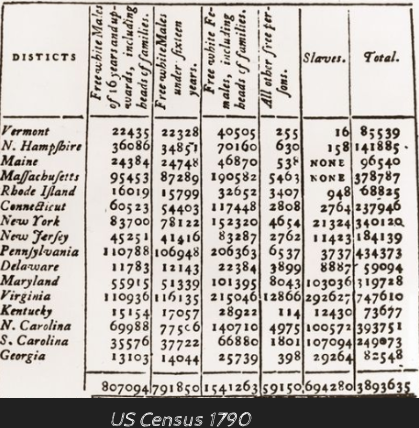
       What was new on the topic of slavery in 1790 was that it was actually being publicly debated in Congress, which meant that the debate would spread from the nation’s capital. Based on the (first) Census of 1790, the attitudes towards slavery could be seen in large part statistically, in that where the ratio of slaves (blacks) to whites was the highest, then the attitudes towards slavery were more entrenched. To the South, slavery was the only way to guarantee segregation of the races. 
     But the Census of 1790 also showed that if any state was going to show the way towards emancipation, it would be Virginia. Also, the window of ending slavery was not opening, per the conventional wisdom of the era, but closing, even before the invention of the cotton gin in 1793. The fading Revolutionary War ideology was arrayed against the growing racial demography, which bolstered the Deep South’s contention that emancipation was wildly unwise and impractical. The Census of 1790 showed, even before the cotton gin, that those that believed slavery would slowly die a natural death were naive. In addition, the relocation of even the existing slaves to various regions of the nation was also a naive notion that had no plan.
     While there were no specifics concerning emancipation, the idea was being publicly debated nonetheless. All the plans for gradual emancipation rested on the assumption that slavery was a moral/economic problem that needed a political solution. Also, any plan for gradual emancipation needed to combine speed and slowness, since the window was closing. Speed was necessary to act quickly before the slave population increased, and slowness was necessary in order to absorb the costs of emancipation.

Picture
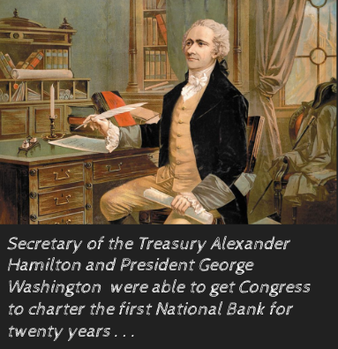
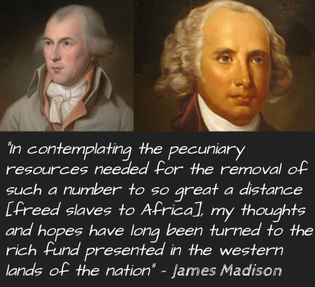
     It was assumed that slave owners would be compensated with funds coming from some kind of taxation combined with the sale of Western lands. It was also assumed that the bulk of freed slaves would be transported elsewhere, either to Africa or some designated location in the West. The cost of freeing slaves in 1790 was generally estimated to be $140 million; further thought of actual emancipation decreased dramatically as a result of that estimated cost (the federal budget for that fiscal year was $7m). However, the Hamiltonian approach with the federal government leading the fiscal side of things with a
National Bank could have managed such a discrepancy. 

     So the actual question in 1790 wasn’t the total cost of emancipation, but the initial capital cost. The ability to accrue debt with a public debt and a National Bank became a reality in the early-1790s, but the desire to incorporate gradual emancipation with that fiscal systems network fizzled and went nowhere. It was much easier to talk about emancipation in an ideological (and remote) sense in a Northern state such as Massachusetts compared to a state in the Deep South such as Georgia (90% of the black population in the US was below the Potomac River). Any plan for gradual emancipation had to feature WHERE the freed slaves would be relocated, and that was a problem that had no solution. Added to the mix was the reality that only the federal government could run point on gradual emancipation, and to the South, that smacked of even more “consolidation”.

Picture
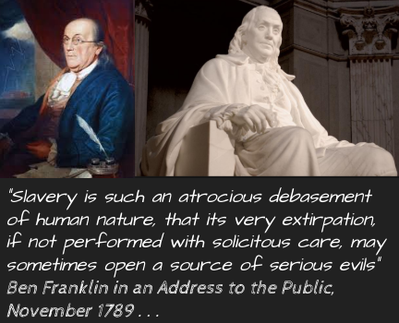
     So then, by the Spring of 1790 it was already basically impossible to make any major decision against slavery, and in some ways it came down to leadership. In addition to being named a delegate from Pennsylvania to the Constitutional Convention in 1787, that same year he agreed to serve as the new president of the Pennsylvania Abolitionist Society. Franklin made gradual emancipation his last great cause And unlike being an almost-too-late Patriot in the 1770s, Franklin had been against slavery since at least 1729, even speaking out against claims that blacks were racially inferior. But Franklin had never before thrown his full weight against slavery until the late-1780s during the Constitutional Convention. 
     Vice-President John Adams, his anti-slavery credentials long-standing, agreed to avoid the anti-slavery petitions read on the Senate floor. Hamilton didn’t support the debate against slavery in the House since it could further complicate/delay passage of this fiscal plan. President Washington wanted the House debate to be terminated, since it was a “nuisance”. Where Franklin was basically all big ideas, James Madison was concerned with details, and by the Spring of 1790, he decided to become involved in the slavery debate. If Franklin and Madison were on the same team, they would have been unbeatable, but on the slavery debate in 1790, they were on opposite sides.

Picture
     Madison’s strategy could be described as the “Virginia Straddle”. Madison had no patience for the Deep South, but he favored self-imposed paralysis on slavery, despite using some anti-slavery rhetoric. In effect, Madison thought the whole subject of slavery on either side was taboo. So Madison favored a strategy of “enlightened obfuscation” to try and remove the explosive issue of slavery from the political agenda. Madison had worked his magic behind the scenes to the point where some Northern representatives that had sided with the Quakers expressed regret that the matter had got out of hand. 
     In terms of the committee, the Deep South, now with support from Massachusetts and Virginia, tried to have the report tabled, wanting to avoid future debate. But Madison wanted more than just to end the debate: he wanted to establish a precedent that made clear the power (or lack of) that Congress had on the issue. Madison welcomed the 29 - 25 vote to release the committee’s report. Before the existence of judicial review, Madison wanted to use the vote on the committee report to create the equivalent of a landmark decision that would prohibit any plan of emancipation. 
     The report gave the Deep South the protection they demanded by denying Congress the power to pass any gradual emancipation legislation. The report also aligned the year 1808 concerning the slave trade with emancipation, so in effect, the Deep South got what it wanted for a limited time, since after 1808, Congress wcould do whatever it wished concerning slavery.

Picture
    Madison’s magic worked as the report went through the conference committee so the same version was presented to both houses. The Virginia delegation in the House had its marching orders to support the amended report from the conference committee, and the delegations from Massachusetts and New York were pressured to do the same. Seven resolutions from the original report were reduced to three by the conference committee, with the tax on the slave trade dropped altogether. 
     The final report passed the House by a vote of 29 - 25, making clear that the states had the power concerning slavery, not Congress, which in effect extinguished any federal plan/effort towards emancipation. Gradual emancipation disappeared from the political agenda in Congress, as both Madison and Washington wanted. It wasn’t until John Quincy Adams entered Congress after his term as President that the debate over slavery in the House would resume. The major piece of unfinished business from the Revolutionary War Era, slavery, remained unfinished.

0 Comments

    Archives

    May 2020
    April 2020
    March 2020
    February 2020
    January 2020
    December 2019
    November 2019
    October 2019
    September 2019
    August 2019
    July 2019
    June 2019
    May 2019

    Categories

    All
    18th Century
    19th Century
    20th Century
    History

Powered by Create your own unique website with customizable templates.