Mr. Jensen's U.S. History Website
  • U.S. History Blog
    • U.S. History Blog (May 2026 - May 2027)
    • U.S. History Blog (May 2025 - May 2026)
    • U.S. History Blog (May 2024 - May 2025)
    • U.S. History Blog (May 2023 - May 2024)
    • U.S. History Blog (May 2022 - May 2023)
    • U.S. History Blog (May 2021 - May 2022)
    • U.S. History Blog (May 2020 - May 2021)
    • U.S. History Blog (May 2019 - May 2020)
    • U.S. History Blog (May 2018 - May 2019)
    • U.S. History Blog (May 2017 - May 2018)
    • U.S. History Blog (May 2016 - May 2017)
    • U.S. History Blog (May 2015 - May 2016)
    • U.S. History Blog (May, 2014 - May, 2015)
  • About

Andrew Jackson & The Battle of New Orleans, Part Five

6/18/2019

0 Comments

 
Source: Brian Kilmeade & Don Yaeger. Andrew Jackson And The Miracle of New
              Orleans - The Battle That Shaped America's Destiny (2017)
Picture
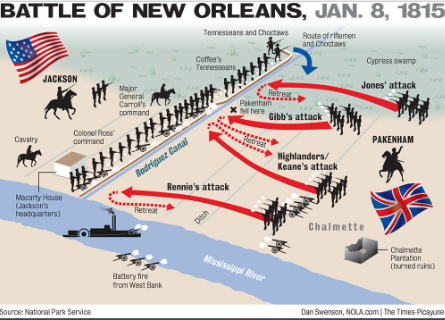
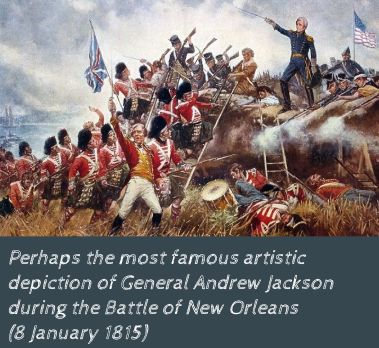
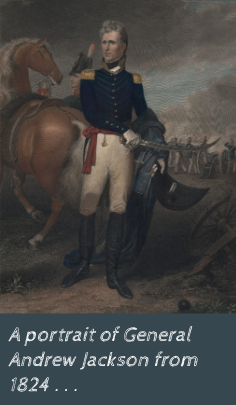
​     Jackson could see the entire battlefield from the ramparts, and 2/3’s of the open plain was filled with British redcoats. The 32 pounder, loaded with musket balls, fired, and the forward elements of the British center suffered terribly, but the British troops from behind kept pushing forward. Rennie’s men advanced very close to the targeted redoubt, but after Rennie was killed with a shot to his head, his men retreated.  When the British were 200 yards away from the US center, the deadly musket fire started, especially from the Tennessee Volunteers and Kentucky Riflemen. Jackson’s men took turns firing, then falling back to reload; some fired as quickly as they could after reloading, while others took their time.
    All the while, Jackson was there, directing, encouraging, and inspiring his men. The Volunteers and Riflemen, most armed with .38 caliber long rifles (42 inch barrels), couldn’t miss hitting what they aimed at. Keane’s column had started to fall back under the intense musket/artillery fire, and after Keane was wounded, they fell back even faster. The British troops that reached the canal found that their footing was not nearly good enough to advance up the grade, and all the while Jackson’s men fired down on them. To the British, Jackson’s men seemed to be almost invisible; even to soldiers that survived battle during the Napoleonic Wars, this battle had become overwhelming.

    On the British right, Gibbs was carried off the field, and Pakenham and his aides raced to fill the void and to take command. The troops were rallying when Pakenham was shot in the knee, and then Pakenham’s horse was killed by another shot. In the process, Pakenham had been wounded again, this time being shot in an arm. As the twice-wounded Pakenham was getting help mounting another horse, a cannon ball ripped into his groin, mangling his spine. Pakenham was taken from the field, and his last command as he lay dying was to bring up the reserves. British casualties were horrific, while Jackson’s men suffered hardly a pinprick by comparison.
Picture
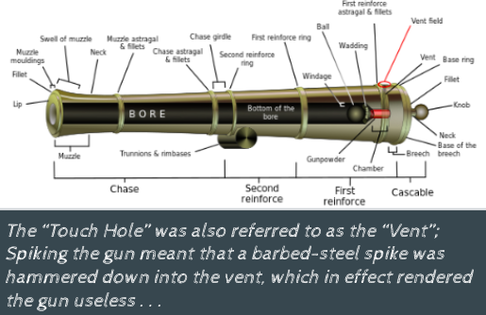
    The attack across the bank, which was Pakenham’s best hope for victory, occurred far too late. The British had been delayed further due to the strong current of the river, which carried them far downstream from their planned landing point, which led to a four mile march. As the British advanced, they could see Patterson’s guns firing across the river into the main British force. The ramparts on the opposite shore proved to be no problem for the British to overrun, but before that occurred, Patterson ordered his men to spike the guns (an iron rod was hammered into the vent, a.k.a. the touch hole, at the back of the gun), which was a very time-intensive and laborious process to undo. The British controlled the position, but they were unable to use the US artillery, which meant that Jackson’s main force would not be under deadly flanking fire.
    By midday, Jackson received the flag of truce at the HQ house. Before he had left for the HQ house however, Jackson had walked the entire line of defense, thanking and congratulating his officers and his men. Jackson agreed to a ceasefire so the British could deal with their dead/wounded. During the last part of the battle, a British officer had waved a handkerchief on his bayonet as a flag of truce, an that British officer gave up his sword, which had been the first real sign that Jackson’s men had accomplished the impossible.
Picture
     The Americans from their line watched not only the horrors of the massive numbers of KIA British soldiers on the ground, but also the hundreds that simply got up from the ground that had barely suffered a scratch. The casualty count for the British was never truly confirmed, but estimates were stunningly high; a total of 3000 KIA/WIA was not an unrealistic estimate (Jackson eventually settled on 2600 KIA/WIA . . . Jackson only had 12 KIA).
    Jackson had secured the mouth of the Mississippi River for the US. Jackson’s multi-ethnic / multi-class army did what Napoleon had failed to do, which was to destroy the finest fighting force in the world. Jackson had proven to possess superior military instincts, planning, and ferocious leadership compared to his British counterparts.  From the HQ house, Jackson kept the artillery going, letting the British know he was watching them as well as determined to see them leave the vicinity as soon as possible.
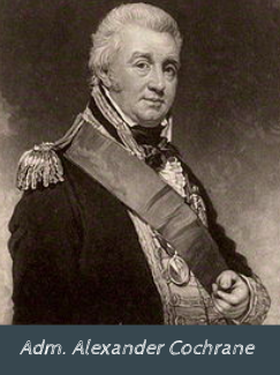
    Sixty miles downriver, Cochrane was firing on Fort St. Philip with five warships. Cochrane fired more than 1000 rounds over 9 days but didn’t inflict any real damage on the fort. Jackson held his position at the canal, and on 19 January 1815, the British force decamped with an overnight withdrawal.

Picture
     20 January 1815: Jackson returned to New Orleans for the first time in a month, and on 23 January 1815, the city had a formal celebration with Jackson being the recipient of most of the attention and adulation. Jackson suspended the curfew that night, and the citizens of New Orleans celebrated until dawn.
    While the British had retreated from land, they remained a strong presence in the surrounding waters. Jackson was concerned that the British might go after another strategic location such as Fort Bowyer, and Jackson was right. Cochrane didn’t think the war was over since no word from London to that effect had yet reached him. Cochrane now had a much larger fleet under his command, now in excess of 60 ships, and that fleet set sail for Fort Bowyer on 27 January 1815. If nothing else, Cochrane wanted to regain lost prestige, not only for his navy, but especially for himself. On 8 February 1815, Cochrane landed 5000 men several miles from the fort. Before he ordered the onslaught, Cochrane sent an officer under a flag of truce to demand the fort’s surrender.
    The commander of Fort Bowyer had no real choice but to surrender since he only had 360 men, and on 12 February 1815, Fort Bowyer surrendered. Jackson wrote Monroe of his absolute mortification of the surrender since now the British had an open route to Mobile. But on the next day, a British frigate arrived, and Cochrane received orders to stand down since the Treaty of Ghent was in effect. Cochrane was also ordered to set sail for Britain, but Jackson refused to believe Cochrane would do so until he received absolute confirmation.
Picture
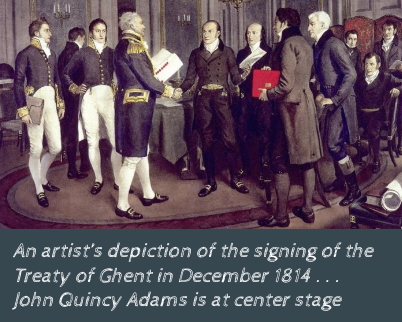
     On 14 February 1815, President Madison received a copy of the Treaty of Ghent, and he submitted the treaty to the Senate without delay. The Senate ratified the treaty 35 - 0, even though many were miffed that there was no mention of British actions that started the war such as impressment. Meanwhile, over a thousand miles away, Jackson was still waiting for news. Jackson refused to lend any credence to the rumors he heard that the war was over, or even to the clippings of British newspapers that some had shown to the general. Jackson kept martial law in effect in New Orleans, and most citizens of the city had come to view Jackson as a jailer instead of a deliverer. Rachel’s presence eased Jackson’s tensions at least somewhat, and finally, on 8 March 1815 after receiving “persuasive evidence”, Jackson cut New Orleans loose from the restraints, and he released his men so they could return home.
    Jackson didn’t start for home until early-April, but when he returned to Tennessee, it was as a national hero. Thanks to Jackson, the US would never again be invaded by a foreign power. The victory at New Orleans overshadowed the previous humiliations of the war, such as the burning of DC. The nation’s memory of the war would remain forever centered on Jackson, since he was the figure given the most credit for restoring the honor of the nation. Fort McHenry, successes on the Great Lakes, and especially New Orleans gave the US a sense of nationhood for the first time, and recognition and respect from Europe was an added bonus.
Picture
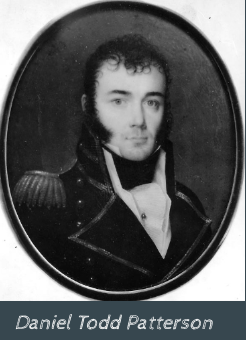
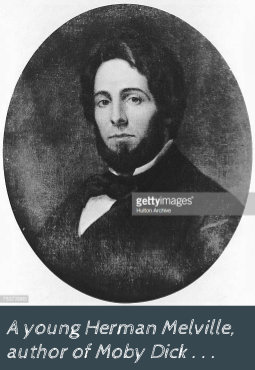
     On 15 February 1815, Congress authorized a medal to be struck with Jackson’s profile. Patterson would eventually be in command of the USS Constitution, and by 1839, the year he died, he was the commander of the Washington Navy Yard. Jones would cross paths with a navy deserter named Herman Melville, and Melville featured Jones as Commodore J___ in Moby Dick. Lafitte was pardoned, but he remained a pirate, setting up shop in Galveston in Spanish Texas. Lafitte died in 1823 during a ship-to-ship battle, but over the succeeding years, he became the stuff of myth and legend.
    The Duke of Wellington placed the blame for the British defeat squarely on Admiral Cochrane, pointing out that the trek across Lake Borgne meant that the British troops were not connected to their supply base. Jackson’s failure to secure the river bank opposite of his position has raised questions about his battle preparations and strategies . . . no matter, since Jackson was the man of the hour that deserved all the honors and plaudits. Jackson’s decision-making and instincts before/during the battle proved to be stellar.
Picture
   Jackson was invited to the 25th anniversary celebration of the battle held in New Orleans. Jackson believed that 8 January 1815 mattered in US History just as much as 4 July 1776. By 1839, Jackson’s health was poor; he spent the last five months of his Presidency bedridden, almost dying for a serious attack related to the musket ball that was still in his chest from the duel in 1806. Despite his fame and importance, Jackson was cash-poor, and he refused to borrow money to go to New Orleans. But the battle was such a huge part of his life that he insisted that he continue to be addressed as general.
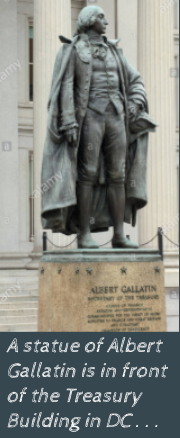
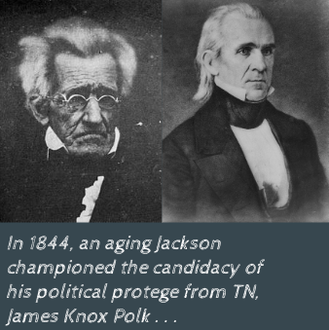
    December 1839: Jackson decided to go to New Orleans, and he borrowed against his cotton crop to do so. Jackson left Nashville on 24 December 1839, and it took for days to travel 125 miles to the mouth of the Cumberland River, where Jackson boarded the Gallatin and headed down the Ohio River. Jackson arrived in New Orleans in the morning of 8 January 1840, and Jackson was seen by a crowd of about 30,000 cheering Americans. After the celebrations, Jackson boarded the Vicksburg and headed upriver, back to the Hermitage. Jackson died on 8 June 1845 must months after his protege, fellow Tennessean James Knox Polk, took office as the nation’s 11th President.

             Addendum: Henry Clay and The Treaty of Ghent . . . 
0 Comments

Andrew Jackson & The Battle of New Orleans, Part Four

6/17/2019

0 Comments

 
Source: Brian Kilmeade & Don Yaeger. Andrew Jackson And The Miracle of New
              Orleans - The Battle That Shaped America's Destiny (2017)
Picture
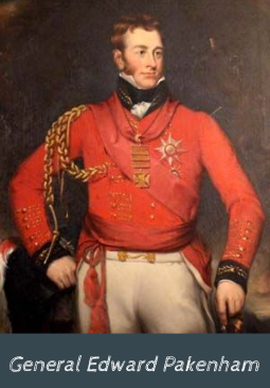
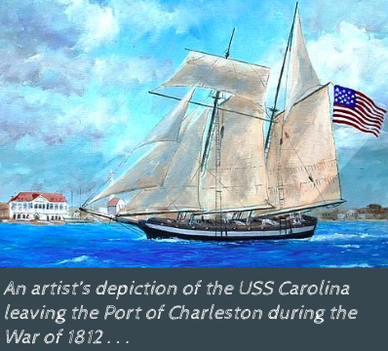
     The USS Carolina and now the USS Louisiana, continued to shell the British camp, and US snipers were in the area targeting any British soldier that was in their range. At night, British sentries were hit by US cavalry, and worse were the raids by Choctaws on the sentries. At 2 pm on Christmas Day 1814, General Edward Pakenham and the remaining troops arrived at the camp. Pakenham was the rare British general that truly shared the danger with his men, and he had proven his worth/stature in that he was one of the key generals that led to the defeat of Napoleon. He had been WIA many times, but this as Sir Edward Pakenham’s first real independent command.
    Pakenham immediately saw that his attack would occur in a tight area with the Mississippi River on one side and a cypress swamp on the other. Pakenham was not very happy, to say the least, to find out that those in command before he arrived had placed him in such a limiting position. At an officer’s meeting, Pakenham mentioned that he would like to withdraw to a more favorable location, but Admiral Cochrane sharply disagreed, insulted at the mere suggestion that there had been any failure while he had been command. Cochrane in essence triple-dog-dared Pakenham to take the US position with his army, or Cochrane’s marines would do so. Pakenham was surprised at Cochrane’s outburst, and he needed the admiral’s assistance and ships. Pakenham realized that he was stuck, and that he needed to make the best of an awful strategic location . . . but his first plan was to destroy the USS Carolina.

Picture
     27 December 1814: Jackson saw from his vantage point in the top floor of his “Headquarters House” that British cannon were targeting the Carolina. As far as Jackson knew, the British battery hadn’t been there the day before. Pakenham was in direct command of the battery; the artillery had been brought to the levee during Christmas night, and the guns were spaced by several hundred yards, making them very difficult for the Carolina to hit. Pakenham made sure that other necessary preparations were made for defending/stabilizing the guns on the soft soil.
    Jackson ordered the Louisiana to sail out of range of the British artillery. The Carolina returned fire with the only long-range gun it had, its 12 pounder. Jackson watched as the British artillery kept hitting the Carolina, and a cannon fireball penetrated deep in the bowels of the ship, and the Carolina was soon fully ablaze. Then Jackson saw the British train their guns on the Louisiana, who had been unable to sail out of range due to the current and no wind. The only escape for the Louisiana was upriver, and the Louisiana had to be moved manually, both by oarsmen on boats and from those on shore pulling ropes. Soon enough, the Louisiana was moved half-a-mile out of range of the British guns.   


Picture
   Pakenham still lacked specific knowledge of Jackson’s strength/location, so next for Pakenham was to get rid of the snipers and cavalry that kept him from finding out what he needed to know. On 28 December 1814, Pakenham organized a force that would reconnoiter, and if possible, attack Jackson’s position. Pakenham simply didn’t believe that Jackson would be the kind of worthy adversary he had faced in Europe. Soon enough, Pakenham received reports that the US line was dug in from river-to-swamp with 5 foot high breastworks.
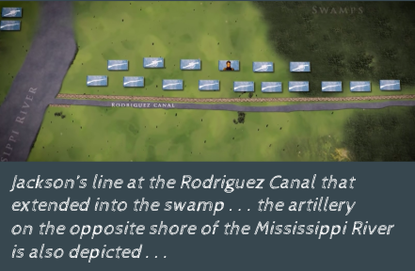
    Lafitte, meanwhile, had told Jackson that his line was still vulnerable unless he extended it into the swamp. Jackson, to his credit, immediately acted on Lafitte’s advice. Pakenham, now seeing Jackson’s line with his own eyes, was surprised to see five big guns visible among the breastworks. Jackson had taken advice from ditch digging slaves that bales of cotton should be used to fill the muddy hollows. Cotton bales were buried and connected by iron rings with wooden platforms on top where the big guns were placed. Pakenham and his force came within a half mile of Jackson’s line on the canal. But the Volunteers and Riflemen were hitting what they aimed at, and the Louisiana was firing from the river. Pakenham quickly understood that he didn’t have nearly enough artillery in play, and he sent orders to bring up more guns.
    While all this occurred, Jackson received a messenger from the governor of New Orleans, informing Jackson that serious talk had developed in the city about surrendering to the British. Jackson informed the messenger that if he couldn’t save the city, he would burn New Orleans to the ground, cut off the British from receiving any supplies from downriver, and force them to eventually leave. Jackson made it crystal clear that New Orleans would never raise the white flag as long as he was alive and in command.
    Pakenham had seen enough and he ordered a withdrawal. British soldiers were ashamed and upset with the humiliating retreat after their proud advance into battle, but Pakenham at least had the information about Jackson’s defenses that he needed. Pakenham knew that the deadly US artillery would have to be silenced for the next advance to succeed. Jackson installed a 32 pounder in the center of his line, knowing the British would return in greater force.

Picture
     For the next three days the armies kept their distance, but during that time, Jackson had reinforced and extended his line into the swamp. Jackson also ordered secondary lines of defense behind his main line just in case they were needed. On the opposite bank of the Mississippi River from his position, Jackson had Patterson bring cannon ashore from the Louisiana for flanking fire on the British advance.
    Pakenham ordered artillery to be located just 600 yards from Jackson’s line, and his men did so stealthily at night. Fog kept Jackson’s men from seeing what the British had done overnight, but intelligence indicated that Pakenham had heavily reinforced his army. When the fog cleared, the British guns focused much of their fire on the HQ house where Jackson was located. Over 100 cannon balls hit the HQ house, but no one was injured.
    Jackson went to the line at the canal, and he noticed more British soldiers were in play with new/additional artillery. There was little Jackson could do but hope his own artillery could keep the British advance at bay. While the British had more cannon, the US guns were higher off the ground and more effective, but the British artillery proved damaging. Jackson rode up and down the line, exhorting/calming his men, and the line held, mostly due to the more accurate US artillery. Pakenham watched as his options faded, and once again the British retired from the field with nothing to show for their hardships or efforts.


Picture
     Dysentery had taken hold of the British camp, and rations were running low, since the army had taken almost everything consumable from nearby plantations. Sniper and artillery fire by the US continued as well, but Pakenham was undeterred given the conditions and setbacks so far. Pakenham’s plan was to break through Jackson’s line in using greater force, but in order to do so, he would need to take the US guns on the opposite shore of the Mississippi River, and then rain flanking artillery fire down on Jackson’s line. Yet again, the sense of impending victory took hold among the British ranks, especially with the addition of two more full regiments.
    On 4 January 1815, 3000 militia had arrived, mostly Kentucky Riflemen, but they were badly outfitted and short weapons. Jackson had to threaten the governor of New Orleans to get off his behind and get all that was available from the city to his lines, and finally the additional Riflemen were set to go by 6 January 1815. Jackson located his 5000 men in terms of factions, with about 1000 of his men across the Mississippi.
    On the evening of 7 January 1815, Jackson received intelligence from Patterson that the British were making a move on Jackson’s artillery across the river, and Patterson asked Jackson for reinforcements. Jackson had already sent Patterson 400 Riflemen . . . Jackson remained convinced that the British attack would be on his main line of defense, not across the river.

Picture
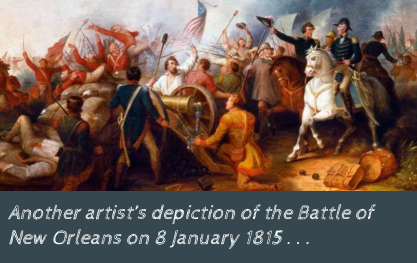
     8 January 1815, the Battle of New Orleans: An American flag flew proudly at the center of Jackson’s line. Even before dawn, Pakenham received bad news, in that the attempt to take the US artillery on the opposite shore had been delayed, which meant there wouldn’t be any artillery flanking fire on Jackson’s line, at least not when Pakenham wanted it. The attempt had been delayed since Cochrane’s design for a temporary lock between the river and the bayou led to ships getting grounded.
    The British contingent trying to cross the river was 8 hours behind schedule, and Pakenham had to decide whether to attack or delay. Pakenham decided to attack, hoping that the could break through Jackson’s line, even though the casualties would be great. Pakenham ordered a rocket to be fired to signal the advance, which Jackson easily saw; Jackson and his men had been at their position since 4 am. The British remained invisible due to heavy fog, so Jackson didn’t immediately see that Pakenham had divided his force into three brigades.
    Under General Samuel Gibbs, the main attack would come from the British right, but his men forgot to bring scaling ladders, and they went back 500 yards to get them, which delayed their advance; military historians still debate whether that delay cost the British victory. The soldiers under Gibbs’ command that led the charge were decimated by Jackson’s force.
    On the opposite flank along the river as a brigade commanded by Colonel Robert Rennie, and his orders were to take Jackson’s newly placed forward redoubt (protected cannon) at all costs. Pakenham needed that artillery silenced to prevent the slaughter of his troops in the open field. General John Keane led the other brigade, which was in the center, and Pakenham had a reserve brigade in the rear composed of the most recent arrivals. The US artillery fire started even before the fog had burned off, but Jackson’s men were able to see the redcoats nonetheless.


0 Comments

Andrew Jackson & The Battle of New Orleans, Part Three

6/16/2019

0 Comments

 
Source: Brian Kilmeade & Don Yaeger. Andrew Jackson And The Miracle Of New 
              Orleans - The Battle That Shaped America's Destiny (2017)
Picture
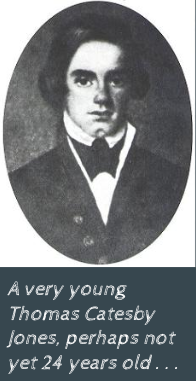
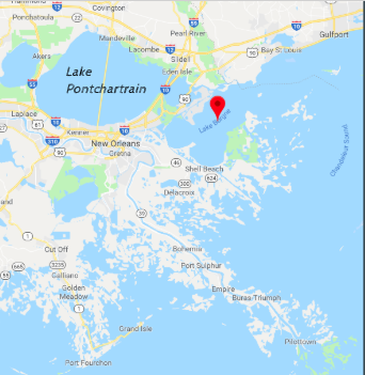
     Lt. Jones was on board one of the five gunboats, waiting for the British advance across the lake. During the previous few days, the 24 yr old commander had been playing cat-and-mouse with the British, and reporting to Patterson everything he observed. The British started to move across Lake Borgne on 13 December 1814 at 10 am, and their attack on New Orleans had officially started. Jones ordered the schooner to blow up the US supplies located on a nearby shore so the British wouldn’t get any “freebies”, but there was little else he could do other than be an irritant to the British advance.
    Jones kept waiting for the British barges to move south and land their troops, but instead the British kept advancing on his position, and by 2 pm Jones became 100% sure the were targeting his gunboats. Jones retreated further into Lake Borgne, heading to the Rigolets as Patterson had ordered, and if his stand there failed, he would retreat into Lake Pontchartrain. However, the waters had become even more shallow and three gunboats became stuck, and it wasn’t until 3:30 pm that the boats were freed.
    Jones noticed that three barges veered to the north to attack the schooner, which navigated as close to shore as possible, and the men were able to fend off the British from both ship and land. But by 7:30 pm, the crew of the schooner set their ship ablaze, knowing they could not withstand any further attacks. Jones soon thereafter lost the wind, while the British barges were powered by oarsmen; Jones knew he would have to turn and engage the British the next morning.

Picture
    The British started off by capturing the converted fishing vessel which was used for communications, and the British continued to advance on the five gunboats who were anchored in place. Jones had no choice, since the winds were still calm and the current worked against them. More than 40 British barges closed on the five gunboats, and Jones ordered the boarding nets to be released into the water (which would make it far more difficult for the British to board a gunboat).
    The British waited just out of range of the cannon on the gunboats in essence to rest up for the final assault. The gunboats were not in an even row of five due to the current, and Jones’ boat was actually the first which would be in the line of fire. While the US smooth bore cannon on each gunboat had longer range, able to fire more than a mile away, the barges were small targets. Despite the best efforts of the crew of Jones’ gunboat, Jones was shot in the shoulder and the British boarded and took the vessel, and in less that two hours the rest of the gunboats fell into the hands of the British.
    Despite the defeat, Jones had served Jackson well, in that he bought Jackson valuable time. Under interrogation, Jones and his men exaggerated the size of Jackson’s force, which created some hesitation and concern in Cochrane’s decision-making. Cochrane may have gained the necessary foothold to bring British troops to the immediate vicinity of New Orleans, but he had no idea of the strength of Jackson’s army.


Picture
     Jackson would not learn of the defeat on Lake Borgne until a day after the citizens of New Orleans heard the bad news. Before hearing the bad news, and despite another round of dysentery, Jackson went to the mouth of Lake Borgne, opposite where  Jones had faced the British, and then to view the expanse of Lake Pontchartrain, and then to Chef Menteur Road, which to Jackson seemed the most likely avenue for the British advance on land. Then, on 15 December 1814, Jackson received the news of Jones’ defeat on Lake Borgne.
    Jackson had written Monroe that the lakes around New Orleans had been secured, and now Jackson wished he could get that letter back. Jackson knew that he, with only about 1000 men, had to pull a rabbit out of his hat to protect the city. Jackson sent out emergency missives ordering the men he had positioned in such locations as Baton Rouge to come back immediately. Jackson was also waiting for around 2500 Kentucky Riflemen under the command of General John Thomas to arrive, and he also worrying if the supplies and ammunition from Pittsburgh would arrive on time. Jackson ordered that two battalions of free blacks be incorporated into his command, but he also ordered that they be treated equally.
   Jackson had his hands full, in that he needed to calm a panicked city while also uniting various factions. In order to try and accomplish both of those tasks, Jackson announced that a procession (parade) would occur in the city’s central square, knowing that those in New Orleans loved a parade. Citizens cheered for all the various elements of Jackson’s army as they proceeded through the central square, honoring those whose loyalties/qualities had been recently questioned.

Picture
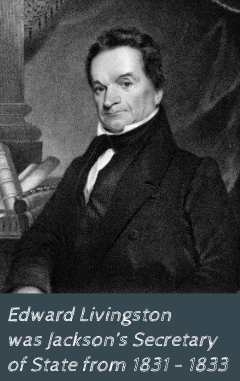
  Through Livingston, a resplendent Jackson complimented the citizens and encouraged them to further heroism, and then he addressed each faction of his army. Jackson left his audience reassured/inspired, but he also declared martial law the day before, meaning that there was no longer any free entry/exit from the city, and that there was a city-wide 9 pm curfew with lights-out. Through his martial law proclamation, Jackson ordered that every able-bodied man was to fight (even though that may not have been exactly legal). That order also meant that Patterson could conscript who he needed, since he was desperate for additional numbers as well. While Jackson succeeded in reducing panic, he didn’t know that the British were well on their way to New Orleans a full day before the parade.
    Barges propelled by oarsmen dealt with the shallow waters and brought forth many soldiers, but it was still a hard crossing given that the barges were overloaded, and the 30 mile / 10 hour voyage each way was miserable (storms made the crossing even more unbearable). Pea Island, which was little more than a sandbar, would be the staging location for the advance. The oarsmen had to make three complete round trips, and then another hard row of 30 miles awaited to reach real landfall. Pea Island had no cover or shelter, and the British misery continued. It took five days to get the British forces on Pea Island, but morale remained high due to the anticipated spoils of war.

Picture
    Jackson remained clueless about which route the British would take from Lake Borgne, and from which location the British would actually launch their ground assault. After Jackson received word that the British were on Pea Island, he knew from his own reconnoitering that the best route was along the Plain of Gentilly, and he sent men to that location.  However, it was also possible that the British would travel south of that plain at Jumonville, and it was also possible to advance via the English Turn.
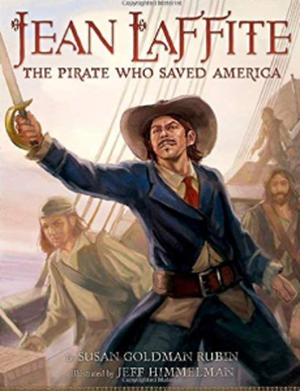
    While the most direct routes were manned, Jackson still had two problems, in that he did not have enough ammunition, and he didn’t have enough knowledge of the bayous in order to repel every possibility of attack. In order to strengthen his defenses, Jackson needed to add one more group to his motley collection of troops. For months, Jackson had resisted making any agreements with pirates, and the motives of Lafitte were hard to decipher in any case. On 14 December 1814, the Louisiana state legislature in effect granted amnesty to Lafitte and his pirates for all previous transgressions, and Jackson was under increased pressure from the numerous and influential Creoles to enlist Lafitte.
    For the last three years, Livingston had been Lafitte’s legal advisor, and Jackson asked Livingston for his advice, and Livingston recommended that Jackson at least meet w/ Lafitte. Jackson was also interested in that Lafitte had boasted that he could supply an army of 30k, so in effect Jackson had little choice but to meet with the pirate leader. After obtaining secure passage to enter the city (since there was still a warrant out for his arrest), Lafitte explained to Jackson that he offered more than just his allegiance; he had over 1000 men willing to fight, and he had powder, shot, and flints, all of which Jackson desperately needed.
    Just as Jackson had recognized a military kindred spirit win Red Eagle, Jackson saw Lafitte in the same way. And Lafitte knew the backwater bayous intimately, and Jackson had Volunteers and Riflemen that hit what they aimed at, and Lafitte had the necessary ammunition. So, Jackson arranged that after Lafitte was through organizing his men and distributing the ammunition, etc, that he would join Jackson as a de facto officer.

Picture
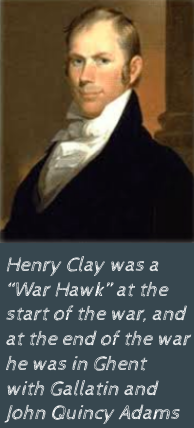
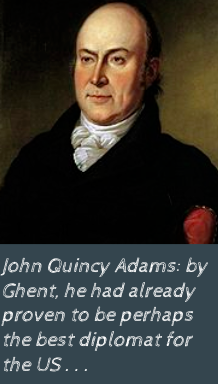
     By December 1814 in Ghent, the US contingent started to believe that an agreement might be within reach, with fishing rights in the North Atlantic and navigation on the Mississippi River the only apparent remaining issues. John Quincy Adams valued the fishing rights far more than Clay, and Clay valued navigation on the Mississippi far more than JQA. Then the British introduced a new wrinkle to the negotiations, focusing yet again on language that kept lands in possession held by either side at the end of the war. JQA started to think that something was up (catching up to Gallatin), and he started to wonder what the British really wanted to achieve with that language; JQA wondered what would happen if the British captured New Orleans.
    The new draft of the document indicated that all territories, places, and possessions captured during the war would be returned, but was that phrase accurate, and to be trusted? Would the treaty mean that the US would get New Orleans back if the British took possession of the city? To John Quincy Adams, the key word was “possessions”, in that the British had never officially recognized the Louisiana Territory as an American possession. Unknown to JAQ, Clay, and Gallatin, General Pakenham’s orders were to keep going after New Orleans until he had confirmation by the British government of a finalized treaty. Pakenham was told to gain “possession of the country”. If JQA didn’t fully understand what was going on, Jackson had no chance, but Jackson’s instincts told him that holding on to New Orleans was beyond-vital.

Picture
     Cochrane sent out spies (including Spaniards), and after hearing the information that was brought back, he concluded that the best approach to New Orleans was via Bayou Bienvenue, in that it was unguarded and without obstructions. Also, ten-to-twelve Spaniards would act as pilots along the complex waterway. On 22 December 1814, Cochrane gave the order to advance with an expeditionary force of 1600 men, and they entered the Bayou Bienvenue that night. US pickets were captured, so Jackson knew nothing about the advance.
    The next day, the swamp gave way to firmer ground for the British, and New Orleans was only seven miles away on dry ground. The British expeditionary force decided to rest overnight instead of taking the fight right to the Americans, which was the first major British mistake of the campaign. The British had taken possession of a plantation as their new staging ground, and took prisoners, including the ower, Major Villere. Villere escaped by exiting a window, knocking down a few British soldiers, and running away to a nearby dense cypress woods, somehow avoiding getting shot. Villere knew he was being pursued, but he knew the area, and the British did not. Villere hid himself by climbing up a huge cypress tree, and the British failed to find him, returning to the plantation knowing that news of the presence and approach would now reach New Orleans.

                  Addendum: The First Battle of New Orleans . . .


0 Comments

Andrew Jackson & The Battle of New Orleans, Part Two

6/1/2019

0 Comments

 
Source: Brian Kilmeade & Don Yaeger. Andrew Jackson And The Miracle Of New   
​              Orleans - The Battle That Shaped America's Destiny (2017)
Picture
    On 27 August 1814, Jackson received confirmation that the British were landing in force in the Gulf of Mexico just 50 miles east of his position. Jackson had intelligence that indicated that this relatively small British contingent would be supplemented by a much larger force, and that the plan was to take Pensacola, and then Mobile Bay, and then the ultimate prize, New Orleans. Jackson had to scramble in order to amass 2000 troops, and most of them were inexperienced. Jackson wrote to Nashville, asking for the entire Tennessee militia, including cavalry, but in the meantime, Jackson had to get ready to defend Fort Boyer.
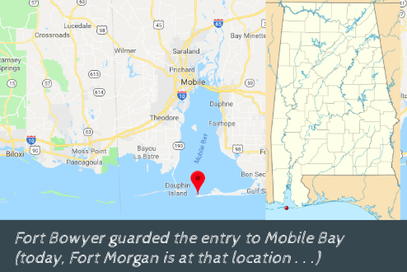
    Fort Bowyer stood 30 miles south of Mobile at the opening of Mobile Bay. British ships would have to pass through the narrow opening under fire from Fort Bowyer’s guns, but the fort had long been neglected and wasn’t readily fit. Jackson’s men worked around the clock to get Fort Bowyer ready knowing that the British could arrive at any time. Jackson wrote the governor of New Orleans to warn him of the British plan to advance on the city; Jackson was ready to fight the British from his position at Fort Bowyer, but the odds of defeating the British were not in his favor.

Picture
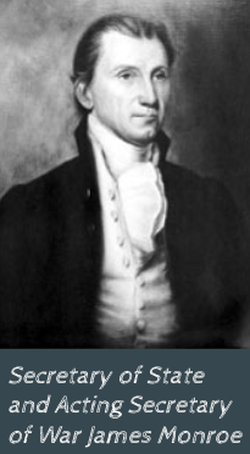
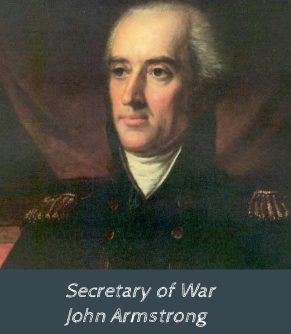
     Jackson was 100% sure of the intentions of the British in the Gulf, but that wasn’t the case in Washington, D.C. with President James Madison and Secretary of War John Armstrong. Instead of getting DC’s defenses ready, SecWar Armstrong was certain that Baltimore was the main target of the British, and Madison followed his advice. Armstrong went so far to tell Madison that DC had little strategic value to the British. On 20 August 1814, Secretary of State James Monroe decided to find out what was really going on and he took to his horse. Soon, Monroe saw that the British invasion had already started, but even Monroe, a former officer in the Revolutionary War, couldn’t ascertain the true target of the British.
    On 24 August 1814, the British attacked Bladensburg (MD), 8 miles from DC, and by doing so showed their hand: DC was their ultimate target. Around 7000 US troops faced 4000 British troops, but once the British engaged the US soldiers, they turned and ran as fast as the could (the “Bladensburg Races”). Once in DC, snipers fired on British troops, and the British commander ordered the house from which they fired burned, which then started a cascade of conflagrations, which soon meant that the President’s House (it wasn’t called the White House until after the War of 1812 after it was refurbished and repainted with many coats of whitewash) was targeted for destruction. The British also set fire to other government buildings and to specific newspaper buildings/presses. Even after a hurricane forced the British out of DC, the US government was homeless; the only good news was that Armstrong was sacked, and SecState Monroe became the Acting SecWar. But not even Monroe could provide, at least right away, the kind of government assistance that Jackson needed . . . and the negotiations in Ghent were going nowhere.

Picture
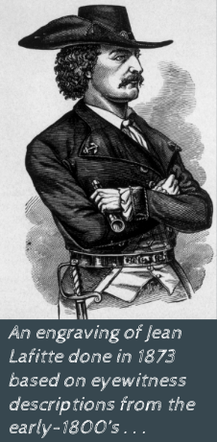
    2 September 1814, Bataria Bay south of New Orleans: the British attempted to meet with Jean Lafitte, and emissaries were taken to the pirate who welcomed them, and led them to his very comfortable house. Lafitte was invited to join the British for their upcoming offensive, but Lafitte had difficulty at that moment deciding whether he was being asked or being coerced. The British emissaries told Lafitte that he would receive $30,000 in cash plus land grants, as well as pardons for his men that were currently incarcerated. Lafitte was also told that New Orleans was the ultimate target for the British: the message was clear - join the British or be destroyed.
    Lafitte told the British he needed time to consider their offer, and the British emissaries had no choice but to wait overnight since their boat was “guarded” by Lafitte’s men . . . Lafitte assured the British emissaries that they would have safe passage back to their ship the following morning. After the British left, Lafitte drafted his formal response, saying that he would meet them again in two weeks to give his answer. Lafitte chose to be a double agent, in that he wrote a close friend in New Orleans of the British intentions on the city. Lafitte also wrote to the governor of New Orleans to not only alert him, but to also offer his services in defense of the city. Whether or not Jackson wanted him, Jean Lafitte had thrown in his lot with the New Orleans and the general.

Picture
    Over a week would pass until Jackson was told about the British “offer” to Lafitte, but Jackson was far more concerned about holding Mobile (AL), 150 miles to the east of New Orleans. But before Jackson could inspect the defenses at Fort Bowyer, the British made their move on the fort on 13 September 1814. In no way did Jackson want his small advancing force to be captured, so he headed back to Mobile and hoped that the fort could withstand the British onslaught . . . but Jackson had to get Mobile ready if the British advanced.
    Unknown to Jackson, the British had a land force that was ready to attack Fort Bowyer from behind as well as from the water. But Jackson’s men at Fort Bowyer were made of much sterner stuff than the soldiers at Bladensburg, and the British land force’s advance was frustrated. The US guns from the fort were able to match the British guns from their ships, and the engagement was a stalemate, but it was only a matter of time until the guns at Fort Bowyer ran out of ammunition. And then one of the fort’s cannon shots hit the anchor chain of one of the British ships, and the current took it wo within 600 yards from the fort, where it ran into a submerged sandbar. The British had to abandon the ship since it was under direct fire from the fort, and three hours later, the British ship exploded.


Picture
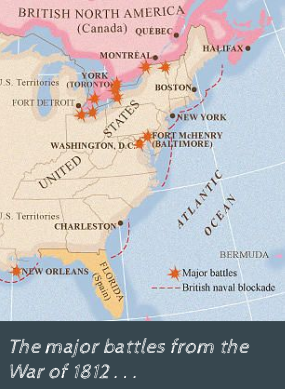
     Jackson, even though he was 30 miles away, saw the fireball of the explosion of the British ship on the horizon, but many anxious hours would pass until Jackson received confirmation that Fort Bowyer remained in American hands. The three remaining British ships sailed away from the fort even though they had at least a 10:1 advantage in manpower: 158 US defenders had denied the British access to Mobile Bay and Mobile. Jackson wrote SecWar/SecState Monroe to inform him of the victory, but if Monroe had time to savor the news, it didn’t last long since it was about at the same time that the British attacked Fort McHenry. In a much larger-scale version of the attack on Fort Bowyer, the British were denied their goal of advancing to Baltimore.
    Jackson, without the large numbers necessary to defend all the strategic locations in the Gulf, had to try and out-guess the British, and for the moment, Jackson stayed in Mobile to gather intelligence. Jackson set about to reinforce Fort Bowyer while while waiting for reinforcements. The guns from the destroyed British ship were taken and installed in Fort Bowyer, and once Jackson was satisfied with the fort’s defenses, he was ready to try and find a way to remove the British from Pensacola (in Spanish Florida, 50 miles east of Mobile). The Spanish had granted the British free use of Pensacola’s harbor, which meant that the British cold mount an overland attack on New Orleans.
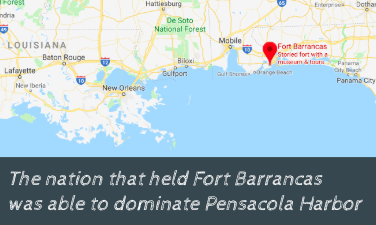
    Soon enough, Jackson’s force exceeded 4000 men, but he didn’t have any direction or permission from DC to take Pensacola . . . Jackson even received instructions from DC to stay away from Pensacola, since Madison and Monroe were afraid that Spain might enter the war. However, via backchannels, Monroe told Jackson that he was “authorized” to attack Pensacola, and that he would receive “support”. Monroe understood the strategic significance of Pensacola, and Jackson knew that if his attack failed, he would bear the political blame, not Madison. Jackson knew that if he took Fort Barrancas he would be able to control Pensacola Bay, and the British fleet would be forced to leave . . . but the problem was that the British held the fort. On 6 November 1814, Jackson halted just two miles from Pensacola. Jackson decided to communicate with the Spanish governor of Florida first, and the general demanded that the Spaniards expel the British and give the fort to him, and the Spanish governor refused.

Picture
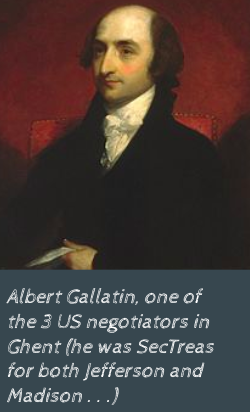
     At Ghent, as far as the US diplomats were concerned, negotiations were moving forward, but not nearly as quickly as desired. The British had insisted that the proposed treaty contain two Latin words, “uti possidetis”, which meant that when the war was over, whatever land each had had, that side kept. Gallatin correctly concluded that the British were in the process of trying to take New Orleans, which would mean that US expansion west would be controlled by the British . . . and at that point there was nothing that JQA, Clay, or Gallatin could do about those two Latin words.
    During the night of 7 November 1814, Jackson moved all but 500 of his men into the woods outside of Pensacola. The Spanish defenses still believed that Jackson’s army was still in camp since their guns were trained on the (empty) tents. The British were focused on the western approach to Pensacola, so Jackson took both the Spanish and British by surprise. Jackson quickly overran the Spaniards and the British blew up the ordnance at the fort, which meant that Fort Barrancas was unusable. However, Pensacola was defenseless, even though Jackson didn’t gain the fort. More importantly, the British would not be able to use Pensacola as their base of attack on New Orleans on land.
    Jackson was by far the most effective general in the US Army, as Madison and Monroe well knew; somehow, the President and Acting SecWar found $100k for Jackson’s army and promised the general additional soldiers. In just three days, Jackson was back in Mobile, where he received letters from Monroe telling him what he already knew, that the British had designs on New Orleans . . . on 22 November 1814, Jackson started his men towards the city.

Picture
    26 November 1814, Jamaica: the largest fleet assembled in the history of the Western Hemisphere, featuring 50 large vessels, was ready to sail; the British were making their move on New Orleans. Among the 50 ships were 6 Ships of the Line, each with 74 guns, 8 three-masted frigates w/ 38 or more guns, and there were schooners, sloops, and barges, all of them with guns. There were also cargo ships whose job it was to carry away the spoils from taking New Orleans. However, this immense fleet left Jamaica before all of General Edward Pakenham's forces were present.
    Jackson didn’t know for certain if the British fleet was indeed heading to New Orleans, and he had no way to know the size of the fleet, but Jackson assumed a large British force was heading his way. Jackson took an overland route from Mobile to New Orleans, gathering as much intelligence as he could along the way. Jackson planned on a trek lasting 12 days traveling 300 miles, needing to blaze his own trail in some parts, but it only took him 10 days to reach New Orleans.
    When Jackson reached the outskirts of New Orleans, a carriage took him and his aids to the city, where many wanted to meet the “Savior of New Orleans”. Since Jackson didn’t speak French, his old Congressional colleague who lived in New Orleans, Edward Livingston, served as interpreter. Additionally, Livingston would serve Jackson as his secretary and confidant, and Livingston’s inside knowledge of how things worked in New Orleans became invaluable to the general.


          Addendum: The Beginning of the Battle of Lake Borgne . . .

0 Comments

    Archives

    May 2020
    April 2020
    March 2020
    February 2020
    January 2020
    December 2019
    November 2019
    October 2019
    September 2019
    August 2019
    July 2019
    June 2019
    May 2019

    Categories

    All
    18th Century
    19th Century
    20th Century
    History

Powered by Create your own unique website with customizable templates.