Mr. Jensen's U.S. History Website
  • U.S. History Blog
    • U.S. History Blog (May 2026 - May 2027)
    • U.S. History Blog (May 2025 - May 2026)
    • U.S. History Blog (May 2024 - May 2025)
    • U.S. History Blog (May 2023 - May 2024)
    • U.S. History Blog (May 2022 - May 2023)
    • U.S. History Blog (May 2021 - May 2022)
    • U.S. History Blog (May 2020 - May 2021)
    • U.S. History Blog (May 2019 - May 2020)
    • U.S. History Blog (May 2018 - May 2019)
    • U.S. History Blog (May 2017 - May 2018)
    • U.S. History Blog (May 2016 - May 2017)
    • U.S. History Blog (May 2015 - May 2016)
    • U.S. History Blog (May, 2014 - May, 2015)
  • About

James Knox Polk and the Mexican War, Part Two

11/17/2019

0 Comments

 
       Source: Robert W. Merry. A Country of Vast Designs - James K. Polk,
                     the Mexican War, and the Conquest of the American Continent (2009)
Picture
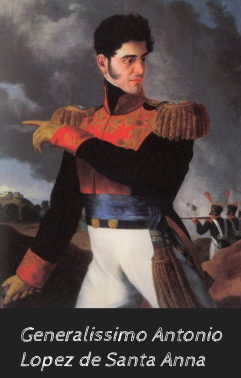
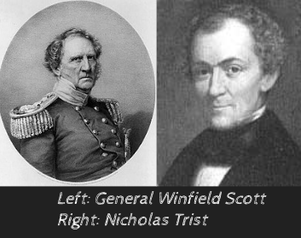
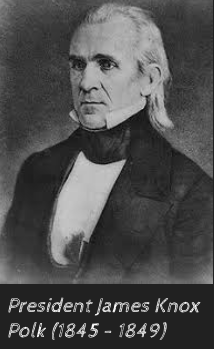
     Unbeknownst to Polk and DC, General Winfield Scott and Nicholas Trist not only healed their rift, but they became close, developing an emotional bond so strong that it would last the rest of their lives. What helped form that bond was that they discovered that they both hated President Polk.  Trist wasn’t authorized to personally deliver the sealed packet to the Mexican government (Scott was the one authorized), but Trist wanted the Mexican government to receive the packet much sooner, so Trist asked a member of the British legation to deliver the packet on his behalf. Very soon after receiving the packet, Santa Ana called a “special session” to consider the US offer. 
     Scott and Trist actually offered Santa Anna a $1m bribe to end the war and to begin negotiations. Scott told his staff that bribes of that nature were how to deal with nations/governments such as Mexico. The bribe fell through when the Mexican legislature refused the give Santa Anna the necessary powers to negotiate with the US. As a result, Scott was forced to press the reality of war to the Mexican government, which meant he had to make his move on Mexico City.
Picture
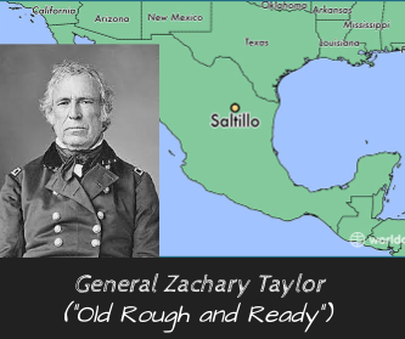
     In the Summer of 1847, Whig conventions burst forth with their support for Zachary Taylor to be the party’s candidate for President. All that mattered was that he was a war hero and therefore able to win votes for the Whigs in 1848. Few knew Taylor’s touchy/petulant side, as well as his lack of intellectual curiosity, ability, and imagination. Taylor released statements that sounded like he expected to go straight from the battlefield as a commander to the Presidency in a sort of political immaculate ascension, which proved to be a political blunder that slowed his momentum.
     The Whigs increasingly became more united on one front, in that no land should be taken from Mexico as a result of the war. The tactic was brilliant in a way, sidestepping the Wilmot Proviso while at the same time putting pressure on the Democrats. It was about at that time that Buchanan informed Polk that the US no longer had any more money to fund the war. An absolutely mystified/upset Polk ordered an investigation as to where the money went. It was soon discovered that $2m went to New Orleans brokers, who kept $1.1m of the money as a “handling fee”; although the money was distributed to far too many people/groups, it turned out that most of the money was still disbursed to the military.
Picture
     In August 1847, Scott inflicted a series of defeats on Santa Anna, culminating with what would be his greatest military humiliation in Mexico City. On 20 August 1847, a broken and desperate Santa Anna convinced the Mexican government to negotiate a truce with Scott in order to shore up his defenses, and to also plan shenanigans. When approached by a Mexican official, Scott and Trist agreed to the proposed truce. Scott went further, ending Santa Anna an offer of armistice. Even though the war at that point was unwinnable, Santa Anna broke the truce by building fortifications for his troops, while also blocking the US from obtaining supplies from Mexico City. 
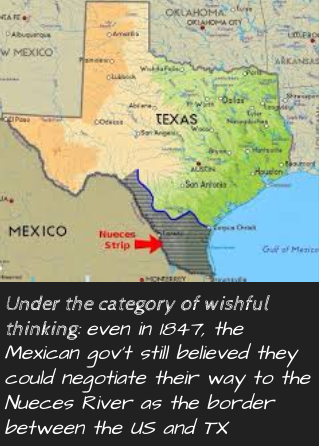
     On 7 September 1847, Scott ended the truce while Trist was working the diplomatic angle. Mexico remained firm on the Nueces River being the border between Texas and Mexico, and refused to sign anything that labeled them as a nation that had lost a war. Trist discovered that US military victories had only strengthened the resolve/resistance of the Mexican government. In principle, Trist agreed to a Nueces/Rio Grande mutual boundary area, and sent the proposal to DC. In short, Trist was tried to negotiate and end to what he considered to be a war started by Polk. On 4 October 1847, Polk instructed Buchanan to recall Trist.

Picture
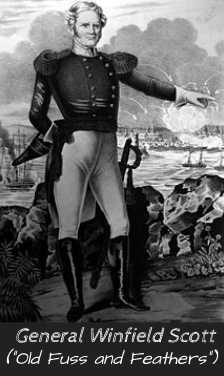
     By mid-September 1847, Scott had taken Mexico City and raised the US Flag in the National Palace. The only way to enter Mexico City was by the causeways (highways), and while Santa Anna had the roads defended, US artillery was able to scatter the resistance. Most of the casualties in the Mexican War occurred during Scott’s assault on Mexico City. For example, taking Molina del Ray, a foundry rumored to have Mexican artillery and shells, led to 116 KIA and 665 WIA, and in the end, there was no Mexican artillery . . . the high-cost battle was tactically worthless. 
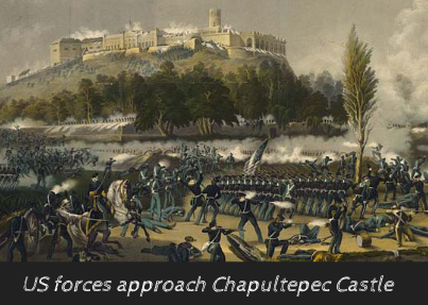
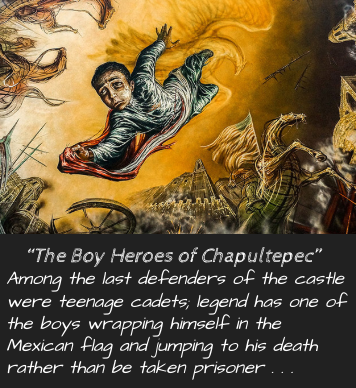
     Scott was then inclined to hit Chapultepec Castle and the two major western causeways. Scott’s officer cadre wanted to advance from the three southern causeways, but Scott refused. Although the fighting was intense, it only took two hours to take Chapultepec and to secure the surrounding area. In the process, Santa Anna lost four times more than Scott, and by the end of the day, Scott had the southwest and northwest causeways that entered Mexico City. As Mexican resistance faded away, Santa Anna and his remaining force skulked out of Mexico City that night. 
     In the end, Scott was brilliant in his assault on Mexico City. With only 11,000 troops and cut off from supplies, he defeated 30k Mexican soldiers that were well-entrenched; it was a remarkable military achievement, and Scott became the second great hero of the war. Scott’s vainglorious behavior increased due to his victory, and among the generals on his staff, Major General Gideon Pillow did his best to undermine Scott’s reputation by constantly writing Polk (e.g. telling the President that the US took Mexico City in spite of Scott).
Picture
    Pillow developed delusions of grandeur since he had powerful backers in DC, and he greatly exaggerated his role in the Mexico City campaign. Pillow kept cooling himself out of business with his fellow officers, even going so far as to keep a Mexican artillery piece as a souvenir, and he was caught. Pillow demanded a court-martial, which was a mistake in that the truth came out that he was a general that moved too slowly and wasn’t a team player . . . such was the drama of the US Army Officer Corps at the close of the war.
     Polk started to think of increasing the US military strength in Mexico City and wait for Mexico to “cry uncle”. On 13 November 1847, Henry Clay came back to the forefront with a speech in Lexington (KY) where he tried to unify the anti-war and anti-slavery blocs. Clay took a formal stand in favor of the Wilmot Proviso, which had been at least informally adopted on the Whig platform. While the speech helped the Whigs, it didn’t help Clay with the Whigs, who were still in love with Taylor. Polk focused on ending the war and keeping his pledge to only serve a single term; by then, Polk wanted out, in large part because the new House would be under the control of the Whigs.
Picture
  Trist was dealing with far more moderate politicians in the Mexican government that were willing to negotiate when Trist received his recall notice from DC, as well as instructions to immediately stop negotiations. Trist ignored both instructions since he was finally making serious progress. Interestingly, Trist held no official diplomatic authority at that point, but the Mexican government either didn’t know or care about Trist’s new standing. 
     Trist believed that if he could make “The Deal” while openly defying Polk and DC, then he would be the one awash in glory. Trist knew that Polk as getting desperate in terms of ending the war, and US military forces in Mexico could very well increase as a result. On 4 December 1847 after talking to a newspaperman, Trist decided to “make the treaty”. On 7 December 1847, the 30th Congress convened, and Polk’s political standing and influence eroded further with the new Whig majority. Also, without knowing it, Polk would also lose unity in his Cabinet and cede authority for ending the war . . . the only thing Polk would control was how hard he worked (the “Martyrdom of Duty”).
Picture
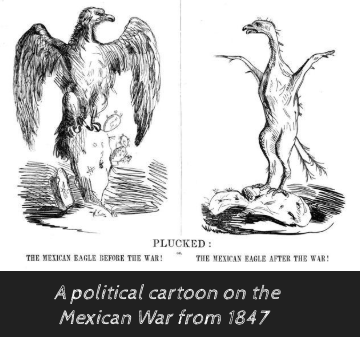
    Polk’s position was that a cession was required as a de facto indemnity from Mexico (read “war reparations”). In Polk’s eyes, that cession would legalize and justify the Mexican War. Polk made it very simple: no cession = no indemnity = the war wasn’t legal. As far as Polk knew, Mexico wasn’t negotiating, and he would have to intensify the military pressure on that government. Polk, the ultimate chessmaster, knew that if the US didn’t take California and New Mexico (which Mexico was unable to govern anyway), then Britain could fill that void, which would create a whole other major crisis. Opposition to Polk’s way of thinking was swift and furious, and the new debate centered around how much of Mexico the US should take. Some in the Cabinet thought the US should take all of Mexico (Polk definitely leaned towards that way of thinking). 
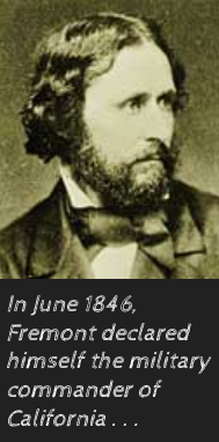
     In November 1847, General Zachary Taylor asked for and received a six month leave of absence. When Taylor entered New Orleans in December 1847, it was in a political, not a military, posture. On 2 February 1848, Polk received word that the troublesome (to Polk) John C. Fremont had been dismissed from the military due largely to his actions in California. The President was soon asked to show clemency towards “The Pathfinder”, and Polk, unhappy that the whole affair had been dumped on his lap, decided to restore Fremont to active duty. Fremont refused to accept Polk’s offer of remitting the court-martial’s sentence, believing that he never should have been charged in the first place. The immediate political result of the Fremont business was that Benton became a 100% Polk opponent (Benton even refused to make eye contact with the President), but Polk found himself on friendly terms with Henry Clay.
0 Comments

James Knox Polk and the Mexican War, Part Three

11/17/2019

0 Comments

 
  Source: Robert W. Merry. A Country of Vast Designs - James K. Polk,
                     the Mexican War, and the Conquest of the American Continent (2009)
Picture
     Nicholas Trist worked hard to forge a treaty that was loyal and consistent to Polk’s outline from April 1847. Trist was firm on getting Upper California with San Diego; with Scott’s assistance, he was able to use the US Army Corps of Engineers (commanded by Robert E. Lee) to prove that San Diego was indeed in Upper CA. By January 1848, Trist had a treaty that was ready for consideration by the Mexican government. Trist increased the pressure on Mexico by telling them that they needed to act quickly before President Polk replaced General Scott. Trist also reminded the Mexican government that he could be forced to leave Mexico at any moment. 
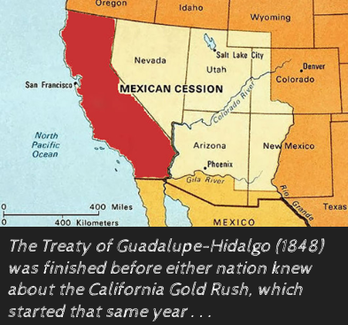
     Mexico agreed to all of the terms in the draft treaty, including $15m from the US for CA and NM. The Treaty of Guadalupe-Hidalgo was signed on 2 February 1848 by Trist and the relevant parties in the Mexican government. Trist wanted immediate approval from DC to not only end the whole process, but to also limit the level of humiliation for Mexico. When Polk received the treaty, he didn’t react with outrage towards Trist, but rather in a realistic fashion. Polk spent time with the treaty, making sure he was totally familiar with it and that it was acceptable, and then the President sent the treaty to the Senate for ratification.

Picture
     Polk would have loved to take more territory since the war lasted much longer than he envisioned. Polk wanted Mexico to pay a price for it intransigence, but realism again took hold of the President. Polk knew that if he rejected the terms of the treaty and continued to prosecute the war, the opposition to the war would drastically worsen. Basically, Polk decided he couldn’t reject the terms he outlined in April 1847 to Nicholas Trist. Most Americans believed that the treaty needed to be ratified to, if nothing else, avoid a greater national evil. 
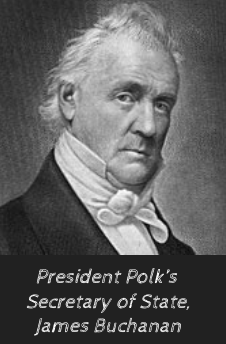
     The Senate needed to ratify the treaty by a 2/3’s majority, which meant that twenty Senators could kill the treaty (39 - 19 would ratify). Polk was stunned to find out from the Senate Foreign Relations Committee that it wanted to renegotiate with Mexico along the same terms, but with someone other than Trist as the US diplomat. Polk was also beyond-stunned to discover that his own Secretary of State, James Buchanan, had been actively working in opposition to not only the treaty, but also in whispering campaigns against Polk in newspapers (Buchanan was trying to position himself for a run for the Presidency in 1848). 
     The pressure on Polk was immense, and he knew that his historical legacy was on the line. On 10 March 1848, Polk was informed that the treaty had been ratified in the Senate by a vote of 38 -14, with six Senators abstaining. Polk rushed the document to Mexico with a promise to send a new US envoy that would, unlike Trist, have full plenipotentiary powers.


Picture
   On 4 May 1848, a bedraggled and nearly forgotten (in the public eye) Nicholas Trist reached New Orleans. Polk refused to pay Trist from the day he had been ordered to leave Mexico; interestingly, in Mexico Trist was seen as a man of high esteem and good character. On 1 May 1848, Genera Scott left Veracruz and reached his home in New Jersey on 20 May 1848. Scott was actually facing a Court of Inquiry which would resume on 5 June 1848 in Maryland (much of the scurrilous hoo-haw was due to Major General Pillow).
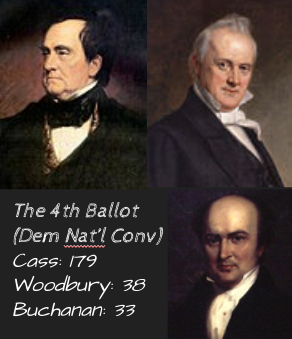
     Taylor let it be known that if he wasn’t the Whig nominee, we would run for President as an independent candidate in order to force the Presidential election in the Electoral College to the House of Representatives. On his end, Polk made it very clear to Democrats that were planning the 1848 convention that he was out of the running for the nomination. On 22 May 1848, the  Democratic National Convention started in Baltimore. A super-majority of 2/3’s of the delegates was voted on in order to nominate the party’s candidate, this time without any rancor or controversy as had occurred in previous conventions. Rival Democrats from New York, the “Hunkers” vs. the “Barnburners”, made the expansion of slavery a big issue in the convention. Three serious candidates emerged: Lewis Cass, James Buchanan, and Levi Woodbury (an associate Supreme Court justice). The results of the 1st ballot were Cass 125, Buchanan 55, and Woodbury 53; Cass would win the nomination on the 4th ballot.

Picture
    To the Southern Democrats, Cass (from Michigan) was not supportive enough of the expansion of slavery, and to the growing number of Abolitionists, Cass wasn’t aggressive enough in his opposition to the expansion of slavery. During the convention, Cass pondered if Popular Sovereignty (white citizens in the actual territory decide whether or not to have slavery) just might be the cure for the debate concerning the expansion of slavery
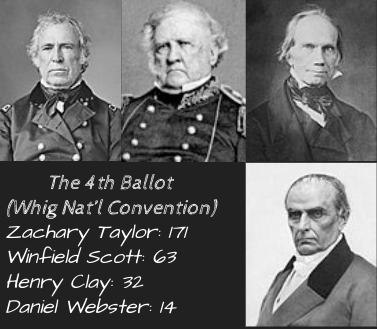
     On 7 June 1848, the Whig National Convention started in Philadelphia. Conventional wisdom had the 71 year old Henry Clay getting the nomination over Zachary Taylor. The result of the 1st ballot was Taylor 114, Clay 97, and like Cass for the Democrats, Taylor captured the Whig nomination on the 4th ballot. Taylor’s nomination blurred the line between Whig and Democrat, which basically helped his overall electability as far as the Whigs were concerned. 
     The Senate ratified the treaty that was delivered from the Mexican government on 10 June 1848. By that point, Polk’s health had seriously declined due to the physical and psychological toll of US losses in the war. Polk was a politically diminished President, and there was nothing pressing for him to accomplish during his last eight months in office, other than finishing what he considered necessary concerning the war. Polk had no sense of proportion by that time, and little irritations vexed him greatly, which diminished his standing even further. 

Picture
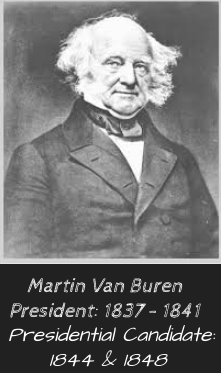
     On 4 July 1848, Polk presided over the cornerstone being laid for the Washington Monument​. A helpless Polk watched Congress move at a snail’s pace to approve territorial governments in the Mexican Cession due to the slavery debate. The Barnburners, headed by former President Martin Van Buren, created the Free Soil Party as a political home for anti-slavery Democrats and Whigs. MVB had to do some serious “spinning” in order to justify his current Abolitionist views compared to his views on slavery when he served in Jackson’s administration. MVB and the Free Soil Party simply wanted to destroy the existing political order using their moral opposition/outrage against slavery. 
     During August 1848, Polk signed a territory bill for Oregon that did not feature slavery, using the 36/30 line from the Missouri Compromise as justification. A few months later, Polk was very upset that Taylor won the Election of 1848 over Lewis Cass, which meant to the outgoing President that the Polk Era would be reversed. Due to the calendar, 4 March 1849 was Polk’s last full day in office, and he had hoped that he would be presented the territorial bills to sign for California and New Mexico. However, the debate in the Senate over the territorial bills went into the wee hours of 5 March 1849, and Polk was very frustrated that he was not allowed the honor of sealing the deal on the Mexican War. 
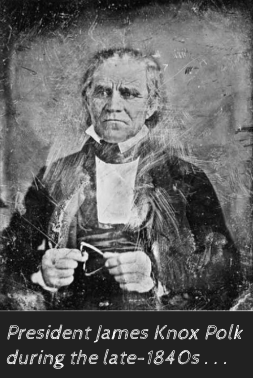
       Zachary Taylor was inaugurated as the 12th President on 5 March 1849, and the Kentuckian didn’t say anything about the slavery debate in his Inaugural Address. The Polks left DC on 6 March 1849 for New Orleans, and then went up the Mississippi River to Tennessee, and then east to Nashville. Polk’s health deteriorated on the trip home with among other ailments diarrhea and severe fatigue. Polk, with fatalist stoicism, accepted his looming death and was baptized and embraced Christianity for the first time. On 5 June 1849, James Knox Polk died in his sleep at the age of 53. 

Picture
   No President in US History had a wider chasm between accomplishments and popular recognition (with the possible exception of Jimmy Carter); the main reason was the heated debate on the expansion of slavery. Critics of John Adams, Thomas Jefferson, Theodore Roosevelt, and Franklin Roosevelt have had almost no effect on their historical legacies as President, but those critics still negatively affect Polk’s legacy. There were three charges from that era that are especially remembered; first was the assertion of the Whigs that Polk usurped authority to wage an unnecessary war. Second was the statement made famous years later from Ulysses S. Grant (who served as a 2nd Lt. in the Mexican War) that the Mexican War was an unjust war. Third were the attacks from a freshman representative from Illinois, Abraham Lincoln, against Polk and the war. 
    To today’s sensibilities, the Mexican War was not a war defending human rights, but a nationalist war, and Polk is the main villain. However, ignored in all the anti-Polk focus was that the government and military of Mexico royally screwed up in virtually every phase of the war, from beginning-to-end, due to excessive pride/honor. Mexico’s actions with Texas after 1836, especially concerning annexation, were simply and purely tempting fate. Mexico fired the first shots and inflicted the first casualties of the Mexican War, which brought about Polk’s wrath. Added to the mix were voluminous reports beforehand of abuses towards US citizens in Mexico, leading to demands of indemnity, which leads to the question of how much was the US to take from Mexico in that regard. Also conveniently ignored is that Polk (the Chessmaster) was probably the only politician at that time that as President was able to bring the US vision/goal of westward expansion to reality; no other President before Polk had accomplished so much in a single term

0 Comments

James Knox Polk and the Mexican War, Part One

11/17/2019

0 Comments

 
      Source: Robert W. Merry. A Country of Vast Designs - James K. Polk,
                    the Mexican War, and the Conquest of the American Continent (2009)

Picture
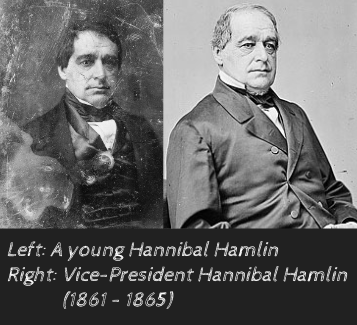
      On 4 January 1847, President James Knox Polk was informed that the Wilmot Proviso was introduced in the House of Representatives, and that Hannibal Hamlin (ME) was organizing opposition to the “10,000 Regiment Bill”. Unlike the Lt. General bill that was pending in Congress, the 10k Regiment Bill plus the reintroduction of the $2m war funding bill was far more crucial to Polk, in that both were necessary to take the war to the interior of Mexico (especially to Mexico City). 
  Polk’s falling political standing in Congress was mostly due to his lack of leadership skills. Unlike Jackson, Polk was not able to inspire loyalty or fear. Polk couldn’t manipulate men and votes like Henry Clay, and he offered no political incentives, threats, or punishments. Therefore, more-and-more in Congress and DC not only ignored Polk’s wishes, but attacked him in public. And those frontal assaults in essence started with his own Secretary of State, James Buchanan, and soon word was out that Polk was an easy mark.
  However, Polk had legendary perseverance, which his political enemies vastly underestimated. Polk’s problems multiplied when General Taylor proved to be uncooperative and uncommunicative in northern Mexico. By this early stage in the war, a very touchy and sensitive Taylor already felt unappreciated and victimized. Also, General Winfield Scott (Taylor’s superior) had leaked the plans of the attack on Veracruz to the press, mostly out of vanity. So, Polk not only had problems in Congress in terms of authorizing and funding more soldiers, but his two highest-ranking generals were high-maintenance divas. And then to complicate things further, news came from New Orleans that Santa Ana was moving an army towards Taylor.

Picture
   On 11 January 1847, the House easily passed the 10x Regiment Bill, but it became stalled in the Senate. On 27 January 1847, the Senate finally passed a “Loan Bill” for Polk’s signature (remember, there was no National Bank), and then on 30 January 1847 the Senate passed the 10x Regiment Bill by a vote of 39 - 3, after which it was sent back to the House so that chamber could consider the Senate’s amendments to the bill. All of this had taken far too long to accomplish as far as Polk was concerned.
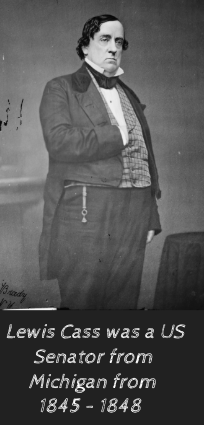
     On 5 February 1847, debate started in the Senate on what was now called the “$3m Bill”. On 8 February 1847, Lewis Cass
informed Polk that the Senate had rejected the 10x Regiment Bill conference committee report in that many Whigs had joined Democrats that supported John C. Calhoun in opposition. However, Polk’s supporters worked the 10x Regiment Bill through the next conference committee,, after which the bill was finally passed in the Senate. After the long delays in Congress, Polk finally had the ability to go inland in Mexico with US forces.

     On 9 February 1847, Calhoun rose in the Senate and argued that the military should only take and hold what was already being called the New Mexico Territory and California. Calhoun’s rationale was that by doing so, Mexico would be forced to attack what we already possessed, which would be a quicker/better path to wrapping up the war and negotiating a favorable peace. Therefore, Calhoun was very much opposed to any military landing at Veracruz; in essence, Calhoun claimed that he knew how to fight the war better than Polk.

Picture
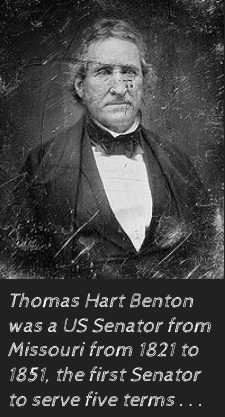
      Thomas Hart Benton then stood and accused Calhoun of actually starting the Mexican War. Calhoun was President Monroe’s SecWar during the acquisition of Spanish Florida in 1819, and was an avid and vocal supporter of the annexation of Texas as President Tyler’s SecState. Calhoun’s letter coveting Texas as a future slave state further polarized the debate on the expansion of slavery in the mid-1840s. Calhoun’s rebuttal to Benton’s charges were forced, defensive, and ineffective; Benton’s attack had hit home. 
     During the last 24 hours of the lame-duck session of Congress, the $3m Bill was passed without the Wilmot Proviso by a vote of 115 - 81 in the House; Wilmot had tried to pass his proviso separately, which was in direct opposition to his promise to Polk, but it failed by five votes. One of the results of the military and funding bills being passed by Congress was that Polk now had the ability to organize to regiments and to appoint new generals, including three major generals and two brigadier generals (but no #1 Lieutenant General, since that bill was still stalled). But Congress had failed to provide any measures for additional ( and future) revenue to pay for the war (again, the US didn’t have a National Bank). For the time being, however, Polk could concentrate on being Commander-in-Chief of the armed forces as President.

Picture
      When news traveled slowly and came in fragments, tremendous suspense resulted. During March 1847, news hit DC that Taylor had suffered a terrible defeat at the hands of Santa Anna at Saltillo (a.k.a. Buena Vista). Polk understood that, if the report was true, Taylor’s defeat could very well do in his Presidency. Taylor was supposed to remain at Monterrey, but on his own volition he decided to go south to Saltillo, which did not feature nearly as much, or as high, quality defensive positions. 
     On the second day of the battle at Saltillo, Santa Anna had flanked Taylor, and was ready to close out the engagement. At great cost, Taylor repulsed Santa Anna from flanking him on his left by using bold attacks and artillery. That night, Sanata Anna realized he no longer had his advantage and retreated from the field. In effect, Saltillo was the Iwo Jima of the Mexican War, in that there was no strategic justification for Taylor to even be in that position, and the cost of victory was great. Taylor’s army suffered 665 casualties (WIA/KIA) out of a total of 4594 soldiers, which was a casualty percentage of 14.5% . . . and, Santa Anna’s army was still intact and mobile.

Picture
    Once more news concerning Saltillo became known (especially Santa Anna’s retreat), Taylor was celebrated as an American military hero, and the Whigs contemplated him as their Presidential candidate in 1848. Polk saw Taylor’s “victory” in a different light, since it in no way would it shorten the war. One of the KIA at Saltillo was Henry Clay, Jr, who was wounded and lying on the ground when he was bayoneted to death. Clay was almost 70 years old, had lost many family members, and hadn’t achieved the Presidency that he had truly coveted . . . and to lose his son in a war started by a protege of Andrew Jackson was a personal and political dagger to his heart. 
     By March 1847, the Abolitionist movement had reached a level of numbers and influence where Calhoun organized a Southern backlash . . . it was the birth of the Southern Democrats. Polk had no patience for either the Abolitionists or the Southern Democrats, seeing both as unpatriotic. On 9 March 1847, General Scott’s force landed 12,000 men three miles south of Veracruz without much opposition. Very soon thereafter, Veracruz and its fortress surrendered to Scott and US Naval forces. Scott shelled the city and castle fortress for three days until the Mexican commander had to quit fighting.

Picture
     Polk needed a diplomatic envoy to accompany Scott on his way to Mexico City. SecState Buchanan suggested Nicholas Trist who was his chief clerk in the State Department and was experienced and talented. Polk decided that Trist would be the envoy unless Mexico specifically asked for Buchanan (and for what it was worth, the Cabinet agreed). Trist married Thomas Jefferson’s granddaughter, and he even helped take care of Jefferson to the end of the former President’s life. Trist befriended Andrew Jackson Donelson at West Point, and soon became part of President Jackson’s Circle of Trust. 
     Trist succeeded Donelson as Jackson’s private secretary (kind of like today’s Chief of Staff), and that was when Trist in particular became politically connected. From 1833 - 1841, Trist was US Consul in Havana, but his career trajectory turned downward after the death of President William Henry Harrison in 1841 when Tyler’s Whigs had the votes to remove him from the post. Soon thereafter, Trist attached his star to James Buchanan, and he became one of Buchanan’s most trusted men. One of Trist’s character traits was similar to Jefferson and Madison, in that he believed that Virginians were naturally superior to all other Americans; that level of certitude would come into play soon enough. Trist was empowered to spend up to $30m for the Rio Grande and what would become the Mexican Cession. The generals in Mexico were ordered to stop all hostilities if Trist succeeded in his negotiations.

Picture
     During May 1847, Scott defeated Santa Anna at Cerro Gordo, despite Santa Ana’s superior defensive position. Santa Ana escaped by mule and left behind 3000 soldiers and $6000 in payroll. Initially, Scott and Trist didn’t get along at all, and Polk didn’t know what to do about the two vain glory-hunters. It sour relationship started when Trist arrived in Mexico but did not personally present himself to Scott w/ the proper decorum. Instead Trist sent some important documents ahead with a terse cover letter, which infuriated Scott.
     Scott communicated to Trist that there was no way he was subservient to a clerk from the State Dept. Scott also stated that he, not Trist, would be the one in charge of all the diplomacy with Mexico. Scott also wrote to DC and found a way to drag Polk into his vainglorious rants. Polk and the Cabinet wanted to replace Scott, but that was logistically a near-impossibility. Scott kept writing to DC, and it soon reached a point where he basically dared the President to remove him. While both Polk and the Cabinet believed that both Scott and Trist should be removed and disciplined, the war was at a crucial juncture, and dealing with the two divas could seriously disrupt the momentum the US currently had prosecuting the war.

0 Comments

John Adams vs. Thomas Jefferson & James Madison, Part Two

11/2/2019

0 Comments

 
  Source: Joseph J. Ellis. Founding Brothers - The Revolutionary Generation (2000)
Picture
     During Abigail’s absence (she was ill back in Quincy, MA), on 18 February 1799 Adams announced that he was sending another delegation to France, and he did so without consulting a single Federalist. Scuttlebutt in the newspapers was that Adams made the decision because Abigail wasn’t there to talk him out of it. That decision proved to be Adams’ greatest as President in that the delegation was able to end the quasi-war with France. In addition, Adams was the first to implement one of Washington’s main points from his Farewell Address. Also, Adams’ decision established a precedent of US isolationism from European wars that would last until WW I. But Adams’ unilateral (and historically correct) decision cost him politically, in that Adams alienated himself from almost all the Federalists since his decision was viewed as pro-French. 
   Adams sent the delegation for three reasons. The first reason
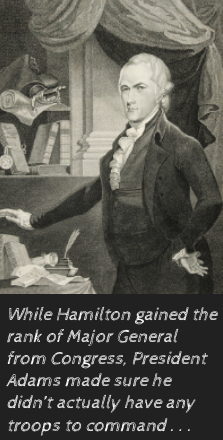
centered on Hamilton, who in 1798 pressed hard for the creation of a vastly expanded Provisional Army (“New Army”) of 10,000 - 30,000 men to be ready for war against France. Adams was more-than-fine with an expanded Navy, but he saw an expanded Army as dangerous, expensive, and utterly unnecessary/useless against France. Adams came to realize that Hamilton was trying to become an American Caesar with the New Army, with the ultimate goal of installing himself as a military dictator. So, if there was no war with France, there would be no need for the New Army, which would then de-fang Hamilton. Secondly, JQA had even more intelligence than Gerry, telling his father that Talleyrand himself was eager for peace with the US, which meant that the peace delegation would ultimately be successful. Thirdly, Adams found great personal satisfaction in succeeding in the face of what both rival parties wanted, and that his decision must have been the right one since both parties railed against his action. Like President Jimmy Carter, Adams valued long-term national interest over short-term politics.

Picture
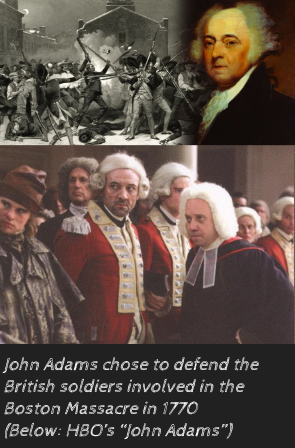
     It wasn’t the first time that Adams had run counter to what was expected of him . . . don’t forget that Adams decided to serve as the defense attorney for the British soldiers after the Boston Massacre in 1770, and that Adams had insisted on independence a full year before others came around. At his core, Adams was an iconoclastic contrarian who relished alienation (JQA and Henry Adams, his great-grandson, exhibited the same traits). In sending the delegation to France, Adams had basically declared himself to be politically independent from both parties. 
     Where Adams saw problems that needed to be solved for the good of the nation, Jefferson and Madison saw opportunities to advance the Republican cause at the expense of the Federalists, a political party that they believed was the enemy to the principles of the Revolution. To Jefferson and Madison, it was a Zero Sum Game, in that if the Republicans gained, the Federalists lost. Even though Adams alienated himself from the Federalists, Jefferson and Madison targeted Adams in the Republican newspapers nonetheless. Jefferson and Madison had talked themselves into believing that Adams actually wanted war with France, and they also believed that Adams had fabricated the entire XYZ Affair in order to mobilize public opinion for war (Interestingly, Jefferson knew better, since he knew that Washington had endorsed Adams’ decision, but he went along with Madison). Adams did his best to isolate himself from the ideological warfare between the two parties, while Jefferson and Madison focused on building momentum at the expense of Adams and the Federalists for the Election of 1800.

Picture
     In Jefferson’s mind, he was taking the high road, but he contracted James Callender to be his pit bull publisher to go after Adams and the Federalists in 1798 (which made it easier for Adams to sign the Alien and Sedition Acts). Jefferson complained that the debate over the Alien and Sedition bills was aimed directly at him; he admitted to Madison that he had passed information to the French government via a pro-French Republican. That being said, Jefferson truly felt that he was in the right, in that the Alien and Sedition Acts and the New Army were Federalists power grabs that violated the tenets of the Revolution.  By today’s standards, Jefferson’s actions in giving information to the French would be an impeachable offense, but Hamilton was guilty of similar actions before/during the negotiations on the Jay Treaty with Great Britain (and Hamilton’s shenanigans with Adams’ Cabinet would have landed him in jail today). During the mid-to-late-1790s, there was no political center because that center simply didn’t exist. 
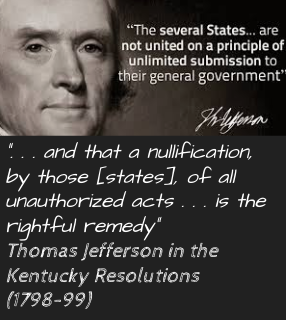
    The capstone of Jefferson’s and Madison’s opposition to the Federalists were the
Kentucky and Virginia Resolutions of 1798 - 1799. Jefferson visited Madison at Montpelier on 2 & 3 July 1798 in order to discuss strategy. The Alien and Sedition Acts passed on 4 July 1798; to the Federalists, it was the perfect day-and-way to celebrate the nation’s independence. During August/September 1798, Jefferson worked alone at Monticello in order to write the Kentucky Resolutions (in effect, Jefferson was a ghostwriter using the Kentucky state legislature as his publisher). Jefferson took what would become the classic states’ rights position, arguing that a state had the right to interpret, and then if desired, nullify an Act of Congress (and if ultimately necessary . . . secede). Fortunately for Jefferson, the Kentucky state legislature removed the passages concerning overt nullification and secession, in that such open defiance of federal authority was deemed too risky given the current political landscape.

Picture
     Madison’s more judicious Virginia Resolutions claimed that the Alien and Sedition Acts violated the 1st Amendment. Madison went on to argue that the federal courts, not the states, were the ultimate arbiters of the Constitution. Jefferson’s arguments became the core gospel of the Confederacy in 1861, whereas Madison’s arguments trended towards judicial review. After a personal visit from Madison in September 1799, Jefferson softened his stand on secession, once again deferring to Madison’s judgment. Madison’s intervention may have saved Jefferson’s political future while also concealing a large difference in their interpretations of the Constitution relative to states’ rights. 
     The desire to project a unified Republican front against the Federalists trumped any differences Jefferson and Madison had over the question of where sovereignty should be located in the new republic. Jefferson and Madison had the extra advantage in that they didn’t have to do too much to tear down the Federalists, since the Federalists were doing a nice job of going down the road to ruin enforcing the Alien and Sedition Acts. Had the Election of 1800 in the Electoral College occurred a week or two later, Adams may have defeated Jefferson in that the news of the treaty that ended the quasi-war with France arrived after the election, and too late to help Adams. 

Picture
     The expense of the New Army strained the federal budget to the point where the federal government needed new revenue, which meant that the cost of raising the New Army would be the responsibility of the voting public, but that revelation came too late to help Adams as well. Adams didn’t receive the political rewards that he deserved, and he took the blame for things that had been initiated/done by others. When Napoleon took power in France in 1799, Jefferson flipped his view on France on a dime, and went down the same path of neutrality as Washington and Adams had done. 
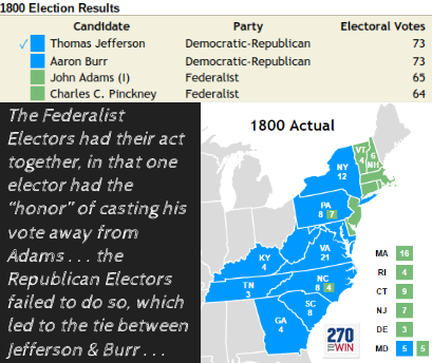
 In the end, the maneuverings/shenanigans of Aaron Burr in New York that gave Jefferson 12 Electoral Votes proved to be the difference in the Election of 1800 (Jefferson 73; Adams 65). Too late to have made a difference in the election as Hamilton’s 54 page diatribe against Adams in a pamphlet (Hamilton saw Adams as the villain that denied him glory as an American Caesar). Hamilton showed the deep divisions within the Federalists, and that he was out of his mind; writing that pamphlet was just as reckless as deciding to face Burr in The Duel.
     Jefferson saw his victory as a recovery (renewal) of the principles of the Revolutionary War. It turned out that Adams had it wrong, in that he could have separated the long-term collective national interest from partisan politics if he had chosen to do so, which in effect lost him re-election. Now that Jefferson was President, he no could no longer claim to be above the (political) fray. Meanwhile, Adams had to move to the new Presidential mansion in the new capital while the House of Representatives tried to sort out the tie in the Electoral College
between Jefferson and Burr (each received 73 Electoral Votes). Adams and Jefferson didn’t exchange another word for twelve years . . .

0 Comments

John Adams vs. Thomas Jefferson & James Madison, Part One

11/2/2019

0 Comments

 
  Source: Joseph J. Ellis. Founding Brothers - The Revolutionary Generation (2000)
Picture
     As the Election of 1796 approached, to the Electors in the Electoral College the real meaningful difference between the major candidates were their Revolutionary War credentials. In other words, the main qualification for the Presidency was the candidate’s historic role in the Revolution. Only the 30 or so that stepped forward at the national level for the good of the fledgling nation were eligible to be President. But by 1796, two clear front runners had emerged from the 30+, John Adams and Thomas Jefferson. 
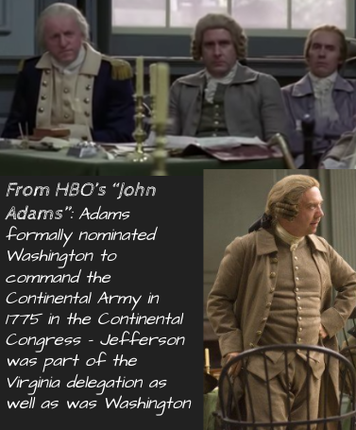
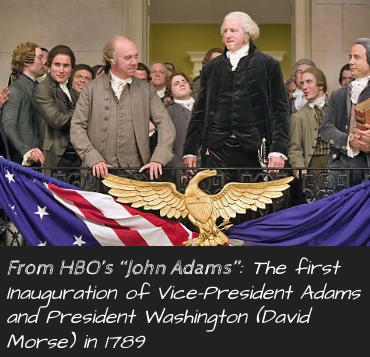
     By 1796, Adams and Jefferson were political rivals, but they earned their impeccable credentials concerning the Revolution together. Choosing between the two was like trying to select the head or the heart of the Revolution. Adams became active in Boston during the Stamp Act in 1765, and soon he was a constant opponent of British policies in the Colonies, especially by 1774 with the Intolerable Acts. Despite his tremendous contributions, Adams’ reputation fell in large part because he was the first Vice-President, which proved to be a meaningless elected post. Adams deeply resented being marooned and muted in the Senate, and President Washington rarely consulted his Vice-President.

Picture
     Adding to the troubles of Adams was that based on the essays he published as VP, his support for a strong Executive was taken by many as support for a monarchy in the US, which was a misunderstanding to be sure, but the way Adams worded his essays left him open to such attacks. It was then, if not before, that the friendship of Adams and Jefferson became seriously stressed, which could be seen in their correspondence. Jefferson believed that Adams had been inadvertently taken in by the Federalist monarchists. Jefferson and Adams remained cordial during Washington’s first term, in large part because Vice-President Adams was muted and Secretary of State Jefferson was part of Washington’s Cabinet. 
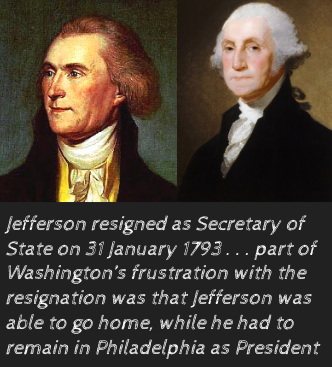
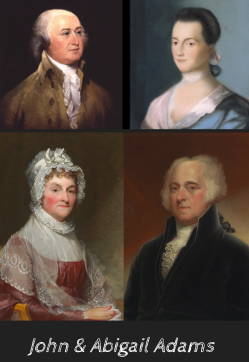
     It was Jefferson’s over-the-top support of the French Revolution that did it for Adams, who though it was lunacy that anyone could see similarities between the American and French Revolutions. Adams began to describe Jefferson as a “dangerous dreamer” and a man “poisoned by ambition”. By the time Washington accepted Jefferson’s resignation as SecState on 1 January 1794, only a remnant remained of Jefferson’s and Adams’ friendship. By the mid-1790s, Jefferson and Madison had become the Republican dynamic duo, and the only true confidant Adams had was his wife Abigail.

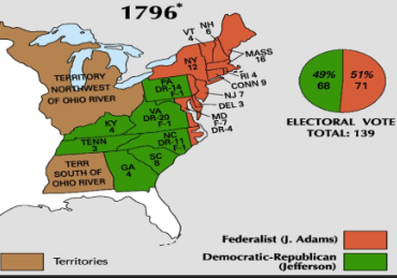
     To Adams, being the second President was his ‘Revolutionary Right” that he had earned not only by his many years of distinguished service before/during/after the Revolutionary War, but also for languishing for eight years as Vice-President. In March and April 1796, John and Abigail Adams did the Electoral College math state-by-state; Adams predicted a very tight election, even a tie. Abigail still believed that Jefferson as VP would work out okay with her husband as President. After many nervous moments and many temper tantrums, Adams found out that he had prevailed over Jefferson 71 - 68 in the Electoral College (two months prior, Jefferson told Madison that he would lose by 3 Electoral Votes).

Picture
     Adams and Jefferson were back together, this time as President and Vice-President, but they had incompatible political ideals and strategies. Adams wanted to bring Jefferson into his Circle of Trust where Adams would treat Jefferson as Washington should have treated VP Adams. But trust from Jefferson was no longer on the table in that as early as 1793 Jefferson and Adams had been on opposite sides politically with foreign policy.  A major difference between Adams and Jefferson was that Adams, when push-came-to-shove, was far more willing to negotiate/compromise than Jefferson, who by 1797 had become ideologically rigid (a luxury he would not be able to maintain once he became President). 
     Adams wanted to collaborate with Jefferson, but the Federalists did not want Jefferson in any way on the inside. Jefferson’s first instinct was to accept Adams’ proposal, but Madison would have none of it. Madison threw the gauntlet at Jefferson’s feet, saying he needed to decide on renewing his friendship with Adams or advancing the prospects of the Republicans. Madison made it clear to Jefferson that in no way should he be drawn into the decisions of Adams’ Presidency in that he could hurt the Republicans. Jefferson almost always took Madison’s advice when it was given, but he told Madison that there would be a cost, which would be his dealings with President Adams (added to the mix was Jefferson’s absolute fear of personal confrontation). Adams made a political blunder, keeping Washington’s Cabinet from his second term intact after they had threatened to resign if the President had involved Jefferson in any way. Adams would have been much better off had he got rid of all of them, since not only were they still loyal to Washington, but they were in effect informants for Hamilton.

Picture
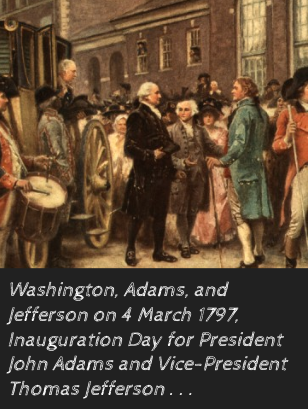
    On 6 March 1797, Adams and Jefferson dined with Washington at the Presidential mansion in Philadelphia. During that dinner, Adam learned that Jefferson would not be a part of his Cabinet and that Jefferson and Madison would not be part of the peace delegation to France.  On 13 March 1797, Adams was sworn in as President in the Senate (the “official” inauguration in those days), and immediately after the inaugural ceremony, Vice-President Jefferson departed for Monticello. Adams soon discovered that his only true political confidant was Abigail. 
     Looking back, it’s hard to find another Presidency more dominated by a single foreign policy problem while at the same time the nation was divided on how to solve it. Adams was the victim of inherited circumstances, as all Presidents have been, for better and for worse. The US was waging an undeclared war on the Atlantic and the Caribbean against French privateers, and Adams faced the dilemma of declaring war on France or go all-in to find a diplomatic solution. Adams opted to build up the US Navy for defensive reasons in case negotiations broke down with France, which was by far the wisest move, but that strategy depended on a normal government in France, and there simply wasn’t one. 
     The Directory was like the shifting sands of the desert, unable to form any kind of cohesion, direction, or consensus concerning the quasi-war with the US. Also, America was seen as only a minor distraction (Britain felt the same) and irrelevant. So the conditions for finding a workable solution to the quasi-war didn’t exist, and President Adams bore the cost. Making the problem worse was the raging ideological debate in America between the Federalists (pro-Britain) and the Republicans (pro-France), with each side viewing the other as traitors to the core principles of the nation as defined by the Revolution.

Picture
     Jefferson was very good at lamenting the chasm between former fellow Revolutionaries, and then doing his best to build walls from his side of the debate. The idea of legitimate political opposition didn’t exist in the late-1790s, and there wasn’t yet any vocabulary to describe the development of political parties as they were growing.  Adams’ Vice-President was the leader of the opposition party, and the President’s Cabinet was loyal to Hamilton (and the memory of Washington), and the emerging role/influence of public opinion was off the rails in the press in terms of attacking the other party and/or its members. The authority of the federal government was not yet formed, and the emerging political parties were too new and ill-formed/informed to effectively cope with the challenges of the new nation. 
     Adams ignored his Cabinet, and in effect Abigail became his one-person administration. Jefferson remained in Philadelphia as VP leading the Republicans while Madison was home at Montpelier. So Adams and Jefferson went their separate political ways with separate Circles of Trust. Adams had no prior experience as an Executive, never having served as a governor (as had Jefferson) or as a military leader. The idea that he should, as President, manage his Cabinet and factions in Congress never occurred to Adams, so he relied on his own judgment (as well as Abigail’s). 
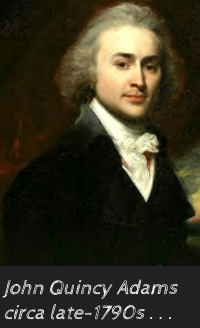
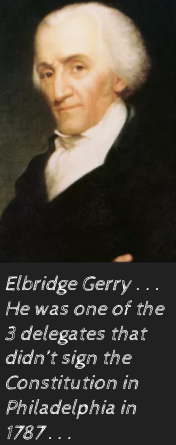
    One of Adams’ unilateral decisions was to include Elbridge Gerry on the delegation he was sending to France. By that point, Gerry saw the French Revolution in the same way as Jefferson, but even so, Adams saw Gerry as someone he could trust. plus he knew that Gerry could be bipartisan. Adams appointed his son, John Quincy Adams, to be the US Minister to Prussia despite the obvious nepotism (JQA was more than qualified for the post). In effect, Adams decided to serve as his own Secretary of State, and he wanted trusted men in Europe to let him know what was really going on with the negotiations with France.

Picture
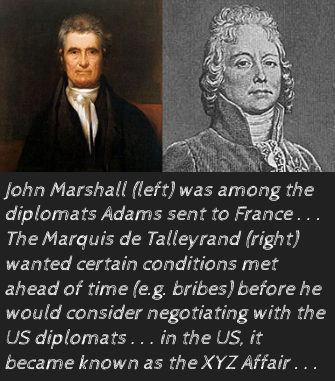
     Gerry informed Adams of the XYZ Affair, and Adams decided to keep it quiet/secret as long as possible in order to buy time in the face of increasing tensions between the US and France, as well as the increasing rhetoric/actions in the US. Gerry remained in Paris, and through him Adams found out that he needed to be patient with the mess that was the French government. Gerry also told Adams that the Marquis de Talleyrand’s shenanigans (e.g. demanding $$ for a bribe) were seen as a gross miscalculation. Gerry, JQA, and other trusted contacts in Europe also counseled patience with France, so Adams decided to hold out for peace in the face of very strong pressure from the pro-British Federalists (e.g. Hamilton) to declare war on France. 
     The Republican newspapers, controlled/influenced by Jefferson, savaged and vilified Adams, which in large part led  Adams (with Abigail’s blessing) to sign into law the Alien and Sedition Acts (1798), which was Adams’ biggest blunder as President. Adams went to his grave arguing that he signed those four bills into law very reluctantly under intense pressure from Federalist extremists, and that those laws never had his support once put into effect, which was all true enough. Moderate Federalists like
John Marshall urged Adams to not sign the bills; even Hamilton was lukewarm about the Sedition Act. It was perhaps the one time where Abigail led her husband astray in terms of political advice.

0 Comments

John Adams & Thomas Jefferson: A Renewed Friendship

11/2/2019

0 Comments

 
  Source: Joseph J. Ellis. Founding Brothers - The Revolutionary Generation (2000)
Picture
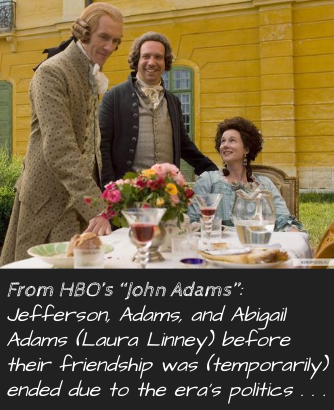
    From early-1801 to late-1810, John Adams was at his farm stewing and lamenting the elevated mythological status of seemingly every figure of the Revolutionary Era except for him. Adams was especially piqued over the star status that had been conveyed upon Thomas Jefferson, whom Adams saw as a junior partner during the Revolutionary War. Benjamin Rush, a close friend of Adams, exchanged many letters in the first decade of the century with the former President. Rush did his best to get Adams and Jefferson to renew their correspondence. Adams broke the silence with a short letter to Jefferson dated 1 January 1811; by then, Adams’ never-ending vanity was under enough control for him to reach out. That first letter by Adams led to 158 letters between the two men over the next 14 years; that correspondence renewed their friendship. 
     What motivated Adams to write that initial letter, and then write twice as many to Jefferson as Jefferson wrote to him? Adams believed that Jefferson’s version of what the Revolution meant, though misguided, would dominate history. Adams knew that his letters to Jefferson would afford him the ability to get his version on the historical record. Both men knew they were writing letters for posterity as well as to each other.  Second, Adams’ letters to Jefferson meant that he could join Jefferson as the co-star of the Revolution in a “Final Act”, which just might elevate Adams’ status/mythology and be his ticket to historical immortality. Adding to the historical luster of these letters was that both men died within five hours of each other on 4 July 1826 on the 50th anniversary of the young nation.

Picture
      Most of their letters were over safe subjects that both could write voluminously. Readers of the letters may be surprised that Adams held his own with Jefferson in terms of prose/style, in part because Adams was more heavily invested in the correspondence than Jefferson (Adams’ more aggressive exclamatory temperament also came through). One can almost visualize Jefferson, lean and standing tall waxing eloquent, while the shorter rotund Adams circled around him, pointing/gesturing and occasionally grabbing his friend by the lapels to make a point. During the first few years of their correspondence, Adams did fly off the handle somewhat, for example lamenting the overall downsizing of the US Navy before the War of 1812 under Jefferson’s watch. Jefferson was very shrewd in that in at least one letter he blamed the Hamiltonians for the rupture between the two men. In other letters, Jefferson hinted that it wasn’t the fault of Adams that he had been caught in the crossfire between the two political parties.  Jefferson knew, then and during their correspondence, that Adams was not a “real” Federalist; again and again, it was Jefferson that diffused Adams’ criticisms during their correspondence. ​
     In 1813, the letters changed tone, in that they became more focused on their competing versions of what the Revolution meant plus their historical legacies, and in the process, mutual trust between the two had been recovered, which opened up their dialog even further. On 15 July 1813, Abigail Adams attached a note of her own to her husband’s letter; it was the first time she had written Jefferson since she had really let him have it years prior. That attached note was the surest sign possible to Jefferson that he had been truly forgiven by both Adams. John Adams typically set the intellectual agenda for the correspondence, while Jefferson preferred to provide the larger framework for their debate to play out. Jefferson wrote that they had fought together against the British, served together in Europe as the dynamic duo of diplomats, then returned to serve their nation again in the new federal government. 


Picture
   Jefferson saw the world in terms of clashing dichotomies, and due to the correspondence, Adams found himself on the same side as Jefferson, which he knew would be historically appealing. To Jefferson, the Federalists had been the “New Tories in Town”, and Jefferson knew (and now appreciated) that Adams had stood up to the Federalists on his own volition. By 1813, Adams finally had a venue/target in which to focus his immense firepower in writing to Jefferson. For Jefferson, the episodic ramblings of Adams fit perfectly with his temperament during those years in that he loved to revisit topics in no particular order, which allowed for a thematic overview. 
     From 1813 into 1814, the running argument in their letters focused on their different definitions of social equality and the role of the Elites in running the federal government. Adams was all-in on the “few” not only having the power, but those “few” (Elites) were the only ones that were deserving and that could be trusted. Jefferson’s point of view was that the Elites have a leading role, but it should be based on merit, not inherited as in an aristocracy. Ironically during their estranged years, Adams, the son of a New England farmer/shoe maker had been accused of having aristocratic leanings by Jefferson, who owned 10,000 acres and 200+ slaves, most of which he inherited. In his letters, Adams was more than happy to include Jefferson as a member of what he called the “natural aristocracy” of the Revolution.

Picture
    Jefferson understood, where Adams did not, that the very word aristocracy was a four letter word in the US during/after the Revolutionary War in that to most it meant a violation of the war’s sacred principles. Jefferson also understood that the only Elites that would be tolerated by the people were those that repudiated aristocracy (Elitism) while claiming to speak for the masses. Jefferson and James Madison and the Republicans grasped that fact in the 1790s, and shrewdly used it against the Federalists. The Federalists, no more-or-less elite than the Republicans, simply didn’t grasp that concept/trend, and they went down the road to political ruin. As long as Adams clung to the word “aristocracy”, to many Americans he seemed to be denying a major principle of the Revolution.
   Starting in 1815, Adams and Jefferson added their views on the French Revolution to their correspondence. Ironically, it was Jefferson that first brought up the subject, and did so in conciliatory fashion, telling Adams that his prophecies on France proved better than his. Jefferson also acknowledged that Adams’ critical view of the French Revolution had been the major cause of his unpopularity as President (it was the nicest possible way to tell Adams that he had been historically correct, but not politically correct). Now that Napoleon had been defeated, Jefferson graciously admitted that Adams was owed an (historical) apology. It may not look like much today, but to those from the Revolutionary War Era, Jefferson’s admission was not only a huge reversal of perspective, but he also admitted that he was wrong on something he and the Republicans had been all-in on in the 1790s. In effect, Jefferson admitted to Adams that he had used the French Revolution as a political weapon to undermine Adams’ Presidency. Adams was gracious in his response, writing that Jefferson had simply misread the French Revolution instead of manipulating it for political advantage.

Picture
    It wasn’t until the debate over the “Missouri Question” in 1819 that slavery became part of their letters (they had agreed beforehand to not broach the subject). Adams was the calmer of the two on the topic compared to Jefferson, which was not surprising. Jefferson couldn’t believe that the issue was even being debated in Congress . . . Jefferson knew that the constitutional argument over the authority of the federal government on slavery was a potential powderkeg for the nation. Adams wrote to others that he was glad that the debate on the expansion of slavery was taking place. Down the road, Jefferson’s position would be recognized as Popular Sovereignty, while Adams’ position would be recognized as a “House Divided Cannot Stand”. Nationwide, applying the tenets of the Revolution to slavery only led to contradictory intentions and perspectives. 
    The tradition established in Congress in 1790 (spearheaded by James Madison) concerning the debate on slavery was that of silence and avoidance, and that was what Jefferson thought should continue in 1819 - 1820. Adams kept his vow of silence concerning the debate on slavery in his letters with Jefferson, letting Jefferson rant on the topic on his own terms. In 1820, their correspondence shifted back to focusing on nostalgia; it still bothered Adams that 4 July 1776 had become THE seminal Revolutionary moment. Adams knew full well that it had been a culmination of moments, such as in 15 May 1776 when the Continental Congress called for each state to write their own constitutions (of course Adams had drafted and submitted that resolution. Abigail died in October 1818, and the process of aging crowded out the likelihood of any controversial topics being brought up by either men (By 1823, references to the scandals of the 1790s had become the basis for jokes between the two). In 1824 - 1825, When Lafayette made his triumphant tour of America (the future 6th President, Adams’ son John Quincy Adams, had been among those responsible for making Lafayette’s tour happen), Quincy, Massachusetts and Monticello were required stops for Lafayette, who whose presence further solidified the historical status of John Adams as a major Revolutionary figure in the eyes of Americans in the mid-1820s. 

0 Comments

    Archives

    May 2020
    April 2020
    March 2020
    February 2020
    January 2020
    December 2019
    November 2019
    October 2019
    September 2019
    August 2019
    July 2019
    June 2019
    May 2019

    Categories

    All
    18th Century
    19th Century
    20th Century
    History

Powered by Create your own unique website with customizable templates.