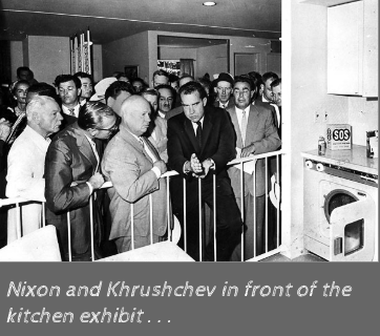
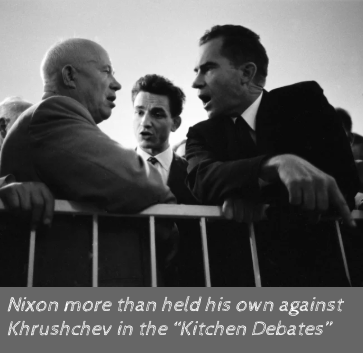
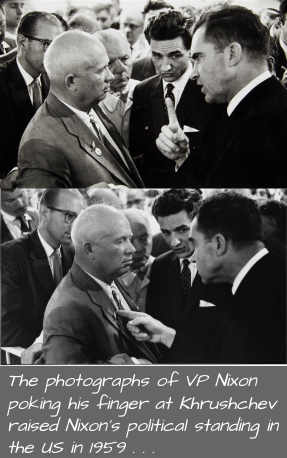
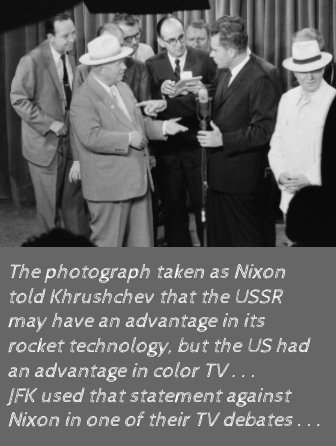
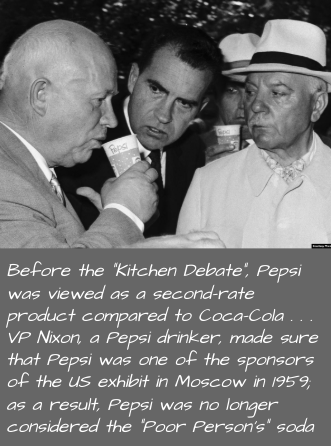
Source: John A. Farrell. Richard Nixon - The Life (2017)
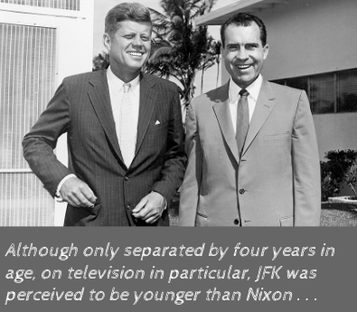
The campaign of 1960 was Nixon’s fifth in nine years (1952, 1954, 1956, and 1958). Conventional wisdom had the Election of 1960 being a barn-burner like Truman vs. Dewey in 1948. Nixon’s most appealing attribute was experience, yet he was only 47 years old (JFK was 43), and the increased tensions from the U-2 Incident to many meant that Nixon’s seasoned leadership was necessary. However, America was slowly approaching the brink of major political and social change, and to an increasing number of Americans, Nixon represented the past, while John Kennedy seemingly represented the future.
JFK kept using and touting the word “change”, and Nixon was largely forced to go with the status quo that was associated with President Eisenhower. Complicating matters for Nixon was that there were only 14 Republican governors, which meant that the state political machinery in the other 36 states were in the hands of the Democrats; no Republican candidate for President had faced that particular obstacle since the FDR era. The Republican Party remained pro-business, and that didn’t resonate particularly well with working class families. The Democrats had a 3 : 2 advantage in registered voters, which would make a huge impact at the grassroots level in favor of the Democrats. Added to the mix, the Sun Belt was growing in importance in terms of the Electoral College (e.g. Texas and California), but the Rust Belt still mostly held sway with states such as Illinois, Pennsylvania, Ohio, New York, and Michigan.
JFK kept using and touting the word “change”, and Nixon was largely forced to go with the status quo that was associated with President Eisenhower. Complicating matters for Nixon was that there were only 14 Republican governors, which meant that the state political machinery in the other 36 states were in the hands of the Democrats; no Republican candidate for President had faced that particular obstacle since the FDR era. The Republican Party remained pro-business, and that didn’t resonate particularly well with working class families. The Democrats had a 3 : 2 advantage in registered voters, which would make a huge impact at the grassroots level in favor of the Democrats. Added to the mix, the Sun Belt was growing in importance in terms of the Electoral College (e.g. Texas and California), but the Rust Belt still mostly held sway with states such as Illinois, Pennsylvania, Ohio, New York, and Michigan.
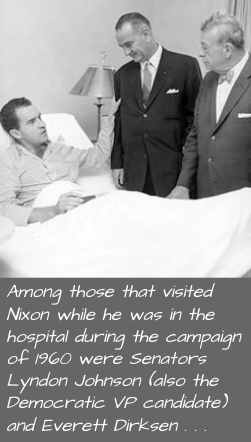
While Nixon didn’t have to worry about a challenger for the Republican nomination, JFK kept getting headlines since he was in a series of competitive primaries, with LBJ lurking in the background. In the end, both Nixon and JFK garnered their nominations on the first ballot. During the Campaign of 1960, JFK received the kind of breaks from which Nixon had benefited against Voorhis (1946) and Gahagan Douglas (1950). Political and physical disaster struck Nixon when he was in the hospital for twelve days after banging his knee on a car door and getting a staph infection (Nixon was a colossal klutz).
It was during his stay in the hospital that Nixon agreed to the first-ever televised debates with JFK. The economy was not in Nixon’s favor, and Ike et al were content to finish out their time in the White House sitting on the sidelines, not trying to do much at all to boost the economy in an election year. In the last weeks before the election, 450,000 jobs were lost; Nixon saw the lack of government spending (to try and minimize the economic downturn) as just plain stupid politics in an election year.
It was during his stay in the hospital that Nixon agreed to the first-ever televised debates with JFK. The economy was not in Nixon’s favor, and Ike et al were content to finish out their time in the White House sitting on the sidelines, not trying to do much at all to boost the economy in an election year. In the last weeks before the election, 450,000 jobs were lost; Nixon saw the lack of government spending (to try and minimize the economic downturn) as just plain stupid politics in an election year.
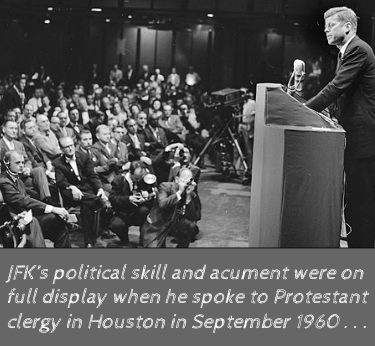
The general campaign played out in stages, with the month of August being a draw since Nixon was hospitalized and JFK was still working in the Senate. September 1960 marked JFK’s confrontation with Houston Protestant ministers which was covered by the media. JFK and RFK (his campaign manager), took clips from the showdown, edited them to their liking, and made sure they played all over the television dial. In the end, Nixon only received 22% of the Catholic vote, at the time a record low for a Republican Presidential candidate.
Making everything worse for Nixon was his decision to be his own campaign manager. Nixon’s decision was driven in large part by his desire to receive all the credit for winning the Presidency, and also to shove his victory right up Ike’s nose (that decision also provided the opening for H.R. Haldeman to enter the Nixon's Circle of Trust). As Nixon became mired in details as his own campaign manager, his campaign of course suffered as a result. Nixon claimed that he couldn’t delegate campaign responsibilities since he didn’t have people with the necessary expertise to do so. Nixon would pay a dear price for no longer having Murray Chotiner in his circle; there would have been no doubt that Chotiner would have confronted Nixon about his decision-making.
Nixon chose to constantly meddle in the minutiae of the workings of his campaign, constantly striving to keep control . . . and therefore the future credit. As a result of losing himself in the campaign’s details, Nixon didn’t do a good job communicating who he was or what he wanted to accomplish as President, and it started to show in the campaign for all to see. Nixon’s constant apprehensiveness led to a public perception that the Republican nominee vacillated, was weak, and timid.
Making everything worse for Nixon was his decision to be his own campaign manager. Nixon’s decision was driven in large part by his desire to receive all the credit for winning the Presidency, and also to shove his victory right up Ike’s nose (that decision also provided the opening for H.R. Haldeman to enter the Nixon's Circle of Trust). As Nixon became mired in details as his own campaign manager, his campaign of course suffered as a result. Nixon claimed that he couldn’t delegate campaign responsibilities since he didn’t have people with the necessary expertise to do so. Nixon would pay a dear price for no longer having Murray Chotiner in his circle; there would have been no doubt that Chotiner would have confronted Nixon about his decision-making.
Nixon chose to constantly meddle in the minutiae of the workings of his campaign, constantly striving to keep control . . . and therefore the future credit. As a result of losing himself in the campaign’s details, Nixon didn’t do a good job communicating who he was or what he wanted to accomplish as President, and it started to show in the campaign for all to see. Nixon’s constant apprehensiveness led to a public perception that the Republican nominee vacillated, was weak, and timid.
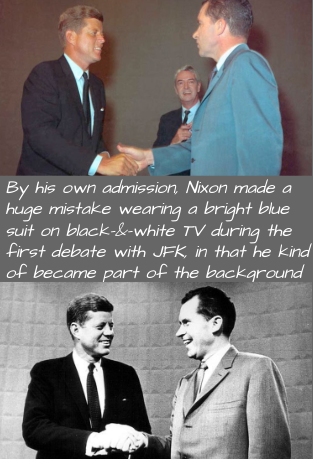
The first-ever televised debates between Presidential candidates occurred in Chicago on 26 September 1960. By 1950, 11% of Americans had a television, but by 1960, 88% had a TV. The audience for the first debate was between 70 and 80 million in a nation with a population of 107 million adults. During that first debate, both Nixon and JFK displayed knowledge and command of the debate topic, which was domestic affairs.
However, as television had saved Nixon’s political career with his “Checkers Speech” in 1952, television turned on Nixon during this first debate. Nixon simply looked awful on television during the first debate, and there were reasons. Nixon’s frenetic campaign schedule that he organized had left him exhausted and unprepared. Nixon spurned makeup, thinking it would make him look feminine instead of masculine. Nixon came off poorly when the camera was on him when he wasn’t talking (another of the shenanigans arranged by the Kennedy campaign). Nixon was still recovering health-wise, and sure enough, the klutzy Nixon banged the very same knee on a car door while heading into the studio for the debate. All that being said, that televised debacle didn’t lose the election for Nixon, but he certainly didn’t help himself out at all that evening.
However, as television had saved Nixon’s political career with his “Checkers Speech” in 1952, television turned on Nixon during this first debate. Nixon simply looked awful on television during the first debate, and there were reasons. Nixon’s frenetic campaign schedule that he organized had left him exhausted and unprepared. Nixon spurned makeup, thinking it would make him look feminine instead of masculine. Nixon came off poorly when the camera was on him when he wasn’t talking (another of the shenanigans arranged by the Kennedy campaign). Nixon was still recovering health-wise, and sure enough, the klutzy Nixon banged the very same knee on a car door while heading into the studio for the debate. All that being said, that televised debacle didn’t lose the election for Nixon, but he certainly didn’t help himself out at all that evening.
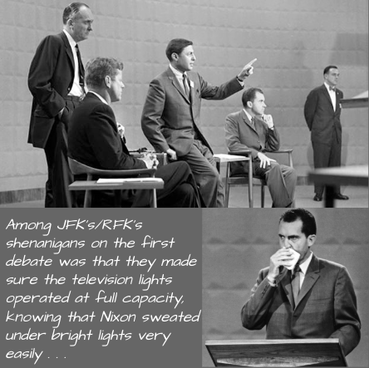
The significance of the first debate was that millions of Americans concluded that JFK was Nixon’s equal, and it was from that new starting point that the general campaign continued. JFK went into the four televised debates with nothing to lose, and Nixon went in with much to lose. The last televised debate was on 21 October 1960, and afterwards Gallup showed a slight lead for JFK, and a fawning media predicted a landslide. Nixon campaigned like a berserker in the last two weeks, and the Republican Party rallied around him, with Ike finally chiming it at last. JFK was very worried that he would lose the election which was his for the taking just like Dewey in 1948.
Nixon almost certainly would have won if he had made a phone call. Neither candidate wanted to alienate voters in the South (not counting TX, there was a bloc of 104 Electoral Votes in the South). At the same time, neither candidate wanted to alienate voters in the North, which had far more Electoral Votes. Nixon’s track record on Civil Rights was stellar and unmatched by any other major Republican over the last several years (and very few liberal Democrats), and Nixon figured that he would win at least one-third of the African-American vote. Also, Nixon had MLK, Jr. and Jackie Robinson in his corner, which could only help adding votes in a tight election.
Nixon almost certainly would have won if he had made a phone call. Neither candidate wanted to alienate voters in the South (not counting TX, there was a bloc of 104 Electoral Votes in the South). At the same time, neither candidate wanted to alienate voters in the North, which had far more Electoral Votes. Nixon’s track record on Civil Rights was stellar and unmatched by any other major Republican over the last several years (and very few liberal Democrats), and Nixon figured that he would win at least one-third of the African-American vote. Also, Nixon had MLK, Jr. and Jackie Robinson in his corner, which could only help adding votes in a tight election.