Source: Ron Chernow. Washington: A Life (2010)
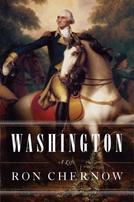
Despite being the most famous Founding Father, George Washington was the most enigmatic of that brethren. Beneath the iconic General and President were complex layers of motivation and anxiety in the political, social, and economic spheres. As with all people, Washington was the sum of his experiences, and much of Washington's ambitions and anxiety were shaped from his childhood to his early-twenties before the beginning of the French & Indian War in 1754 in the Ohio River Valley.
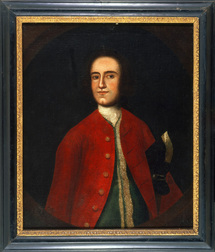
George Washington as a young child lived with his parents at Fredericksburg in Colonial Virginia; Washington's father, Augustine, ran a profitable plantation and also made money with iron ore. Washington's half-brother, Lawrence (14 years his senior; pictured) was tasked with being the caretaker of the properties on the Potomac River. Washington wanted to spend as much time as possible on the Potomac properties, mostly because he adored Lawrence. The Potomac properties were called Little Hunting Creek, but Lawrence, in a fit of Anglophobia, renamed it Mount Vernon after a British admiral under which he served (and admired). Lawrence had actually received a Royal Commission, which meant he served in the REAL British military; that was something Washington would pursue with every fiber in his being during the French and Indian War (1754 - 1763), but would never attain.
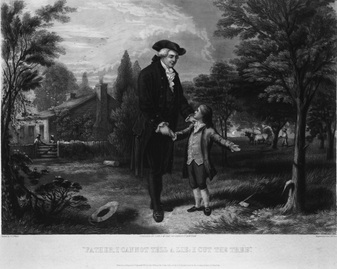
Washington's father, Augustine (pictured below with a young GW), died in 1743; ironically, he died in a very similar manner as Washington would in 1799. The reality of the men in the Washington family was that none of them lived very long, and the young George Washington was very cognizant of that fact (he would be the outlier, living to the age of 67). Due to his father's death, Washington was unable to receive a classical education (which was considered a must when considering social status), or even have a true childhood, since it was "all hands on deck" to keep the plantations profitable. As a result, Washington lacked the classical education that was attained by Jefferson, Adams, Hamilton, and Madison; he would always seem more provincial than the other Founding Fathers.
Nonetheless, Washington was exceedingly smart, and quick to grasp ideas, whether they were his or from someone else. Even as an older child, he knew good advice when he heard it, and more-often-than-not acted upon it. Washington learned the 110 Social Maxims, which was the universal etiquette for Gentlemen in Colonial Virginia. Washington followed the maxims almost to the letter; to others, Washington was cool, pragmatic, and controlled . . . but those genteel manners were a social facade that concealed his stormy emotions. It would be a very rare event indeed for anyone to witness Washington's virulent temper at Mount Vernon, during the Revolutionary War, or as President.
Nonetheless, Washington was exceedingly smart, and quick to grasp ideas, whether they were his or from someone else. Even as an older child, he knew good advice when he heard it, and more-often-than-not acted upon it. Washington learned the 110 Social Maxims, which was the universal etiquette for Gentlemen in Colonial Virginia. Washington followed the maxims almost to the letter; to others, Washington was cool, pragmatic, and controlled . . . but those genteel manners were a social facade that concealed his stormy emotions. It would be a very rare event indeed for anyone to witness Washington's virulent temper at Mount Vernon, during the Revolutionary War, or as President.
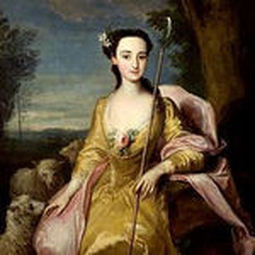
Lawrence was a perfect model for Washington's development in terms of polishing his manners and investing in his human capital; Washington made sure that he was near Lawrence as often as possible. Lawrence married Anne Fairfax (pictured) in July, 1743; the Fairfax family was the most powerful and influential family in that region of Virginia (they were the only family to own land in all of the 3 main regions of Colonial Virginia: Tidewater, Piedmont, and the Shenandoah). As a result of the marriage, Lawrence became a Virginia Grandee (Gentleman) and a member of the House of Burgesses.
Anne's father, William Fairfax, owned five million acres, from the Potomac to the Shenandoah Valley; by marrying into the Fairfax family, Lawrence crossed the chasm from being merely comfortable to being fabulously rich and influential. Almost immediately, Colonel William Fairfax saw the young George Washington as a protege, grooming him for bigger and better things as a member and representative of the Fairfax clan . . . Washington would have never had his future opportunities without that marriage. Washington now had his social, economic, and political platform for advancement in Colonial Virginia, all at the age of 11.
At age 15, due mostly to derive an income on his own, Washington learned how to be a good surveyor. Also, while acting as an agent for others in terms of land speculation (especially for the Fairfax family), he could scout potential choice areas for himself. Surveying was a perfect fit, in that Washington loved the outdoors, was very good with math, and was an excellent problem-solver. His years as a surveyor meant a lot of time in the saddle, and as a result, Washington would become one of the great horsemen of his time.
Anne's father, William Fairfax, owned five million acres, from the Potomac to the Shenandoah Valley; by marrying into the Fairfax family, Lawrence crossed the chasm from being merely comfortable to being fabulously rich and influential. Almost immediately, Colonel William Fairfax saw the young George Washington as a protege, grooming him for bigger and better things as a member and representative of the Fairfax clan . . . Washington would have never had his future opportunities without that marriage. Washington now had his social, economic, and political platform for advancement in Colonial Virginia, all at the age of 11.
At age 15, due mostly to derive an income on his own, Washington learned how to be a good surveyor. Also, while acting as an agent for others in terms of land speculation (especially for the Fairfax family), he could scout potential choice areas for himself. Surveying was a perfect fit, in that Washington loved the outdoors, was very good with math, and was an excellent problem-solver. His years as a surveyor meant a lot of time in the saddle, and as a result, Washington would become one of the great horsemen of his time.
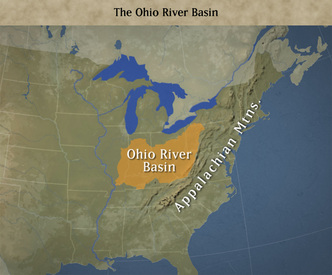
At the age of 16, Washington had become hardened by the outdoors, and nothing really rattled him from that point on; that may explain why he would be able to make a smooth transition between the genteel and the wild (it also boded well for his future in the military). Lawrence and the Fairfaxes created the Ohio Company, which was designed to snatch up as much desirable land as possible in the vast Ohio River Basin; the formation of this company would set George Washington on his path to being directly involved in events that started the French and Indian War.
At age 17, Washington was named the surveyor for William & Mary College; he became the youngest official surveyor in the history of Colonial Virginia, and as a result he was able to skip many social steps in terms of status. When he turned 18, Washington already had a plantation, where he focused on growing corn, wheat, and tobacco (By 1756, at the age of 23, Washington owned 2315 acres in the Shenandoah Valley, which today is NW Virginia).
In 1751 (Washington was 18), Lawrence contracted tuberculosis, and he and George went to Barbados, in an effort to help Lawrence recover his health. In Barbados, George contracted smallpox, and was nursed back to health inside of a month. By 12 December, 1751, Washington was completely recovered, but bore a pock-marked nose for the rest of his life; Washington now had immunity to the most virulent scourge for 18th Century armies.
At age 17, Washington was named the surveyor for William & Mary College; he became the youngest official surveyor in the history of Colonial Virginia, and as a result he was able to skip many social steps in terms of status. When he turned 18, Washington already had a plantation, where he focused on growing corn, wheat, and tobacco (By 1756, at the age of 23, Washington owned 2315 acres in the Shenandoah Valley, which today is NW Virginia).
In 1751 (Washington was 18), Lawrence contracted tuberculosis, and he and George went to Barbados, in an effort to help Lawrence recover his health. In Barbados, George contracted smallpox, and was nursed back to health inside of a month. By 12 December, 1751, Washington was completely recovered, but bore a pock-marked nose for the rest of his life; Washington now had immunity to the most virulent scourge for 18th Century armies.
Not long after his return from Barbados, Lawrence died at Mount Vernon on 26 July, 1752; he was only in his mid-thirties. Mount Vernon was willed to George if he was alive after Anne and her daughter died; it wouldn't be too far in the future when both had died, leaving Washington the sole owner of Mount Vernon (it was a continuing Greek Tragedy in Washington's life that he greatly benefitted from the death of someone close to him). More immediately, Washington was willed thousands of acres near where he spent his young childhood at Fredericksburg.
It was at this point in his life that Washington decided to trade his life as a surveyor to become a soldier, like his beloved half-brother Lawrence. Due to his connection with the Fairfax family, Washington became a Major in the region's militia, with the additional title of Adjutant for the Northern District; it was the most prominent and prestigious military position in all of Colonial Virginia. In short order, Washington became a Freemason, mostly to gain more meaningful social contacts. By the age of 21, George Washington possessed large tracts of land, African slaves, and military and social status, but it came in part at tremendous cost, in that much of it would not have been possible without the deaths of his father and half-brother.
At age 21, Major George Washington, Adjutant for the Northern District of the Commonwealth of Virginia, was at the forefront of the events that unfolded in the Ohio River Valley that led to the start of the French and Indian War . . . his experiences to that point prepared him well for the challenges that awaited him in the Ohio River Valley.
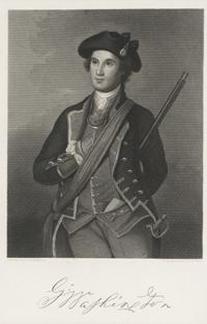
(Pictured: a portrait of Washington shortly after being
promoted to Colonel in the Virginia Militia)
It was at this point in his life that Washington decided to trade his life as a surveyor to become a soldier, like his beloved half-brother Lawrence. Due to his connection with the Fairfax family, Washington became a Major in the region's militia, with the additional title of Adjutant for the Northern District; it was the most prominent and prestigious military position in all of Colonial Virginia. In short order, Washington became a Freemason, mostly to gain more meaningful social contacts. By the age of 21, George Washington possessed large tracts of land, African slaves, and military and social status, but it came in part at tremendous cost, in that much of it would not have been possible without the deaths of his father and half-brother.
At age 21, Major George Washington, Adjutant for the Northern District of the Commonwealth of Virginia, was at the forefront of the events that unfolded in the Ohio River Valley that led to the start of the French and Indian War . . . his experiences to that point prepared him well for the challenges that awaited him in the Ohio River Valley.
(Pictured: a portrait of Washington shortly after being
promoted to Colonel in the Virginia Militia)
