Source: Lynne Olson. Those Angry Days: Roosevelt, Lindbergh, and
America's Fight Over World War II, 1939 - 1941 (2013)
America's Fight Over World War II, 1939 - 1941 (2013)
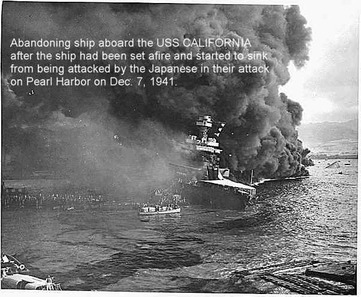
Japan's attack on Pearl Harbor on 7 December, 1941, proved that BOTH the Internationalists and the Isolationists were wrong. The Internationalists (FDR included) badly underestimated Japan, focusing on Nazi Germany as the threat to America. Isolationists were shown that a foreign power could attack America in its own hemisphere.
Pearl Harbor also shook FDR from his "Leadership Lethargy", that was the hallmark of his mostly disastrous second term in office. For the first time in over five years, FDR once again became the decisive leader that America needed during a national crisis. Charles Lindbergh gave a terse "we need to be united" radio address, and then disappeared from public view.
Pearl Harbor also shook FDR from his "Leadership Lethargy", that was the hallmark of his mostly disastrous second term in office. For the first time in over five years, FDR once again became the decisive leader that America needed during a national crisis. Charles Lindbergh gave a terse "we need to be united" radio address, and then disappeared from public view.
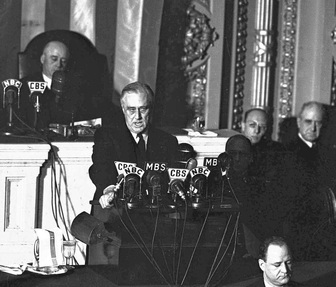
On 8 December, 1941, FDR asked a Joint Session of Congress for a declaration of war against Japan, but not against Nazi Germany. FDR was still hesitant to commit himself to any more than what was minimally required; for three horrible days, Britain faced the prospect of a two-front war with the U.S. only engaged in war in the Pacific.
The Axis agreement only committed Germany and Italy to declare war on the U.S. if America attacked Japan. Hitler was strongly advised to avoid declaring war against the U.S., but despite outwardly counseling patience for the last several months, he decided that Pearl Harbor was the "incident" for which he had been waiting. In his mind, Japan's attack on Pearl Harbor opened the door to address the many provocations that FDR had committed against Nazi Germany (and him) since the late-1930s.
The Axis agreement only committed Germany and Italy to declare war on the U.S. if America attacked Japan. Hitler was strongly advised to avoid declaring war against the U.S., but despite outwardly counseling patience for the last several months, he decided that Pearl Harbor was the "incident" for which he had been waiting. In his mind, Japan's attack on Pearl Harbor opened the door to address the many provocations that FDR had committed against Nazi Germany (and him) since the late-1930s.
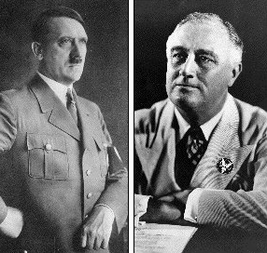
On 11 December, 1941, Hitler appeared before the Reichstag, and in a fit of anger and rage, formally declared war against the U.S. Had Hitler not declared war on America, he almost certainly would have been able to conquer Europe, free-and-clear. Future Secretary of State Dean Acheson stated that our enemies, with "unparalleled stupidity", united Americans for a hard war.
Instead of demoralizing the U.S. as Japan envisioned, the attack on Pearl Harbor united a divided, fractious America. Pearl Harbor was like a "Reverse Earthquake", in that everything that was disjointed was put back in place. Pearl Harbor shook FDR out of his lethargy, and once again he became the indispensable leader for an America in crisis. And the economy, almost immediately, became war-oriented instead of consumer-oriented, which was the first step to unleashing our industrial might that would win the war. The nation also became far more conservative during World War II; the overall decrease in civil liberties was the cost.
Instead of demoralizing the U.S. as Japan envisioned, the attack on Pearl Harbor united a divided, fractious America. Pearl Harbor was like a "Reverse Earthquake", in that everything that was disjointed was put back in place. Pearl Harbor shook FDR out of his lethargy, and once again he became the indispensable leader for an America in crisis. And the economy, almost immediately, became war-oriented instead of consumer-oriented, which was the first step to unleashing our industrial might that would win the war. The nation also became far more conservative during World War II; the overall decrease in civil liberties was the cost.
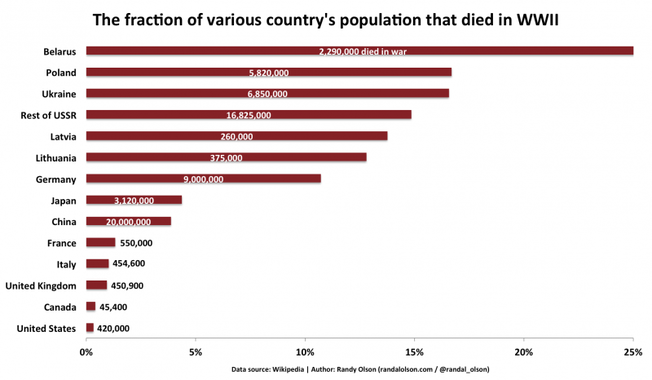
During World War II, the number of Americans killed in action was 417,000, which was the lowest casualty percentage compared to a nation's population of any of the major belligerents. Alone among those belligerents, the U.S. was spared widespread devastation and suffering. The Isolationists were wrong in their prediction of economic disaster if the U.S. went to war. Instead, World War II ended the Great Depression, and started incredible economic growth; unemployment went from 14% to 2% during the war, while annual income increased 50%.
Ironically, the acrimonious and divisive national debate from 1939 - 1941 (on the role the U.S. should have in the War in Europe) actually prepared America for World War II. The positives and negatives were thoroughly explored and weighed throughout the nation. The U.S. was better prepared for a war spiritually and militarily than at any other time in the nation's history.
Ironically, the acrimonious and divisive national debate from 1939 - 1941 (on the role the U.S. should have in the War in Europe) actually prepared America for World War II. The positives and negatives were thoroughly explored and weighed throughout the nation. The U.S. was better prepared for a war spiritually and militarily than at any other time in the nation's history.
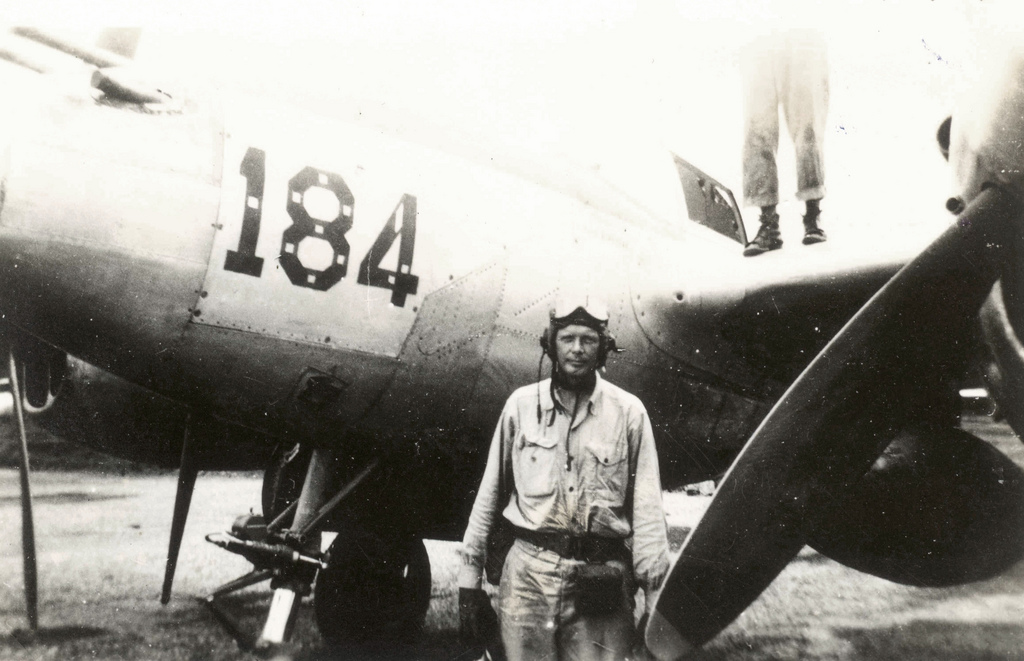
Without the knowledge of FDR and his administration, Lindbergh's military friends took him to the Pacific Theater. In a naval officers uniform (without insignias), he flew 50+ combat missions in Army or Navy planes for five months against Japan, while his superior officers looked the other way. Lindbergh's responsibilities ranged from patrol duty, escort duty, strafing runs, and dive-bombing, during which he recorded one confirmed kill. His recommendations for the P-38 Lighting (pictured above, with the pilot Charles Lindbergh) increased its range by 500 miles. Lindbergh was happy, in his element, flying with like-minded pilots facing danger.
After Pearl Harbor, Lindbergh wanted to be reinstated in the U.S. Army Air Corps, but that was something that FDR would not allow. Lindbergh's enemies didn't disappear after Pearl Harbor; Secretary of the Interior Harold Ickes, like Inspector Javert in Les Miserables, continued to publicly torment Lindbergh.
Secretary of War Henry Stimson was stuck giving the bad news to Lindbergh, telling him that according to the President, his loyalty to his nation was still in question. Even the aviation industry avoided Lindbergh, since FDR threatened to cancel lucrative war-time contracts if Lindbergh was employed.
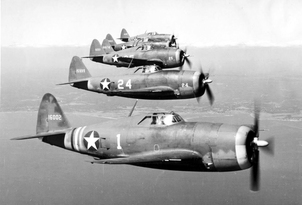
But Henry Ford, the Auto Magnate / Isolationist / Anti-Semite, came to Lindbergh's rescue. Lindbergh worked to improve the designs of the B-24 (Liberator) and the P-47 (Thunderbolt; pictured). Lindbergh even tested P-47's at extremely high altitudes, which saved pilots lives. Eventually allowed in other areas of aviation, Lindbergh played a major role in developing the Corsair, which was a fighter plane designed for use on aircraft carriers. Lindbergh proved his critics wrong: he stayed out of politics, and kept his mouth shut, focusing his efforts in the technology sector of aviation to help America win the war.
During World War II, Wendell Willkie became an "Ambassador at Large" for FDR, visiting every American ally of significance. In September, 1944, Willkie died suddenly at the age of 52, mostly as a result of excessive smoking, drinking, and eating.
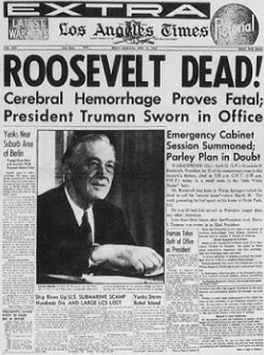
A week after FDR died, Lindbergh finally emerged from political isolation on 19 April, 1945. With FDR gone, Lindbergh was no longer persona non grata to the federal government. Lindbergh, at President Truman's request, served as a special advisor to the U.S. Air Force, which was created as a separate branch of the military in 1947. President Eisenhower reinstated Lindbergh in the U.S. Air Force Reserve in 1954, and President Kennedy, a life-long admirer of Lindbergh, made sure that he stayed in the good graces of the U.S. Government.
A week after FDR died, Lindbergh finally emerged from political isolation on 19 April, 1945. With FDR gone, Lindbergh was no longer persona non grata to the federal government. Lindbergh, at President Truman's request, served as a special advisor to the U.S. Air Force, which was created as a separate branch of the military in 1947. President Eisenhower reinstated Lindbergh in the U.S. Air Force Reserve in 1954, and President Kennedy, a life-long admirer of Lindbergh, made sure that he stayed in the good graces of the U.S. Government.
