Mr. Jensen's U.S. History Website
  • U.S. History Blog
    • U.S. History Blog (May 2026 - May 2027)
    • U.S. History Blog (May 2025 - May 2026)
    • U.S. History Blog (May 2024 - May 2025)
    • U.S. History Blog (May 2023 - May 2024)
    • U.S. History Blog (May 2022 - May 2023)
    • U.S. History Blog (May 2021 - May 2022)
    • U.S. History Blog (May 2020 - May 2021)
    • U.S. History Blog (May 2019 - May 2020)
    • U.S. History Blog (May 2018 - May 2019)
    • U.S. History Blog (May 2017 - May 2018)
    • U.S. History Blog (May 2016 - May 2017)
    • U.S. History Blog (May 2015 - May 2016)
    • U.S. History Blog (May, 2014 - May, 2015)
  • About

Benedict Arnold: America's Most Famous Traitor, Part Three

5/1/2016

0 Comments

 
                 Source: Steve Sheinkin. The Notorious Benedict Arnold - A True
                                      Story of Adventure, Heroism, and Treachery (2010)
Picture
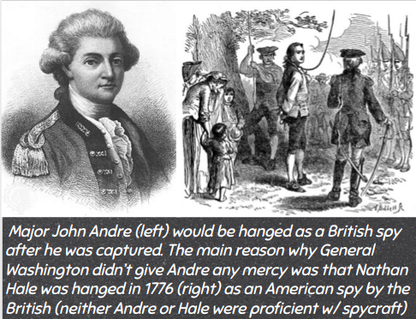
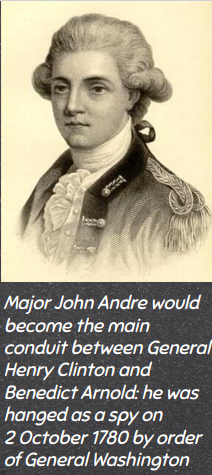
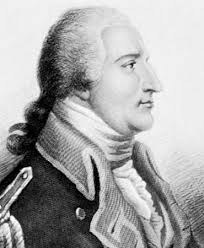
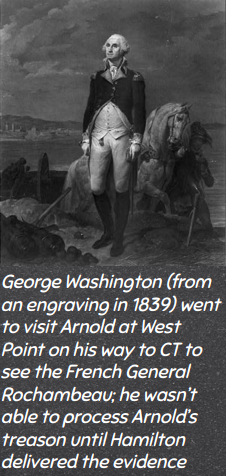
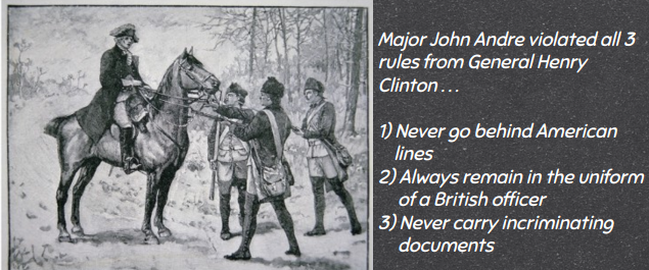
     Major John Andre, General Henry Clinton's chief of espionage, had already broken one of Clinton's rules of spying: he had crossed American lines. General Benedict Arnold, the reason why Andre was behind enemy lines, insisted that Andre take the written-down instructions on the strengths/weaknesses of West Point to General Clinton. By doing so, Andre violated Clinton's second rule, which was never carry incriminating papers, by placing the documents between his feet and stockings. 
     Arnold wrote a pass for Andre in order to get past any US soldiers; it was agreed that when Clinton saw the papers, the British attack at West Point would begin. If the timing was right, Clinton would get Fort Arnold, thousands of soldiers, and George Washington, who was en route to the fort. Andre couldn't leave until dark, and Joshua Hett Smith, who had been unwittingly assisting Arnold in his treason, would ride with him and show Andre to the British line. Smith agreed, but wanted to know why Arnold was in a British uniform, to which Arnold basically shrugged off his question. 
     Smith loaned Andre civilian clothes, and Arnold went back to his wife, Peggy. For Arnold and Andre, there had been some unfortunate glitches in their plan so far, but their plan and timing was still intact. When Andre put on Smith's civilian clothes in Smith's house, he violated the last of Clinton's rules, which was to all times remain in uniform. As Smith and Andre rode out from West Point, Smith chatted endlessly, while Andre kept quiet, not doubt trying to think about how to get out of his dangerous situation.
Picture
     Soon, Smith and Andre were challenged. Smith handed the guards the pass written by Arnold after basically telling them off. Smith was given back the pass, but told to go no further; Smith knew why . . . the next 15 miles were a violent No-Man's Land controlled by Loyalist-leaning thugs known as "Cowboys". These "Cowboys" fought for territory and loot with a rival gang, Rebel-leaning thugs known as "Skinners". Andre wanted to proceed, but the captain of the guard advised against doing so.
    
​     Smith and Andre spent the night in a farmer's house, but Andre wasn't able to sleep, since he was still shaken from the day's events, which included passing on the road an American, Colonel Webb, who had been a prisoner in New York City when Andre was stationed in the city. . . Webb showed no signs of recognizing Andre. In the morning, Andre loosened up with Smith, but after breakfast at the farm house Smith told Andre he didn't want to ride into
​No-Man's Land. Smith gave Andre directions, and then Smith (and his slave) rode off in the opposite direction. Andre continued alone. A few miles ahead in Tarrytown, three men were crouched by the side of the road, probably a mix of "Skinners" and American militiamen. The three men decided to stop the coming rider if they didn't know him . . . that rider was Major Andre.
Picture
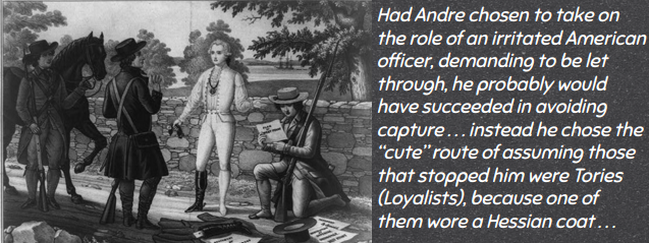
     The three men surprised Andre. Andre gambled that they were Loyalist "Cowboys", and addressed them as such, but he was mistaken. Andre's face went ashen, and he gave them Arnold's pass. Had Andre presented the pass before saying anything, or pretended to be a put-out American soldier, he almost certainly would have been allowed to continue. The three men assumed that Andrew was a British officer with money, which explained the thorough forced search. Andre was completely naked except for his boots and stockings . . . then the three men searched his boots, and saw something in the stockings.
    
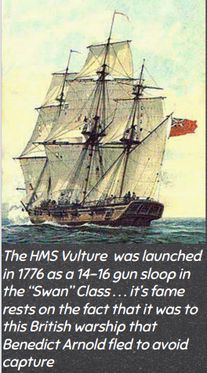
​      The three men had found the documents given to Andre by Arnold; Andre denied he was a spy and demanded to be set free. The three men asked Andre what his freedom was worth, to which Andre in effect replied "any sum you want". That sum was 100 guineas, his horse, saddle, bridle, and his fancy watch. Andre actually haggled with the three men until Andre offered the ridiculous sum of 10,000 guineas. The three men decided it was too risky collecting money from a British officer/spy . . . it was surely safer to turn in Andre to the American side, since he sure seemed to be worth something. At that point, Andre knew his chances at returning to the HMS Vulture and New York City were nil.
     Meanwhile, Smith told Arnold that Andre was safely on his way to New York City. At the same time, aboard the HMS Vulture, the crew was nervous, in that they were still waiting for Andre's return. Andre was delivered to an American army post that was commanded by Colonel John Jameson, who was unsure what to do with Andre.
Picture
      Andre's pass from General Arnold was genuine, but Colonel Jameson wondered why Andre would he have detailed information on West Point in his stocking. Jameson decided to let Arnold know that he had "John Anderson" as a prisoner, and that he had in his possession potentially incriminating documents. Jameson also decided to send the captured documents to Washington . . . so two messengers were sent at the same time, one to Arnold, and the other to Washington. 
     Washington's headquarters were located close-by, and the messenger actually passed the camp. He turned around and found the camp, but Washington wasn't there, because the general was studying the land, river, and fort very near West Point. Washington wasn't in any particular hurry to reach Arnold, despite being expected for breakfast . . . General Lafayette was getting nervous, advising Washington that they needed to go see Arnold . . . but the rider that was still trying to locate Washington was probably more nervous than Lafayette.
     Washington decided to send two officers ahead to let Arnold know they would be late to breakfast. Those officers were with Arnold when Jameson's other rider delivered the message. One of Washington's officers noticed Arnold's reaction to reading the note; he seemed embarrassed and agitated . . . but why? Arnold now knew that Andre had been captured, and that Washington had the documents . . . and that Washington would be there any minute. Arnold didn't know if Washington was actually in possession of the papers yet, and he didn't want to wait to find out. 
Picture
     Arnold went upstairs to Peggy's bedroom, and told her why he needed to leave right away. Then there was a knock on the door, and Arnold was told that Washington was almost there, and Peggy fainted. Arnold got on his horse, telling his officers to let Washington know that he would be back in an hour. Arnold galloped towards Washington's personal guard; they got out of his way and saluted him as he passed. Arnold found his small boat by the river; he always had officers nearby so they could row him across the Hudson whenever he wanted. Arnold ordered his men to row towards the HMS Vulture, since he had secret business with a man on board . . . Arnold stood in the rowboat with both of his pistols cocked, ready to be used.
    Just minutes after Arnold left, Washington arrived. Washington was told that Arnold was at West Point, so after a quick breakfast, Washington and his entourage rowed across the Hudson to Fort Arnold, expecting a formal greeting, which included a 13 cannon salute. However, there was nothing of the sort, and Washington soon discovered that Arnold hadn't been on that side of the river at all that day. Washington didn't have any idea why things weren't normal; the fort looked neglected and soldiers were not in their proper places . . . the strategic location was wide open for an attack.
Picture
     Back at Arnold's house, Peggy was in play-acting mode, and started to shriek; the fact that she also looked genuinely terrified helped her with the ruse. She asked if Colonel Varick (who was in the room) was planning on killing her baby. Peggy kept crying, saying that Arnold would not return, ever . . . it appeared to those in the room that Peggy was hallucinating. Washington soon arrived at Arnold's home, expecting him to be there, but no one knew Arnold's whereabouts.
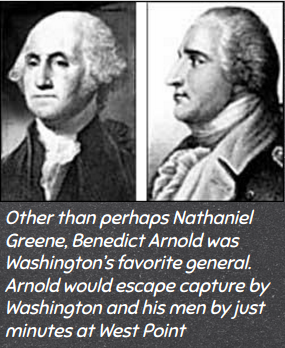
​     Finally, Colonel Jameson's other messenger found Washington, and handed the general the message and the documents. Shortly after starting to read the papers, Washington's hands started shaking; he knew immediately that Arnold had betrayed him, saying "who can we trust now"? Arnold was out of Washington's reach (after an exhaustive search), so Washington focused on preparing West Point for an attack, placing General Nathaniel Greene in charge. 
     Peggy heard Washington's voice, and asked to see him upstairs. When Washington entered the room, Peggy again started raving, claiming to not recognize Washington, accusing him of murdering her child. Washington tried to comfort Mrs. Arnold, but it wasn't his strong suit. Lt. Colonel Alexander Hamilton was in the room as well, and he saw the sweetness of beauty and innocence mixed with lost senses. Peggy was acting, but again, she was truly afraid. Peggy needed to convince Washington that she had no part in Arnold's treason, and she succeeded . . . after Washington left her room, she lay calmly down on the bed, plotting her next series of decisions.
Picture
     Now it was Joshua Hett Smith's turn; soldiers entered his home with bayonets, and he was dragged in front of Washington. Washington told Smith that he was being charged with treason; Smith was genuinely confused, and insisted that he hadn't known about Andre's identity or Arnold's intentions. Once Washington calmed down, he realized that Smith had been used, but he put Smith in jail for the time being, just in case. 
     Washington and the men stationed at West Point stayed up all night for a British attack that never came; Washington was still shaken by the recent shocking turn of events. Arnold wrote Washington from the HMS Vulture; true to form, Arnold thought that he had acted correctly. Arnold did one decent thing in his series of letters to Washington, in that he absolved all those around him of being a part of his actions. The HMS Vulture sailed back to New York City, where Arnold walked the streets in the uniform of a British general.
     Arnold didn't get the reception he was expecting; most just stared icily at him. Arnold's arrival stunned the residents of New York City; when the shock wore off, many started to wonder about Major John Andre. General Clinton was a wreck over Andre, and he didn't welcome Arnold, which meant the officers that ranked below Clinton followed suit. Arnold walked the streets of New York City in his new uniform, more alone than he had ever been. Arnold's plot had failed, and if Andre died, the catastrophe would be complete.

Epilogue: The fates of General Benedict Arnold and Major John Andre . . .
0 Comments

Benedict Arnold: America's Most Famous Traitor, Part Two

5/1/2016

1 Comment

 
                Source: Steve Sheinkin. The Notorious Benedict Arnold - A True
                                     Story of Adventure, Heroism, and Treachery (2010)
Picture
     The Revolutionary War interrupted the court-martial of Major General Benedict Arnold, and he went back to Philadelphia. Arnold continued clandestine negotiations with
Major John Andre, who was the head of General Henry Clinton's spy network. Arnold told Andre that he wanted to be paid no-matter-what for his efforts (what would be $1.5 million today); Clinton demanded something big for that price tag. To do so, Arnold needed to be back in an important military command, but his court-martial kept getting delayed. 
     On 23 December 1779, Arnold's court-martial finally resumed at a tavern in Morristown, New Jersey. Arnold stated to the judges that for all he'd done for his nation, he deserved better treatment; he needed an acquittal in order to be put in command in the field again. 
     Arnold refuted each of the charges one-by-one, and in great detail. Although Arnold was planning on betraying his nation, and had been up-to-his-neck in unethical behavior as the Military Governor of Philadelphia, he didn't FEEL GUILTY . . . Arnold was always able to convince himself that he was doing right.

Picture
       On 26 January 1780, Arnold was acquitted of the serious charges; in the opinion of the judges, he was guilty of repeated bad judgment, and was sentenced to an official reprimand from Washington. As the sentence was read, Arnold complained (about the bad judgment) "for what"? Washington procrastinated for two months until finally reprimanding Arnold, and it was a short and mild official rebuke which featured an apology for the reprimand as well. However, that sensitive and generous note from Washington came far-too-late in Arnold's view.
     
​     Sometime during May 1780, Arnold started to think about West Point on the Hudson River. The fort sat on a peninsula that jutted into the Hudson River 50 miles north of New York City.
Washington called West Point the "Key to America"; as long as West Point was held, the British fleet could be bottled up in New York City. Arnold told Andre of his plan (wanting more money, of course), and Clinton was finally seriously intrigued, and agreed to Arnold's price. Andre told Arnold that he wasn't getting paid for effort alone, and Arnold agreed that he had to deliver with his plan.

Picture
     Arnold had been pestering Washington for weeks about West Point. Washington couldn't understand why Arnold was so adamant about being in command at West Point, since the British were unlikely to attack . . . why waste Arnold's abilities at West Point? Washington had a better idea: he offered command of the Left Wing of the Continental Army to Arnold. When Washington told Arnold of his decision, Arnold lost his smile, which visibly annoyed Washington. Washington offered the most prestigious position (except his own), which would place Arnold on top of the "General Heap". Washington, wondering what was going on in Arnold's mind, told Arnold to wait at Headquarters. 
    Arnold remained at HQ as ordered, and was limping more noticeably in order to be seen doing so. Arnold was also telling as many as possible at HQ that West Point was the only post in which he was physically capable of being in command. On 1 August 1780, Washington issued new orders that placed Arnold in command of the Left Wing. When news of this order reached Arnold's wife, Peggy, she had hysteric fits, since she was in on the plot with her husband (and most likely assisted with many details). Peggy kept telling people that it must have been a mistake; many were surprised that she appeared to value West Point over the Left Wing. Arnold visited Washington again, restating that he physically couldn't handle command of the Left Wing. Washington relented, and on 3 August 1780, he reluctantly rescinded his order, and placed Arnold in command at West Point.

Picture
      Clinton placed Andre in charge of the mission to grab Fort Arnold at West Point (earlier in the war, the fort had been renamed in honor of Arnold's heroism and bravery). On the other side of the coin, Arnold had to figure out the best way for the British to attack the fort. Many at West Point, especially his long-time aides, noticed that Arnold seemed bewildered the moment he took command. Among the odd behaviors the aides noticed was that Arnold spent a lot of time with Joshua Hett Smith, a local dandy landowner . . . they had no idea that Smith would play a leading role in Arnold's secret plan . . . and neither did Smith. Arnold chose an abandoned Loyalist mansion on the other side of the Hudson River as his private residence, and since it was very isolated, it was the perfect setting for his plans. Arnold then sent for Peggy, giving her precise instructions and directions to safely get to West Point.
     By now, Americans were getting very sick of the Revolutionary War, since it had become a "Never-Ending Story". In the army, dissatisfaction, mutinies, and desertions were all at the highest levels of the entire war. The Continental Army blamed Congress, while Congress resented the non-stop demands of the Army. Then, Major General Horatio Gates led his army to an inglorious defeat at Camden, South Carolina . . . the American Revolution was on the verge of collapse when Arnold took command of West Point.

Picture
     Arnold not only wanted a large amount of money, but he also wanted to end the war and have America return to the British Empire; in his mind, he would not only be rich, but a hero to BOTH lands, and perhaps even be knighted by King George III . . . it was an insanely ambitious and audacious plan, yet the pieces were falling into place. All that remained was for Arnold and Andre to meet face-to-face to work out the final details. Andre was to sail up the Hudson River, anchor at an agreed-upon location, and watch for a rowboat which would conduct him to a safe location for their meeting.
     On 16 September 1780, Arnold received news that Washington and his staff were coming to West Point, and that they would be there for several days. This was too good to be true for Arnold, in that not only would he deliver West Point to the British, but also Washington . . . Arnold passed the news on to Andre. Clinton knew that Andre was relatively inexperienced with the ways of a spy in the field, and he gave Andre advice. First, he told Andre, do not go behind American lines. Second, refuse to carry incriminating papers, and third, no matter what, do not take off your British uniform. Clinton told Andre that if anything went wrong, those three rules would provide protection against spying, and an almost certain execution. Andre agreed, and sailed north on the Hudson aboard the HMS Vulture.

Picture
      Arnold saw the HMS Vulture reach the agreed-upon spot, and needed to reach Andre without involving any men under his command. Arnold waited until dark, and then turned to his carefully-chosen tool, Joshua Hett Smith. Arnold wanted Smith to row out to the British ship, and bring back a man named Anderson. Smith was thrilled to be involved with Arnold, which was of great assistance in that Arnold needed Smith's help in recruiting rowers. Two tenant farmers agreed to perform that service, but only after they became somewhat tipsy after drinking rum, which was provided by Arnold. 
     Smith and the two rowers reached the HMS Vulture, and Smith was forced to go on board to meet Andre. After Smith delivered Andre to Arnold, he was told to leave so their conversation would be private. Smith felt that he had earned the right to be part of the conversation, but he sat by the river while Andre and Arnold talked until 4 am. Smith told the tenant farmers that he was ready to take Andre back to the HMS Vulture, but the rowers refused. It had become a moot point anyway, since it was already dawn, and Andre needed to be concealed until the next evening. Arnold and Andre got on horseback, and moved away from the shore, and came across pickets that saluted Arnold.

Picture
     Up to that point, Andre believed he was on neutral ground, but the pickets proved otherwise, and Andre had violated Clinton's first rule of going behind American lines. At Smith's house, Andre took off his blue coat, and Smith saw that he was a British Redcoat. Arnold, Andre, and Smith ate breakfast with very little conversation between the three men. Suddenly explosions came from the Hudson River, and all three rushed to the window. 
     An American officer, James Livingston, took it upon himself to fire two cannon on the HMS Vulture; he had become annoyed that a British ship was so close to West Point. Firing on the HMS Vulture with a four-pounder (the smallest of the large cannon) was largely useless (and loud), but for two hours, those cannon fired. Six shots actually hit the HMS Vulture's hull, while other shells struck the sails and rigging. The captain was slightly injured by a splinter in the nose . . . that splinter changed the course of American History. The captain of the HMS Vulture ordered the ship to drop back out of range, and Andre was on his own, behind enemy lines, in the company and protection of Benedict Arnold. 

1 Comment

Benedict Arnold: America's Most Famous Traitor, Part One

4/30/2016

0 Comments

 
               Source: Steve Sheinkin. The Notorious Benedict Arnold - A True
                                   Story of Adventure, Heroism, and Treachery (2010)
Picture
      On 4 May 1778, General Benedict Arnold finally returned to his home at New Haven, Connecticut, and was greeted as the "Hero of Saratoga". On 18 May 1778, British officer John Andre's all-day extravaganza (it was more like an elegant carnival) for General Howe occurred in Philadelphia. Unbeknownst to either Arnold or Andre, they would soon work together to try and win the war for Great Britain. 
     On 21 May 1778, Arnold arrived at Valley Forge (PA) and met with General George Washington. Washington knew that Arnold's fighting days were over, so he wanted Arnold to be the military governor of Philadelphia, once the British left (which his spies told him would be soon). The job would call for skills that Arnold didn't have in abundance: patience, tact, and political skill. For reasons that nobody has yet figured out, Washington offered the post to Arnold.
     Philadelphia was of no strategic value for Britain, so Washington's spies were correct: the British forces in Philadelphia went to New York City. Major John Andre said goodbye to a young lady whose acquaintance he had made in Philadelphia, Margaret Shippen, the daughter of a prominent Philadelphia Loyalist (and soon to be the 2nd Mrs. Benedict Arnold). 
     Arnold entered Philadelphia in the center of a large parade in full dress uniform, smiling and waving to the crowd. Washington's instructions to Arnold were to adopt certain measures that were effective-yet-least-offensive in order to restore order. But Arnold started to offend the citizens of Philadelphia almost immediately; he was determined to live like a supreme leader, and it was an irritating (and rude) display of luxury to a city that was in shambles.

Picture
      The citizens of Philadelphia wondered where Arnold obtained large amounts of money. Arnold had made a huge profit from confiscated stores on an American cargo ship, which wasn't exactly illegal, but it certainly wasn't ethical. Arnold kept quiet about the details that lead to his wealth; he felt more-than-entitled to that wealth since he had served with great distinction, but hadn't received the respect/glory he felt he deserved, and that he had also lost his robust health. 
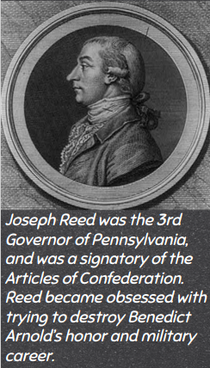
     Joseph Reed was a successful Philadelphia lawyer, and a former aide to Washington, and was Vice-President of the Pennsylvania Executive Council that actually administered the city of Philadelphia. Reed hated seeing military leaders get so popular, and was also jealous of Arnold. Reed wanted to cut the military leaders down-to-size while there was still time to do so; to Reed, Arnold was no longer doing the work of the Revolution. At a gala dance, Arnold asked to be introduced to Peggy Shippen; after a small chat, he was smitten. Peggy was also intrigued with Arnold, and soon Arnold's fancy coach was often spotted in front of the Shippen mansion.
     Finally, Arnold was able to walk without crutches. The best cobbler in Philadelphia made a special high heel for his (shorter) left leg. Arnold strolled the streets of Philadelphia with a limp (and a cane), ignoring the fierce storm between Loyalists, Patriots, and neutrals that raged around him . . . by that time, everything in Philadelphia was political. Arnold was even accused of inviting Tory (Loyalist) ladies to galas, which was true, but Arnold just wanted to be entertained and he enjoyed female company (as did Benjamin Franklin and George Washington). 

Picture
      While Arnold and Peggy were doing well together, Arnold and the Pennsylvania legislature were not; the legislature was convinced that American military officers were starting to act like British aristocrats. Arnold purchased Mount Pleasant, which was a mansion on 90 acres overlooking the Schuylkill River, and easily one of the grandest estates in Philadelphia. 
     Reed became the preeminent figure in the Pennsylvania Executive Council, which not only made him more powerful, but also increased his obsession with destroying Arnold. Reed started to officially investigate the source of Arnold's wealth, and he used the city's newspapers to mount a smear campaign against Arnold. Arnold should have ignored the investigation and attacks, but of course he took it all personally, and had to respond. Then, in a newspaper article came specific mention of the rumors surrounding Arnold and Montreal (false accusations in which Arnold was accused of stealing supplies for his retreating soldiers after the failure at Quebec in 1775). Arnold responded with contempt for all Pennsylvania officials; by then, even Arnold understood it was probably time to leave Philadelphia.

Picture
       In February 1779, Arnold went to Washington to discuss options; Reed panicked, believing that he was losing his chance to destroy Arnold. Arnold was almost to Washington's HQ when he was shown a newspaper from a stranger. Contained in an article were the formal charges against Arnold from the Pennsylvania Executive Council. The Council accused Arnold of everything they could dream up, including illegal purchases, illegal use of public wagons for personal gain, and disrespectful treatment of militiamen and government leaders. 
     Arnold showed Washington the charges contained in the newspaper; Washington advised Arnold to go back to Philadelphia and deal with the problem. Washington was thinking politically, which was very common for the general, but Arnold thought that even Washington doubted his honor . . . it was a turning point for Arnold in terms of his relationship with Washington. 
     Andre quickly became General Henry Clinton's closest aide. Clinton was a very difficult general to serve, since he was perpetually moody, distant, a loner, and always appeared to be annoyed. Other officers avoided Clinton, but Andre took a liking to the general, and was able to break through Clinton's veneer. Andre was promoted to major, and in effect became Clinton's Chief-of-Staff . . . Andre was becoming an important man in New York City, and he loved it for every minute. 
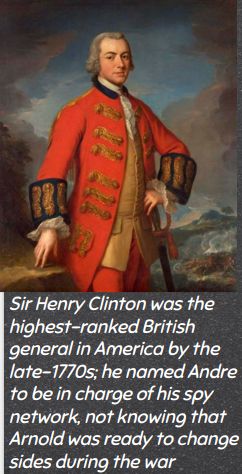
     In April 1779, Clinton named Andre his Chief of Intelligence, which meant he was in charge of Clinton's spy network. Andre was 28, which aggravated the older, more senior officers; to them, Andre was a "cringing, insidious sycophant". Andre was fully aware that he was on a figurative ledge, and that many were rooting for him to fall . . . Andre was supremely motivated to show them he was the right man for the post - he wanted to pull off an amazing coup as the Intelligence Chief. 

Picture
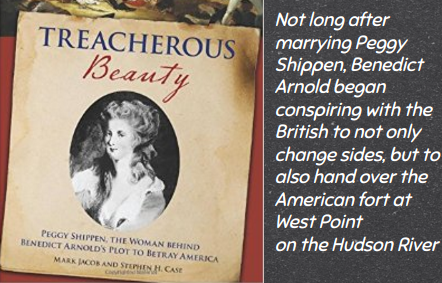
     On 8 April 1779, Arnold and Peggy were married in the Shippen mansion. The charges against Arnold were national news, and Arnold was quickly running out of money; he was bleeding cash trying to keep his extravagant standard-of-living. Soon, Arnold started to borrow money to keep up appearances, and Arnold and Peggy largely kept to themselves . . . this was when the treasonous plot was most likely hatched. 
     Congress had to decide the Arnold v. Pennsylvania debacle, but they couldn't find any evidence of illegal trading by Arnold. Congress then in effect transferred the entire mess to Washington, telling him to try Arnold in a military court. Arnold asked for a quick trial, but Reed objected, saying he needed more time to gather evidence. Reed went so far as to write Washington that if he didn't get the extra time, then Pennsylvania's support of the war effort just might decrease. 
     Washington was in an impossible position, and decided to postpone Arnold's trial. Arnold believed that the delay meant that Washington also saw him as a criminal, which proved to be another step towards treason. Arnold stated that the delay was worse-than-death; Arnold was most likely wrestling with his inner-demons by that time, and was heading towards some dreadful decisions. It was almost like Arnold was asking Washington to save him before it was too late. 

Picture
      Major Andre had a hard time knowing which people visiting his office were actually spies, and whether they were credible or crackpots. On 10 May 1779, Joseph Stansbury visited Andre and told him that General Benedict Arnold was offering his services to General Henry Clinton, either by joining the British army or by being part of a covert operation. Andre was in absolute shock . . . it never even remotely registered to any British officer that Arnold was anything but a true Patriot. 
     A few days later, Stansbury told Arnold that his offer had been accepted, and that Andre urged Arnold to propose a specific plan of action. Peggy Arnold was the go-between, and invisible ink from onion juice was used; their cypher was Blackstone's Commentaries, a massive legal text familiar to the well-educated. The code/cypher was impossible to break, but it was also very slow and tedious to decode. 
     Arnold inquired about financial details, while Andre wanted information in order to find a weak spot in the American defenses. Andre made it very clear to Arnold that he needed to return to an important command in the American Army. Arnold saw Washington at his headquarters on 1 June 1779, just before his long-delayed court-martial was to begin. Arnold started ranting about Congress and Reed, and Washington didn't want to be seen talking to Arnold in any meaningful public way before the court-martial due to perceptions of fairness. As a result, Washington gave Arnold a fairly stern public rebuke; as a result, Arnold no longer had second thoughts of treason . . . his inner-demons were no more.

0 Comments

Benedict Arnold: The Hero of Saratoga (Aug 1777 - January 1778)

4/29/2016

0 Comments

 
       Source: Steve Sheinkin. The Notorious Benedict Arnold - A True
                           Story of Adventure, Heroism, and Treachery (2010)

Picture
     After securing Fort Stanwix, Major General Benedict Arnold returned to the Northern Army to find the overall commander, General Philip Schuyler, and his second-in-command, General Horatio Gates, fighting for control of the army. Congress sided with Gates; a majority in Congress had (unfairly) blamed Schuyler for the British takeover of Fort Ticonderoga. Gates, at the age of 50, finally saw his chance to achieve glory. 
     Gates decided to organize his army in a defensive posture in order to face the slowly advancing British forces under General John Burgoyne. While Gates was doing so, more-and-more soldiers showed up at camp, bolstering the Northern Army. Until this point, Gates and Arnold had got along okay; but then Arnold discovered that Gates didn't mention Arnold in his dispatches about Fort Stanwix . . . and Arnold offended Gates by populating his staff with Schuyler loyalists. 
     The main division between the two concerned their strategies of the upcoming battle at Saratoga. Gates didn't think that Arnold's recklessness was needed . . . he wanted the British to smash themselves against his defenses. As always, Arnold preferred the offensive, and since Daniel Morgan and his men were also at Saratoga, Arnold wanted to attack Burgoyne and disrupt their plans/formations and create chaos . . . chaos that would lead to victory and glory for Arnold.

Picture
     Gates had become sick of hearing about Arnold's heroism and bravery, and he no longer invited Arnold to strategy meetings. Gates' defensive strategy would be the equivalent of a head coach that was "playing not to lose" . . . it was exactly the strategy on which General Burgoyne was counting. At 10 am on 19 September 1777, Burgoyne's forces started hammering away with cannon fire at the defensive positions of the Northern Army. 
     Arnold urged Gates to not let the British get any closer; finally, mostly to just get Arnold away from him, Gates told Arnold to take 2000+ men and head to the battle. Arnold led his men to the fighting, and after being repulsed on his first charge, Morgan and his snipers started picking off British officers. The Americans and British went back-and-forth all afternoon; many later thought the fighting featured the most intense artillery/musket exchanges of the entire Revolutionary War. 
     Arnold sensed that victory was near, and asked Gates for reinforcements. Gates refused to do so, saying it was too risky; Arnold personally asked Gates to reconsider, and Gates still refused. Arnold continued to plead his case, and finally Gates sent 300+ men back with Arnold. Arnold told those near him that he would end the battle, but Gates heard his boast, and recalled Arnold to camp . . . Arnold heard the last sounds of battle that day standing just outside his tent.

Picture
      Arnold's men fell back to the defensive lines, and Burgoyne was in control of the field; Burgoyne had 600+ casualties to approximately 300 for the Americans. Burgoyne and his staff tried to figure out what went wrong on their assault . . . they concluded that their failure was due to Arnold's actions and leadership. 
     At the same time, Gates was satisfied with his defensive strategy, and he made sure that his lines were more stout, since Burgoyne had lost many more men, and many of his best officers. Gates concluded that Burgoyne would have to attack with his weakened army, or head back to Canada; for Gates, it was all wine-and-roses at this point of the battle. True, Burgoyne was in a dangerous position, but he was expecting help. General Howe was supposed to head north from New York City, and General Barry St. Leger was to come in from the west. But Arnold had forced St. Leger to alter his plans at Fort Stanwix, and Howe chose instead to take Philadelphia, in part due to his hatred of Burgoyne, whom he outranked.

Picture
     General George Washington's failure to keep the British from enforcing their will in Pennsylvania intensified pressure on the Northern Army at Saratoga. By that point, Gates and Arnold were beyond any reconciliation. Gates made no mention in his dispatches to Congress of Arnold's successful efforts in stopping Burgoyne, which was contrary to all military tradition. Arnold was stunned and insulted, and to make matters worse, Gates took Morgan and his men under his direct command, crippling Arnold's initiative in any future engagements. 
     None of what Gates did to Arnold made any military sense, but Gates was concerned that Arnold may do something stupid and reckless that may lead to defeat . . . his defeat. Or, perhaps worse yet, Arnold may do something crazy to win the battle and deny Gates his glory. Arnold confronted Gates, and Gates expertly needled Arnold to the point where Arnold demanded to join Washington in Pennsylvania. 
     Gates gladly wrote the pass for Arnold, but Arnold remained at Saratoga, and then raved when Major General Benjamin Lincoln (one of the five original major generals selected by Congress, and who Arnold actually out-ranked at that point) took command of his men. Gates told Arnold that if he interfered again he would be arrested . . . it was awkward for Arnold to remain, but he just couldn't leave the Battle of Saratoga.

Picture
     By early-October, Gates had over 10,000 men to Burgoyne's 5000. Burgoyne was still in front of the American lines with only three weeks remaining of his provisions . . . yet on 7 October 1777, Burgoyne made his move. General James Wilkinson advised Gates to attack Burgoyne with Morgan and his men, a comment which Arnold overheard. Gates noticed that Arnold was eavesdropping, and ordered him back to his tent. 
     Arnold couldn't stand the situation any longer, and he mounted a horse and rode around the camp, then he spurred his horse towards the sound of the battle, shouting "Victory or Death" . . . Gates ordered Arnold to be brought back to camp. Soldiers cheered when they saw Arnold heading their way, and cheered even louder when Arnold took command on the field. The men had no idea that Arnold did so without the authority of General Horatio Gates.

Picture
       Gates was no longer in control of the battle; Arnold led charges against one of the British redoubts (small fort-like defenses) in order to outflank Burgoyne. Arnold led charge-after-charge, and then realized that he had been attacking the stronger of the two redoubts. Then Arnold did something extreme, even for him: Arnold dodged fire between enemy lines for 120 yards, reaching the Americans in front of the weaker redoubt to the north.
     Arnold then led charges on that position, until he felt a musket ball slice through his left leg, and the leg splintered under the weight of his falling horse. Arnold ordered his men to continue the charge, and from the ground, with his left leg shattered, he saw the decisive victory come to pass that he had longed for during the last three years (during the fighting on 7 October, British General Simon Fraser was shot and killed; he had kept the British focused, organized, and inspired . . . it was possible that Arnold was targeted as a result of Fraser's death).

Picture
     Arnold's men jury-rigged a conveyance for Arnold; it was at that point that a messenger from Gates told Arnold that he was to return to camp before doing "some rash thing". Arnold was asked where he was hit, and Arnold responded that it was the same leg that was injured at Quebec (in 1775), but "I wish it had been my heart". 
     Arnold was not only shot in the left leg, but he also had a very serious compound fracture. Arnold refused to have the leg amputated, and his leg was put in a "fracture box", which was a tight wooden frame around his entire leg (a device that was still in use during the Civil War). Arnold was told by doctors that he would be bedridden on his back for several months. It was in this condition that Arnold followed the news from Saratoga. Burgoyne was outnumbered 3:1 by Gates, and surprisingly, Gates took the initiative, and attacked Burgoyne as he was retreating to Canada. On 17 October 1777, Burgoyne surrendered his 6000+ British and Hessian soldiers to Gates . . . it was by far the biggest event yet in the Revolutionary War.

Picture
     Arnold trembled with rage, calling Gates 'the greatest poltroon (coward) in the world". Arnold didn't hear a thing from Gates, but there was plenty of news about Horatio Gates to read. Gates was the "Hero of Saratoga", and Arnold obsessed about the unfair cruelty of it all. In mid-December 1777, Congress granted Arnold the seniority he had long desired, but Arnold didn't feel "restored". 


     Congress, like Gates, was silent about Arnold's role at Saratoga. In mid-January 1778, Washington sent Arnold a letter of congratulations, and inquired about his health and his ability to return to duty. Arnold had muscle damage so severe in his left leg that they shrank as they healed, leaving his left leg two inches shorter than his right . . . his doctors didn't think that Arnold would ever walk again . . . or would even want to walk again. Up to this point in time, Arnold was always able to redouble his efforts and try again to achieve the glory that kept eluding him. But in his current physical and mental state, he didn't think there would ever be a "next time" . . . the seeds for treason were sown . . . 

Picture
0 Comments

Benedict Arnold: Before Saratoga, 4 January - 24 August 1777

4/22/2016

0 Comments

 
       Source: Steve Sheinkin. The Notorious Benedict Arnold - A True
                            Story of Adventure, Heroism, and Treachery (2010)          
Picture
     After the Battle at Valcour Island in October 1776, Benedict Arnold was back in New Haven, Connecticut by January 1777. Arnold loved reading the positive press about his exploits; he felt honored when he read that the British thought it was a shame that he wasn't captured, since he was the most "enterprising" of the rebels. Arnold was no longer the one in New Haven being negatively judged; those that had been doing so were coming by, uninvited, to congratulate him, ask about him, and wish him well. 
     Arnold was also well-received in Boston, and was invited to a party hosted by Washington's Commander of the Artillery, Henry Knox. But soon, Arnold heard less-than-stellar opinions of his recent military action. Some said that Arnold had behaved rashly, and only cared for personal glory . . . and some even said that Arnold was an "Evil Genius".

Picture
     In Philadelphia, the Continental Congress had become tired of seeing generals being treated as celebrities and/or idols; John Adams and many of the other members of Congress didn't want the military to overshadow the true heroes of the Revolution . . . themselves. Washington submitted a request to Congress for five new major generals. General Washington left the decision to Congress (for political reasons); Congress was itching to show the Commander of the Continental Army who was actually in charge.
     The selections for the major generals by Congress featured none of the men Washington wanted. Arnold had been passed over, which upset Washington, in that Arnold had more seniority/rank than those chosen. General Washington knew that Arnold would miss the politics of the decision, and take the result as a personal insult, and would most likely resign. Washington wrote Arnold, telling him that the selections were based on politics and sectionalism, not merit. But Arnold believed that the stories told by his enemies were the reason why he wasn't promoted. Arnold was at home, feeling besieged by bitter enemies, with idle time on his hands, and experiencing more periods of gout. But the Revolutionary War saved Arnold; on 25 April 1777, Benedict Arnold was awakened at 3 am by militiamen pounding on his door.

Picture
      General Arnold was told that the British were raiding their beloved Connecticut, and were slashing/burning their way in the direction of Danbury. Arnold rode 20 miles, and when he saw the 2000+ Redcoats moving back to Long Island, Arnold decided to attack with only 500 men. Arnold placed his men on the road the British would soon use on their route back to New York. Riding back-and-forth between positions, Arnold's horse was shot out from under him (At least 9 Redcoats fired at him). Arnold's leg was trapped underneath his felled horse, but he was able to kill an approaching Redcoat with a single shot of his pistol. 
     Arnold freed himself and took off on foot across a swamp, fired on repeatedly until he was able to reach the cover of the woods. At least two shots went through Arnold's hat . . . once again, the British were impressed. Congress, after hearing about Arnold's actions, promoted Arnold to Major General . . . but the original five major generals still outranked Arnold. Once again, Arnold felt slighted, believing again that the attacks on his character were the reason why he didn't receive the promotion he felt he deserved.

Picture
      The worst of the anti-Arnold rumors were still those concerning Montreal, where Arnold was accused of stealing provisions for retreating soldiers after Quebec in 1775. Arnold was determined to go to Philadelphia in order to convince Congress to give him seniority over the original five major generals; Washington knew no good could come of Arnold's efforts. On 19 May 1777, Arnold made his case to Congress; Arnold's lack of political skills/tact hurt him badly. Arnold's sincere appeal quickly turned to angry whining . . . Arnold received a new horse, but no advancement in rank/seniority. 
     Arnold stayed in Philadelphia to lobby for the desired rank/seniority nonetheless; larger political issues meant nothing to Arnold . . . to him, everything was personal. After weeks of fruitless efforts, Arnold finally gave up, and on 10 July 1777, Arnold wrote his resignation, and delivered it to Congress the next day. Congress received another letter on 11 July 1777 from Washington, notifying them that the British had started their attack from Canada, and were threatening to take the Hudson River (to Washington and many others, if the "Line of the Hudson" was taken by the British, the war would be lost). 
     Washington wrote additional letters to Congress, inquiring about Arnold's status, and saying that he wanted Arnold to head north. Congress asked Arnold to set aside his resignation and hurry to Washington's headquarters . . . both parties were glad to be rid of each other.

Picture
      Arnold reached Washington's headquarters on 17 July 1777. Washington told Arnold that this time, the British were in greater force than in 1776. Fort Ticonderoga had been retaken by General Burgoyne, and his army was heading towards the Hudson River. Washington told Arnold to head north and help General Philip Schuyler deal with Burgoyne. 
     In early-August 1777, General Schuyler called his top Northern Army officers to a council of war. The Northern Army had about 6000 men, but half were sick; Burgoyne was advancing with 8000+ men, but slowly. And, to make matters worse, Lt. Colonel Barry St. Leger (promoted to Brevet General for that campaign) was coming from the west with 750 Redcoats and over 1000 Mohawks. Most generals advised Schuyler to keep the army in one piece, and forget about defending Stanwix. 
     Arnold told Schuyler that he should divide his army, sending troops to reinforce (or to rescue) those at Fort Stanwix, and Schuyler agreed. Schuyler then asked who would lead the force to Stanwix, and nobody responded, not even Arnold. An angry Schuyler then stated he would lead the force, and asked who would be his #2 general . . . Arnold was the only general that offered to go with Schuyler to Fort Stanwix.

Picture
     The goal was to keep St. Leger's forces from getting anywhere near the Hudson River. On 21 August 1777, Arnold, who was on-point, neared Fort Stanwix, and confirmed that St. Leger was at least twice his strength. Arnold wanted to attack, but agreed to wait for reinforcements; Arnold wanted happier officers under his command, for at least the time-being.
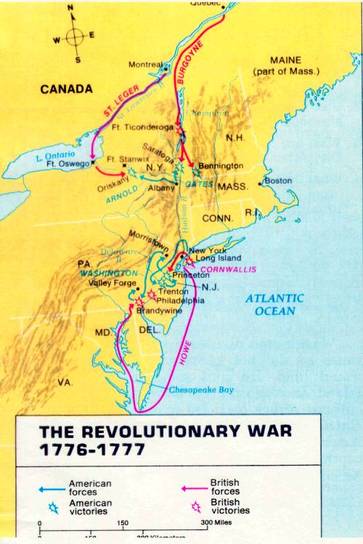
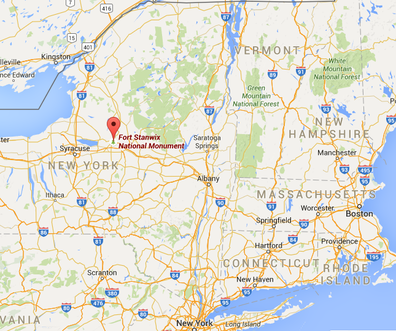
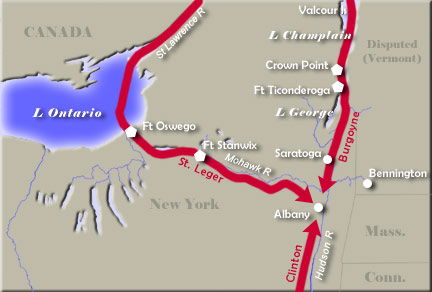
     But Arnold had a trick up his sleeve; instead of shooting a suspected traitor named Hon Yost Schuyler (who was actually a Loyalist working for St. Leger), he ordered Yost Schuyler's coat to be shot-up. Then, beholden to Arnold for his life, Arnold had Yost Schuyler head to Fort Stanwix. Yost Schuyler was captured, and he told the Mohawks that he had barely escaped with his life eluding an American army that numbered over 2000. The Mohawks wanted to leave anyway, and they now had their excuse; as the Mohawks prepared to leave, they must have enjoyed scaring the devil out of the British - terrified Redcoats ran to the woods. St. Leger had no choice but to retreat to Lake Ontario, 70 miles away. On 24 August 1777, Arnold arrived at Fort Stanwix, solidifying American possession of the area. An aggressive-yet-tricky General Arnold had succeeded in keeping St. Leger's force from reaching the Hudson River from the west, which would be crucial in the Battle of Saratoga in September/October of 1777 (pictured above: the British overall strategic plan on taking the "Line of the Hudson" with 3 armies . . . St. Leger had only reached Fort Ticonderoga when Burgoyne surrendered his army near Saratoga on 17 October 1777).

0 Comments

Benedict Arnold: The Hero of the Battle of Valcour Island (1776)

4/17/2016

0 Comments

 
       Source: Steve Sheinkin. The Notorious Benedict Arnold - A True
                           Story of Adventure, Heroism, and Treachery (2010)
Picture
      Benedict Arnold was already an American Colonial hero by the Summer of 1776. In 1775, he (with Ethan Allen and his Green Mountain Boys) had taken Fort Ticonderoga on Lake Champlain from the British for the 100+ cannon. And later that year, Arnold and hundreds volunteers from the Continental Army experienced incredible hardships just getting to the fort at Quebec on the St. Lawrence River, and actually entered the fort before being forced out by a much larger British contingent. A wounded Arnold was the last American officer to vacate the area after it became clear a retreat was necessary.
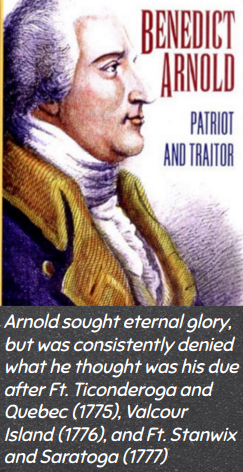
     Benedict Arnold's life to that point featured periods of hard work and achievements that were interrupted by outbursts of temper . . . politics and subtlety were not among his strengths. Arnold saw the Revolutionary War as a chance to wipe out the negativity that had surrounded the Arnold family name in New Haven, CT, and to soar above those that dared to judge him . . . in short, Benedict Arnold sought immortality.

Picture
      During the Summer of 1776, a meeting of officers from the Northern Continental Army took place. General Philip Schuyler was in overall command, with General Horatio Gates second-in-command. General Arnold (who was still beyond-upset that he wasn't one of the highest-ranking generals in the entire Continental Army) reviewed the situation facing them on Lake Champlain. Arnold told his fellow officers that the British were regrouping at St. John's in the northern area of the lake, and had rebuilt its fleet, and were ready to head south past the lake to the Hudson River all the way to New York City. 
​     Arnold stated that the British fleet must be stopped in Lake Champlain, and to do so meant building an American fleet. Arnold proposed building boats that would be smaller than the British ships, and with fewer guns, but more maneuverable. Since no general really knew what to do, Schuyler gave Arnold command of the American fleet on Lake Champlain; the other generals were glad to have Arnold have the responsibility, since he would have to take the blame when the fleet was crushed by the British. Arnold was given the title of "Commander of the Lakes", and as he started to build America's first fleet of ships, news of the Declaration of Independence reached their location in Upstate New York.
 

Picture
      General Arnold was under a lot of pressure in Lake Champlain, especially when he heard of the near-capture of Washington's Army just outside of New York City. Arnold kept crews working around-the-clock, but the construction of the fleet was still going too slowly. Arnold needed more of everything, including sailors for the ships. Arnold, tactless as always, went above Gates to Schuyler, demanding what was needed. Schuyler was already suspicious and distrustful of Gates, and Gates coveted Schuyler's command, and so Arnold's actions increased the tensions among those two generals (and Arnold didn't do any favors for himself with Gates, especially)
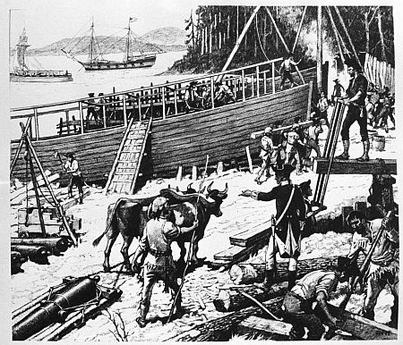
    While trying to build the fleet (pictured: a drawing depicting the construction of one of the ships in Arnold's fleet), Arnold had to defend himself in a military inquiry. In Canada, the supplies he arranged for the retreating troops from Quebec were not properly guarded, and Arnold had dressed-down the officer in charge in front of others. That officer then spread false rumors that Arnold had obtained the supplies by stealing them Montreal. Arnold had to spend a week defending himself in court rather than building the fleet; Arnold refused to apologize to the judges for his behavior, and even challenged all of the judges to individual duels. Frightened, the court asked Gates to have Arnold placed under arrest; Gates couldn't spare Arnold, and he subsequently dissolved the panel of inquiry. General Gates actually stood up for Arnold in this situation, but he never forgot that Arnold went over his head to Schuyler.

Picture
      By September 1776, Arnold's spies were sure that Britain's fleet would move south on Lake Champlain in October. Again, Arnold asked Gates for more of everything, and Gates told Arnold to use what he already had in his possession. At that point, it dawned on Arnold that he was being set up for failure, and then to be blamed. Arnold knew he couldn't slug it out with the British fleet ship-to-ship, so he had to come up with another strategy. Arnold moved his just-constructed fleet behind Valcour Island so the British, as they moved down Lake Champlain, would not see any American ships. General Guy Carleton, the commander of the British fleet, overheard one of his captains lamenting the fact that the Americans were nowhere in sight; Carleton, who was very familiar with Arnold's courage and boldness, told his captain, "wait and see".
    The Battle of Valcour Island started on 11 October 1776. Arnold arranged his fleet of 15 small ships in an arc, hiding in the narrow channel between Valcour Island and the main shore of Lake Champlain. Arnold prepared his 800 men on 15 ships to engage 34 British ships of various sizes that had at least 700 men. Arnold hoped that the British fleet would sail past his position, and when they spotted the American fleet, the British would need to turn around. At that point, the wind would be against them in order to get to the channel were the American fleet was located . . . that was the moment that Arnold wanted to attack. But, if the wind changed direction, the American fleet would be floating in a death trap.

Picture
      The British fleet approached Valcour Island without any scouting vessels, and cruised past the island in an overconfident manner; the British eventually spotted the American fleet when they had sailed south past the island. The wind remained in Arnold's favor; now Arnold needed to lure the British into battle very quickly before they had time to adjust strategy/tactics. Arnold and his fleet darted forward and opened fire; Arnold continued to bark out orders even though the battle didn't start out well for the Americans.
     General Carleton was shaken; this wasn't the battle he had envisioned. The battle raged all afternoon, and as the sun started to set, the superior British firepower began to dominate. The British set in for the night, blocking the American fleet in the channel, and were content to wait until the next morning to finish off the stubborn smaller fleet. Arnold had three options: first, he could stay and fight, which was madness. Second, he could surrender, but to Arnold that wasn't an option worth even considering. So it would be the third option; the British had left a small gap between their line of ships and the shore. Arnold knew the area well, and he knew the gap had water deep enough for his ships to navigate their way through . . . Arnold's plan was for a "Midnight Escape".

Picture
      The night was dark and moonless; shirts were wrapped around the oars, and the American fleet rowed through the gap without being discovered . . . and as at Quebec, Arnold was the last to leave (on his flagship, the Congress). Again, the British were very surprised the next morning; General Carleton was in a rage, largely to cover his own embarrassment at being outfoxed. Carleton gave the order to chase-down the American fleet. Arnold had an eight mile head start, but even so, it would be a close race to the closest American fort at Crown Point. If Arnold could reach the protection of the fort's guns, he would be safe . . . but he was twenty miles away, and the British fleet was closing fast.
     The British fleet caught up with Arnold's ships at noon on 12 October 1776; the American fleet was rowing for their lives as the British fired, and hit some of the American vessels. Again, Arnold's knowledge of the lake paid off in that he knew he was approaching a shallow rocky bay where the British couldn't follow. Arnold headed into the shallow bay, and ordered his men out of the boats on to the shore, carrying the wounded and setting the fleet on fire. The fire reached the powder kegs on each ship, and there were many explosions, which shielded the men as they made their escape on land.  Arnold and his men were still ten miles from the fort at Crown Point, but they reached the fort that night . . . and found out that the army had abandoned the fort and had retreated to Fort Ticonderoga.

Picture
     Arnold and his men reached Ticonderoga at 4 am on 13 October 1776. The American forces at Ticonderoga knew they didn't have enough firepower to hold against a British onslaught. It wasn't until  28 October 1776 that Carleton's fleet was spotted; Carleton had no idea of the strength of the fort's defenses, and his supply lines from Canada had become dangerously long and vulnerable . . . also, Carleton's fleet had taken an unexpected pounding from Arnold's ships.
     Carleton decided that he had enough for one season, and while claiming two victories, he had failed to drive off the Americans from Lake Champlain. The British would have to start all over the next year; if the British had forced the Americans from the lake, and had moved down the Hudson to join the huge British force in NYC, the Revolutionary War would most likely have ended. General Gates and the Americans under his command at Fort Ticonderoga watched the British fleet disappear in the distance . . . Arnold's little navy was destroyed, but that tiny fleet had kept the American Revolution alive.

0 Comments

The Attempted Assassination of President Ronald Reagan

4/2/2016

0 Comments

 
                  Source: H.W. Brands. Reagan: The Life (2015)
Picture
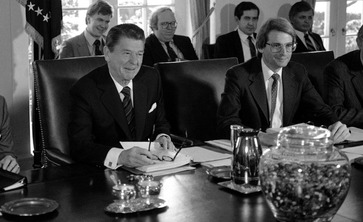
      On 30 March 1981, President Ronald Reagan addressed the leaders of the Building & Construction Trades Department (pictured) of the AFL-CIO at the Washington Hilton, just up Connecticut Avenue from the White House. Union leaders listened respectfully but skeptically; many were disappointed that Reagan didn't endorse federal spending for mass transit and energy projects, which would employ 600,000+ idle workers.
     Nancy Reagan was initially told that Reagan wasn't shot outside the Hilton; but she went to George Washington Hospital as fast as she could anyway. When Nancy arrived, Michael Deaver (one of the members of Reagan's "Troika") told her that Reagan had been shot (the shooter was John Hinckley, Jr.). Reagan later said that he felt a blow in his upper back that was unbelievably painful, and initially thought he had a broken rib. When Reagan started coughing up blood, the Secret Service agent next to him ordered the limousine to the George Washington Hospital . . . during the few minutes to the George Washington, Reagan's condition worsened.

       Inside the double-doors of the hospital, Reagan collapsed; he was held up by Secret Service agents. The George Washington Hospital staff thought that Reagan was suffering from a heart attack, and prepared intravenous lines. Reagan regained consciousness and complained that he couldn't breathe. When the bullet hole was discovered after rolling the President to his right, it was deduced that he had been hit by a ricocheted bullet; a small "wicked disc" remained in Reagan's body. The doctor in charge, Dr. Benjamin Aaron, decided to remove the bullet. When Nancy was allowed into pre-op to see her husband, Reagan said, "Honey, I forgot to duck".
Picture
Picture
      Secretary of State Alexander Haig called Chief-of-Staff James Baker III (pictured below with Reagan after the President's recovery) just before Baker left the White House to go to the hospital. Haig was alarmed that the President was incapacitated, even temporarily, with Vice-President George Bush out of D.C. in somewhere in Texas. Haig told Baker he would ensure the chain-of-command by gathering the Cabinet officials most crucial to national security: Defense, Treasury, CIA, National Security Advisor, and the Attorney General, and he would continue to try and reach the Vice-President.
     Baker, as Chief-of-Staff, had to decide whether-or-not to invoke the 25th Amendment; should Vice-President Bush be the acting-President while Reagan was undergoing surgery . . . Baker decided not to do so. Baker didn't want Bush to become an acting-President; Baker liked Bush very much, but Baker and the other Reagan loyalists didn't think Bush's conservative bona fides were nearly stout enough. Also, their was the fact that Baker and Bush were very good friends, and appearances mattered, even when the President was fighting for his life.

Picture
      Press Secretary James Brady's assistant, Larry Speakes, froze under the pressure of the cameras, and didn't have up-to-the-minute information, which created the impression that no one was in charge of the federal government while Reagan was undergoing surgery. Secretary of State Haig was watching the press conference; Haig felt that it was imperative to show that the U.S. had an effective government during the crisis. Haig raced out of the Situation Room and dashed to the Press Room, and took over for Speakes.


     Haig was asked who was making decisions in the Executive Branch; Haig had intended to calm down the room (and nation), but he arrived out-of-breath, and his words had the opposite effect. Also, Haig made a mistake in terms of the line-of-succession according to the 25th Amendment; the Secretary of State was 5th, not 3rd, in the line-of-succession (after the President is the Vice-President, then the Speaker-of-the-House, then the President Pro-Tem of the Senate, THEN the SecState). Haig's "I am in control here" line was too easily used by TV to portray the SecState in the wrong manner; Haig's main intent was to let the USSR know that there were indeed people in charge of the government and the military. Haig regretted not composing himself before he took the podium and his choice of words . . . but he succeeded in pointing out that he was the senior Cabinet official present, and the government was functioning.

Picture
     Reagan's surgery began smoothly; fresh blood replaced the lost blood, and a breathing tube kept him oxygenated, and the President's vital signs were stable . . . but the bullet proved to be very elusive. Multiple eyes and doctors were involved trying to find the bullet to no avail. During the searches, the bullet kept moving slightly, avoiding detection . . . finally, the bullet was found and removed (an intern had to hold the President's heart in his hands for the bullet to be found and removed).
     The rest of the surgery was straightforward, but still risky, in that an artery needed to be repaired, and a lung sutured (the surgery lasted 70 minutes on a President that was almost 70 years old). Reagan recovered, but Nancy never did; she would remain paranoid when her husband needed to leave the White House for any significant sojourn for the rest of his Presidency . . . Reagan was released after only thirteen days at George Washington Hospital.

Picture
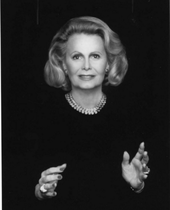
     Reagan recuperated over the next two weeks at the White House, but Nancy could never relax; she knew of the "fatal pattern" of Presidents that were elected in years ending with a zero since 1840 (divisible by 20) . . . Nancy constantly worried that death in office still awaited her husband. The First Lady started to consult an astrologer, Joan Quigley (pictured) whom she had met years ago in California from a mutual friend, Merv Griffin. 
     Quigley claimed to have 30 March 1981 pegged as a "bad day" for Reagan; Nancy became addicted to contacting Quigely when Reagan resumed normal activities as President. Nancy involved Michael Deaver, who made sure that the astrologer remained secret; neither he or Nancy wanted to embarrass the President that she constantly used an astrologer to predict "good days" or "bad days" for her husband.

Picture
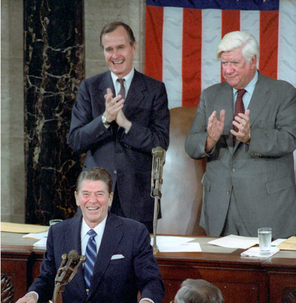
     A month-and-a-day after being shot, Reagan asked for, and received permission, to address Congress. Reagan had to fight through extended arms and hands to reach the podium. Reagan reveled in the atmosphere, and reciprocated that good feeling . . . he was performing in front of a receptive audience, a feeling he craved (it was the main reason why he entered politics).
Soon enough during his address, Reagan launched into the topics of less federal spending, finding ways to reduce inflation and to lower taxes (pictured behind Reagan: VP Bush to the left, and Speaker of the House Tip O'Neill to the right).
     Six months after his election, the economy was still in "Stagflation" mode; inflation had scarcely abated and interest rates were punishingly high; 8 million Americans were out of work, and real wages were down. Reagan stated that the effort to improve the economy started with the federal budget; in Reagan's view, government was too big and it spent far too much.
     Reagan's proposed budget had moved along until House Democrats presented their version that kept social spending levels intact, raised taxes, and cut proposed increases in defense spending. Reagan responded that he proposed nothing more than to stop tax increases; he didn't advocate tax cuts as of yet. Reagan's address was in the aftermath of the first Space Shuttle Mission, which had just successfully concluded . . . Reagan stated that "we have much greatness before us"; t
he near-death experience from the attempted assassination only heightened Reagan's sense of mission as President

0 Comments

President Ronald Reagan: 20 January - 30 March 1981

3/26/2016

0 Comments

 
                         Source: H.W. Brands. Reagan: The Life (2015)
Picture
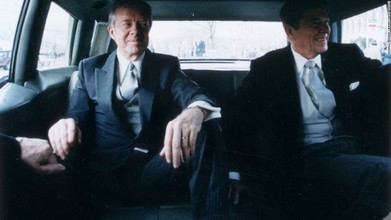
      20 January 1981, Inauguration Day: Outgoing President Jimmy Carter considered himself far more competent than the incoming President, Ronald Reagan. Carter still resented losing to Reagan in the Election of 1980; Carter's mood didn't improve in the least since the Iranian government refused to release the 52 American hostages as long as he was in office. 
     For the first time, a President was inaugurated on the West side of the Capitol Building. Only a handful of people have spoken to a larger crowd than Reagan on his first Inaugural. It was unseasonably warm and cloudy; but when Reagan reached the podium, the sun started to shine. 
     Reagan and his staff decided to cut taxes and get control of federal government spending. Reagan proposed to take the U.S. across the Rubicon with tax cuts ahead of spending cuts. Cutting taxes was the easy part, so Reagan and his staff decided to get those cuts through Congress first, saving the tougher battle on reducing government spending for later. David Stockman, the head of the Office of Management and Budget (OMB) suggested significant spending cuts in every Cabinet department except one . . . Defense. The Defense Department, under SecDef Caspar Weinberger, was able to get most of what it wanted due to Reagan's philosophy of building up the military in order to better deal with the USSR.

Picture
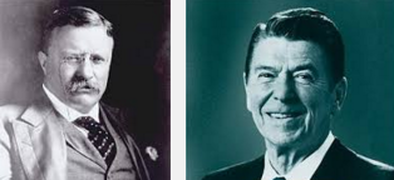
      Presidents have influence on domestic affairs, but they have actual power in foreign affairs. That being said, Reagan in his first term had more influence on domestic affairs compared to most other Presidents, in that he was a believer in Theodore Roosevelt's "Bully Pulpit". Reagan believed that the "Bully Pulpit" gave him an advantage over the Legislative branch. Reagan was the most compelling and effective communicator as President since Franklin Roosevelt, and he knew it. Reagan knew how to read a room, and he was able to reach a vast audience through television. Reagan's message was always the same: smaller government and lower taxes.
    On 18 February 1981, Reagan formally proposed his budget in the House of Representatives. Reagan stated that unless Congress acted now, the economy would  get worse; America was experiencing double-digit unemployment and inflation at the same time ("Stagflation"). Reagan wanted a four-part plan passed by Congress. First, Reagan called for $498B in federal government spending cuts. Reagan went on to say that these were cuts in projected increases; there still would be an absolute increase of $41B in government spending. To some, it already appeared that the new President was weakening his stance on cutting federal government spending.

Picture
      Reagan further weakened his stance by announcing what areas of government would be exempted from spending cuts. Social safety nets such as Social Security and Medicare would be exempted. Reagan than announced that the Defense Department (pictured: President Reagan with his SecDef, Caspar Weinberger in 1981) would see increases in their budget; the President justified this decision by saying that the U.S. faced unprecedented challenges in terms of national security.
     Federal aid for education would be cut, as would federal support for the arts. Concerning education, Reagan said that less federal money was a good thing, in that the cuts would lead to greater local control. Funding for the Energy Department's synthetic fuel research would be reduced, and the Import-Export Bank would lose 1/3 of their funding. Recipients of food stamps would be vigorously scrutinized in order to eliminate freeloaders. Medicaid payments to states would be capped, and the U.S. Postal Service would receive less federal money.

Picture
     Part two of Reagan's proposed budget to Congress centered on tax cuts; specifically, Reagan wanted 10% across-the-board tax cuts. Every year for the next three years, taxes would be cut for all individual income taxpayers. Reagan disagreed that these tax cuts would increase inflation; like spending, these were cuts in projected tax increases. Reagan (pictured in February 1981; Reagan and David Stockman, Director of the OMB, to the right) argued that tax cuts would reduce inflation by increasing overall output, which then would lead to greater revenue for the federal government (that was basically what President Calvin Coolidge did in his administration).
     Reagan predicted that the economy would not only recover under these tax cuts, but would be rolling along and expanding by 1985. Reagan also wanted to encourage investment in business by adjusting the complex-and-outdated tax brackets. But Reagan also stated that changing the tax brackets was a strategy that could be debated and implemented later.

Picture
     Part three dealt with deregulation; Reagan believed that government regulation equaled hidden taxes. Reagan made it clear that no regulations would be removed that were essential for health and safety. But Reagan was clear that many government regulations would have to go, and there would not be any new regulations created. Reagan announced that Vice-President George Bush would lead a committee that would focus on government regulations.
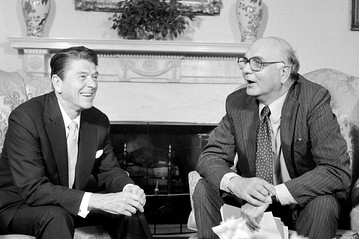
     Lastly was Monetary Policy; Reagan argued that to curb inflation, the growth of the money supply (MS) must be slowed. The Federal Reserve was not in the purview of the President, but Reagan wanted to clearly communicate that he wanted/expected cooperation by the Chairman of the Federal Reserve, Paul Volcker (pictured with Reagan in July 1981, just weeks after the attempted assassination on the President on 30 March 1981).
     Not since the New Deal had a President presented such a sweeping economic program to Congress. It was Reagan's plan, but it required the assent of Congress; Reagan told Congress that the federal government must get out of the way of the American people in order to restore risk-taking, investment, consumer spending, and overall confidence in the economy.

Picture
      Reagan enjoyed holding news conferences and dealing with reporters, at least in early years of his Presidency. Reagan took care to learn all of the names of the reporters that were assigned the White House as their primary beat. Reagan's mastery of details was much less than Carter, but his presence as President was far greater. The first press conference was one week after the Inauguration. Helen Thomas asked Reagan if he would punish or reconcile with Iran; Reagan answered that there would be no punishment, and no reconciliation. 
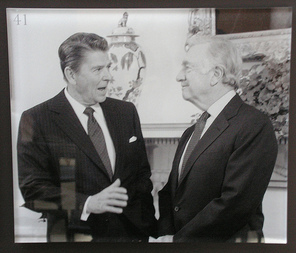
     Sam Donaldson of ABC News (the reporter that Reagan would come to detest the most) asked about his stance with the USSR; Reagan answered that the US would take a much harder line with the Soviets compared to recent Presidents. Walter Cronkite of CBS News (pictured at Reagan's left on 3 March 1981 - Cronkite was still "The Most Trusted Man in America") was just days away from retirement, and his last hurrah was interviewing Reagan on television. Cronkite asked if bashing the USSR would be productive, and Reagan responded that Leonid Brezhnev already wanted a US/USSR summit. Reagan further commented that he was in no hurry for a US/USSR summit, in that he needed to talk with America's allies in advance. Reagan went on to say that the summit could be canceled if the USSR misbehaved.

Picture
      Despite a comfortable White House routine in terms of personal and Presidential activities (Reagan LOVED creating and keeping schedules), both the President and the First Lady, Nancy, felt confined, and very often went to Camp David on weekends to be outdoors. Fridays and Saturdays were movie nights at Camp David; the favorites of the President and First Lady were the classic "oldies" from their time in Hollywood . . . they watched more modern movies with much less enthusiasm.
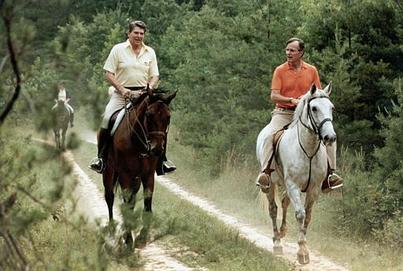
     The Reagans returned to the White House on Sunday afternoon, and they already missed Camp David. To the Reagans, Camp David was more soothing and comforting than Rancho del Cielo, their ranch in California. That being said, every few months, Air Force One would whisk the President and First Lady to their ranch in California . . . reporters and cameras were banned.  By late-March 1981, President Ronald Reagan had developed a White House routine that he loved to follow, and he was able to
​re-energize at Camp David on weekends
(pictured: President Reagan and Vice-President George Bush on a trail at Camp David in 1981).
​     On 30 March 1981, Reagan addressed the leaders of the Building and Construction Trades Department of the AFL-CIO at the Washington Hilton, just up Connecticut Avenue from the White House . . . the President had no way to know that John Hinckley, Jr. was lying in wait to assassinate Reagan in order to impress the teen-aged actress Jodie Foster . . . 

0 Comments

Turning the Tide of WW II: Defeating the "Tyranny of Distance"

3/23/2016

0 Comments

 
         Source: Paul Kennedy. Engineers of Victory: The Problem Solvers Who      
                                             Turned the Tide in the Second World War (2013)

Picture
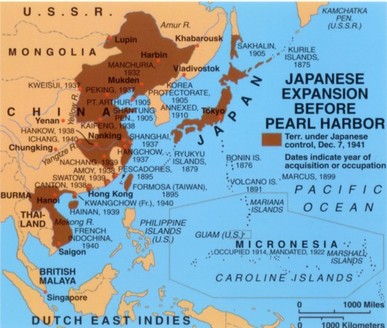
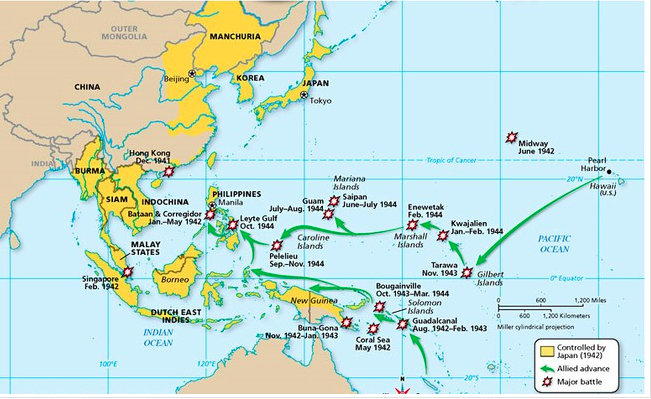
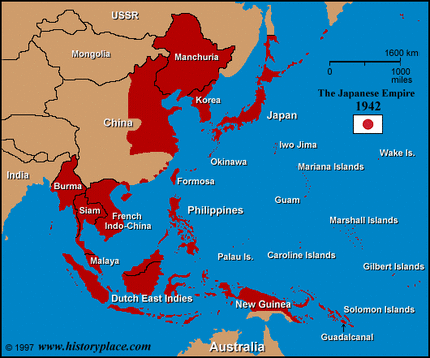
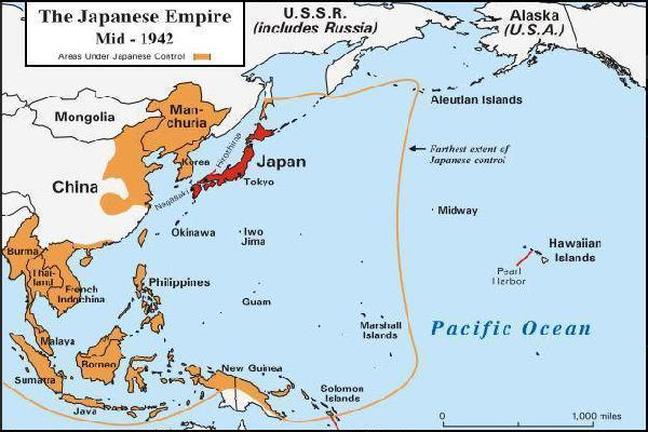
      In World War II, Japan overreached, while the US overcame the vastness of the Pacific. Japan had never before been defeated in a war, but in WW II, their vast empire was brought to an end by external means, chiefly by beyond-impressive deployment of US resources.  The US was better at exploiting distance, time, and opportunity; the maritime-oriented US held the advantage over Japan's fixation on land campaigns in Asia . . . America, not Japan was able to conquer the "Tyranny of Distance" in the Pacific Ocean.
     It seemed to be all wine-and-roses for Japan until July 1941, when the US, Britain, and the Dutch froze all of Japan's commercial assets, essentially cutting off Japan's imports of oil (of which Japan imported 88%). The Empire of the Sun could either buckle or strike out to gain what it needed to supply their home islands and its war machine. The leaders of Japan believed that if they gave in to the US/British/Dutch, their nation would revert back to a medieval state. That scenario was totally unacceptable to that generation of Japan's military leaders, such as Nagumo, Tojo, and Yamamoto (all three served their nation in WW I).

      To Japan's leaders, their nation could only go forward and achieve its destiny, and in the process end Western influence in the Pacific. Therefore, it made perfect sense to take, by force, the oil tin, and rubber in Samatra and Malaya, and then to strike at Hong Kong, the Philippines, Borneo, Java, and Singapore. Japan's goal was to eliminate US/British/Dutch military forces/bases, and to create a strategic "Perimeter Rim" that swept from the Aleutian Islands to the Burma-India border.
     Japan's most decisive act WAS NOT their attacks on 7-8 December 1941 on Pearl Harbor, the Philippines, and Hong Kong, but their invasion of mainland China in 1937. Everything else that followed was of operational or diplomatic consequence, including closer ties with Nazi Germany, neutrality with the USSR, moving into Southeast Asia, going for oil in the Dutch East Indies, and taking Hong Kong and Singapore. As far as the attack on Pearl Harbor, Japan wanted to prevent any US advance in the Pacific, especially south . . . the main cause of all that occurred in the Pacific before and after 7/8 December 1941 was Japan's invasion of China in 1937.
​     Japan had a strong army that was oriented toward conquest on the Asian continent, as well as dealing with Russia . . . the US/British were of much less interest to the Japanese military until the economic blockades. The Japanese army was large and disciplined, and very well-trained with modern weapons, but had little interest in fast armored warfare (e.g. tanks). The Japanese army had a tremendous focus on sea-to-land warfare, crossing rivers, warfare in jungles and mountains; taking distant islands in the Pacific was not yet a priority. Japan saw no point in creating an expensive long-range strategic bombing force, since there weren't any real strategic targets to bomb in Shanghai or Vladivostok.
Picture
Picture
      Japan eventually advanced in the Pacific in an "Expanding Torrent"; their arc widened as they advanced. In the Pacific (and in Russia), that meant thousands of miles compared to Western Europe . . . the further Japan spread by force in SE Asia, China, and islands in the Pacific, their troop-density decreased. It was the same dilemma that Hitler forced on the Wehrmacht in Russia, Europe, and North Africa. But even in Russia, the distances weren't as great as in the Pacific / East Asia / SE Asia, and Germany possessed far-greater military and industrial resources compared to Japan.
     Therefore, by June 1942, Imperial Japan had overstretched itself in the Pacific and Asia, and had even put most of their troops in the wrong places, but didn't realize their strategic blunders. Japan had achieved great territorial gains, the nation was safe, and the booty from its conquests were pouring in to the home islands, and there were no breakthrough counter-attacks by the US/Great Britain. So, to Imperial General Headquarters, the situation in June 1942 was not disastrous, or even serious. The loss of four aircraft carriers at Midway was "regrettable", and the loss of Guadalcanal seemed too distant to matter. By the end of 1942, alarm bells were not ringing at Imperial General HQ, and by the end of 1943, they only heard the alarm bells at a distance.

      It was on the Allies to alter the landscape in the Pacific, since Japan didn't need to go much further. It would fall entirely on the shoulders of the US to take the offensive and force a Japanese surrender; that officially became the strategy in the Summer of 1942. But how, where, and with what means to win the War in the Pacific; it proved to be very difficult to transform from a largely defensive strategy in the Pacific to an offensive one, especially given the vastness of the Pacific. Turning the tide of WW II in the Pacific would be very different than in Europe.
     There were four alternatives that were debated at the highest levels in the US Military as to the main strategy in the Pacific. One option was to base the Allied counter-offensive on mainland China. A second option was to focus on SE Asia, and a third was to focus in the SW Pacific from Australia north to the Philippines. The last option that was debated was "Island Hopping" in the Pacific, taking key Japanese island strongholds, shrinking their defense perimeter. In the end, only one option in the Pacific would work: Admiral Nimitz's thrust of the US Navy across the Pacific ("Island Hopping") in order to take islands close enough to be able to strategically bomb Japan into surrender. The other three options were ancillary or secondary to the US Navy and the Marines, much to General Douglas MacArthur's immense irritation in the SW Pacific.
     By 1942, it was obvious that only the US could end Japan's domination of the Central, West, and South Pacific. American munitions factories were mostly located on the West Coast at about the same latitude as Japan, and there was no intervening land between San Francisco and Tokyo. It made sense to advance on a line that was somewhat south of the Tropic of Cancer, from Hawaii to the Gilbert and Marshall Islands, then to the Carolines, and then the prize, the Marianas, before turning north to Japan. Hawaii gave the US control of the Central Pacific, not only as a bulwark against Japanese expansion, but also as a launching point for a massive counter-offensive.
Picture
Picture
      The United States had the tools necessary to overcome "The Tyranny of Distance"; first, the Marines had the plans ready to take key Japanese-held islands one-by-one, and had also been able to develop weapons/tactics for amphibious warfare in the Pacific. Second was the evolution of the fast carrier groups; the US Navy had dependable carriers with decent planes, which gave them a chance against Japan's superior carriers/planes at the start of the war. 
     The attack on Pearl Harbor opened the US Navy's eyes (as well as the US Gov't) to the amazing destructive reach of a carrier group . . . they were determined to use that strategy against Japan. Third was the development of the B-29 Superfortress, a bomber so advanced that not only could it carry and immense bomb load thousands of miles, but it could fly at an altitude of 30,000 feet, which meant it could not be attacked by enemy fighters or ant-aircraft shells. Once the Marianas were taken and secured from Japan, B-29 airbases provided an enormous advantage to end the war sooner.


     During 1943-1945, only the US could have built the B-29; Hitler called the Superfortress a "Wonder Weapon". The wiring/aluminum for a B-29 equaled that of a squad of Messerschmitts. Fourth were the Seabees, the US Navy Construction Battalions; the Seabees were the engineers that created what was needed in the face of geographic challenges. And fifth, the US Submarine Service within the Navy . . . what was needed was command and organization to bring all the elements together in order to defeat Japan.

Picture
     The two greatest contributions in gaining supremacy in the air in the vast Pacific were the Essex-class aircraft carriers and the F6F Hellcat fighters designed to be used on those carriers.
Together, they tipped the balance in the Pacific in part because they came into full service in the middle of the crucial period of mid-1943 to early-1944, just when the US counter-attack was gaining momentum. Both complemented the other, with the Hellcat being a great defender of the carriers that launched them, as well as being an absolute terror to Japanese forces.
     There were many turning points in the Pacific, such as Guadalcanal and Midway; a turning point that to this day has been under the radar occurred 30 May 1943, when the USS Essex arrived at Pearl Harbor. The Essex was the first of the brand-new, tough, powerful and sophisticated aircraft carriers that would make a huge impact in the Pacific. The new Yorktown (named in honor of the original) arrived in late-July 1943 with some of the new light carriers. The Essex-class carriers proved to be superior to Japanese carriers; the weapons system was a miracle. The new US carriers had radar-controlled gunnery and detection, armored hangars, and were capable of speeds up to 30 knots, and have 90-100 planes. 
     A total of 31 Essex-class carriers were on order in 24 gigantic shipyards. The new carriers were going to Admiral Chester Nimitz in the Central Pacific, not to MacArthur in the SW Pacific, in order to increase the odds of taking key islands. An added benefit: the US Navy would have time to plan how to use the new Essex-class carriers. It was decided to cluster the carrier groups in order to make the more effective; hundreds upon hundreds of aircraft would be able to descend on Japanese carriers/ships, plus the ability to defend the carrier groups was greatly increased.

Picture
     Taking the Marianas would not have meant so much if it wasn't for the B-29 Superfortress. The B-29 was created with the traditional belief that the "bomber will always get through". In the Pacific, it would be true, since the B-29 could fly higher & faster than any Japanese plane.
The B-29 weighed twice that of a B-17 Flying Fortress; its pressurized cabin meant altitudes up to 30,000 feet, and its maximum airspeed was 350 mph. The B-29's over Japan unleashed brutal, unprecedented devastation in that part of the world. The most destructive runs of the B-29's were the low-flying firebombings of Tokyo in March 1945; 130,000 Japanese were killed - the Tokyo firebombing occurred at the same time as the firebombings in Western Europe (e.g. Dresden). 
     The B-29 was a very complicated weapon, which featured a great number of difficult development problems. The only runways for the 141 foot wingspan and the 120,000 pound weight existed in specifically-designed runways that were only in the Pacific. At Boeing, the Design-and Development teams had their abilities and imaginations stretched to the limit. Major problems included how to pressurize different cabins but not the bomb bays; designers created a pressurized "crawl tunnel" that linked the cabins. The biggest problem was with the engines; all the early engines were inadequate and unreliable. The B-29 project was almost scrapped due to the seemingly insurmountable obstacles, but General "Hap" Arnold kept the program going. 
     Even when the B-29 was completed, it was the devil to get a B-29 to successfully take-off; even the Enola Gay came close to running out of runway. But once the B-29 reached its desired altitude, it was untouchable . . . the only real threats were within the B-29 itself, with its complex mechanisms that needed to work flawlessly in concert with each other.
​

Picture
     The B-29's took off from the Marianas to devastate Tokyo in the greatest firestorm of all of WW II in the Spring of 1945. After Tokyo, cities such as Nagoya, Osaka, and Kobe suffered the same fate. USAAF General Curtis LeMay ordered B-29 strategic bombing runs that not only destroyed Japanese industry, but also 2 million buildings with 13 million homeless. While the strategic bombing was achieving desired objectives, it was taking the lives of hundreds of thousands of Japanese civilians (as were the simultaneous firebombings in Europe), mainly women, children and seniors.
     The US surge in the Pacific occurred later than that of the Allies in Western Europe, since the "tools of war" took longer to develop and produce in large numbers. But once assembled, the US counter-attack in the Pacific went remarkably fast. Even in the extreme early stages of the US counter-attack, in one day at Guadalcanal, 11,000 of 19,000 Marines landed without immediate opposition, quickly gaining the upper-hand.
     The US Navy and Marines learned much in the months after the disastrous victory at Tarawa. The Marines had figured out their amphibious-warfare techniques, the Essex-class carriers and groups were in place, the F6F Hellcats were aloft, the Seabees were building, and the B-29's were bombing Japan. The single-most important amphibious operation in the Pacific occurred on 15 June 1944, when 127,000 US troops, mostly Marines, began to land on the Mariana Islands; it was far-more threatening to Japan than anything MacArthur's forces were accomplishing in the SW Pacific. The US had acquired the islands that were close enough in order to bomb Japan into submission and surrender.

0 Comments

Turning the Tide of WW II: Seizing an Enemy-Held Shore

3/23/2016

0 Comments

 
         Source: Paul Kennedy. Engineers of Victory: The Problem Solvers Who      
                                              Turned the Tide in the Second World War (2013)

      November 1942: Operation Torch was the largest Allied amphibious invasion of WW II to that point, much larger in scope than the Dieppe Raid. 75,000 Allied troops in the first stage, with many more to come; Torch was a joint Allied operation (US & Britain) featuring three armed services (land, sea, air). 
     British Prime Minister Winston Churchill and President Franklin Roosevelt had been trying to bring about "jointness" since the Atlantic Charter. Overall command of Torch went to the American General Dwight Eisenhower, who was headquartered at Gibraltar. Also different from Dieppe was the distance and scope of Torch; so many different ships had to be in place at the right time, including landing craft for the soldiers to reach the beaches.
Picture
Picture
     The Allies took naval bombardment and control of the air very seriously with Torch; four fleet carriers and five smaller carriers were deployed, which meant the Allies had control of the skies until the enemy airfields were taken. After the air bases were taken, then British Hurricane and Spitfire squadrons had an operational platform. 
     By 12 November 1942, the approaches to Casablanca in Morocco were secured, but the landings in Algiers and Oran were much more difficult due to increased enemy resistance. However, in three days, all three target areas in North Africa were secured, and the Allied ground forces started moving inland. 
     The Allies learned quite a few important lessons in terms of amphibious campaigns in North Africa: first, be sure to have control of the air, and if there were enemy air bases, take them. Second, be sure to have a command ship (a "Floating Headquarters"; the US didn't have a command ship during Torch). Third, it was sheer folly to attack an enemy in a fortified harbor, even if taking enemy-held beaches was very difficult. Complicating matters was that weather and geography was a potential additional enemy for the Allies when moving on an enemy shore. Lastly, the Allies didn't yet know how their strategies/tactics would work against entrenched German troops on a beach . . . Torch, despite the casualties, and been a relatively easy campaign for the Allies.

Picture
      The deadly rehearsals in the Mediterranean were absolutely key for the planned Operation Overlord; also, there was a rushed timetable, in that even a somewhat-reluctant Churchill knew that Overlord had to occur at the latest in early-1944. However, the Allied amphibious campaigns logically went from North Africa to Sicily; the takeover of Sicily was a major blow to the Axis, in that it led to the overthrow of Mussolini and the eventual surrender of Italy. Another positive by-product of Sicily was that US forces gained valuable experience taking entrenched beaches.
     However, Operation Overlord looked beyond-foreboding, in that the Allies experienced extreme resistance in Italy from German troops . . . the assumption was that German resistance would be far-greater in France. The Western Allies had no way of knowing that they would be able to take five separate beach-landings from the Germans, and start to pour inland like a breached dam, meeting resistance and swirling past obstacles. The ground forces would surge through gaps and places of least resistance, covered by air power, tanks (for the British), and mobile artillery. By the end of June 1944, Allied forces were twenty miles inland . . . by 25 August 1944 US and Free French troops were in Paris. So, why was Operation Overlord successful in the face of the feared German resistance . . . it started with Command-and-Control . . . without it, Operation Overlord would fail.

Picture
     The "Mediterranean Gang" was brought to London to run the show for Operation Overlord, including General Eisenhower, and field commanders such as Bernard Montgomery (pictured with Eisenhower), Omar Bradley, and George Patton. Eisenhower decided to land on five beaches, not the original three; nothing was left out in terms of planning and details. The overall mastermind of Overlord was a modest British naval officer, Bertram Ramsay, who orchestrated the British withdrawal from Dunkirk in 1940. The strategic planners of Overlord (Ramsay, Eisenhower, et al) knew that certain things were required: command of the air and sea, as well as excellent deception and intelligence. To Ramsay and Eisenhower, take one of the three away, and Overlord's chances of success drastically diminished.
     Air, sea, and deception/intelligence were factors that they could at least largely control; out of their control was the weather and the nature of German positioning and their response to the landings . . . the capacity of the Wehrmacht to strike fast (like at Anzio) had to be blunted. Also, German communications had to be crippled to-and-from the Atlantic / English Channel shores. Therefore, Eisenhower ordered the US Army Air Force (USAAF) and Ramsay the Royal Air Force (RAF) to strategically bomb bridges, roads, railroads, and known key communication centers in order to paralyze military transportation/communication networks for the Wehrmacht.

Picture
     General Erwin Rommel had placed much in defense at Normandy, but the Germans didn't know where or when the Allied offensive would occur; Pas-de-Calais or Normandy? The Allied deceptions were very effective in clouding the picture for Rommel, and the weather was bad enough that Rommel actually went back home for his wife's birthday. The fickle weather gave the Allied forces a crucial window of opportunity, and a huge stroke of luck. On D-Day +10, one of the worst storms of the 20th Century hit Normandy, setting back the Allied timetable to Berlin. Had the monstrous storm occurred on D-Day +4 (10 June), the Allies would have been beached crabs, and open for counter-attack by German forces.
     In the end, Hitler had made a series of decisions that benefited the Allies, in that he created a strategic situation that Germany would be weak everywhere, and strong nowhere, which was the exact opposite of Frederick the Great's military philosophy. Therefore, German defenses at Normandy were not strong enough on the shores, and not strong or mobile enough inland. So while the Allied invaders were very smart, well-orchestrated, and in command of the air and sea, they were also very, very lucky.

Picture
     The only aspect left that wasn't guaranteed was what would happen on the beaches; and if the beaches were taken, then what would happen on the advance inland in France. Eisenhower worried about the beaches the most, and the Germans pinned all their hopes on the same. During the first three days of Operation Overlord, both sides were proven right, and Rommel was proven correct in that the first three days after the beach-landings would be the most decisive.
     There were three amphibious landing forces in five beaches for D-Day, 6 June 1944. The westernmost of the beaches was Utah Beach; at the end of the day, US forces had moved five miles inland. Having reached that point, the US troops at Utah would not be easily dislodged; Utah was by far the smoothest amphibious attack in all of WW II - the 8th and 27th Infantry regiments lost a total of 12 men (pictured: General Patton in 1943 - to the right was General Theodore Roosevelt Jr., who would be the first high-ranking officer to set foot on Utah Beach).

Picture
     The biggest part of Overlord were the British and Canadian beaches code-named Gold, Juno, and Sword. The British and Canadians were thorough, careful, fastidious, well-orchestrated, and not very bold. The British had deep respect for their old foe Germany, and the British could not afford another Dunkirk, Crete, Dakar, or Dieppe. In comparison to the US, British resources/manpower were overstretched; Overlord, no matter what, would be Britain's last great offensive of WW II.
     Therefore, Britain was massively invested in deception, intelligence, Command-and-Control, signals, beachmasters (the US had none), mine clearance, as well as specially-designed tanks. Nicknamed "Hobart's Funnies", the British had a tank for almost any purpose, such as flail tanks, flamethrower tanks, and tanks that laid a layer of "carpet" so vehicles could get off the beach (pictured). With these specially-designed tanks on the beach, Germans fighting from concrete bunkers were not safe . . . at Gold, Juno, and Sword beaches, Rommel's "Outer Crust" strategy (keep the Allies on the beaches) quickly failed.

Picture
      The third part of D-Day was Omaha Beach, which was an entirely different story than the other four beaches. The casualty numbers in comparison were dismal; most American soldiers came came ashore with only the weapons they carried, and had no choice but to move inland facing far-too-many deadly beach obstacles in the face of deadly crossfire from the Germans.
Only 5 of 32 tanks made it to the beach, and over 60% of the howitzers sunk.
     American destroyers came within 1000 yards offshore to fire on the German bunkers, endangering the ships to minefields in the water near the shore. The initial landing at Omaha featured 34,000 men and 3300 vehicles with a similar number in reserve. Desperate shelling by the destroyers plus USAAF tactical bombing plus re-establishing order on the beaches finally cracked the German coastal defenses at Omaha. US troops got off the beaches, up the bluffs, and held a position only a mile inland. The German panzers could have easily pushed the Americans back to the beach, but Hitler refused to authorize any movement. 
     The 1st and 29th Infantry Divisions had taken Omaha Beach at bitter cost, and it was a close-call; Eisenhower was clearly disturbed the next day when he personally surveyed the situation. The 1st & 29th had 2400 killed, wounded, or captured; compared to large Civil War battles, or to such World War I disasters as the first day of the Somme, or Operation Bagration in the Eastern Front, those casualties pale in contrast . . . but Omaha Beach was by far the most deadly of the five beach landings on D-Day.

Picture
     Omaha Beach had to be taken, otherwise a gap would have existed for the Germans to exploit, which would have made taking Cherbourg, a major port, very difficult if not impossible.
There was poor battlefield management at Omaha Beach, with too much self-confidence in play, which was never wise against the Wehrmacht. The naval bombardment beforehand was light, and cloud cover doomed the USAAF/RAF bombing runs. With the high waves/tides, it was sheer folly to order the tanks and howitzer craft in the sea 5000 yards away. The US had no flail or wire-cutting tanks, and General Bradley and his staff was unaware that the German 352nd had just moved behind Omaha beach in support. 
     The US troops at Omaha Beach achieved their objective without the luck, support, planning, and weapons that were present at the other four beaches. Depending on sources, between 132,000 and 175,000 Allies swarmed ashore at Normandy on 6 June 1944, taking approximately 5000 casualties, which was far-less than planning estimates. On 27 August 1944, Eisenhower was in Paris (which had been liberated two days prior); the Wehrmacht fought ferociously in defense with remarkable tactical efficiency, most notably in the Battle of the Bulge. For the rest of WW II in Europe, amphibious attacks were no longer needed; much of what was used at D-Day was sent to the Pacific.


0 Comments

Turning the Tide in WW II: Stopping the Nazi Blitzkrieg

3/23/2016

0 Comments

 
         Source: Paul Kennedy. Engineers of Victory: The Problem Solvers Who      
                                             Turned the Tide in the Second World War (2013)

Picture
      1 September 1939: the Nazi Blitzkrieg of Poland. The formula: the Luftwaffe took control of the air, and destroyed Polish air bases, scattered Polish army columns, and then devastated Warsaw. At the same time, 14 mechanized divisions of the Wehrmacht swept past Polish army and cavalry, and raced to the important targets of Lodz, Krakow, and Lvov. 
     During the Spring of 1940, the Nazis used the "Phony War" to improve their strategy and tactics. In early-1940, the Nazi Blitzkrieg was too much for Belgium, the Netherlands, Denmark, and Norway . . . and the Fall of France shocked the entire world. By June 1940, Great Britain stood alone against Nazi Germany.
     
​     The geopolitical and military shape of WW II was transformed. Stalin was beyond-anxious, in that he knew the USSR was nowhere-near-ready for a major Nazi offensive. The U.S. was engaged in an incredibly divisive national debate in terms of Isolationism or Intervention, which paralyzed any meaningful assistance to Britain. Mussolini joined Hitler, and Japan recalculated their options in Asia and the Pacific. In just the first ten months of WW II, the world was turned upside-down by the Nazi Blitzkriegs.

Picture
      It seemed that nothing could stop the Nazi Blitzkrieg, but that would change between 
late-1941 and the Summer 1944. One reason was geography: for example, a decisive victory with a Blitzkrieg was unlikely in mountain ranges, as the Wehrmacht found out in Yugoslavia and Greece in 1941 . . . difficult geographical & physical circumstances favor the underdog.
     Wide deserts with hundreds of miles of shifting sands restrict aggressive generals like Rommel in history, and give advantage to more conservative generals such as Montgomery. Also, great rivers slow down Blitzkriegs, and swift-and-decisive victories won't happen if the defensive forces are stronger, too entrenched and too numerous, regardless of the geography. And, the Blitzkrieg will falter if the attackers get too spread-out horizontally or vertically.
     But the Nazis had a lot of the newest military weapons and technology, which made their Blitzkrieg seem revolutionary. The internal combustion engine and armored vehicles with railroads and aircraft were joined together to do something that seemed brand new . . . by the end of 1941, it did seem that the Nazi Blitzkrieg was invulnerable.

Picture
     In order to defeat the Blitzkrieg, an opponent would need to deploy stronger, tougher, better-equipped forces to match, halt, and then counter-attack German forces. However, this could only be done by large and powerful nations, which during WW II meant Great Britain, the USSR, and the US . . . but none of those nations were ready for large-scale modern combat during the first-half of WW II. 
    All three nations, however, possessed the inherent resources of strength, technology, and innovation. All three nations enjoyed a decent geographic distance from Germany (for Britain, it was the English Channel), which allowed the three Allies to develop their capabilities and allow engineers, inventors, and manufacturing to reach capacity. Only superior numbers of "everything" could beat the Blitzkrieg; the tenacity and operational effectiveness of a seasoned Germany army division was hard to equal in WW II.
     But superior numbers were not the entire picture; by late-1943 in North Africa, Britain introduced superior radar, decryption, and orchestration of tactical air power with ground forces. Also, Great Britain had Special Forces, while the Germans and Italians had ZERO. Also, the Allies would soon have more powerful and adaptable aircraft (e.g. the P-51 Mustang). Flail tanks (pictured above) and acoustic mine detectors arrived on the scene, as well as a better-integrated command-and-control system. By late-1943/early-1944, the Allies had figured out how to defeat the Nazi Blitzkrieg . . . superior numbers of troops in advantageous strategic locations with more advanced weapons and technology combined with great organization.

Picture
     The Eastern Front was the worst of WW II; unprecedented ferocity, wholesale destruction, mass deportations, immense loss of life due to combat, starvation, exposure, disease, massacres . . . the Eastern Front was "Holocaust Central", in that nearly all Nazi concentration and extermination camps, death marches, ghettos, and most of the pogroms occurred in that theater of WW II. Of the 70+ million deaths from WW II, 30+ million died on the Eastern Front, including far-too many civilians (pictured below: Nazi concentration camps in Europe).
     The Eastern Front was decisive in determining the outcome of WW II, serving as the main reason for not only the defeat of the Blitzkrieg, but of Nazi Germany as well . . . so how did the USSR defeat the all-powerful Nazi War Machine? The Eastern Front was unique in that mechanization was combined with Asiatic-horde-like warfare; the clash between Teutons and Slavs was now entwined with technological competition. Both Germany and the USSR reached deep into their own very advanced technological/productive resources to bring forth newer and more destructive weapons. Those new/improved weapons, combined with millions of troops, and the strategies/tactics in the vastness of Russia, led to the extended nightmare of the Eastern Front.

Picture
     The first thing that slowed down the Blitzkrieg in Russia was the weather. During the first months of Operation Barbarossa, the weather was perfect for the Blitzkrieg, but by October and November 1941, it slowed down . . . there was nothing the Germans could do about Russian mud in the early-winter of 1941, which ironically was also the coldest since Napoleon's invasion of Russia. 
     By 1 November 1941, one major German army was out of fuel, artillery was frozen, and soldiers were crippled by frostbite. By the Spring of 1942, the ground conditions were even worse, due to Rasputitsa - "Quagmire Season". Surface snow had melted, but couldn't drain in that the soil was still frozen below; two feet of unfrozen soil turned into a muddy nightmare, and the Wehrmacht was literally stuck in the mud (pictured above). As the Germans discovered, Rasputitsas occurred in the Fall and Spring, but the mud was much, much worse during Spring.

Picture
     It wasn't just the weather that slowed down the Blitzkrieg; the Red Army fought back enough to slow their advance, in part due to "Scorched Earth" tactics. For a German soldier, there was nothing scarier than to be lying, frozen & exhausted, in a defensive position only to see regiments of battle-hardened white-clad ghosts from the Red Army approach. 
     The Wehrmacht made immense gains (625 miles by December 1941), but were unable to break through to Moscow. German political and military leaders grossly underestimated the ability of the USSR to oppose the Blitzkrieg, and there was no consideration at all for the geography/climate. The Germans had no real useful intelligence of their opponent, in part because the Nazis believed that the USSR was relatively primitive across-the-board. This time for the Blitzkrieg, there would not be an equivalent of the Fall of France in Russia.
     The numbers of Russian troops in opposition to the Blitzkrieg was breathtaking, and the story stayed the same through 1942 and 1943. The Wehrmacht constantly tried to encircle and destroy the growing USSR forces, but with no success. The Wehrmacht believed that the lines of the Red Army were thinly held and could be outflanked, but the reality was that defensive positions reached 1000+ miles across and 200+ miles deep. Also, the battlefront was littered with broken bridges, poisoned wells, booby traps, ruined crops, PLUS the climate of summer heat, autumn mud, hellish winters, and even worse mud in the spring, as well as the incredible endurance of the USSR. By early-1943, the Nazis were guilty of overreach: there was no way to provide what was necessary for German troops in far-away locations in the Eastern Front.

Picture
      On 5 July 1943, the German Blitzkrieg struck Kursk, and immediately faced enormous strength-in-depth defenses . . . Stalin knew the Germans were coming. 12 July 1943 featured the greatest tank battle in world history; USSR losses were much greater, but the Wehrmacht had to abandon the field because the were unable to break through enemy lines. The Kursk campaign cost Germany 1600+ tanks; dozens of divisions were destroyed or rendered useless.
     Two days before the climactic tank battle, the Allies landed in Sicily, and Hitler re-tasked some forces from the Eastern Front. Also on 12 July 1943, the Red Army attacked the Wehrmacht with Operation Kutozov . . . by the Summer of 1943, fatigue finally set in on the Wehrmacht on the Eastern Front. The Red Army started to advance against the Wehrmacht from the North, Central, and South; the pattern was that the USSR attacked, the Wehrmacht resisted and pulled back, and the Red Army advanced. Most WW II historians regard Stalingrad as the turning point in the Eastern Front, but that isn't entirely accurate, in that it took more than Stalingrad to defeat the Wehrmacht.

Picture
      In the Summer of 1943, the USSR defeated the Wehrmacht at Kursk; the USSR had the advantage of only fight on one (massive) front, while Germany was fully engaged on three fronts . . . Germany couldn't be strong everywhere. 
     The Nazi Blitzkrieg was stopped at Kursk not only by the greatest tank battle in history, but also with the greatest minefield (pictured: Red Army soldiers removing mines after Kursk). Nothing frustrated swift panzer attacks more than deeply sown minefields. The Red Army laid tens of thousands of mines across the entire Kursk Salient (the line of battle that projects closest to the enemy), and soon those mines were more-than-hidden by summer wheat. Anti-tank mines averaged 2400 per mile, and anti-personnel mines averaged 2700 per mile, and the minefields were 16 to 25 miles deep . . . there was no chance for a Panzer Blitzkrieg at Kursk.

Picture
      The practical problems facing Germany in the Eastern Front included running out of ammunition/fuel, dealing with minefields, and Red Army anti-tank platoons. There were no longer any weak places that would allow a Blitzkrieg strike; panzer divisions kept trying to find weak spots in order to flank the Red Army, but they simply didn't exist. And there was also the positive impact of the Lend-Lease Act, especially with trucks and jeeps; American vehicles were brought over by the Royal Navy and drastically increased the mobility of the Red Army. The USSR was the only nation that had both tank and anti-tank forces that moved quickly.
     Operation Bagration was launched on 22 June 1944 (3 years to the day after Operation Barbarossa), which was a massive assault on the German central line in the Eastern Front. The ground-based forces used by the Red Army in Operation Bagration were several-times larger than the combined totals of all forces involved in the Marianas and D-Day attacks . . . nothing was small-scale on the Eastern Front. The size of the USSR forces exceeded anything from before . . . Operation Bagration finally broke the back of the Wehrmacht.
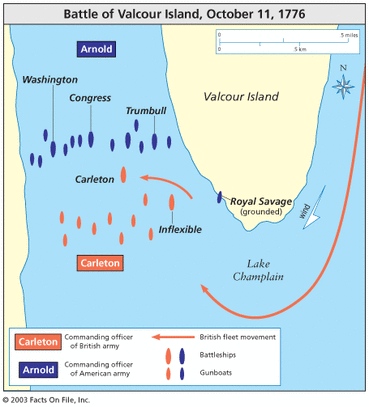
Picture
     The Red Army during Operation Bagration numbered 1.7 million combat/support troops, 24k artillery, 4000 tanks/assault guns, and 6334 aircraft. German strength was 800k troops, 95k artillery, 553 tanks/assault guns, and 839 aircraft (for comparison, General Rommel at El Alamein had 27k troops) . . . By the Summer of 1944, the USSR had finally reached its full military potential. 
     By now, the Soviet T-34 tank was virtually unstoppable, and it wasn't uncommon for the Red Army to outnumber soldiers in the Wehrmacht by a ratio of 10:1. Also, Stalin by 1944 had relinquished much of his inflexible command style to his major generals, while Hitler refused to do the same. German losses during Operation Bagration were astounding: 670k killed, wounded, or captured; although the USSR losses were greater, Russia had millions of men from which to draw for the singular purpose of defeating Nazi Germany in "The Great Patriotic War"
     When Operation Bagration began, the Red Army was 750 miles from Berlin; at the same time, General Patton was 650 miles from Berlin . . . June 1944 represented the end for the Third Reich. By August 1944, the end of Operation Bagration was in sight, and Berlin became the focus for the Red Army. Somebody needed to march into Berlin and end the war, and the Red Army was the one to do so. Therefore, 85% of all Wehrmacht losses during WW II were against the USSR. By mid-to-late 1943, German U-Boats could not win the Battle of the Atlantic, nor could German Panzers win in Russia . . . Germany would fight on, ferociously, but moving forward with a Blitzkrieg was over.

0 Comments

Turning the Tide of WW II: Gaining Command of the Air

3/23/2016

0 Comments

 
        Source: Paul Kennedy. Engineers of Victory: The Problem Solvers Who      
                                            Turned the Tide in the Second World War (2013)

Picture
     By the Fall of 1943, the Luftwaffe was clearly winning the battle in the skies over Europe. On 30 March 1944, ten weeks before D-Day and fourteen months after Casablanca, 795 Royal Air Force (RAF) bombers were sent to attack Nuremberg in Germany: 95 bombers failed to return, a dozen were scrapped on their return, and 59 were very badly damaged. But those losses paled in comparison to the losses of trained crews . . . by early-1944, things were going backwards for the Allies in terms of strategic bombing in Nazi Germany.
     It was amazing that the Allies didn't learn much from the Battle for Britain (overall plane/crew #'s pictured). The Germans "royally" failed in that not nearly enough bombers were sent to "get through" British defenses, the bombers didn't fly high enough, didn't have enough bombs, and had poor discipline in formation. The Allies felt when it was their turn to strategically bomb Germany, they would be much smarter with larger numbers of bombers flying at greater speeds and altitudes. Among other bombers, the Allies would fly B-24 Liberators and
B-17 Flying Fortresses at 24,000 feet (opposed to the Luftwaffe's 12,000 feet), which would minimize the loss of bombers. The Allies also assumed that the German people wouldn't be as tough as the British, which was the same conclusion reached by Hitler/Goering towards the enemy before the Battle for Britain. From late-1942 to early-1944, strategic bombing in Europe reached a level of stalemate much like trench warfare in World 
War I . . . no real attention was paid to the really important aspects of strategic bombing, such as distance, targeting, and detection.

Picture
      Spring 1942: British and Nazi stupidity. The RAF inexplicably bombed Lubeck, Germany, an ancient wooden-framed city. Hitler became so enraged that he ordered bombing raids on British cathedral and university cities such as York, Norwich, and Exeter. Bombs and crews were wasted, and hatreds become more inflamed; the Luftwaffe didn't touch the Rolls Royce engine factories or the Spitfire and Lancaster assembly lines.
     Hitler's "Retribution Bombing" served no strategic purpose for the Nazis, and it also took the focus off what should have been targeted in Britain. Hitler's "Retribution Bombing" desensitized Britain to the coming indiscriminate aerial bombings in Germany. A desire to payback German civilians for what the Luftwaffe did rose incredibly in Great Britain in 1942.

Picture
       By the time the United States Army Air Force (USAAF) started bombing German targets, it was natural that their first raids would be tentative and would stick close to their bases. From August through September 1942, the USAAF was having a "dream season"; everything seemed to go right. But on 9 October 1942, 108 USAAF bombers raided the heavy industries at/near Lille in France (pinned in the map), Luftwaffe fighters rushed past 156 Allied fighter escorts, and focused their attack on the B-17s and B-24s. The Luftwaffe fighters shot down 4 bombers, seriously damaged 4 more, and damaged 42 other bombers . . . the bloodletting had begun.
     More significant was that the Luftwaffe fighters caused a drastic drop-off in accuracy; only 9 of 588 high-explosive bombs fell within 1500 feet of any target. Many USAAF bombers aborted their runs entirely, and B-17 and B-24 gunners wildly inflated the number of Luftwaffe fighters they downed. These new crews were green-and-nervous, and after-action analysis was sub-standard. Of the 70+ claimed kills from the gunners on 9 October 1943, only ONE Luftwaffe fighter plane was actually shot down.

Picture
      The raid on the Schweinfurt's 3 ball bearing factories occurred on 14 October 1943. 60 bombers were lost, and 138 damaged; that meant that only 14% of the 229 USAAF aircraft that actually attacked the targets returned unscathed. The Luftwaffe defenses had been greatly improved; the first wave of defense were single-engine fighters, followed by a second wave of two-engine fighters, all firing rockets and large-caliber machine guns. The single-engine and two-engine fighters refueled and re-engaged from all directions, and the fighters concentrated on one USAAF formation at a time (here the Luftwaffe targeted, which they didn't do in Britain). 
     Rocket attacks were used against the formation, while machine guns were used against the crippled aircraft. At Schweinfurt (pinned in the map), an entire combat wing of the 1st Bombardment Division was almost completely wiped out. While some targets on the ground were hit, the bomber attrition rate was unsustainable; Schweinfurt was the highest bomber attrition rate to that point of WW II. The USAAF strategic bombing offensive had to be shut down - only short range targets were approved. 
     The upcoming winter allowed USAAF to take inventory, reassess strategy, and to rebuild morale . . . the USAAF was forced to admit that they had lost air superiority over Germany. Long-range fighter escorts now became absolutely necessary, but their current range wasn't close to what was needed. Fortunately for the battered USAAF bomber crews, solutions were just around the corner.
Picture
      In late-April 1942, Ronnie Harker, a RAF liaison test pilot for Rolls Royce engines was asked to test a problematic USAAF plane, Pursuit-Fighter 51 (P-51). The P-51 was a poor performing plane compared to the P-38 Lightning and the P-47 Thunderbolt . . . the P-51 seemed to be a round peg in a square hole. Harker first flew a P-51 on 30 April 1952; he was puzzled, in that it the plane turned easily and didn't stall, and functioned well in low-to-medium altitudes, and was aerodynamically superb (which meant low drag, less resistance in flight). 
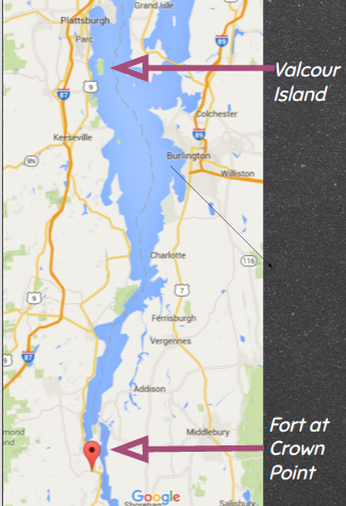
     Harker wrote that if the P-51 had a Rolls Royce Merlin 61 engine, it would be 35 mph faster than a British Spitfire, and have the same power. As it turned out, the Merlin 61 engine was a perfect fit for the P-51; a Polish mathematician calculated that a P-51 with a Merlin 61 engine would outperform the Spitfire, reaching speeds of 432 mph and altitudes of 40,000 feet.
(pictured above: the P-51 Mustang and the British Spitfire)

Picture
      Those calculations would prove to be correct. In the RAF, Wilfrid Freeman (Churchill's favorite in the RAF, pictured) was in charge of the types of planes to be used, and he immediately saw the potential of the P-51 and ordered Merlin 61 engines to be installed on 5 P-51's despite Bomber Command wanting more Merlin engines. Soon thereafter, Freeman ordered 500 P-51's with the Merlin 61 engine . . . by now, the fighter plane was named the P-51 Mustang. Freeman pressured Churchill to pressure FDR to have the P-51 Mustang mass-produced in the U.S. 
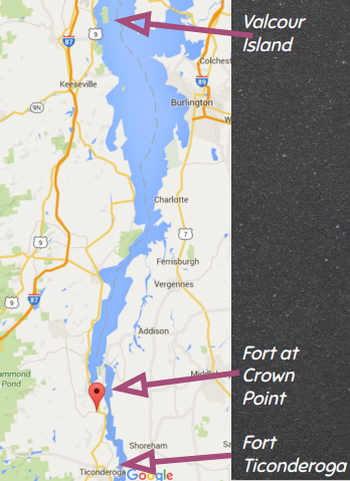
     At that point, good old U.S. government bureaucratic bungling and military competition for resources interfered. Devotees of other planes just didn't believe the P-51 Mustang was as good as advertised. The USAAF, therefore, kept making inferior aircraft that was doomed to fail against German and Japanese fighters. The powerful political backers for each inferior plane were formidable, and FDR was unwilling to stand up to them, at least at that point.

Picture
     Eventually, the P-51 Mustang appeared in Europe in ever-increasing numbers, and became the most effective protectors of the USAAF daytime bombers. For unfathomable reasons, the P-51 Mustang was more efficient and more powerful than the Spitfire despite being heavier, which included the astounding fuel capacity of the aerodynamically-awesome plane. With maximum fuel tanks, the P-51 Mustang had a combat radius of 750 miles, twice that of a Spitfire.
     Also developed were "drop tanks" (pictured: a P-51 Mustang with drop tanks) which contained extra fuel. The purpose of the drop tanks was to burn the extra fuel BEFORE entering combat. They were used for every fighter, whether RAF or USAAF; the demand for aluminum drop tanks was such that the RAF developed a stiffened paper drop tank (108 gallons), which worked wonderfully, and also denied the enemy of any aluminum tanks on the ground. With these drop tanks, ALL Allied fighters could provide 100% protection for the bombers.

Picture
      All these developments led to the true breakthrough for the Allies in order to gain control of the skies in Europe: the destruction of the Luftwaffe fighter squadrons. The USAAF stuck to specific targets, such as oil refineries, which meant that, since there was less oil, the Luftwaffe fighters were unable to wait until USAAF escort fighters abandoned their bombers. Also, with so many P-51's in the USAAF, the order was given for many of the Mustangs to head-hunt Luftwaffe fighters while others protected the bombers.
     In the early months of 1944, RAF & USAAF losses were still severe, but reinforcing squadrons kept on the pressure, and the Luftwaffe was unable to replace/reinforce what it lost. Hitler and Goering re-tasked planes from the Eastern Front, which gave the Red Army more advantage. P-51 Mustangs were flying in broad daylight over Berlin (pinned in the map) by mid-1944; Goering stated "We have lost the war". P-51 Mustangs were destroying three-to-five times more fighters than the P-47 Thunderbolts, and the P-47's were putting up devastating totals of their own. 
By the Spring of 1944, P-51 Mustangs with drop tanks could escort B-17's all the way to Western Russia, over 1000 miles from their base.
     The Luftwaffe cracked in the Spring of 1944; there simply weren't enough planes, pilots, production, or communications. The Luftwaffe was hurt far more by aerial battles than the bombing of German factories. Then, in the late-Spring of 1944, Allied Supreme Commander General Dwight D. Eisenhower ordered the strategic bombing of key German railroad, road, and communications centers . . . it was time for Operation Overlord.
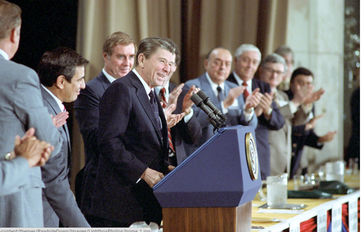

      Eisenhower's strategy of bombing key transportation/communication targets drastically limited Germany's ability to respond in force during D-Day, and beyond. The issue now was not how to get control of the skies, but WHAT to attack by air to end the war as soon as possible. On 6 June 1944, the whole thing, sea, land, and air came together for the Western Allies; 11,590 Allied planes were in the air during D-Day . . . amazingly, the Allies had gained control of the skies only 90-or-so days before Operation Overlord. (Below: an overview of Operation Overlord, showing the Allied mastery of the skies)
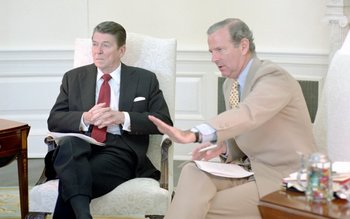

Picture
0 Comments

Turning the Tide in WW II: The Battle of the Atlantic

3/23/2016

1 Comment

 
        Source: Paul Kennedy. Engineers of Victory: The Problem Solvers Who      
                                            Turned the Tide in the Second World War (2013)
Picture
      Winston Churchill stated in his memoirs that the Battle of the Atlantic was what he worried about most; if it was lost, Britain would have run out of everything, including fuel . . . and the will to fight. At the end of 1942, Admiral Karl Doenitz had 212 operational U-Boats; by the time Churchill met President Franklin Roosevelt at Casablanca (pictured), the Nazis were by far sinking more Allied ships than the Allied ships were sinking U-Boats.
     In early-1943, Churchill's nightmare appeared to be coming true: 108 Allied ships were lost in March, with 2/3's of the total sunk in convoy on the single-most important route in the Atlantic. The Nazis came the closest to turning the tide in the Battle of the Atlantic in the first twenty days of March 1943 . . . the Allied strategy of using convoys was in doubt.

Picture
     March 1943 started off badly for the Allies since Doenitz had four large wolf packs in the Atlantic; two of them in the Central Atlantic, with one each on the Northern and Southern flanks. Doenitz also held a significant advantage with intelligence and decryption; Germany even knew where Allied ships were going and when they were leaving their harbor. Bletchley Park was unable to do the same in assisting the convoy escorts in terms of locating German U-Boats . . . the wolves were preying on the shepherds.
     On 5 March 1943, Convoy SC (Slow Convoy) 121 from New York City was slaughtered by U-Boats. 59 slow merchant ships were escorted by 5 ships without air cover facing 26 U-Boats. From 7 - 10 March, 13 ships were sunk without a single U-Boat being hit . . . it was the most one-sided encounter of the war, which explained Hitler's high-level of satisfaction after reading Doenitz's report. On 16-20 March 1943, Convoys HX (Fast Convoy) 229 and SC 122 went through the gauntlet of U-Boat wolf packs with a motley assembly of slow/ancient ships carrying crucial cargoes toward Britain. The convoys had become larger, with many more ships on the sea-lanes . . . while it was true that convoys with 60-90 ships had a greater chance of getting more cargo to Britain than 30 ships, the number of escort ships remained the same.

Picture
      Why did the Battle of the Atlantic go so poorly for the Allies in early-1943? 
     First, there were just too few escort ships protecting the convoys, and far-too-few aircraft providing protection. Also, the Nazis held an advantage with intelligence with their code-breaking/communications network, B-Dienst. Doenitz
(pictured) was able to direct four major U-Boat orchestras thousands of miles apart, especially since Allied intelligence was slow and late. 
     The lack of air cover in the "Air Gap" was beyond-significant; U-Boats were able to operate virtually unopposed . . . Allied planes just didn't have the capacity to fly far enough from their bases to provide air cover in that stretch of North Atlantic. By April 1943, Doenitz had 240 operational U-Boats with 185 more being retro-fitted or in the process of training crews. Doenitz was capable of sending 40 U-Boats against any single convoy . . . finally, on the Allied side, reality set in. Allied strategists/planners figured out that the convoys would need to fight their way across the Atlantic rather than evade the enemy . . . that crucial decision gave the Allies a much more clearer focus on how to deal with the wolf packs lying in wait. 

Picture
     What caused the change of fortunes in the North Atlantic? 
​     The greatest factor was aircraft; World War II was the war in which sea power was affected by air power. Doenitz lamented after WW II that Germany waged war without an "Air Arm" to complement and protect his U-Boats. Increased Allied air power took two forms: VLR (Very Long Range) shore-based aircraft, especially the B-24 Liberator, as well as B-17 Flying Fortresses and the PBY Catalina.       

​    Secondly were escort carriers (pictured), which were modest in speed and striking power compared to the US full-sized fleet carriers in the Pacific, but were perfect for the North Atlantic. Aircraft from the escort carriers could patrol for miles around, and they had similar weapons systems as the VLR's to destroy U-Boats. These planes rearmed and refueled overnight on the escort carriers and were able to repeatedly engage U-Boats.
     Doenitz never could cope with the increased Allied aircraft, which not only held an obvious speed advantage, but also had more accurate-and-lethal weapons necessary to destroy U-Boats. By mid-1943, a VLR B-24 Liberator could assist a convoy 1200 miles from it s base; Doenitz realized as early as 1941 that without air power, control of the seas was basically impossible, even for his vaunted U-Boats.

Picture
     For a nation dependent on long-range oceanic commerce, it was somewhat surprising that an "Air Gap" existed in the first place. But once diagnosed, closing the "Air Gap" didn't occur because some "great person" decreed so. For example, a team of mostly Canadian air engineers in early-1943 pulled one bomb bay from a Liberator and replaced it with extra fuel tanks, at last creating an aircraft that could reach the "Air Gap". There were scientists that developed more effective fuses for more predictable depth charges, as well as scientists and armaments experts that created the air-launched acoustic homing torpedo, nicknamed "Fido", which was specifically engineered to search-and-destroy submerged U-Boats.
     There were improvements to radar, escort carriers, and training schools that cranked out air crews. During 1943 in all theaters of WW II, 199 U-Boats were sunk, 140 of them by Allied aircraft; that trend would continue for the rest of WW II. The key task for convoy escorts, whether surface or aerial, was to prevent U-Boats from launching their deadly torpedoes at Allied merchant ships. 

Picture
      The main Allied counter-weapon, the MK6 Depth Charge, wasn't very reliable in early-WW II. The theory was that the large explosion, magnified under water, would rip apart the U-Boat's joints, since it wasn't a contact explosive. A depth charge was an attractive weapon in that it could be mounted on even the rear decks of a corvette, and used by anti-sub air patrols.
     However, the MK6 had significant disadvantages. A ship had to steam over where a U-Boat was detected, which would give the U-Boat time to dive deeper; the British Admiralty and the US Navy were slow to realize how quickly U-Boats were able to dive. Proximity fuses needed to be set at the last moment at the estimated depth of the U-Boat . . . on average hundreds of MK6 Depth Charges over days were needed to destroy a single U-Boat.

Picture
     On the other hand, there was the Hedgehog (after the grenades were launched, what was left looked like the spine of a hedgehog), which was so simple one wonders why it wasn't created during WW I. A Hedgehog was a multi-headed grenade launcher that fired forward of the warship; usually, the four-inch gun was replaced with the Hedgehog. The Hedgehog had several advantages over depth charges, and its introduction in 1943 was widely welcomed by escort ships. The time it took to fire at U-Boats was reduced, and a fusilade of 24-30 grenades rained-down on the U-Boat, with delayed and/or contact explosions.
     An added bonus was that the Hedgehog didn't distort sonar readings after the grenades were launched. By mid-1943, the British-invented Hedgehog was in wide use . . . by the end of WW II, the Hedgehog had destroyed about 50 U-Boats . . . and Allied weapons developers were in the process creating Hedgehogs that had projectiles that could search for submerged U-Boats.
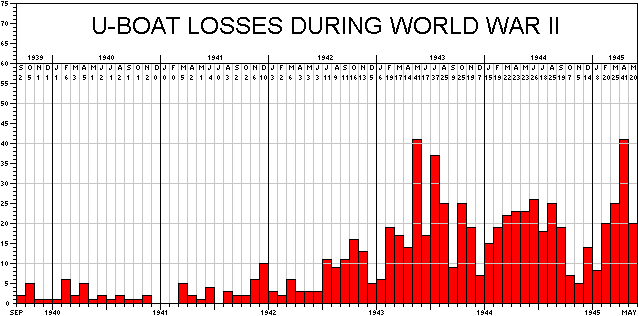
Picture
     Centimetric Radar was even more of a breakthrough, maybe the greatest of the new or improved technology used in the Battle of the Atlantic. It was a miniaturized version of the large-scale and effective British on-land radar used v. the Luftwaffe during the Battle for Britain. A device needed to be invented that could hold the power necessary to generate the microwave pulses to locate specific/small targets AND be small enough to be put on an escort vessel or in the nose of a VLR. 
    Slowly, Centimetric Radar was introduced in Allied reconnaissance aircraft as well as corvettes. This new radar could spot a U-Boat's conning tower miles away, day-or-night . . . in calm water, the Centimetric Radar could even spot a single periscope. And, none of the U-Boat technology systems could detect the radar.
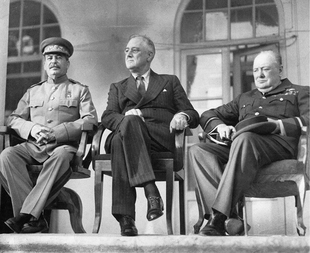
Picture
       More-and-more Allied escort commanders were thinking "kill" and "attack" far more than "protect" when facing U-Boats. The creation of "support groups" in addition to escort ships was key, in that the support ships could pursue U-Boats while the escorts guided/protected merchant ships. With more warships, escort carrier planes would do the air equivalent of a "Creeping Attack", in that two planes would strafe a U-Boat, while a third plane would go for the kill with bombs and/or torpedoes. 


         While the number of U-Boats sunk by carriers was much less than land-based aircraft, their presence and effectiveness was invaluable. By June-August 1944, Allied control of the air and sea-lanes in the North Atlantic was complete. For example, only 5 Allied vessels were sunk during D-Day by German U-Boats. Doenitz was still receiving and dispatching new U-Boats as late as April 1945; the submarines of the Kriegsmarine fought to the end of the war. During WW II, the casualty rate among U-Boat crews was 63% (76% if captured crews were included) . . . no other service in any other nation's military suffered so great a casualty percentage. (Below: Episode #1 of "The War Against the U-Boats")
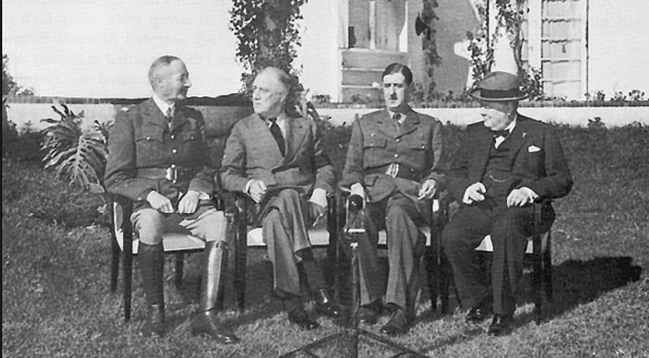
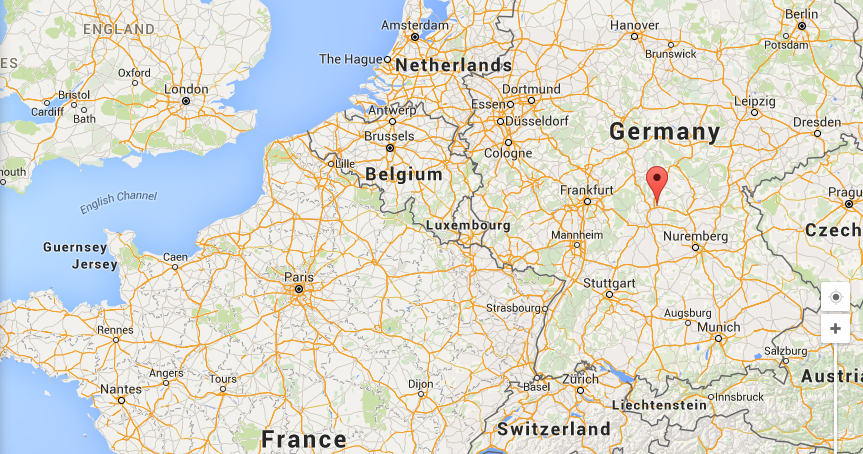
1 Comment

Turning the Tide in World War II: An Overview

3/23/2016

0 Comments

 
       Source: Paul Kennedy. Engineers of Victory: The Problem Solvers Who      
                                           Turned the Tide in the Second World War (2013)
Picture
      Traditional World War II history focuses on "Top-Down, Great-Man" narratives, such as Franklin Roosevelt, Winston Churchill, General Dwight Eisenhower, Adolph Hitler, etc. Rarely do historians inquire into the mechanics and dynamics of strategic success or failure. For example, the British victory over the Spanish Armada in 1588; Sir John Hawkins drastically redesigned the galleons ten years earlier, which gave the Royal Navy the necessary firepower and speed to defeat Spain. Another example: as the British Empire grew, it was financed by the merchants of Amsterdam and other European centers, as well as the creation and development of the Bank of England (pictured above: FDR, Stalin, and Churchill at the Teheran Conference, 1943).

Picture
      At Casablanca in early-1943, FDR and Churchill proclaimed that nothing other than the unconditional surrender of the Axis Powers would be accepted . . . making the pronouncement was all well-and-good, but how to do so? At the time of the Casablanca Conference, the Allies were losing badly in all theaters . . . what needed to be done to win the war would have to be done at the "middle-level", involving thousands of people in various roles, both military and civilian. 
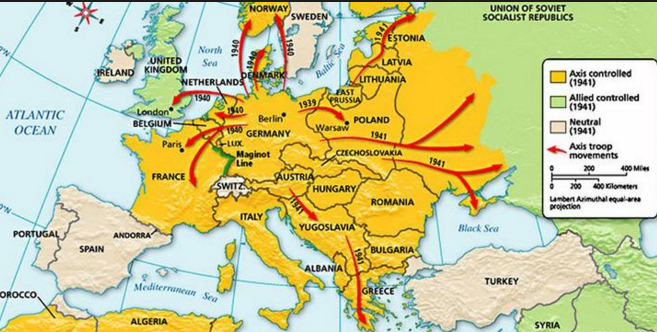
     First, the Allies needed to win control of the North Atlantic sea-lanes for their convoys. Second, the Allies needed to take control of the skies over West-Central Europe, so Britain would be more than just the launching pad for Operation Overlord, it would be the base of massive destruction from the air. Third, the Allies needed to find a way to get past Axis-held beaches and carry the fight to the heartland of Europe. Fourth, the Allies needed to find a way to counter the Nazi Blitzkrieg, and fifth, the Allies needed to find the best route and methods to take the war to Japan in the Pacific.
     In a little more than a year after Casablanca (pictured above, L-R: French General Henri Giraud, FDR, Charles de Gaulle, and Churchill), all of the above was achieved with the exception of the unconditional surrender of the Axis Powers. No straight causal line connects Casablanca to the reality of achieving all five major obstacles to win the war; the Allies were in no position to do anything of substance to pursue Casablanca's goals in early-1942 (actually, WW II deteriorated for the Allies in the months immediately after Casablanca). 
     Much like Pearl Harbor erased memories of the most divisive period in U.S. History after the Civil War (1938 - 1941; Isolationists v. Internationalists), the ultimate victories in 1945 erased the truth that the Allies were losing World War II by late-1942 / early-1943 . . . the final victories of 1945 obscured how difficult the Allied position was in the middle years of World War II.

Picture
     In the battle for control of the sea-lanes in the North Atlantic, losses among Allied merchant ships increased after Casablanca. During March 1943, German U-Boats sank 108 vessels, which stunned and demoralized the Western Allies. If the Allies couldn't reverse momentum, there would be no chance for Operation Overlord. Also, Allied strategic bombing in Europe after Casablanca went from bad-to-worse. the Royal Air Force (RAF) was running out of bombers due to the increased numbers and effectiveness of Luftwaffe night fighters.
     From November 1943 to March 1944, there were 16 massive Allied attacks on Berlin. The Allies lost 1047 aircraft, while another 1682 planes were badly damaged . . . attrition was even greater during daytime raids. On 14 October 1943, the ball-bearing factory at Schweinfurt (pinned in the above map) was targeted; 60 of 291 B-17 Flying Fortresses were shot down, and a further 138 damaged. The Allies found out that their theory that "the bomber will always get through" was beyond-wrong. Allied command of the sea-lanes in the North Atlantic and of the air over Western/Central Europe was an illusion . . . both needed to be drastically reversed if there was to be any chance of victory.

Picture
     It really didn't matter, in that the Allied Command had no idea how to achieve the incredibly difficult strategy/tactics of a major amphibious attack against an entrenched defensive force. Allied amphibious attacks had been relatively easy in North Africa, which was probably why FDR and Churchill were over-confident at Casablanca (Eisenhower was much less confident in terms of cracking Nazi defenses). 
     Dealing with the Germans on the Atlantic shore was a totally different proposition, as was discovered during the catastrophic 
Dieppe Raid in Aug 1942 (pinned in the above map) where the majority of Canadians were killed/wounded/captured. The conclusion by the Allies was that it was basically impossible to take a well-defended enemy harbor . . . the strategists started to think about a mass invasion on an open beach, which also seemed impossible. So then, how were the Allies supposed to take the war to Nazi Germany or Imperial Japan with ground troops . . . it definitely seemed like an impossibility by early-1943.

Picture
     Also vexing the Allied Command was how to stop the Nazi Blitzkrieg. During 1940-1941, the British army had been tossed out of Norway, Belgium, Greece, Crete, and France very quickly and easily by the Nazis. True, there was some good news before Casablanca with El Alamein in North Africa and Stalingrad in the Eastern Front, but Nazi Germany reorganized after those two defeats, and were also able to increase their manufacturing capacity.
    The German military had more-and-better aircraft, tanks, submarines, and on the Eastern Front, the Wehrmacht (the German unified military forces, but often the term refers to the German army) had stopped the Red Army's advance, and were assembling vast forces at Kursk. If Nazi Germany could keep up the momentum in the North Atlantic, blunt the effectiveness of Allied bombing in Europe, and deny the Western Allies any meaningful entry points in France, Stalin may have had no choice but to negotiate separate terms with Hitler, and for the second time in less than thirty years, Russia would have pulled out of a World War.

Picture
     And then there was the War in the Pacific, which was an entirely American enterprise. The dilemma: how exactly would Marines land on a heavily defended/mined/booby-trapped coral atoll. November 1943: Imperial Japan didn't value Tarawa (pinned in the map), since they only had 3000 defenders, but the losses of Marines taking the atolls shocked the US public. The Japanese had 270,000 defending the Philippines . . . MacArthur boldly stated that "I Shall Return", but that was pure theatrics . . . the reality was that the US had no chance to force Japan off the Philippines in early-1943.
    Systems networks were in play in a military sense, in that successes and failures elsewhere affected other regions/theaters, and the actions of others benefited/cursed others. For example, Stalin benefited tremendously from the Allied bombings in Germany, since Hitler needed to keep military forces in Germany instead of sending them to the Eastern Front. An advantage gained by the Allies in one theater could help campaigns elsewhere, and a serious defeat could damage chances of success in another theater(s).

Picture
      All five separate-though-interconnected challenges facing the Allies were overcome in about 17 months, from February 1943 to the Summer of 1944, which was roughly between Casablanca and the quadruple successes of Normandy, the Fall of Rome, the Marianas Landings, and Operation Bagration in the Eastern Front. 
     There was still some work to be done: "Island-Hopping" in the Pacific and continued strategic bombing in Germany, and Japan as well as the advance of the Western Allies to Berlin. True, the Axis Powers overreached in their aggression, and the US especially was able to employ unmatched resources, but HOW did the Allies recover and fight their way to victory during those pivotal 17 months in 1943-1944 . . . 

Picture
     What if . . . the U-Boats had not been defeated in the Summer of 1943, or if the vaunted Luftwaffe wasn't crushed in early-1944 . . . or if the Red Army hadn't defeated the Nazi Panzers. What if . . . legendary "turn-around" weapons such as the P-51 Mustang or the B-29 Superfortress (pictured below) weren't developed . . . or if the miniaturized radar that arrived on the scene in 1943-1944 hadn't been developed in time, or at all. Maybe the Allies would have won World War II anyway, but it would have been at much greater cost in a much-longer time frame. For the United States, Great Britain, and the USSR, it would take not only their considerable resources, but also middle-level organizations to carry out the strategic goals and develop the technologies necessary to achieve total victory.

0 Comments

Ronald Reagan & the Republican National Convention of 1976

3/4/2016

0 Comments

 
                   Source: H.W. Brands. Reagan: The Life (2015)
Picture
      For the 64 year-old Ronald Reagan, if there was to be a public role after serving as California's Governor for 8 years, it would be in the White House, which was an unrealistic goal until President Richard Nixon imploded during the Watergate Scandal. Nixon was no longer in a position to anoint a moderate successor; for Reagan, pursuing the Republican nomination for President was now a far more realistic proposition.
     Reagan decided to make a run for the Republican nomination in 1976, but he didn't want to look too eager in trying to become the nominee. Reagan actually took a mini-gig on CBS Radio, where he had a daily five minute editorial (pictured: Reagan giving one of radio addresses). Those radio addresses kept Reagan in the public eye; Reagan preferred radio because he thought people would tire of him on television. The major reason was, perhaps, that Reagan thought TV would magnify is age.

Picture
       By 1980, Reagan (pictured below at his ranch  in 1976 with his favorite horse; his wife Nancy is to the left) was speaking via radio to at least 50 million Americans twice each day during commuting time; Reagan wrote every one of his 5 minute radio presentations. Reagan knew the radio was a very intimate medium; he purposely re-created his version of FDR's "Fireside Chats". Reagan wanted the audience to focus on his words and make their own images in their brain, rather than images he would have needed to provide if he was on television. 
     Reagan had no policy agenda beyond his basic conservative principles, which were anchored by his beliefs that the federal government was too large, taxes needed to be reduced, and that the US should stop "playing nice" with the USSR. Reagan expected events to provide opportunity and direction for a political comeback, and that occurred with the Fall of Saigon on 30 April 1975. Reagan blamed a lack of leadership in the federal government for South Vietnam falling to the North Vietnamese communists. Not long his radio addresses on Saigon, Reagan started to question the wisdom of detente with the USSR.

Picture
     Reagan did not think the US/USSR monster grain deal, which lessened Soviet food shortages, was a good deal for US farmers. Mostly, Reagan admitted that there were some economic benefits for the US, but he questioned the morality of the grain deal with communist Russia. 
     Reagan was appointed to the Rockefeller Commission (Nelson Rockefeller was President Gerald Ford's Vice-President), which was investigating the Central Intelligence Agency's actions. However, Reagan attended less than half the committee's 26 meetings. At the end of the investigation, Reagan signed the committee's report, which was no more than a "slap on the wrist" to the CIA.
      However, another investigation, the Church Committee, chaired by Democratic Senator Frank Church of Idaho (pictured to the left, with Republican Senator John Tower of Texas to the right), uncovered CIA shenanigans. The Church Committee outlined CIA activities in Iran in 1953 (the Shah of Iran was brought back to power), Guatemala in 1954, the Bay of Pigs disaster in 1961, and assorted attempted assassinations. Conservatives like Reagan didn't want any sunshine on the CIA, which in their view could only weaken a part of the government that needed to stay viable and effective against foreign threats.

Picture
      Reagan didn't want to wait until President Ford stepped aside; he would challenge the President of the United States for the Republican nomination (pictured: Reagan and Ford at the Republican National Convention in Kansas City, MO). If Reagan had won the Election of 1976, only William Henry Harrison would have been older entering office. For Reagan, it was 1976 or never in terms of becoming President; the problem for Reagan was that it was a desperate decision, not an astute move, in pursuing the nomination at that point in time.
     It was a long shot for Reagan to defeat Ford for the Republican nomination; as President, Ford had vast power within the party machinery compared to Reagan. Reagan also risked being blamed for splitting the Republican Party, and if Ford lost the General Election, Reagan would face even more blame. On 20 November 1975, Ronald Reagan formally declared himself as a candidate for President at the National Press Club in Washington, D.C.

Picture
      In December 1975, a Gallup poll had Reagan ahead of President Ford 40% to 32% among Republicans. In February 1976, Ford defeated Reagan by 1% in the New Hampshire primary (pictured: Reagan campaigning in New Hampshire in January 1976). Reagan and his team made a tactical blunder, in that he left New Hampshire during the final two days before the primary vote to campaign in the Midwest. Ford's campaign took full advantage, claiming the mantle of victory in New Hampshire, and benefiting from the corresponding momentum. 
     Reagan and his campaign staff knew they had blown it in New Hampshire, and were unable to effectively compete in the next five primaries, losing to Ford in all of the contests. Each loss in a primary eroded Reagan's credibility in the Republican Party, and Reagan was pressured to drop out of the race, and support Ford as a loyal Republican. Reagan responded that he would battle all the way to the Republican National Convention in Kansas City.

Picture
     After Reagan was trounced in Florida, even his wife, Nancy, thought Reagan should drop out of the primaries (her main fear was that Reagan would not recover from what she viewed as repeated political embarrassments). But Reagan, with the help of Senator Jesse Helms
​
(R; NC) was able to arrange a 30 minute television broadcast, where Reagan espoused his conservative bona fides, and where he also was able to re-introduce himself to the American South.
     Reagan attacked President Ford for "giving away" the Panama Canal, something over which Ford had no influence or control, other than to continue what had started in the 1960s. But Reagan's attack struck a chord, and Reagan stunned Ford and the Republican leadership by winning North Carolina 52% to 46%. North Carolina had their delegates committed proportionately, so Reagan only garnered 28 delegates to Ford's 26. But the flow of campaign money increased, and Reagan was able to continue . . . Ford and his staff cast Reagan as a Republican Party "wrecker". 
     Reagan captured more Southern primaries, as well as Indiana, California, and Nebraska. The Ford team had a modest lead over Reagan in terms of delegates heading into Kansas City, Missouri. But the decision was made to bring James Baker (pictured above) to the Ford campaign, an organizing genius with legendary political connections, to insure that the Republican National Convention would not descend into chaos, which would benefit Reagan.

Picture
      Conventional wisdom had Ford needing about 40 more delegates for the nomination, with Reagan needing a little more than 100. Reagan gambled when he named his Vice-Presidential candidate early, selecting Senator Richard Schweiker (R; PA) in an effort to claim Pennsylvania's delegates. But Reagan and his team once again miscalculated, and he lost many of the Southern delegates that he had worked so hard to get in his fold during the primaries . . . and it turned out that Schweiker couldn't deliver on the expected Pennsylvania delegates.
     Reagan's defeat was sealed as a result, with Ford capturing 1187 delegates to Reagan's 1070. Despite the totals, conservative Republicans stayed with Reagan. Ford didn't ask Reagan to be his Vice-President, and Reagan never offered to be Vice-President. According to James Baker (Reagan's future Chief-of-Staff and the Secretary of the Treasury), had Reagan been asked to be the VP, he would have done so out of a sense of party loyalty . . . but if that would have occurred, it would have been very unlikely that Reagan would have been elected President in 1980. (pictured above: Reagan shaking hands with President Ford on the stage in Kansas City, with V.P. Rockefeller in the background).

Picture
     The Presidential Election of 1976: A Presidential Elector in Washington state, Mike Padden, was committed by tradition to vote for President Gerald Ford, who won the state over the Democratic candidate, Jimmy Carter. However, Padden used his Presidential Electoral Vote for Reagan instead of Ford (Padden didn't think Ford's stand against abortion was strong enough). Padden used his Vice-Presidential Electoral Vote for Ford's running mate, Senator Bob Dole (KS) . . . Dole received more Electoral Votes than than did President Ford, which was the first time a V.P. candidate received more votes in the Electoral College than the Presidential candidate from the same party.

0 Comments

Ronald Reagan: 1967 - 1975

3/4/2016

1 Comment

 
                   Source: H.W. Brands. Reagan: The Life (2015)
Picture
      Governor Ronald Reagan took special pleasure in attacking the University of California at Berkeley whenever possible. Reagan vowed to "clean up" Berkeley, citing a need to change the leadership at the university's administration, which he believed was enabling a minority of malcontents to disrupt the education of the majority of students. 
     In February 1969, the Third World Liberation Front attempted to close down Berkeley's campus; Reagan responded by declaring an "extreme emergency", and sent state troopers to assist local authorities. Several weeks later, a property dispute arose at Berkeley, where a recently purchased lot remained empty; hippies and radicals squatted in the lot, proclaiming it to be the "People's Park" (pictured). Reagan had taken some criticism in California when he pursued the Republican nomination that he wasn't decisive-enough to be Governor . . . Reagan was itching to show that he was indeed decisive.

Picture
     Reagan unilaterally ordered the area cleared, and then a fence erected to keep out the squatters. The fence was quickly erected, but a march to "take back" the People's Park started to move towards the area. Protesters threw rocks, concrete, and metal objects at the police, while police responded with tear gas and shotguns loaded with birdshot or buckshot (which was far worse, and its use was disputed by the police). Dozens of protesters were wounded, and one was killed; the California National Guard was called in, and remained under Reagan's orders.
    Reagan officially blamed the "street gangs" and "campus radicals" for the violence; Reagan's words exacerbated the crisis, and shortly afterwards, National Guard helicopters sprayed tear gas on the protesters (pictured: a helicopter spraying tear gas on 20 May 1969). The Berkeley faculty denounced Reagan's "military occupation", and demanded an audience with the Governor. In a televised address at the Commonwealth Club in San Francisco, Reagan held firm. He cited many examples of lawbreaking in the last year at Berkeley, and he specifically identified the leaders of the riots as political agitators, with "lemmings" as followers. Reagan also called-out the Berkeley faculty, blaming them for creating the current polarized atmosphere on campus.

Picture
      Reagan ran for re-election in 1970 while campus turmoil shifted to the University of California at Santa Barbara, where radicals were protesting the Military-Corporate Complex. Reagan once again declared a state of emergency, and again called in the National Guard. Reagan thought he knew the cause of the crisis: a small group of revolutionaries trying to rock the boat . . . Reagan was quoted as saying, "If it's to be a bloodbath, let it be now" (a comment which he obviously regretted). 
     California voters liked Reagan and his pragmatism, but they weren't as enthusiastic in 1970 as they were in 1966: in 1966, Reagan had .580 of the popular vote, compared to .530 in 1970. Although the margin of victory in 1970 was half that of 1966, Reagan viewed it as a "win-is-a-win", and accepted the outcome (pictured: campus unrest increased in 1970 when Nixon ordered the invasion of neutral Cambodia).

Picture
      In 1964, Americans soundly rejected Barry Goldwater's ultra-conservatism, and in 1972, Americans soundly rejected George McGovern's ultra-liberalism; Nixon was right in the middle between the two extremes, which appealed to most Americans. Big government wasn't the enemy, and it wasn't a best friend . . . most Americans wanted a stable, calm status quo.
     For Reagan, if there was a public role after serving two terms as Governor of California, it was in the White House, which was an unrealistic goal until Nixon's implosion during Watergate. Reagan (pictured with Nancy on 10 March 1974 returning to Los Angeles) turned 64 after his two terms, and Nixon was no longer in a political position to anoint a moderate successor . . . the road was wide open, and Reagan decided to make a run for the Republican nomination in 1976 (but not too eagerly . . .).

Picture
      Reagan actually took a mini-gig on CBS Radio, five minutes twice a day during the commutes. Reagan was able to stay in the public eye, and avoid being on television; he believed that people would tire of seeing him on TV every day with Walter Cronkite (another reason was that Reagan thought the TV would magnify his age). By 1980, Reagan was speaking to at least 50 million people in the morning and afternoon.
     Reagan wrote every one of his five minute radio broadcasts himself. Reagan remembered the intimate nature of FDR's "Fireside Chats", and re-created his version twice a day. Reagan wanted his words to be the focus, not images he would have needed to feature on TV. Reagan had no policy agenda beyond his basic conservative principles; he expected events to provide direction, and that occurred with the Fall of Saigon in 1975.

Picture
     Reagan blamed a lack of leadership in the federal government for the nation of Vietnam becoming all-Communist. Soon, in his radio addresses, he started questioning the wisdom of "detente" with the USSR. Reagan had a big problem with the US/USSR monster grain deal which lessened food shortages in Russia; mostly, he questioned the morality of the grain deal (why should the US assist a communist nation in any way?) admitting that there were economic gains, especially by US farmers.
     Reagan was appointed to the Rockefeller Commission, whose job it was to investigate the CIA. Reagan attended less than half of the 26 meetings (Reagan is pictured to the left of Vice-President Nelson Rockefeller); in the end, Reagan signed the Commission's findings, which were basically a "slap on the wrist" against the CIA. 
     But, the Church Committee (chaired by Senator Frank Church of Idaho) uncovered shenanigans by the CIA, including Iran in 1953, Guatemala in 1954, and the Bay of Pigs in 1961, as well as assassination attempts. Conservatives, like Reagan, didn't like any sunshine showing on the CIA; to Reagan, the CIA needed to stay viable and effective to guard against foreign threats . . . especially Communist foreign threats.

1 Comment

Governor Ronald Reagan and Campus Turmoil in California

2/21/2016

0 Comments

 
                Source: H.W. Brands. Reagan: The Life (2015)
Picture
      Governor Reagan took special pleasure in attacking UC-Berkeley whenever possible (even when he was campaigning for Governor in 1966). Reagan vowed to "clean up" the campus at the University of California at Berkeley, citing a need to change the university's administration, which in his view was enabling a minority of beatniks and malcontents to disrupt the education of the majority of students.
     In February 1969, the "3rd World Liberation Front" attempted to close down Berkeley's campus. Reagan responded by declaring the situation an "extreme emergency", and he sent state troopers to assist local law enforcement. In the spring of 1969, a property dispute erupted, where a recently purchased lot by the university sat idle, and hippies and radicals squatted in the area proclaiming the lot to be the "People's Park"
(pictured: squatters working to create the "People's Park" in the idle lot). Reagan had taken some criticism in California that he wasn't a decisive governor, and Reagan was itching to show his decisiveness to the entire nation.

     Governor Reagan unilaterally ordered the area cleared, and then a fence erected to the out the protesters. The fence was quickly constructed, but a march to "take back" the People's Park started to move towards the area. Protesters threw rocks, concrete, and metal at the police, while police used tear gas and and in some situations, used shotguns with birdshot (or buckshot, which was worse). Dozens of protesters were wounded, and one was killed. Reagan called in the California National Guard, and they remained until the crisis ended. Reagan officially blamed the "street gangs" and campus radicals for the violence. (Below: a short video segment that summarizes Reagan's response in Berkeley in May 1969)
      Reagan's rhetoric exacerbated the crisis at Berkeley; helicopters were called in to spray more tear gas to disperse the protesters. The Berkeley faculty demanded an audience, and denounced Reagan’s “military occupation” on the campus. Reagan held firm as he addressed the Commonwealth Club in San Francisco, which was carried on live television. 
     Reagan cited many examples of lawbreaking in the past year at Berkeley, and he specifically identified the leaders of the riots as political agitators; Reagan also blamed those that followed the riot's leaders. Reagan also called out the faculty for creating the current polarized atmosphere on campus.

Picture
      In the gubernatorial  election in California in 1970, Reagan ran for re-election. Campus turmoil continued, this time at UC-Santa Barbara, where radicals were protesting against the Military-Corporate Complex. Reagan once again declared a state of emergency, and once again called in the National Guard.
     Reagan thought he knew the cause of the riots in Berkeley and Santa Barbara: a small group of revolutionaries that enjoyed creating a crisis. Reagan was quoted as saying, on 7 April 1970, "If it's to be a bloodbath, let it be now" . . . Reagan regretted saying those words, especially since they were publicly reported. But a majority of voters liked Reagan and his pragmatism, but they weren't as enthusiastic in 1970 as in 1966. In 1970, Reagan garnered 53% of the popular vote, while in 1966 it was 58%. Reagan's margin of victory was about half of what it was in 1966, but Reagan accepted the results, saying a "win is a win". 

Picture
      University and college campuses erupted in protest nationwide when President Nixon ordered the invasion of Cambodia; Governor Reagan continued to take a hard line against campus protests, regardless of the motivations. In 1964, American voters soundly rejected Barry Goldwater's ultra-conservatism; in 1972, American voters resoundingly rejected George McGovern's ultra-liberalism. Richard Nixon was right in the middle between the two political extremes, and he often appealed to both sides. To Nixon, big government was not the enemy, but it wasn't a best friend, either . . . most Americans wanted a predictable and stable status quo by the early-1970s. In the Election of 1972, Nixon won 49 states; only Massachusetts (and Washington, D.C.) the most liberal state in the nation at that time, voted for McGovern.

0 Comments

Ronald Reagan: 1964 to July 1968

2/14/2016

0 Comments

 
                     Source: H.W. Brands. Reagan: The Life (2015)
Picture
      In 1964 Ronald Reagan needed work, and he was hired as the host of "Death Valley Days", a television show that had its roots in radio. Reagan was able to travel much as he did when he was the host of "General Electric Theater", but this time in service of his own political brand: "Reagan the Conservative". 
     Opinion polls had Reagan far ahead of any other challenger for the Election of 1966 for Governor of California, and the national media had started to notice. Reagan's main problem at this point was that he needed to keep the conservative wing of the Republican Party happy without scaring the devil out of everyone else in California, which was what Barry Goldwater was unable to do in 1964. Even though Reagan had previously attacked Republican moderates, he toned down his rhetoric in early-1966 concerning that wing of the party.

Picture
     On 4 January 1966, Reagan felt it was time to formally announce his candidacy for Governor of California. Reagan did so with a 30m TV special that was broadcast to 16 stations around California. In the California Republican primary, Reagan won by a 2:1 margin; conservatives now had real hope for Reagan winning the gubernatorial election. 
     Reagan had a winning personality to go with his conservative credentials. Governor Pat Brown, by comparison, looked stodgy and slow. In a June 1966 poll, Reagan held an eleven point lead over Brown, and the Governor was never able to close the gap. On 8 November 1966, Reagan crushed Brown by tallying one million more votes; Republicans swept the statewide offices as well. Nationally, seven other Republicans were elected governor, and Republicans won three Senate seats, and forty-seven seats in the House of Representatives.

Picture
      Reagan started his term as Governor on 2 January 1967, with his public Inauguration occurring a few days later (pictured). The details of governing would rarely interest Reagan; he was a man of ideas and principles . . . the details he left to others. The typical person that worked for Reagan did whatever he/she could to make life easier for Reagan, even though he never asked them to do so. Such was Reagan's personality - niceness, integrity, vision, etc.; people worked hard for him. Reagan's vision and philosophy was his strength, while an over-reliance on many others to carry out the necessary details of government was a weakness . . . both his strengths and weaknesses became apparent as he tried to balance California's budget.

Picture
     Although California law prohibited the state from running a deficit, accounting gimmicks from Governor Brown's administration meant that Reagan inherited a budget that was wildly out-of-balance. Reagan proposed a 10% overall slash in the budget; that proposal antagonized anyone that looked to state programs for assistance . . . Reagan's budget proposal created far more losers than winners. (pictured: Governor Reagan and President-Elect Richard Nixon at the 1969 Rose Bowl)
     The Governor of California was expected to socialize, but Reagan was more of a loner by nature. Reagan went home every night, while state legislators, who were away from home in Sacramento, would "howl and the night". Reagan made some efforts at socializing, for example inviting legislators over for dinner, but his efforts didn't close the "social gap" between the branches of state government.
     California Democrats in the legislature attacked Reagan's budget proposal; it turned out that the Democrats paid far more attention to details than the new Governor. Democrats pointed out that Reagan's proposed 10% cuts across-the-board wouldn't eliminate the state budget deficit, and therefore a tax increase was needed. Reagan was forced to compromise with the legislature; a $1 billion tax increase was featured, which went against Reagan's fiscal philosophy (two of his basic principles were smaller government and less taxes), but he had to take what he could get with the state legislature so soon after taking office.

Picture
     As the Republican National Convention (RNC) in Miami approached in the summer of 1968, Richard Nixon (pictured, in "Campaign Mode"), a moderate Republican, had positioned himself nicely for the nomination. Reagan looked around for the party's #1 conservative, and discovered that he was that man. Reagan allowed the California delegation to the RNC to nominate him as a "Favorite Son" candidate. With 86 delegates from California, Reagan hoped to develop momentum before the RNC.
     Reagan, like Nixon, went on a multi-state speaking tour before the convention. Reagan campaigned like a candidate for President, even though he was technically non-committal. When Robert Kennedy was assassinated in June 1968, Nixon, the moderate, politically benefited far more than Reagan. Moderate Republicans evoked less emotional passions in the extremely polarized social and political landscape of 1968 compared to the conservative Reagan, who to many was still a very scary proposition, even among Republicans.

Picture
      Nixon had enough delegates from the primaries to win the nomination as the Presidential candidate for the Republican Party on the first ballot. As the Republican National Convention convened in August 1968 in Miami, Nelson Rockefeller and Ronald Reagan both tried to sap Nixon's strength; Reagan's people tried to get a speaking appearance for Reagan in front of the entire convention before any balloting took place. 
    But Nixon was a savvy politician, and he was able to keep Reagan off the stage before the balloting while courting Southern delegates by promising that he wouldn't nominate a liberal Republican for the Vice-Presidential slot (Nixon selected Spiro Agnew as his running mate). As predicted, Nixon won the nomination on the first ballot with 692 delegates, while Reagan finished third with 182 (Nelson Rockefeller finished second with 277); only then did Nixon allow Reagan on the stage to address the convention, for the sole purpose of recommending that Nixon's nomination be unanimous (the final ballot, after "switching", was Nixon with 1238 delegates, Rockefeller with 93, and Reagan with 2; pictured above - NBC anchorman John Chancellor interviewing Reagan on the floor of the convention).

0 Comments

Ronald Reagan: 1961 - 1965

2/3/2016

1 Comment

 
                     Source: H.W. Brands. Reagan: The Life (2015)
Picture
      Some enter politics seeking power, but Ronald Reagan entered politics wanting attention. Unlike Lyndon Johnson and Richard Nixon, who were about power and making their marks on history, Reagan merely wanted a large audience, notice, and applause . . . he craved the political stage.
     In the early-1960s, the ratings for General Electric Theater were slipping; the format was outdated compared to most other programs. In 1961, the Justice Department launched a probe into price-fixing, and GE was the prime target; JFK's election as President had shifted the political landscape towards Liberalism and Big Government. Reagan was bucking the political tide with his conservative speeches, and GE didn't want their profile to be any greater than what it already was with the government. GE offered to let Reagan do GE commercials if he would stop talking conservative politics when he was representing the company. In 1962, Reagan formally refused GE's offer, and GE canceled their TV show, completely severing ties with Reagan.

Picture
      Reagan was unemployed during the most dire moment of the Cold War: the Cuban Missile Crisis in October 1962. The Cold War was in Europe, Asia, Southeast Asia, Africa, and Latin America, especially with Fidel Castro in Cuba. Soviet missiles in Cuba gave U.S. leaders a sobering taste of the elixir that the USSR was drinking in terms of the proximity of enemy nuclear missiles. 
     In the midst of the Cuban Missile Crisis, the growing US involvement in Vietnam, and JFK's Assassination, Reagan had the opportunity to publicize his conversion to Republican Conservatism (he had long been a "New Deal Democrat"). Republicans were split, some believing that the moderate President Eisenhower was too accommodating, not only to liberals, but also to the USSR. These conservatives pointed to the expanded role of the federal government, the main reason being Social Security. These conservative Republicans were concerned that the Grand Old Party was actually losing its political soul. (Pictured: an ad promoting a conservative speech by Reagan while he was still employed with General Electric)

Picture
      Senator Barry Goldwater (AZ) was the best of the conservative Republicans to promote for high office. While he rode Eisenhower's coattails to the Senate, Goldwater called Ike's policies "A Dime Store New Deal". Easily re-elected to the Senate in 1958, Goldwater appealed to millions of American conservatives; he lamented the growth of Big Government, but supported a large military in order to meet the threat of international communism, especially from the USSR.
     Goldwater favored equality, but he opposed Civil Rights on the political belief that the states should have the authority with legislation on that issue, not the federal government. Goldwater was contested in the Republican primaries by Nelson Rockefeller (pictured: Goldwater is to the right), the Governor of New York. Goldwater edged Rockefeller in the California primary, which gave Goldwater a decided advantage in the Republican National Convention in the Cow Palace in San Francisco.

Picture
      The Republican National Convention of 1964 was perhaps the ugliest in the 108 year history of the party. Western conservatives howled and heckled the moderate Rockefeller, and then used his divorce and remarriage as an issue to sidetrack his nomination; conservatives were not about to let a divorced man be their party's nominee for President.
     Moderates tried every trick they knew to keep Goldwater from becoming their party's candidate, even during the "11th Hour", but Goldwater and his supporters had a lock on the nomination. Goldwater became the nominee with 883 delegates, William Scranton (Governor of PA) finished second with 214, and Rockefeller finished a very distant third with 114 delegates.
     During his acceptance speech, Goldwater stated "extremism in the defense of liberty . . . is no vice . . . and moderation in the pursuit of justice is no virtue"; conservative Republicans were elated. But conservatives soon discovered that they had nominated an unelectable candidate for the Election of 1964: President Lyndon Johnson received the highest percentage of the popular vote in history, .611, to Goldwater's .385.

Picture
      Goldwater's main motivation for asking Reagan to give the "Time For Choosing" TV/radio address (27 October 1964) so close to the election was to try and woo as many Southern Democrats to vote for Goldwater as possible. The speech was a huge success for Reagan; no speech in US History did more to launch a political career. True, William Jennings Bryan's "Cross of Gold" Speech in 1896, and Abraham Lincoln's "Cooper Union Address" in 1860 were significant, but both were already in politics . . . Reagan had never held any elected office . . . he had never even run for an elected office.
     Reagan had only been a Republican for two years, and with one speech, he was viewed as the #1 conservative Republican after Goldwater's disastrous showing in the Election of 1964. Almost immediately, Reagan was being mentioned as a Republican candidate for the Governor of California. Democratic Governor Pat Brown's second term expired in 1966, and many California Republicans viewed Reagan as their chance to win the state's highest political office.

Picture
      Reagan (pictured riding a horse at his ranch in 1965) and the Republicans in California faced obstacles, especially because the state had overwhelmingly voted for LBJ in 1964. Also, Reagan didn't have political experience, and he had been a Democrat for most of his 53 years . . . and many still viewed him as too conservative. Added to the hurdles in place was that Reagan hated flying, and preferred to travel by train, which drastically reduced the number of campaign appearances he could make.
     But Reagan was a Southern Californian, and that's where most of the votes were located, and his apparent Republican opponent for the nomination was a Northern Californian. Reagan had the advantage of coming through great on television, and when Reagan spoke, it was on broad principles instead of political details. Reagan did attack moderate Republicans, stating that the moderates were the main reason for Goldwater's defeat. Despite his popularity in California, Reagan remained noncommittal about running for governor.

Picture
      For conservatives in the 1960s, the decade was the worst of times; tradition and stability were challenged as had rarely occurred before. But at the peak of Liberalism, when LBJ signed the Civil Rights Act of 1964 into law, he commented to journalist Bill Moyers that he thought that he just delivered the South to the Republicans for a very long time. 
     But, ironically, the 1960s were the best of times for conservatives as well, in that there was a sense of lawlessness and disorder that galvanized conservatives into action across the nation. Race riots occurred in Harlem, Philadelphia, Rochester (NY), and Jersey City in 1964, and then the Watts Riot (headline pictured to the left) started just days after LBJ signed the Voting Rights Act of 1965 into law. (the only African-Americans that were safe during the riot were those that shouted "Burn Baby Burn"). Until 1965, the main complaint of conservatives was that the federal government was too large, but with the race riots, conservatives actually started to think that the federal government might be too small to secure law and order.

Picture
      Conservatives blamed "Bleeding-Heart Liberals" for the lack of law and order in America. Conservatives didn't see poverty and inequality as the main causes of lawlessness and disorder; to conservatives, Liberalism corroded the US character, and the race riots were confirming evidence. 
     And then, there were the Baby Boomers; they represented the first huge wave of students that hit colleges / universities in the 1960s. These Baby Boomer students demanded autonomy and protested such issues as freedom of speech. The University of California at Berkeley was the first flashpoint; a combination of anti-Establishment and anti-Vietnam activists protested the restrictions of freedom of speech on campus. Conservatives were especially irked by the anti-Vietnam War protesters, whose war model was World War II; many conservatives branded resistance to the draft as sedition, or even treason.
     Conservatives, such as Reagan, wondered who was more responsible for what was wrong with America: the over-sized liberal government under LBJ, or the "Long Hair" protesters on college campuses. The question that was most-often asked by conservatives was this: why didn't the federal government do something about the disorder in America? Due to this frustration and anxiety, the stage was set for a conservative backlash to Liberalism, and with the right candidate, Conservatism could rise again . . . the stage was set for Ronald Reagan's entry into politics in the California Gubernatorial Election of 1966.

1 Comment

Ronald Reagan, the McCarthy Era, and Television (1948 - 1954)

1/23/2016

0 Comments

 
                Source: H.W. Brands. Reagan: The Life (2015)
Picture
      Republican conservatives absolutely hated the Truman Doctrine and the Marshall Plan, mostly for fiscal reasons; to them, the New Deal had gone international, and Big Government was growing bigger at the expense of the American citizens. The Election of 1948 looked bleak for President Harry Truman, since many Americans were clamoring for a change-of-party after 16 years of Democrats in the White House. But Truman barely eaked-out a victory; Ronald Reagan, out of habit, remained loyal to the Democrats, endorsing Truman and raising campaign funds for the President.
    Truman celebrated his narrow electoral victory by having the US join the North Atlantic Treaty Organization (NATO), which was a huge affront to Republican conservatives. NATO was America's first peace-time alliance, which committed the US in advance to defend Britain, France, Italy, and 8 other nations from any external attack. Truman and most of the Democrats saw NATO as the "Capstone of Containment", while conservatives thought war-making powers were taken from Congress and handed to the Executive.
     Republicans overall were in a quandary, in that they hated Big Government, but they also hated Communism. In the end, Republicans (especially conservatives) believed that the threat to US liberty was greater from international communism than from domestic liberals. Therefore, there was just enough Republican support in Congress to approve NATO, as well as Truman's Cold War agenda.

Picture
      In 1948, the Supreme Court ruled that the major studios couldn't also control theater distribution (U.S. v. Paramount); for the first time, the studios had to compete to place their movies in American theaters. The big movie stars had nothing to worry about, but marginal actors, such as Ronald Reagan, found less-and-less work.
     Another factor that changed the landscape for the big studios in Hollywood was television. By 1955, 30 million homes had a TV, which was about half the residences in America (by 1960, there would be 60 million residences with TV). As the President of the Screen Actor's Guild (SAG), Reagan had to decide if TV actors would be represented by SAG. To Reagan and SAG, TV actors seemed more like stage actors, so the decision was delayed. The radio industry tried to create an all-encompassing union for actors & performers, but Reagan still resisted, believing that movie actors represented the elite aspects of the industry. Plus, most of the members of SAG lived in Hollywood, where most other performers lived in New York City.

Picture
      Reagan also saw a political problem, believing the Television Authority (TVA) might be a haven for subversives (Reagan characterized the TVA as "catnip to a kitten where the little Red brothers are concerned"). In other words, Reagan believed that "One Big Union" played into the hands of communist subversives; ultimately, SAG stood pat, and TV actors joined the radio performers in the American Federation of TV & Radio Artists.
     Theodore Roosevelt was the first celebrity President, using the newspapers as his medium to do so. Franklin Roosevelt was the first President to really use the radio, and Reagan, as President, would use TV to great effect, but . . . it was Senator Joseph McCarthy (R; WI) that was the first major politician to use television. The political atmosphere in America was perfect for an ambitious politician like McCarthy; in 1949, the USSR announced they had the atomic bomb, Klaus Fuchs and Julius & Ethel Rosenberg were arrested, and China became a communist nation. The political atmosphere was perfect for McCarthy's rise to prominence when he gave his "Communist Infiltration" televised press conference; to most Americans, there was a real battle between Democracy and Communism, not only globally, but also in the U.S.

Picture
     Not long after McCarthy's televised press conference, North Korea invaded South Korea. McCarthy's "discovery" of communists in the State Department gave Republicans a powerful weapon, which they used against President Truman and the Democrats. Stunned by Truman's victory in 1948, the Republicans abandoned all respect for the President, and declared war on all-things-Truman. To the Republican leadership, McCarthy was just the bashi-bazouk ("undisciplined bandit") to lead their charge. 


​      

​     McCarthy's attacks on Truman made the President un-electable in 1952; Truman didn't even pursue the Democratic nomination. Dwight Eisenhower delivered the White House to the Republicans for the first time since Herbert Hoover in 1928. McCarthy soon attacked Ike, claiming that he wasn't nearly as vigilant as he needed to be as President in dealing with the USSR, as well as subversives in the U.S. The Republican Leadership in the Senate gave McCarthy the chair on the Committee of Government Operations, and he used that chairmanship as a platform for his holy war against subversives, using live television to cover his committee hearings.

Picture
     The Army-McCarthy Hearings aired on live television in 1954, with ABC showing all of the hearings, while CBS and NBC had partial coverage. President Eisenhower and the Army were still seething at McCarthy's attacks on SecState George Marshall, and Ike and the Army set a trap for McCarthy.
     A McCarthy aide wanted favorable treatment for an assistant that had been drafted, which allowed the Army leadership to publicly denounce McCarthy . . . in essence, the Army "triple-dog-dared" McCarthy to hold televised hearings, and McCarthy obliged. The hearings aired for 36 days with 20 million viewers; McCarthy lacked the requisite "TV Persona", and as a result his approval plummeted. McCarthy's defeat proved the power of television to shape political perceptions; among many others, John F. Kennedy and Ronald Reagan were watching, learning, and waiting. (Below: the moment caught on television that was the beginning-of-the-end for Senator Joseph McCarthy . . . "Have you no sense of
decency, sir . . .")

0 Comments

Ronald Reagan, Hollywood, and HUAC (1947)

1/16/2016

0 Comments

 
                   Source:  H.W. Brands. Reagan: The Life (2015)
Picture
     Historically, there have been two main reasons for Congressional investigations. The first was to gather information for quality legislation, and the second was put/keep elected officials in the public eye . . . these Representatives / Senators would be the "Guardians of the Commonweal". 
     Investigations on suspected subversion have numbered a close second to war inquiries. But challenging the conduct of a war meant challenging the President (that's why most investigations have occurred after wars); challenging subversion, however was politically safe. Subversives, if they actually existed, were on the margin of society, and had few defenders. Members of Congress could foam-at-the-mouth with little worry of negative political consequences if they launched an investigation on suspected subversives.
    During World War I, Congress investigated German subversion in the US. When Germany was defeated, the focus immediately shifted to Bolshevik subversion, which was the "1st Red Scare". The House Committee on Un-American Activities was created in 1937 (it was originally called the "Dies Committee" since it was under the leadership of Chairman Martin Dies, Jr. 
​D; TX, pictured above)
, and launched its first investigation in 1938 . . . Dies tried to prove that communists were linked to the New Deal. In 1946, the committee started using the acronym HUAC (House Un-American Activities Committee).

Picture
       After the death of Franklin Roosevelt (12 April 1945) and the end of World War II, the Dies (pronounced Deez) Committee focused on FDR's pro-USSR propaganda films, which depicted Russia and Stalin as worthy allies against the Nazis. In 1945, the Dies Committee issued a confidential report that Hollywood was infested with communists. The report stated that if nothing was done with the 500+ communists, they would take over the film industry. Charges of communist subversion in the US was an effective ploy to use against Democrats in the Off-Year Election in 1946; Republicans took control of both houses, and swung into action against Hollywood (as well as President Harry Truman).
     In the spring of 1947, HUAC (pictured; HUAC committee member, California Representative Richard Nixon) launched a new investigation and sent members to assess the situation in Hollywood; studio executives were questioned about FDR's influence in making WW II propaganda films in support of the USSR . . . but the investigation that spring was nothing compared to the all-out investigation in the fall.

Picture
        HUAC summoned dozens of Hollywood producers, directors, writers, and actors to Washington, D.C. HUAC's official reason was to "spotlight" communists, to determine the extent of communist subversion in the film industry . . . then the public could do what it wanted at that point. The hearings were a big deal to the American public, in that witnesses were often famous Hollywood personalities.
      During the fall hearings, studio executives named people, including Dalton Trumbo (pictured; screenwriter) by Jack Warner; Director Sam Wood ("Kings Row", in which Reagan was a star) also listed names, and Louis B. Mayer was cooperative. But Mayer told HUAC that the industry did a great job of keeping communists at bay; these executives walked a thin line, in that they didn't want Congress to censor movies, but the executives also didn't want to be seen as obstructing a high-profile Congressional investigation . . . especially by movie-goers.

Picture
      The entire film industry was based on restraint-of-trade, and the studio executives didn't want to upset Congress, who then just might step in and break up the Hollywood Oligarchy of studios. After the executives, actors testified; Robert Taylor said he had often detected communist influences. After a few other actors, Ronald Reagan testified (pictured); his service in WW II greatly impressed the members of HUAC. 
     Reagan echoed what was stated before, being more specific without identifying people. He stated under oath that he believed that there was a communist influence in Hollywood, based on the votes of the Screen Actors Guild (SAG; of which he was their President) on certain issues. Reagan went on to say that Hollywood could police itself, claiming that 90% of SAG was communist-free. Reagan, again on the record, stated that unless the American Communist Party was directly influenced by the USSR, the party should not be banned, telling HUAC to let "Democracy do it's thing".

Picture
      Reagan really enjoyed being on the national political stage (he later entered politics mostly due to craving an audience and praise), plus he was very good at it, using his quick brain to respond in a variety of ways, including the use of humor. Reagan struck just the right chord of cooperation with HUAC in defending Hollywood, and he came out of the hearings with his reputation and image enhanced. 
     The same could not be said about the ten writers/directors, called "The Hollywood 10", who were cited for Contempt of Congress by a vote of 346 - 17. The most famous of the "10" was the first to testify, 
John Howard Lawson of the Screen Writer's Guild (Dalton Tumbo was part of the "10" as well). "The Hollywood 10" became heroes to the Liberals and Leftists, and pariahs to Conservatives all at the same time.            
     Studio Executives, once it became clear that public opinion was solidly behind HUAC, studio execs started to deny jobs to those in "The Hollywood 10", saying that their actions reflected poorly on the film industry. Those executives stated they would not employ any of the "10" until they were acquitted and declared under oath that they were not a communist. The executives also said the policy wasn't just for the "10"; they knew there was a risk, in that innocent people could be hurt, and that creativity suffered when fear was in the atmosphere in Hollywood.

Picture
      The HUAC hearings changed Reagan; he was exposed to the allure of the political stage, and he was also at an ideological abyss (he was still a self-proclaimed "New Deal Democrat" in 1947), over which he jumped when he joined the studio executives on the issue of communists in Hollywood. Fortunately for Reagan, "The Hollywood 10" weren't actors, so his job as SAG President was unaffected. Keeping actors working while keeping SAG "communist-free" coincided with the interests/goals of the executives.
     Reagan asked the executives what would happen if HUAC charged an actor with being a communist; the executives responded that if the actor refused to answer whether-or-not they were a communist under oath, the actor would be terminated. Reagan didn't object, since politics were the heart of the matter, far more so than economics. Reagan didn't yet know it, but this was this issue, fighting communism, on which he would build his political career.

Picture
     F.B.I. Director J. Edgar Hoover also wanted to talk to Reagan; FBI agents first interviewed Reagan in 1943, during a stagehand's strike. FBI agents told Reagan that communists in Hollywood hated him very much; Reagan was told of meetings where the question was asked what were they going to do with "that sonofabitching bastard Reagan". Reagan decided to cooperate after that eye-opening FBI interview, and in the spring of 1947, in another FBI interview, Reagan started to provide names, including the famous actress Anne Revere (pictured from "Gentleman's Agreement" with Gregory Peck in 1947; she won an Oscar for Best-Supporting Actress in "National Velvet" in 1944).
     In effect, Reagan became an informant for the FBI in Hollywood; Reagan's code-name was "T-10"; Reagan was among at least 18 Hollywood informants, and he never publicized his FBI connections. Reagan didn't think he was doing anything wrong; he judged that he would be far more effective as an informant if he remained anonymous, and the suspected subversives didn't know that he was an informant that ruined their careers . . . as would become clear when he was President, Reagan wanted the atmosphere that surrounded him professionally and personally to be as structured and pleasant as possible . . .

0 Comments

James Knox Polk and the Wilmot Proviso

1/1/2016

0 Comments

 
        Source: Robert W. Merry. A Country of Vast Designs: James K. Polk, the
             Mexican War, and the Conquest of the American Continent (2009)
Picture
      President James Knox Polk was prepared to take a huge risk to try to end the Mexican War: he would sneak Santa Anna (in exile in Cuba) through the US blockade around Veracruz into Mexico, and in a pre-arranged deal, Santa Anna (pictured) would take the lead in negotiating an end to the war. In July 1846, Santa Anna was informally apprised of Polk's demands in exchange for his re-entry to Mexico: 1) The border would be the Rio Grande in Texas; 2) The U.S. would possess Upper California at least as far as San Francisco Bay; 3) The U.S. would pay quite a bit for Mexican lands with no indemnities for war damages. Santa Anna quibbled a bit about the Rio Grande border (Mexico had long insisted the border should be the Nueces River further north), but he accepted the terms. 
     On 3 August 1846, Polk received confirmation of Santa Anna's desire to return to Mexico; if current negotiations with the Mexican government failed, then Santa Anna was Polk's "Insurance Policy". From the very beginning of the war with Mexico, Polk pursued a negotiated peace while prosecuting an aggressive war. Polk, the Political Chess Master, was setting up his pieces on the board of statecraft . . . but 
by the Summer of 1846, Polk could no longer hide, or deny, his overall strategy of territorial expansion.

Picture
      President Polk's "Two Million Dollar Bill" was about to be introduced to Congress; he wanted Congress to authorize funding for the war, since there was no National Bank from which the government could secure loans. The overall design of the bill was to achieve an "honorable peace" with Mexico, but Polk did his best to keep the progress of the bill secret, using the Senate's Executive Committee. Polk (pictured) even sent a secret message to trusted Senators on the committee, trying to get the Senate to vote for the bill without any debate.
     But in the House of Representatives, Polk was unable to keep the progress of the $2m Bill secret, and he was forced to write an Open Message to Congress explaining the purpose of the bill. Almost immediately, House Whigs announced their opposition to the bill; in their view, Polk was trying to avoid responsibility for a war he started. Interestingly, one of Polk's goals with the Open Letter was to put the onus on the House if the $2m Bill failed. It was during the House debate on the $2m Bill that a first-term Representative, David Wilmot (D; PA), appeared on the historical stage. His motive for what became known as the Wilmot Proviso was most likely to make a name for himself in the House by intensifying the debate on the $2m Bill.

Picture
       David Wilmot (pictured) was somewhat similar to JFK in his approach to his legislative responsibilities: don't work too hard. But, when motivated, Wilmot took on all-comers, even going against his party. During a break during the debate, Wilmot overheard representatives from New York, the "Barnburners" (loyal to Martin Van Buren, and against the expansion of slavery . . . the "Barnburners" were the group of politicians that started the "Free Soil Party" in the late-1840s) brainstorm ideas about keeping slavery from expanding in any territory taken from Mexico. 
     Wilmot decided to introduce what he overheard from the "Barnburners" on the House floor in order to make the idea his own, for the record at least. Wilmot had never shown this kind of defiance against Democrats loyal to Polk, and it was rather surprising, in that Wilmot was not an opponent of the war, he wasn't an Abolitionist, he did not view African slavery as immoral, and he wasn't against slavery's expansion in the West. If Wilmot was passionate about anything, it was promoting the expansion of Free Labor.

Picture
       When Wilmot rose to speak, he declared the war with Mexico "necessary & proper", and not a war of conquest. Wilmot further clarified that if the war was about conquest, he would be in complete opposition. Wilmot continued to say that it would be desirable to obtain territory all the way to the Pacific, including San Francisco Bay, but only through negotiation. Then, he announced in dramatic fashion, that he would oppose, now and forever, the expansion of slavery in territories obtained from Mexico, and he would shortly officially propose an amendment to the $2m Bill to that effect (which he did on 8 August, 1846).
     Immediately, the war debate changed - the Mexican War and the expansion of slavery were now intertwined. It was immaterial if the potential territories did not have any interest in slavery . . . Senator Thomas Hart Benton (D; MO) commented that "never were two parties so completely at loggerheads over nothing". Polk was outraged, referring to Wilmot's Proviso as "a mischievous and foolish amendment"; to Polk, the war had zero connection with slavery.
​

Picture
     Now the debate centered on voting on the bill with or without the Wilmot Proviso. John Quincy Adams (pictured in a photograph from 1843) supported the Proviso as a statement of principle, even though he personally felt the amendment was unnecessary. Finally, the moment arrived when the House voted on whether or not to include the Wilmot Proviso in the $2m Bill; Wilmot's Proviso passed 83-64, and was attached to the $2m Bill . . . there would now be an intense national debate about the expansion of slavery in the West. 
     The Speaker of the House, John Wesley Davis (D; IN) who wanted to be absolutely sure the $2m Bill passed with the Wilmot Proviso attached, delayed and obstructed proceedings to the brink of midnight when the session was over, blocking any efforts of those in opposition to the Proviso to make an official motion. However, Davis forgot that the clock in the House ran 8 minutes faster than the clock in the Senate, and he foiled his own efforts at getting the bill with the Wilmot Proviso sent to the Upper Chamber in the last few minutes for a quick vote . . . whoops. 
The House ended its session with the Wilmot Proviso attached to the $2m Bill, and the Senate was not able to vote on the bill because the session of Congress had ended . . . for now, Polk's $2m Bill was dead, as was his leverage in Congress concerning the war with Mexico. 

Picture
     To Southern Democrats, it appeared that the Senate would have passed the bill if it had reached their chamber in time. If that would have happened, according to their perspective, then Polk would have had leverage to use against the Mexican government to end the war sooner. Polk believed that the failure of the $2m Bill denied him the ability to end the war with Mexico by October 1846.  
     Even with the defeat of the $2m Bill, Polk had been the most productive legislative President in US History to that point. He had finalized the annexation of Texas, was very close to ending the Oregon dispute with Great Britain, introduced much-needed tariff reform, and created an Independent Treasury, all in one legislative session. And, he started a war with Mexico, which to Polk's point-of-view, was absolutely necessary in order to expand America's border to the Pacific. Polk (pictured left) had done more in his first 18 months as President than even his mentor, Andrew Jackson (pictured right), had accomplished in 8 years.

0 Comments

The Election of 1844: James Knox Polk (D) v. Henry Clay (Whig)

12/24/2015

0 Comments

 
     Robert W. Merry. A Country of Vast Designs: James K. Polk, the  Mexican War,
                                  and the Conquest of the American Continent (2009)  
   
Picture
     On 27 April, 1844, independently of each other, Martin Van Buren (MVB, pictured) and Henry Clay announced their opposition to the immediate annexation of Texas. Clay stated that it was impossible to guarantee that war with Mexico wouldn't occur as a result, and that America's national character was at stake. Clay went so far to say that annexing Texas and war with Mexico would be the same thing. For MVB, there was no way to avoid a rupture in the Democratic Party over Texas, and to compound his problems after his announcement, Andrew Jackson was disappointed and crestfallen at MVB's stance on Texas. No matter their views and sentiments, MVB and Clay were out-of-touch with the vast majority of U.S. citizens who not only wanted Texas, but also rapid Western Expansion.

Picture
     On 1 May, 1844, Henry Clay was nominated as the candidate for the Whig Party at their national convention in Baltimore. On 10 May 1844, James Knox Polk was summoned to the Hermitage for an audience with his mentor, Andrew Jackson . . . Jackson wanted a pro-annexation man from the Southwest as the nominee for the Democrats, and he had identified Polk as the most able man available.
     MVB's right-hand man, Silas Wright, had also come to the same conclusion about Polk. Wright was even more assured when Polk let it be known that he would remain loyal to MVB as long as he remained a candidate for the nomination of the Democratic Party for President. But all was not well in the Democratic Party: Western and Southwestern delegates threatened to bolt the convention if MVB was a threat to Lewis Cass (Michigan, pictured), an avid expansionist. At the beginning of the Democratic National Convention, Southern delegations pushed for a 2/3's majority in order to determine a nominee . . . if that super-majority became a reality, MVB and his supporters knew they had no chance to win the nomination.

Picture
      Gideon J. Pillow (pictured, as a Confederate Brigadier General) was among the wealthiest men in Tennessee, and had been friends with Polk for many years; he was Polk's point man in the Democratic National Convention in Baltimore. Pillow told Polk that if MVB faded fast, he could survive his association with the former President among the delegates. The key, according to Pillow, was that Northern delegates had to start the "Polk Parade" towards nomination. So, at Baltimore, Pillow's overall goal was to guarantee Polk the Vice-Presidential slot, while doing his best to position him for the nomination as President.
     On 27 May 1844, the Democratic National Convention was called to order, and after a Chairman was selected, the motion for the 2/3's super-majority was made, and after extended debate was passed due to the unity of the Southern delegates. With that vote, MVB's chances at the nomination vanished; the results of the first ballot, with 177 being the 2/3's mark, were MVB 145, Cass 86, with three other candidates totaling 34 (including future President James Buchanan).

Picture
     After the 5th ballot, Cass had 107 delegates to MVB's 103; after the 6th ballot - Cass 166, MVB 101; 7th ballot - Cass 123, MVB 99 . . . by the 7th ballot, MVB's delegates were starting to commit to Cass, and MVB's supporters threatened to bolt the convention. During all this chaos, Pillow was approached by the Pennsylvania and Maryland delegations. Their idea was to nominate Polk as a compromise candidate to try and end the deadlock . . . PA & MD also had a hidden agenda, in that they were mostly concerned about denying Cass the nomination.
     For Polk's name to be put in play, Pillow needed Northern delegates to convince other Northern delegates to support Polk; Polk's chances were nil of he was nominated by Southerners. Before the 8th ballot, Pillow worked the floor during the debate, pushing Polk as the only candidate that could defeat Cass. After the 8th ballot, Cass and MVB held firm, but Polk had 44 delegates (New Hampshire started him off w/ their 6 delegates). Before the 9th ballot, many pro-Polk testimonials were given, and as a result of the 9th ballot, not only did Polk win the nomination, but he was unbelievably unanimously selected. 
Clay, when he heard Polk was the Democratic nominee, publicly stated that he would have an easy path to the Presidency; privately, he knew that Polk would be tougher to defeat in the South & the West than MVB or Cass.

Picture
       To Polk, the "Political Chess Master", there were four main obstacles in his way to winning the Presidency in 1844: a) The lingering tariff issue, especially in Pennsylvania; b) President John Tyler might run as a 3rd Party candidate, siphoning off votes from Polk; c) Senator Thomas Hart Benton's (MO) angry Northerners and John C. Calhoun's (SC) angry Southerners might derail Democratic unity; d) Texas - Polk wanted to separate annexation and slavery, if possible.
     Polk knew he would get backing from powerful Democrats if he promised to serve only one term: he needed Benton, Calhoun, Cass, Buchanan, and many others to support his candidacy. In June 1844, the Texas Treaty, which would have made Texas a state not from a territory, but from a sovereign nation, died on the Senate floor (35-14). And, to complicate matters even further, Benton's and Calhoun's forces went to war as a result, tearing the Democratic Party further apart. Polk even heard reports that a Southern Convention of Democrats would be held in Nashville; South Carolina was the impetus behind the convention, but not Calhoun. Once Calhoun (who was Tyler's 2nd SecState) was persuaded that Polk wasn't a tool of MVB, he not only supported Polk, but also put a stop to the proposed Nashville convention . . . Polk's single-term promise was a motivating factor for Calhoun as well. 

Picture
     By now, Henry Clay (pictured) realized that his stand on Texas was contrary to the national sentiment on expansion. Clay declared that as President, he would annex Texas if it involved no national dishonor or war with Mexico. Once again, Clay was seen by the "Average American" as cunning and duplicitous . . . Clay did not have Polk's political discipline in keeping silent when he needed to be silent. Clay still stuck to his American System past and his games of political intrigue; it didn't register to Clay that the U.S. had moved in a new direction, focusing on the future with Western expansion . . . stubbornness, ideology, ego, vanity, nostalgia . . . all were in play for Henry Clay, and they kept him from winning the Presidency he so coveted.
     In the Election of 1844, Polk had .495 of the Popular Vote, while Clay had .481, and in the Electoral College, it was Polk with 170 Electoral votes to Clay's 105; Polk won 15 states, while Clay carried 11. Clay just may have defeated Polk, except the Liberty Party candidate, James G. Birney (MI), may have kept Clay from winning New York, Michigan, and Ohio; if Clay had carried those three states, he, not Polk, would have been the 11th President of the United States.

0 Comments

The Election of 1800: The Real Story of the "Peaceful Revolution"

12/1/2015

0 Comments

 
     Source: Andrew Burstein & Nancy Isenberg. Madison and Jefferson (2013)
Picture
     The battle lines were set for the Election of 1800: to the Federalists, if Thomas Jefferson became President, it would be a government of "Experiment" instead of "Order". To Republicans, Federalist "Order" had slaughtered Liberty; political rancor was at a fever pitch. 
     As far as the Republicans were concerned, Jefferson was the only one that could defeat President John Adams, but to do so, Jefferson needed the New York Electors, especially since Pennsylvania's Electors had proven to be unpredictable in 1796. Jefferson and James Madison did the math: New York was the key to winning the Election of 1800, and Aaron Burr was the agent to deliver the state's Electors. Burr succeeded in outmaneuvering his rival, Alexander Hamilton, in New York City, making sure candidates loyal to him prevailed in the 13 NYC Assembly elections. Those men would select the state's 12 Electors, which would vote for Jefferson (Hamilton petitioned Governor Clinton to overturn the results of a fair election . . . he wasn't a very good loser).  
     Burr's efforts convinced Virginia's 21 Electors that he should be Jefferson's running mate. Virginia was one of the first states to adopt the "Winner-Take-All" strategy for their Electors (only Nebraska and Maine do not do so today), so therefore Jefferson and Burr secured all 42 of Virginia's Electoral Votes (each Elector cast two ballots for President until the 12th Amendment). In order to try and gain as many Electoral votes as possible in Northern states, the Republicans touted Jefferson as the primary author of the Declaration of Independence, which was not widely known until the end of the century. Federalists countered that Jefferson did indeed write the document, but he was not the author, only the "recorder" of the ideas of others in an effort to minimize any Republican advantage.

Picture
     By October 1800, Alexander Hamilton was less powerful than at any time before George     Washington was President. Hamilton tried to make his political comeback by attacking President John Adams in a 54 page pamphlet (he was embittered largely due to being thwarted by Adams in his pursuit of becoming the commander of the newly created Provisional Army). Hamilton attacked Adams in the pamphlet, and let it be known that he preferred and supported Charles Cotesworth Pinckney of South Carolina as the Federalist candidate for President.
     There was not an Election Day for a popular vote in 1800 (the first such Presidential election that featured a meaningful popular vote occurred in 1824); the Electors voted on 3 December 1800 for President and Vice-President. The states that voted a "Straight Ticket" selected Jefferson with one Electoral vote, and Burr with the other vote. In the states that split their Electoral vote between the two parties, Jefferson and Burr received an equal number (again, each of an Elector's two votes was a vote for President in 1800).
     In South Carolina, Thomas Pinckney (Cotesworth Pinckney's cousin, not his famous brother), worked to hand the state's Electors to Jefferson and Burr. It was arranged during this wheeling-and-dealing that one Electoral vote was to be withheld from Burr in South Carolina, thereby avoiding an unnecessary (and embarrassing) tie. However, either the Elector chosen for the "honor" of doing so failed to properly cast his ballot, or the whole endeavor was inadequately organized and communicated. Republican unity proved greater than practical calculations in other states as well as South Carolina, and as a result, Jefferson and Burr each received 73 Electoral votes.

Picture
      Federalists had dominated Congress for the previous six years, but after the Election of 1800, 2/3's of the House of Representatives would be Republicans . . . but the 7th Congress wouldn't convene until 7 December 1801, nine months after Inauguration Day. It was in the Lame Duck Federalist-controlled House that the Election of 1800 would be decided, and the Federalists (especially the Hamiltonian "High Federalists") made every effort to sabotage the process of electing a new President. (Below: the Electoral College results for the Election of 1800 - notice how the Federalists were able to avoid a tie between Adams & Pinckney; an Elector from Rhode Island cast an Electoral vote for New York's John Jay)
     Many Federalists (especially the "High Federalists") were willing to reverse the intended order of the Republicans for President, and tried to elect Burr; these Federalists also entertained the idea of delaying the process until after Inauguration Day. Jefferson thought that a candid conversation with Adams would help resolve the impasse in the House, but Madison (Jefferson's de facto campaign manager in 1796 & 1800) advised him not to do so, in that a conversation with Adams could easily be misconstrued and backfire for the Republicans. 

Picture
     Contrary to popular history (which is often too accepting of historical hearsay as credible evidence), Jefferson and Madison held no hard feelings towards Burr at this time in terms of any illicit behavior towards them or the Republicans. The main factor why Burr was attractive to many Federalists was that he was a New Yorker, not a Virginian. Burr stayed away from the capital during the scurrilous hoo-haw, not wanting to get directly entangled in the political morass. 
     James Bayard, the lone representative from Delaware, could have ended the election in the House on the first ballot, since he was the lone representative from his state. If Bayard had voted for Jefferson on the first ballot, the election in the House would have been over, but Bayard deeply resented the Planter Class, and cast his ballot for Burr. The results of the first ballot in the House were as follows: Jefferson had 8 states, Burr 6, and there were 2 undecided delegations . . . with all 16 states voting, Jefferson needed 9 states in order to become President.

Picture
     Bayard announced, after well over two dozen ballots, that he would abstain from voting, since he was assured by a Virginia Republican he respected that Jefferson would continue Federalist fiscal policies if elected. The "High Federalists" freaked-out, since Bayard's abstention meant that Jefferson would become President with the 8 states he already had in his fold. Burr was the wildcard in the equation: Bayard was waiting to see if Burr would offer a better deal compared to Jefferson. A letter from Burr was received by Bayard, but the contents must have been less-than-satisfactory to Bayard and the other Federalists.
     On the 36th ballot, Bayard and members of the South Carolina delegation abstained, and with other movement among the Congressional delegations (Hamilton had convinced other Federalists that Jefferson was the "Lesser Evil" compared to Burr), Jefferson received 10 states to Burr's 4 (and with the two abstentions from DE & SC, all 16 states were on the record). Many of the Republicans believed that Burr was a schemer; to them in appeared that Burr made a play for President, and then failed to make a satisfactory deal with the Federalists (that may well have been true) . . . however, the true instigators of the "Nightmare in the House" were the outgoing Federalists.

Picture
     Epilogue: On 4 March 1801, James Madison was unable to attend Jefferson's Inauguration since his father had recently died. Albert Gallatin (pictured: the statue of Albert Gallatin in front of the Treasury Building in Washington, D.C.), who had been a thorn in the side of the Federalists in the House for nearly a decade, was confirmed as Secretary of the Treasury when the Senate convened in December. Gallatin became Jefferson's most influential adviser, convincing the 3rd President to reduce federal spending, with the most obvious cuts to the Navy (Gallatin would serve in the Cabinet for both Jefferson and Madison). 
     Madison was unanimously confirmed as Secretary of State, even though he had never left the shores of America; SecState in the early decades after the Constitution was considered the stepping-stone to the Presidency (Jefferson, Madison, Monroe, John Quincy Adams, and Martin Van Buren all served as SecState before going to the White House).
     Soon, John Marshall would be #1 on Jefferson's "Enemies List", replacing Patrick Henry (who died in 1799) and Alexander Hamilton (who was no longer a threat). Marshall was not only a Federalist, but also a popular Virginian, which presented two threats as far as Jefferson was concerned (Marshall and Jefferson were also second cousins). By the time Jefferson was sworn in as President, Marshall had made the transition from being John Adams' last Secretary of State to the 4th Chief Justice of the Supreme Court . . . Marshall would soon show that he was not afraid to flex his legal muscles in interpreting Executive and Legislative decisions in relation to the Constitution as Chief Justice (1801 - 1835), most famously in Marbury v. Madison in 1803.

0 Comments

Thomas Jefferson's Last Year as Secretary of State: 1793

11/25/2015

0 Comments

 
     Source: Andrew Burstein & Nancy Isenberg. Madison and Jefferson (2013)
Picture
     In January of 1793, King Louis XVI of France was guillotined (pictured), and the Jacobins took control, ending the initial relatively-liberal phase of the French Revolution. In February 1793, Great Britain was officially added to France's list of belligerent nations. Also by that point in France, aristocracy had become a crime, and civil rights were ignored . . . it was the beginning of the "Reign of Terror". Even after the execution and subsequent "Reign of Terror", many Americans had high-hopes for the
French Revolution. 

     Secretary of State Thomas Jefferson was a supporter of the Jacobins, and really didn't believe the reports he received of the nightmarish violence in France. Jefferson, in a letter to James Madison, wrote that he would rather have "half the Earth desolated" than see the French Revolution fail. Even before 1793, Jefferson had linked the success of the French Revolution (what he thought was going on, anyway) with the success or failure of of his vision of America (Jefferson envisioned an Agrarian nation, with virtuous farmers as the backbone of America under a relatively weak central government).

Picture
     In a precursor to the Monroe Doctrine, President Washington, Secretary of State Jefferson, Secretary of the Treasury Hamilton, and the Leader of the House of Representatives, James Madison, all agreed to provide military and financial assistance to whites in St. Domingue (Haiti). A massive African slave uprising on the island presented a problem, in that most of America's coffee and sugar came from St. Domingue, but more importantly, Washington, et. al. wanted Great Britain to stay out of that part of the Caribbean, for reasons of hemispheric security.
     While Jefferson and Madison were united w/ Washington and Hamilton concerning St. Domingue, they differed on France. Washington's decision to remain neutral in regards to the French Revolution signified to Jefferson that Hamilton had entered the sphere of foreign policy. In April 1793,         Charles-Edmond Genet arrived in South Carolina; in quick order, this "Undiplomatic Diplomat" alienated and angered Jefferson, in that Genet proposed that U.S. ports be used for the needs of the French navy. Jefferson viewed Genet as all imagination with no judgment, as well as disrespectful (especially to Washington) and dictatorial. 

Picture
     Jefferson tired of the hostile environment in the Cabinet; he abhorred conflict in his presence. Jefferson told Washington that he intended to resign as SecState on 30 September, 1793; when Jefferson wrote Madison about his intention to resign, Madison, in essence, told him to "suck it up". Jefferson responded that he felt that he had more than paid his debt in terms of public service . . . Jefferson was playing the part of a wounded, wronged victim.
     One reason why Jefferson had reached his limit serving in Washington's Cabinet is that Alexander Hamilton meddled in the affairs of every department without apology. To Jefferson (and many others that worked with/around him), Hamilton was not a team player; in Hamilton's mind, he always knew best, and did what he wanted, most likely totally unaware of how his behavior was viewed by others.

Picture
     President Washington was in a tough spot, in that he never would have agreed to a second term in office if he had known that Jefferson (and then Hamilton) would resign their posts early; it would be nearly-impossible to find replacements with the requisite skills and brainpower. Jefferson wanted to end his time as SecState not only because of Hamilton, but also due to perceived slights from a fellow Virginian, Attorney General Edmund Randolph.
     According to Jefferson, Randolph didn't back him during his face-to-face tirade (a very rare display of temper) in a Cabinet meeting that was directed at Hamilton. To Jefferson, Randolph was a chameleon that changed his colors depending on the people who were around him. Actually, Jefferson was upset that Randolph didn't agree with him 100% of the time. This unrealistic expectation/perspective was mostly likely due to Jefferson's belief that Randolph was somehow interfering with his political war against Hamilton. 
     Added to Jefferson's travails was that Genet was still on the loose, doing everything he could to circumvent SecState Jefferson to pressure Washington to directly aid France. So dangerous did Genet become to Washington and his Cabinet that a memorandum was sent to Paris demanding that the government (what there was of it) recall Genet. When           Robespierre came to power in France, Genet was recalled; Genet then asked Washington for asylum (Robespierre's directive was to send Genet back "in chains"). Washington graciously granted Genet's request, and Genet went to New York, married a member of the Clinton family (he was Governor), and lived the rest of his life in peaceful obscurity, never returning to France.

Picture
      During August/September in 1793, a Yellow Fever epidemic hit the 30,000 inhabitants of Philadelphia. Philadelphia hadn't experienced a Yellow Fever attack in 30 years, and the scale of this epidemic was unprecedented; nearly half of the city's population fled to the country-side, including President Washington. Several thousand died, including John Todd; his widow was Dolley, who would be in short order would be marry James Madison. 
     Approximately half of those that contracted Yellow Fever died, yet Secretary of State Thomas Jefferson refused to leave the city. Jefferson caught news that Hamilton had the fever, and he wrote Madison about what the SecTreas was going through with undisguised glee. In the same letter, Jefferson also speculated that Hamilton may be healthy, and using the epidemic as a ruse to build up sympathy and support for himself and his policies. 
     Hamilton, in fact, had contracted Yellow Fever, had barely survived, and was on the road to recovery when Jefferson had written his letter to Madison. Jefferson, after having "made his point" by being the only member of the Executive branch that chose to stay in Philadelphia and remained healthy during the scourge, left for Montpelier (Madison's home) in mid-September 1793. There, Jefferson, Madison, and James Monroe met to discuss their strategy in regards to Hamilton and the Federalists.

Picture
      In 1793, Democratic-Republican (D-R) Societies started to form and spread throughout the nation; they were akin to the Committees of Correspondence before the American Revolution.
While not directed by Jefferson or Madison, the D-R Societies were all critical of Hamilton and his goals/policies (Also in 1793, New York became the most populous city with 33,000, surpassing Philadelphia). 
     Jefferson's & Madison's Republican Party and Hamilton's Federalist Party (they actually hadn't started to use that name for their party yet . . . anti-Republican was often used) both claimed legitimacy while labeling the other as a "Faction". The Federalists (and even Washington) went so far as to blame the D-R Societies for causing the Whiskey Rebellion of 1794 (pictured above). In the last quarter of 1793, Jefferson submitted his resignation as Secretary of State to President Washington, which would take effect on 31 December 1793; Washington reluctantly accepted Jefferson's resignation on 1 January 1794.  Thomas Jefferson
retreated to Monticello, and waited for "The Call" from his party to return to the fray when the political landscape was more favorable.

0 Comments
<<Previous

    Archives

    May 2016
    April 2016
    March 2016
    February 2016
    January 2016
    December 2015
    November 2015
    October 2015
    September 2015
    August 2015
    July 2015
    June 2015
    May 2015

    Categories

    All
    18th Century
    19th Century
    20th Century
    Biography
    History

Powered by Create your own unique website with customizable templates.