Mr. Jensen's U.S. History Website
  • U.S. History Blog
    • U.S. History Blog (May 2026 - May 2027)
    • U.S. History Blog (May 2025 - May 2026)
    • U.S. History Blog (May 2024 - May 2025)
    • U.S. History Blog (May 2023 - May 2024)
    • U.S. History Blog (May 2022 - May 2023)
    • U.S. History Blog (May 2021 - May 2022)
    • U.S. History Blog (May 2020 - May 2021)
    • U.S. History Blog (May 2019 - May 2020)
    • U.S. History Blog (May 2018 - May 2019)
    • U.S. History Blog (May 2017 - May 2018)
    • U.S. History Blog (May 2016 - May 2017)
    • U.S. History Blog (May 2015 - May 2016)
    • U.S. History Blog (May, 2014 - May, 2015)
  • About

The Impeachment and Attempted-Removal of President Andrew Johnson, Part Six

5/14/2021

1 Comment

 
                                 Source: Brenda Wineapple. The Impeachers -
            The Trial of Andrew Johnson and the Dream of a Just Nation (2020)
Picture
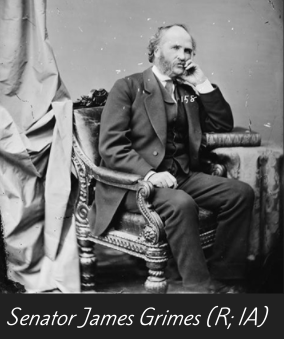
     Days after the closing arguments, the Senate went into closed session, where each Senator was given fifteen minutes to summarize his views. Grimes, happy that Schofield was going to be SecWar, stated that Johnson acted within the scope of the TOA. Grimes and two other Republican Senators were going to vote to acquit Johnson, which meant that the defense needed four more Repubican Senators to reach the magic number of 19 (one more than 1/3). A scheduled day to vote was set for 12 May 1868, but the Senate voted to adjourn for four more day, in part to give Senator Jacob Howard  (R; MI) a chance to get well enough to enter the chamber and vote. 
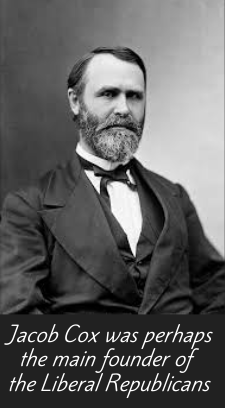
     The impeachers were pessimistic, feeling that if the vote was taken on 12 May 1868, they would have the necessary 2/3’s for removal, but with the delay, they viewed the chances of removing Johnson as fading fast. On 13 May 1868, Johnson was told, by among others, Montgomery Blair, that there were not enough votes to remove the President. Also on that day, Stanton remained barricaded in his office. The backlash against impeachment was growing, and the divisions within the GOP were becoming more fractious. Interestingly, the cabal formed by Chase, with such Senators as James Grimes, formed the basis of what would become the liberal wing of the Republican Party (the end of the Liberal Republicans occurred during the Republican National Convention in Miami in 1968).
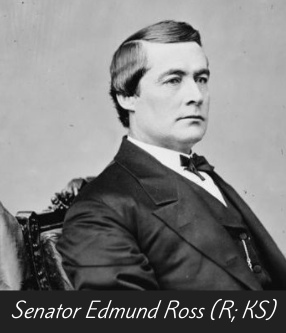
     Senator Edmund Ross (R: KS) had been sent to Capitol Hill to finish the term of his predecessor who had committed suicide. About the only thing Ross succeeded in accomplishing as a Senator was making bad associations with people. Ross received a telegram from KS which stated that his home state expected him to vote Johnson guilty. On 15 May 1868, several Republican Senators that had previously stated that they would vote Johnson guilty now said they would vote to acquit the President.
Picture
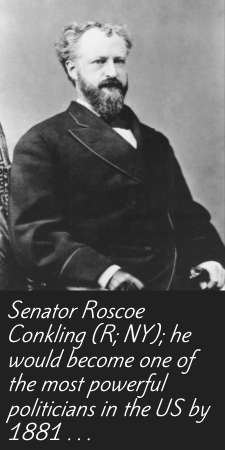
    Senator Howard felt well enough to be carried into the Senate chamber on a stretcher, and Senator Roscoe Conklin (R; NY) was also ill, but he was determined to cast his vote nonetheless. Grimes had suffered a paralytic stroke said to be caused by stress, and it was unknown whether he would be present to cast his vote. On 15 May 1868, in a meeting with about half the GOP Senators, Ross indicated he was a solid guilty vote on the 11th article of impeachment, but he also said that he wanted to see another delay in the proceedings, silently hoping that he would not have to vote at all. The 11th article seemed to have the most guilty votes, so the Radical Republican strategy was to vote first on that article. Ross later claimed that he never voiced his vote on the 11th aricle at the GOP meeting, only his desire for a postponement. 
     Miss Vinnie Ream was a politically connected temptress that had Ross under her spell. Ross boarded at the same house as Ream, and he became an ardent admirer. Despite being charged by KS to convict Johnson, Ross was pressured and convinced by Ream and other ne'er-do-wells to vote to acquit the President. Once Butler was apprised of the shenanigans, he sent a very clear telegram to Ross telling him that he knew what was going on, and that he was expected to vote to convict. Ross vainly kept claiming that he would convict on the 11th article, while hoping the whole deal would just go away. As late as 11:30 pm on the evening before the Senate vote, Ross stated he would convict.; however the person that Ross confided in saw Ream leaving the Senator’s home when he arrived. Ross sent a telegram to KS asserting is right to vote his conscience, and KS responded with a telegram that questioned his motives; in effect, the KS state legislature repudiated Ross in that telegram.
Picture
      Before the vote was taken on the 11th article, Grimes appeared in the chamber, being helped to his seat by two men. Ross was among three Republican Senators in which no one really knew how they would vote, but to the top men in the Republican Party, Ross was viewed as a lost cause. Conkling was present and voted to convict, while Grimes, allowed to remain seated to vote by Chase, voted not guilty. So far in the vote there were no surprises, until, in alphabetical order, came Ross, who as far as the vast majority knew was a lock to vote to convict Johnson on the 11th article; when Ross voted not guilty, the gallery sighed in unison. The die was cast, even though ten more articles needed to be voted upon. 
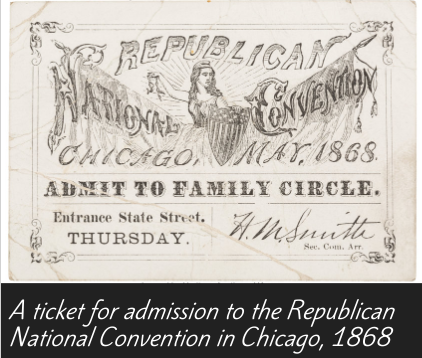
     Ross rushed to the White House after the vote, with James G. Blaine commenting that the rascal was in a hurry to get his pay from the President.  The Senate delayed voting on the other ten article for ten days in order to not be in conflict with the Republican National Convention in Chicago. The Radical Republicans hoped that after the convention the rebellious members of their party would see the light and vote to convict Johnson on at least some of the remaining ten articles. The Radical Republicans were trying their best to get Wade installed as President before the election, which might deny Grant the White House.
     Returning to its legislative function, Congress was ready to bring in Arkansas, which would also bring in more Republicans. However, as much as Sumner wanted AR in the Union, he didn’t want to conduct business with Johnson until the final votes for removal/acquittal were completed in the Senate. Sumner saw, with great disdain, that far too many Senators still buzzed around the President, looking for favors.
Picture
      Meanwhile, Butler got busy trying to figure out whether Republican Senators had been bought for their vote acquitting Johnson. Butler was convinced that there must have been pay-offs, bribes, and bullying. The House authorized a subcommittee to investigate, but everyone knew it would be next-to-impossible to prove anything. A correspondent for the Chicago Tribune opined that impeachment failed due to bad articles, lame managers, and doubtful consequences. Many conservative and moderate Republicans believed it was time for the Senate to pull of the stakes and take down the tent in terms of voting on the remaining articles. The Republicans needed to show a unified front in an election year, and removing Johnson would fracture the GOP with Wade in the White House. As the Election of 1868 approached, the odds seemed long that the GOP could rally around Grant in force.  John Hay, however, was of the opinion that an impeached-but-still-in-office Johnson would help the GOP and pave the way for Grant to become President. The nomination  of Grant at the Republican National Convention, Hay believed, would put out whatever wind was left in the sails of removing Johnson. 
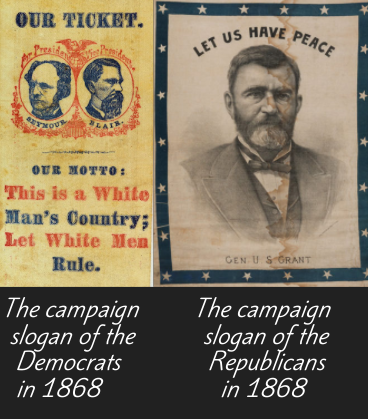
     On 21 May 1868, Grant was nominated on the first ballot. Wade’s chances at being Grant’s Vice-President were dashed due to the failure to remove Johnson on the 11th article, since he was a Radical Republican and President Pro Tempore of the Senate, and nothing more, with far too many in his own party arrayed against him. Speaker Colfax became Grant’s VP on the fifth ballot, and that ticket would mean more to the nation than the impeachment and attempted removal ever could, and the Democrats could have Johnson for themselves, if they chose. Wade actually took his defeat for VP with grace, warmly and genuinely congratulating Colfax. Johnson, still living in his fantasy land, believed that he could easily defeat Grant, if only the Democrats realized that he was their dream nominee.
Picture
   The House subcommittee investigating shenanigans with the Senate vote started to get backlash due to its aggressive tactics. The Democrats called it a “Smelling Committee”, and the Republicans wanted  the investigation to be over yesterday. But Butler and the subcommittee felt they were on the right track, but they also realized that the odds of proving anything of substance were incredibly long. The day before the final vote was taken in the Senate, Butler delivered a preliminary report, which claimed the subcommittee had a great deal of circumstantial evidence that some Republican Senators had been bribed for the vote of acquittal. Many Republicans believed that the subcommittee might pressure the Senate to censure a member(s), or claim a tainted verdict if they were able to get a Senator(s) to change their vote. Among many others, Stanton waited for the votes on the remaining ten articles, all the while staying in his office. 
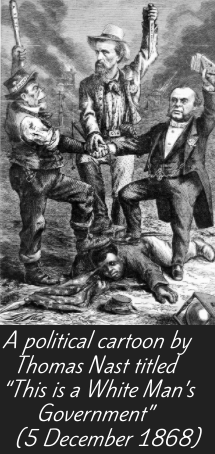
    No one really expected the expected the seven Republican Senators accused of shenanigans to change their votes. The Radical Republicans felt that impeachment was a dead letter in the future, which to them meant that Presidential power to become unchecked. On 26 May 1868, the Senate started to vote on the second and third articles of impeachment, with the vote being 35 - 19 on both, just as it had been on the 11th article. After the vote on the third article, the Senate trial on removing Johnson was adjourned sine die.
Picture
      On 11 August 1868, eleven weeks after Johnson was acquitted in the Senate, Thaddeus Stevens died at the age of 76. By sheer willpower, Stevens stayed alive until the impeachment and removal efforts were all over. Stevens was disappointed in Johnson’s acquittal, but he was in no way surprised. Stevens was buried in his native Lancaster (PA).
     Ross kept up the narrative that he was being picked on because he was a newcomer/nobody in the Senate, and therefore a convenient scapegoat for Butler to pursue. Ross claimed that he had worked in his “humble” way to keep Wade out of the White House and to get Grant elected President Ross conveniently omitted the fact that he repeatedly went to Johnson for patronage favors after the acquittal, telling Johnson that he owed him since he voted for acquittal. Ross became quite the pest, in that every time Johnson agreed to a request from Ross, the junior Senator from KS came back with another request, and another, and another. Ross was probably trying to get back into the good graces of the KS state legislature by getting as many fellow Kansans as possible into the Executive branch. Ross was frequently irritating in terms of asking the President for favors, but he certainly wasn’t alone in doing so. Ross also defended himself by blasting the motives and tactics of the Radical Republicans. 
     Meanwhile, Chase was doing his best to convince the Democrats that he was their man for the nomination, arguing that he had never really left the party. and Af/Am suffrage remained stuck in the craw of the nation. Moderate Republicans only wanted to deal with the South on the matter of Af/Am suffrage, and to let it alone in the North. Sumner and the other Radical Republicans viewed Af/Am suffrage as a constitutional issue in need of an amendment. The conservative Republicans simply believed that they had done enough for the former slaves, and that their future was in their own hands.

Picture
     On 25 February 1869, the House passed a bill that would become the basis of the 15th Amendment. Sumner abstained from voting in the Senate, again arguing that the bill didn’t go far enough, in that a state could find plenty of other ways to disqualify voters. Butler kept up the investigation from the House subcommittee, and in the process he cooled himself out of business with most of his colleagues on Capitol Hill. The Democrats were amused that Butler’s efforts bore so little fruit, and the believed his fixation on Af/Am suffrage would lead to his political ruin. 
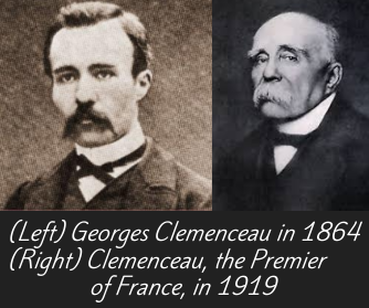
     Johnson badly wanted the Democrats to nominate him for President in 1868, but the Democratic Party’s view was that Johnson proved his disloyalty by being part of the Lincoln administration, cozying up to Seward, and allowing Stanton to remain SecWar. What also turned off the Dems was Johnson’s pathetic attempt to create reinvigorate the National Union Party in order to raid the party’s pantry. Johnson finished second on the first two ballots in the Democratic National Convention in 1868, but on the 22nd ballot, the governor of NY, Horatio Seymour, was nominated. Seymour had supported the draft rioters in NYC in 1863, and he had supported McClellan in 1864. Clemenceau opined that the Democrats had forgotten nothing and learned nothing. By the fall in the Campaign of 1868, the Democrats were experiencing buyer’s remorse with Seymour, realizing far too late that Chase would have been much stronger candidate. 
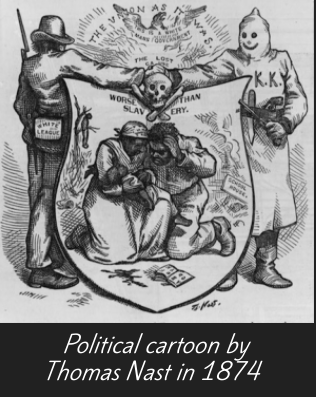
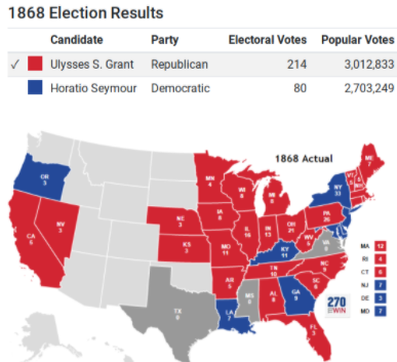
     While Grant won an overwhelming victory in the Electoral College, he only garnered .520 of the popular vote, which meant that white men overwhelmingly voted for Seymour. What provided the Electoral cushion for Grant were the 500k+ Af/Am votes he received from the states in the South. Those 500k Af/Am voters refused to be prevented from voting by violence of the threat of violence, with the KKK running point. By 1868 in TN, there were already 40k KKK members, and Nathaniel Bedford Forrest claimed that there were over 500k KKK members throughout the South. Johnson wasn’t idle closing out his time as President, issuing two more blanket amnesty orders to benefit as many Southern white men as possible, including Robert E. Lee and Jefferson Davis, making sure that they could not be charged with treason. Johnson also made sure he had generals that were to his liking in command of the military districts.

       Addendum: The Aftermath . . . 
1 Comment

The Impeachment and Attempted-Removal of President Andrew Johnson, Part Five

5/13/2021

0 Comments

 
                              Source: Brenda Wineapple. The Impeachers -
            The Trial of Andrew Johnson and the Dream of a Just Nation (2020)
Picture
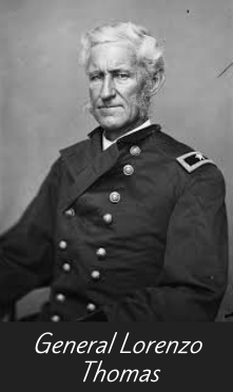
     Johnson replaced Stanton with a bumbling desk officer, 63 year old Adjutant General Lorenzo Thomas, a man widely viewed as incapable of performing any credible public service to his nation. The Democrats viewed the new interim SecWar as a horse’s ass. Thomas went to Stanton’s office, giving him a stack of official documents. Stanton asked if he was expected to vacate the office immediately, and Thomas told him he could have the weekend. 
    An irritated Johnson told Thomas to return and take charge of the War Department on Saturday. Meanwhile, Stanton had contacted Grant and found out that the general was firmly in his corner. On that Saturday, Stanton told Thomas that he wanted more time to think about the situation, and he officially notified the House that Johnson had fired him. With that, the dormant impeachment process erupted, with almost every Republican in the House in support of impeachment. The Senate went into an immediate executive session when the chamber was told of Stanton’s firing. 
     Sumner sent Stanton a one word telegram: “Stick”, with other Republicans told Stanton the same thing in their own way. Stanton resolved to remain in his office, taking his meals at his desk and sleeping on the sofa. During the first night, there were actually soldiers stationed in-and-around the building, in case there was trouble, but there was none. That very night, the Senate declared that the firing of Stanton was unconstitutional. Stanton, with the help of a federal judge, drew up a complaint charging Thomas with violating the TOA. An inebriated Thomas, who had spent the night socializing, telling anyone that would listen that he was going to forcibly remove Stanton with Grant’s help,  was arrested around 9 pm. After being released on bail ($5000), Thomas went to Johnson for assistance, but an unempathetic President told Thomas that he should have taken care of business on that Friday.

Picture
     A hungover Thomas went to Stanton’s office and demanded that Stanton leave, and an amused Stanton refused. Thomas began to whine about what had happened to him, and Stanton befriended Thomas on the spot, offering him a drink, talking shop, making Thomas feel good about himself and things in general again. Georges Clemenceau remarked that Johnson called up the lightning, and the lightning came. When the House Judiciary Committee officially reported its 5 - 4 vote for impeachment to the House Chamber, moderate Republicans were in a panic, Democrats were astonished, and the Radical Republicans were perplexed. A silent Johnson allowed his passion and spite to rule his judgment, apparently having never asked anyone for advice before he fired Stanton. The Democrats refused to view Johnson as one of their own, and most refused to tie themselves to what they considered ot be a political corpse. Johnson remained oblivious to the obvious.
     The imbroglio between Johnson and Congress reopened the anxieties that people felt after they heard about Fort Sumter in April 1865. After the political tides changed after Johnson’s acquittal in the Senate, far too many in Congress that were in favor of impeachment loudly denounced the attempted removal of Johnson, and many of those impeachers had intentionally forgotten their “Go Fever”. But in 1868, impeachment, while risky, also offered the chance at a better future. Johnson had succeeded in uniting a fractured Republican Party, and even Welles was becoming irritated by Johnson’s rash decision-making and his stubbornness. 
     Most Republicans had been content to tie Johnson’s hands and wait until a Republican, almost certainly Grant, was elected in 1868. However, by early-1868 Johnson had pushed most Republicans too far, in that no Republican could ignore that the President had declared war on the Legislative branch. On 24 February 1868, the floor debate for impeachment started, and the lid blew off, with Republican after Republican spewing forth what Johnson had done in violation of the law. The Democrats in the House, correctly as history would prove, argued that the Republicans, especially the Radical Republicans, wanted to increase the power at the expense of the Executive branch. Some Democrats argued that Johnson was only testing the constitutionality of the TOA. It was during the early stages of the debate that Stanton dropped his charge against Thomas for violating the TOA, which meant that Johnson could not appeal the the conviction.


Picture
    The resolution for impeachment passed 126 - 47, with every Republican in the chamber voting to impeach. Next, the House had to specifically outline the articles of impeachment. In order to get the support of key powerful Republicans in the House, the focus was on violating the TOA, which was an indictable offense; Stevens’ preference was to focus on Johnson’s abuse of power. Stevens thought that by focusing on the TOA that the articles of impeachment would be too weak. Stevens proved to be correct, in that the first eight articles focused on Stanton, with the ninth focusing on Johnson’s efforts to circumvent Grant’s authority in the military districts. Stevens did not think that the articles needed in any way to be based on an indictable offense(s). Stevens gained Butler’s support to add a tenth article that accused Johnson of disgracing the office of the President, using his vitriolic speeches as evidence. Stevens lobbied for an eleventh article focusing on abuse of Congress, obstruction of the laws, and conspiracy, which was to serve as a catch-all article covering most bases. 
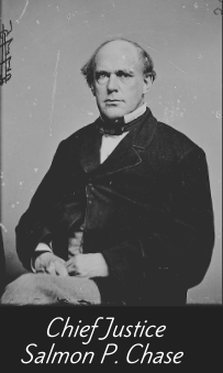
    Next came the process of selecting the House prosecutors for the Senate trial, called managers. Among those selected were Stevens and Butler, and while Butler was not the chair of the committee of managers, he would lead the charge. On 5 March 1868, Chief justice Salmon P. Chase was sworn in as the judge in the Senate removal trial. Beyond that swearing-in, no one really knew what to do next, since the Constitution offered no guidance for Chase as judge, or for the Senate in terms of organization. The Senate couldn’t even force Chase to be the presiding judge, in that if he refused, there was no procedure to replace him. Chase knew he was in a very powerful position, having already indicated that if there was a tie vote, he wanted to cast the deciding vote. Technically, since Chase was not a member of the Senate, he should not have had the right to vote. Chase wanted to rule on the admissibility of evidence, subject to a Senate vote, as well as deciding the reliability of witnesses. Chased wanted the removal trial to be as close to a court of law as possible, so he, not the Senate, would be in control of the trial.

Picture
     The Radical Republicans believed Chase was guilty of judicial interference in what they considered to be a legislative process. It was common knowledge that Chase believed that Johnson acted within his rights as President in removing Stanton, and he considered the entire impeachment process to be ridiculous. Chase had drifted away from his radicalism before/during the Civil War, and it was apparent to those in the know that Chase at that point in time actually sided more with Johnson than with the Radical Republicans. That was an ironic shift, in that Chase had been one of the primary founders of the Republican Party in the mid-1850s. Chase had his eye on winning the Presidency in 1868, firmly believing that he was by far the most qualified, far more than Grant. The Radical Republicans therefore had legitimate reasons to be suspicious of Chase.
     Grant’s supporters were worried about Chase as well, seeing that quite a bit of money had been raised for Chase’s campaign war chest. Making matters more intriguing, Chase was wooing the Democrats as well. Being a former Democrat years ago, Chase had concluded that it was in his best political interest to make life as difficult as possible for the impeachers. On 4 March 1868, Johnson and his two daughters were invited to a Chase soiree. With a straight face, Chase argued that doing so didn’t mean that he was anything but impartial. Chase mostly succeeded in organizing the Senate as a court of law for the removal trial, getting his wish to cast the deciding vote if there was a tie. The only check on Chase was that the Senate voted to allow an individual Senator to call for a vote on any ruling from Chase. The Chief Justice, whether he meant to or not, succeeded in steering the removal trial to more of a courtroom determining a breach of the law than a legislative debate on the abuse of power.
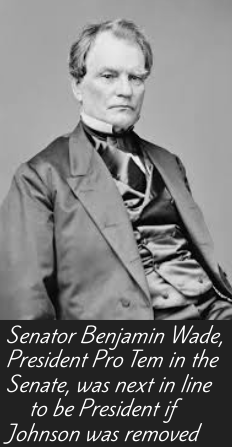
     A Democratic Senator from IN made a motion that Wade should not be sworn in like the other Senators since he was next in line for the Presidency, which the Senator argued was an obvious conflict of interest. Wade dealt in absolutes, and he didn’t let things go, and he simply didn’t care what critics said of him. For many in  Congress, several months of Wade as President would have been far worse than what they had experienced with Johnson, which made the non-Radical Republican Senators feel that they were in a Catch-22.


Picture
     Wade had been sent to the Senate the same year as Sumner by a coalition of Whigs and Free Soilers in the OH legislature, and he chaired the Senate committee on the conduct of the war during the Civil War. Wade opposed the re-election of LIncoln in 1864 with the other Radical Republicans, since he felt that Lincoln was going to be too lenient on the South after the war. Moderate and conservative Republican Senators were fine with Johnson being impeached, but not removed. Johnson was incredulous when a trusted confidant told him that the Senate trial was more about Chase not being allowed to be President than Johnson being removed, which of course Johnson hated to hear since he felt he was the star of the show. 
     The debate over Wade being able to vote continued into 6 March 1868, at which point the motion wa withdrawn for unknown reasons, probably due to behind the scenes deal-making. Wade took the oath with the other Senators. To Wade and the Radical Republicans, it seemed like a huge victory, but they apparently had no idea that the moderate Republicans were going to make sure that Wade never entered the White House via the removal of Johnson. On 7 March 1868, Johnson received a summons to appear in front of the Senate. Johnson welcomed martyrdom and being able to make his case known nationwide, vowing to deal with his enemies once-and-for-all.


Picture
     Johnson was able to get a Dream Team of lawyers to represent him, since many big time lawyers thought impeachment, at least in this case, was not warranted. One of the lawyers was Benjamin Curtis, who had cast a dissenting vote in the Dred Scott Decision in 1857, was no longer on the Supreme Court (he resigned from the Court that same year). Although he was no longer a Supreme Court Justice, Curtis remained a conservative interpreter of the Constitution. Curtis hated politics, and he also hated Abolitionists, having supported the Fugitive Slave Act. Curtis later supported Johnson’s policies, all in the name of conservatism. 
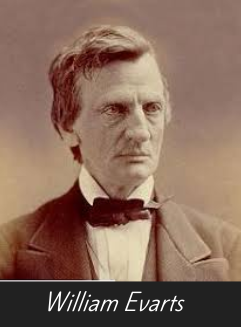
     Another of Johnson’s lawyers, William Evarts, was the grandson of the Founding Father Roger Sherman. Evarts, unlike Curtis, enjoyed politics and wanted ot be on the Supreme Court, a position that Curtis had abandoned (Evarts would eventually become SecState under President Rutherford B. Hayes, and then a Senator from NY). Seward was the one that advised Johnson to bring aboard Evarts. Sumner, who was actually fond of Evarts, believed that Evarts should have never represented Johnson. 
     Eight hundred tickets had been printed for the removal trial in the Senate, with each Senator and Representative receiving a specific allotment. On 13 March 1868, the removal trial began in the Senate. The Senate summoned Johnson to appear three separate times, but Johnson (wisely) was a no-show. Johnson actually listened to the advice of his lawyers and stayed away. His lawyers knew that Johnson would be his own worst enemy if he showed up and spoke. Instead, three of Johnson’s lawyers answered the summons, Curtis being one of them. 
     The first thing Johnson’s lawyers wanted as a forty day postponement, which was denied by the Senate, instead they were granted ten days. Johnson’s lawyers also lost their argument for a very slow-paced trial. The removal trial in the Senate reconvened on 23 March 1868, and Johnson’s three lawyers spent two hours laying out their defense aligned with the articles of impeachment., only after another motion for a postponement was denied. The date of 30 March 1868 was set for the beginning of the actual trial in the Senate.

        Addendum: The Removal Trial in the Senate
                                      For President Andrew Johnson Begins

0 Comments

The Impeachment and Attempted-Removal of President Andrew Johnson, Part Four

5/12/2021

0 Comments

 
                               Source: Brenda Wineapple. The Impeachers -
            The Trial of Andrew Johnson and the Dream of a Just Nation (2020)
Picture
     With the process of impeachment stalled, Republicans believed that they had sufficiently blocked Johnson from doing any more damage. Sumner didn’t buy into that conventional wisdom, and he begged his Congressional colleagues to return in session in July 1867. While Congress was in recess, Johnson did his absolute best to circumvent Congress, such as making sure that the military commanders didn’t have the right to remove civilian officials, which cut out the heart of the 1st Reconstruction Act.  It wasn’t just Johnson vs. Congress, it was also Johnson vs. the military, which proved to be just as much of a factor leading to his impeachment as were the Republicans in Congress. 
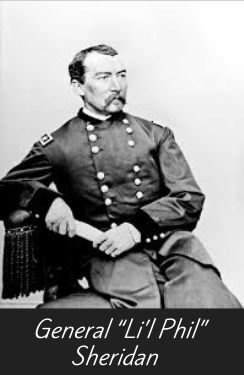
     General Sheridan ignored the opinion of the Attorney General which limited the authority of military commanders. Sheridan was the commander of the LA/TX district, and it wasn’t until the was placed in command of that district that his views fell in line with those of the Radical Republicans. Sheridan removed from office civilians that he believed had orchestrated and/or been involved in the New Orleans Massacre. An added incentive for doing so was that Sheridan wanted to publicly embarrass Johnson. Grant and Stanton approved of Sheridan’s actions, and it was Grant’s support that made it almost impossible for Johnson to remove Sheridan from his post. 
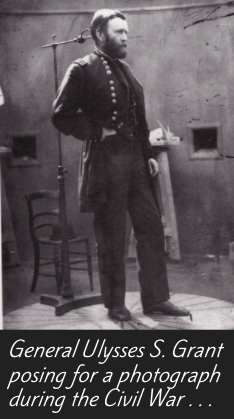
     Seeing the writing on the wall, Congress reconvened in July 1867, and shortly thereafter the 3rd Reconstruction Act was passed, which gave Grant complete authority over Congressional Reconstruction. The act included that military commanders had complete authority with their district, and provided $500m in funding. Johnson vetoed the bill, and yet again Congress overrode his veto. Starting in the Summer of 1867, Grant, unwillingly for the most part, entered the political arena. That being said, no one could yet pin down Grant’s party affiliation, since his statements and actions had given pause to both the Republicans and the Democrats. Grant remained very circumspect, but whats wasn’t under question was the general’s devotion to his beloved military. 
     Grant’s belief was that there would never be real Reconstruction unless Af/Am’s could vote, which meant that he wished to follow (and enforce) the Reconstruction Acts. Grant readily assisted the district commanders as well as shielding them from interference from the President. In Grant’s eyes, Johnson who was defying Congress, so therefore the military could legally defy Johnson, which was a recipe for conflict. Grant had the backing of Stanton, who had formally stated that he would enforce the Reconstruction Acts as SecWar; SecNav Welles felt that Stanton had at last shown his untrustworthy hand.

Picture
     Grant and Stanton controlled the military under laws passed by Congress over Johnson’s vetoes; the overall purpose was to undercut and eliminate Johnson’s power in reconstructing the South. Congress was again in recess in August 1867, and it was during that month that a livid Johnson decided to remove Sheridan and Stanton. Grant advised Johnson against doing so, since Sheridan was very popular and Stanton was protected by the Tenure of Office Act. Even Welles advises Johnson to leave Sheridan be, but the SecNav was using reverse psychology on the President, with the endgame being the removal of Stanton. As far as Welles was concerned, Stanton needed to go in order to defang the Reconstruction Acts, to restore the Southern Way of Life, as well as to get the locked-out Southern members of Congress properly seated. 
     On 5 August 1867, Johnson sent Stanton a note saying that his resignation as SecWar would be accepted. Stanton responded with a written missive saying that he wasn’t going to resign before Congress reconvened. Stanton believed that the TOA protected him unless the Senate voted to remove him. Johnson hoped that there would be a public condemnation of Stanton for staying in office in spite of the wishes of the President, so he let the matter be for a few days, wanting to “sweat” Stanton. Johnson told Grant that his actual intention was to suspend Stanton in order to avoid violating the TOA, and he also told the general that he planned on appointing him as the interim SecWar. Johnson calculated that with Congress in recess, he could again do whatever he wanted, and he assumed that when Congress reconvened, Grant would be confirmed as SecWar. 
     Johnson counted on Grant’s cooperation and popularity to smooth over any difficulties. Johnson also wanted to drive a wedge between Grant and Stanton, who had been working well together running the military districts and enforcing the Reconstruction Acts. Despite receiving advice not to do so, as well as running against his own misgivings, on 11 August 1867, Grant officially accepted his appointment as interim SecWar. On 12 August 1867, Johnson suspended SecWar Stanton. Stanton informed Johnson that he had no right to suspend him without cause. However, since Grant had been appointed interim SecWar, Stanton, who was boiling with anger, wrote that he would, under protest, submit to a superior force. When Johnson received Stanton’s response, he told an advisor that the Rubicon had been crossed.

Picture
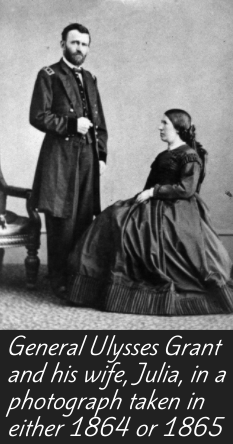
     Johnson believed that he had accomplished two things: removing Stanton and sidelining Grant. The President also thought he had successfully broken any link between Grant and the Radical Republicans. Johnson thought the Radical Republicans would view Grant as a sell-out, and to some, such as Phillips, grant had indeed stabbed Stonton in the back. Grant told his wife (Julia) that he thought it was the right move to accept the post of interim SecWar, sine the War Department needed someone in charge that Johnson could not manipulate. Grant’s main goal was to protect the military, execute the laws of Congress, and to protect the former slaves. However, Grant did not fully appreciate the intricate politics involved with his acceptance of the post of interim SecWar. 
     On 17 August 1867, Johnson removed Sheridan from command, totally ignoring Grant’s advice that if he did so, Johnson would be directly going against Congress and the Reconstruction Acts. Johnson stated that he was the one acting on behalf of the Constitution and state sovereignty, which was too much for Grant, and he released his opposing response to Johnson and to the press. In that released response, Grant argued that Johnson had acted in violation of Congressional acts when he suspended Stanton, and then removed three military commanders, most prominently Sheridan. Johnson pondered removing the head of the Freedman’s Bureau, planning on naming an Af/Am as his replacement, thinking that so many whites would quit the department that the Bureau would become ineffective. Johnson went so far to offer the post to prominent Af/Am’s, such as Frederick Douglass, but wisely, none accepted. 
     As a result, many came to Grant’s defense, echoing what Grant had told his wife, and that he did so to protect the military as well as trying to contain the reckless actions of Johnson. At the same time, opposition to Grant increased, in that many saw Grant as an obstacle to Reconstruction and the Radical Republicans. Grant’s popularity skyrocketed even further, with “Grant Clubs” springing up nationwide. Moderate Republicans increasingly viewed Grant as the nation’s insurance against the Radical Republicans. The paranoia of Johnson, and even Welles, became palpable, with both wondering what Grant would do if the impeachment progressed and escalated, for example would Grant follow the orders of the President. For an answer, Johnson made a personal visit to Grant. As Johnson understood their conversation, Grant promised to obey the President, and that he would step down as interim SecWar if the Senate tried to reinstate Stanton.

Picture
     In a meeting with Sherman, Johnson asked the general a myriad of questions, and whatever Sherman told Johnson, the President was soothed, at least a little. Sherman was not a favorite of the Radical Republicans, and rumors spread that the meeting between Johnson and Sherman hatched a conspiracy leading to armed insurrection. The House Judiciary Committee decided to vote again on impeachment when Congress reconvened in the Fall of 1867. One of the committee’s members changed his vote, due to unproven allegations of financial corruption. On 24 November 1867 the committee voted 5 - 4 to recommend impeachment., which meant that the process was forwarded for the full House to consider. After the Civil War, the amount of money involved in political corruption went off the charts, and the line between the federal government and Big Business became even more blurry. 
     The fight over currency created very different opposing groups, with factions that hated Johnson on every other front agreeing with the President on hard currency (Gold Standard) instead of continuing Greenbacks. Staring everyone in the face on Capitol Hill was the $2.3B Civil War debt, and many war bonds were coming due, so the problem was how should the lenders be paid back, with hard currency or Greenbacks. There were schisms in both parties when it came to the currency debate. 
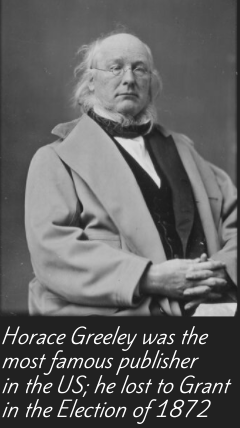
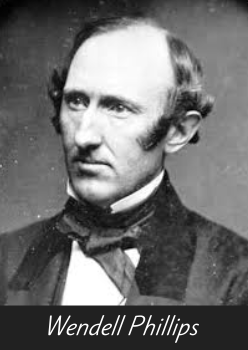
     Congressional fiscal policy was dominated by the Republicans, and they largely favored lowering the amount of Greenbacks in circulation, while Democrats largely favored Greenbacks and not restricting the money supply. Voters in key states voiced their preference, sending Democrats to the governor’s mansion. It also seemed that voters were drifting away from the Radical Republicans, which to many meant that Grant could step in as the moderate voice of reason. Most Republicans did not want to make a martyr out of Johnson, and figures such as Horace Greeley argued that the Election of 1868 was right around the corner, so let the voters decide what to do with Johnson. However, Phillips didn’t want to take the chance that Johnson wouldn’t do something far worse than what he already had done if he was allowed to finish his term.

Picture
    Most moderate and conservative Republicans wanted impeachment off the table, Grant elected as President, the GOP united, and the Radical Republicans run out of DC. These Republicans saw impeachment as the way the Radical Republicans would conduct a palace coup, in that by removing Johnson one of their own, Benjamin Wade, would be President before the election; and that was exactly what the Radical Republicans wanted. 
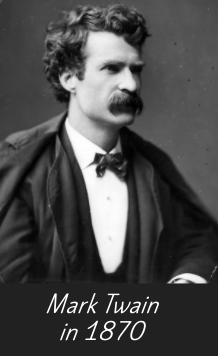
     Mark Twain arrived in DC in 1867 as the Washington correspondent for several newspapers, including the New York Tribune and the New York Herald. Twain’s reputation was as a humorist and lecturer, not as a journalist, but Twain proved to be as keep a political observer/commentator as any in the nation’s capital. Twain did his job very well, but he absolutely hated Washington, D.C. Twain was in attendance in the House on 3 December 1867, witnessing the delivery of Johnson’s Presidential Address to Congress in a bulky parcel. After the message was read out loud, with the members reading along in their own copies, pandemonium ensued. 
     Johnson’s message was a masterpiece of venom and vitriol. The President was obviously emboldened by the reduction of the number of Radical Republicans in Congress after the Congressional Elections of 1866, as well as more recent state elections. Johnson rehashed the same policies, but what was new was his use of the word slavery, in that he used that word towards Southern whites if Af/Am’s gained such civil rights as suffrage. Johnson also referred to “military despotism” with the five military districts. Johnson went on to say that he had ruled out using the military against Congress since he didn’t want another Civil War. Johnson kept going, stating that if he did use military force, the Constitution would be on his side. The address was incendiary, illogical, and it united the Republicans like nothing had done before. 
     Twain commented  that before Johnson’s address, impeachment was going nowhere in the House, but after the address, impeachment gained serious momentum. That being said, Twain, as well as many other observers, simply didn’t think the Republicans in Congress had the guts to seriously pursue impeachment. Soon Twain and those others would be proven right when the House voted 108 - 57 against impeachment. And, just as Phillips had predicted, Johnson let loose, removing more military commanders, including General John Pope, who was removed by Johnson when the general publicly stated that Af/Am’s should be allowed to serve on juries. On 12 December 1867, Johnson sent Congress a message explaining why he had suspended Stanton, which was very vitriolic and at times very illogical, and Johnson also found the time to laud the job Grant had been doing as interim SecWar.

Picture
   Johnson was the chief architect of his own impeachment, choosing conflict (even with Grant) which accelerated a crisis that he didn’t know how to or want to resolve. In early-January 1868, the Senate Committee on Military Affairs was in the process of exploring whether or not to reinstate Stanton. Grant realized that if the Senate did so, then he, as interim SecWar, would be in violation of the TOA, and he could be fined and/or imprisoned. It was on 
11 January 1868 that Grant personally told Johnson that if the Senate reinstated Stanton that he would step down. Johnson offered to pay the fine and serve the jail sentence, but when Grant politely declined the offer, Johnson told Grant the he would prefer that Grant step down soon so he could appoint another interim SecWar. 
     According to Johnson, Grant indicated that he would resign before the Senate voted on Stanton. Grant, on the other hand, denied making any promises to Johnson, instead claiming that he told Johnson that if the Senate reinstated Stanton, then his duties as interim SecWar ended at that point. Johnson thought that they would again meet in a day or so, but Grant held firm that he never promised to meet the President. No matter the truth of what occurred in the meeting, what was plain was that there was clearly growing friction between the President and the General. 
     Grant and Sherman met, and they decided that Sherman would tell Johnson that Grant would resign if he appointed a moderate Republican. The easiest choice was Ohio’s governor, General Jacob Cox, who would have been easily confirmed in the Senate. However, Johnson didn’t appoint anyone, and Sherman suspected that the President had in mind a Copperhead. The Senate overruled Johnson’s suspension of Stanton by a vote of 35 - 6, reinstating him as SecWar, with even moderate Republicans voting in favor. Johnson, Stanton, and Grant were all very stubborn, which played a major role in the upcoming events concerning impeachment.


                             Addendum: Andrew Johnson -
              The Architect Of His Own Impeachment  

0 Comments

The Impeachment & Attempted-Removal of President Andrew Johnson, Part Three

5/11/2021

2 Comments

 
                               Source: Brenda Wineapple. The Impeachers -
            The Trial of Andrew Johnson and the Dream of a Just Nation (2020)
Picture
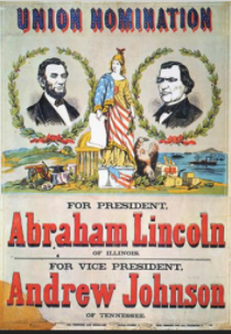
     After Stanton learned of the slaughter in New Orleans, he told Sumner that Johnson and his policies were the reason for the massacre. In 1867, Johnson would remove Stanton as SecWar; one wonders why the President didn’t do so before the passage (over his veto) of the Tenure of Office Act. In 1864, Lincoln and most Republicans formed the National Union Party, which was designed to not only lure War Democrats to their fold, but to also exclude the Radical Republicans (the Radical Republicans would form their own party, hold their own convention, and nominated John C. Fremont as their candidate in 1864). By 1866, that political coalition was not longer intact, but the politically out-of-touch Johnson thought it was still active, and could be rejuvenated for his own political benefit. 
     Johnson believed that a new National Union Party, consisting of his kind of Democrats plus moderate and conservative Republicans, could block Congressional Reconstruction. Johnson also thought that the reconstituted party would crush Radical Republican candidates in the House and the Senate in the Congressional Elections of 1866, setting Johnson up to win the Presidency in his own right in 1868. A National Union Party convention was scheduled for 14 August 1866 in Philadelphia. All but one Republican in Congress saw the attempt to reform the National Union Party as a conspiracy to destroy the Republican Party. What Johnson really wanted was to transfer political power from the party that won the Civil War to the party that opposed and lost the Civil War. 
     Johnson wanted to get the locked-out Southern members of Congress admitted via the results of the off-year elections in 1866, which then would lead to enough votes to block the proposal of the 14th Amendment in both houses. Three members of the Cabinet resigned when Johnson pressed them to endorse the convention. Stanton did not endorse the convention, nor did he resign as SecWar. The National Union Convention in 1866 consisted almost entirely of Rebels and Copperheads, and Nathaniel Bedford Forrest was nominated as a vice-president of the convention. Despite 7000 in attendance, the convention fizzled, and it appeared that Johnson would not have a party in which to run for President in 1868. Johnson had succeeded in alienating every faction of the Republican Party as well as most Democrats, who were upset with the President that he hadn’t yet forced out Stanton.

Picture
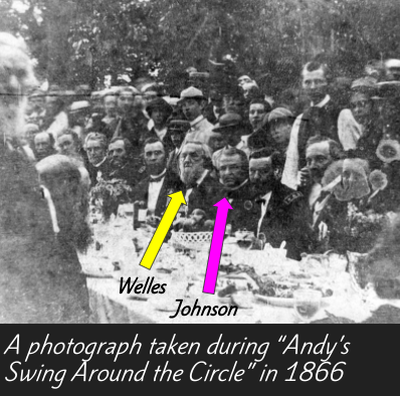
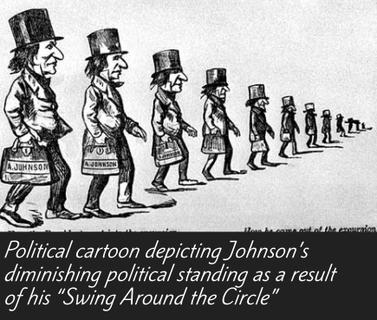
      After the failed convention during the last week of August 1866, Johnson hit the campaign trail, trying to drum up support for his policies, increase opposition to the 14th Amendment, and to curtail the power and influence of the Radical Republicans. Johnson’s tour was soon mocked as “Andy’s Swing Around the Circle”. Johnson had a few famous Americans in his retinue, including Seward and Welles, and he had encouraged Admiral David Farragut and General Grant (and eventually Custer) to join his entourage. No expense was spared for Johnson’s tour, with a special train with luxury cars provided by the Baltimore & Ohio Railroad, which ran on a special time table. 
     The city councils of Baltimore and Philadelphia refused to host official receptions for Johnson’s tour, but well-wishers still greeted Johnson et al when the tour arrived in those two cities. Johnson experienced great crowds in NYC and was feted in the city to a great degree. When the tour traveled to Upstate New York, Johnson was advised to avoid speaking extemporaneously, and to use honey instead of vinegar to build support; Johnson ignored both those pieces of sage political advice. Johnson simply couldn’t resist going after his enemies in his speeches, and the most commonly used word in his speeches on his tour was “my”. Springfield (Ill) only welcomed Grant and Farragut, and increasingly, Johnson heard only hisses and hecklers when he spoke.
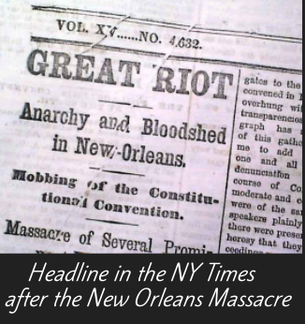
     The massacre in New Orleans had become the reference point for Johnson’s policies in allowing former Confederates to return to power in the South. Hecklers kept baiting Johnson, and the President kept answering back with his usual tart and blunt responses; facing hecklers had become the norm for Johnson as his tour continued. Grant and Farragut were crowd favorites, while Johnson was booed and hissed, even when only his name was mentioned. By the time Johnson arrived in Cleveland, crowds had learned to drown out Johnson by chanting “Grant! Grant!”, and after Cleveland, Johnson looked ill. St. Louis was no better for Johnson, and when he referred to New Orleans, someone in the crowd called Johnson a traitor.

Picture
   Like Richard Nixon, Johnson wallowed in self-pity, which especially came out after being heckled and taunted. Johnson’s speeches became even more incoherent, and in Indianapolis the hecklers were so loud that Johnson couldn’t continue to speak, with even Grant unable to calm the crowd. Johnson had no one to blame but himself for the situation in which he found himself. In Johnstown (PA), a platform that was built over an empty canal collapsed when over 2000 people stood on the plankings, killing six people and injuring over 300. Johnson mistook the intensity of his own convictions/stances for strength of evidence, which is never a good trait for a President to possess. 
     By the Fall of 1866, every card Johnson played worked against him. Americans that had initially supported Johnson left his political camp like rats from a burning building. Democrats soured on Johnson as a result of his tour, suspecting that Seward had set up Johnson for his fall so he increase his chances of becoming President.  By mid-September 1866, both Grant and Farragut had distanced themselves from Johnson and his policies, with Grant going so far to tell his his wife that Johnson was a national disgrace. With crowds cheering Grant and calling for the General to run for President in 1868, Johnson’s attitude towards Grant cooled, just as Grant had cooled to Johnson. Grant returned to DC alone, not with the rest of the tour, and soon thereafter he stated that the military needed to keep another New Orleans from occurring. 

     Seward made things worse for Grant when the SecState affirmed Grant’s support of Johnson and his policies, which led to a significant number of Republicans losing confidence in Grant.  Johnson wanted to rid himself of Grant, but he knew he couldn’t remove his as the Commander of the Army since the general was so popular. As a result, Johnson told Grant that he was soon to depart on what in essence was a diplomatic mission to Mexico. Johnson hoped that Grant would get drunk and that it would be noticed and reported, so as to reduce Grant’s popularity, after which he planned to appoint General William Tecumseh Sherman as the acting Commander of the Army. 
     Johnson either didn’t know, or he ignored the fact that Grant and Sherman had been friends for over a quarter-of-a-century. Grant unequivocally refused to go to Mexico, and Sherman refused to be Johnson’s catspaw.  An irritated Johnson told Seward to order Grant to go to Mexico, but Johnson backed off when his Cabinet advised him that Seward should only request that Grant go to Mexico.

Picture
    The chief architect of the Impeachment of Andrew Johnson was Johnson himself, in that he had a penchant for martyrdom and self-pity, a la Nixon. Johnson believed that his great destiny could be enhanced via impeachment, and given his temperament, Johnson could not roll any other way. So the, Johnson welcomed the battle to the political death, with himself as the hero, either going down to defeat as a martyr, or prevailing in unforgettable glory. 
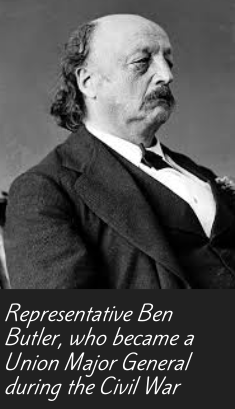
     Speculation about the possibility of impeachment started in earnest in 1866 after the massacre in New Orleans, going beyond the isolated political voices in the wilderness. In other words, the rhetoric concerning impeachment was no longer the sole province of a few Radical Republicans. Johnson kept on the attack against the Radical Republicans, practically daring them to start the process of impeachment, but Congress wasn’t yet taking the bait. The most brash call for impeachment came from the Radical Republican Benjamin Butler, the former Union General, who by 1866 was a member of the House from a district in MA. Butler would become the chief prosecutor from the House during the Senate trial of Johnson. One reason why Butler was all-in on impeachment was that he thought it might be a way to get people to forget he was a major failure as a major general in the Civil War. That was especially true during the Spring of 1864, where instead of advancing on Richmond under orders from Grant, he bottled up his army along the James River, which seriously prolonged the Civil War.

Picture
     During the Spring of 1866, Butler predicted the coming collision between Johnson and Congress. Butler won election to the House from a a district in MA where he didn’t actually live, but where he owned property. The main reason he won was that he kept telling crowds that Johnson should be impeached. Audiences loved Butler, his district elected him to the House, and he would become a bane for President Johnson. 
     Moderate Republicans were hopeful as the Congressional Elections of 1866 approached, in that they were optimistic that New Orleans opened many eyes. Sure enough, the Republicans benefitted from an off-year election landslide, and in the process Johnson was defied. The Republicans gained veto-proof majorities in both houses, 173 to 55 in the House, and 43 to 9 in the Senate. Memphis and New Orleans meant that no new National Union Party had formed, that Johnson’s “Swing Around the Circle” showed the President to be vulgar, vain, and vindictive. It also became clear to more than just Butler that impeachment was necessary, who argued that despite the results of the election, Johnson would never change. 
     The House Judiciary Committee started it impeachment investigations on 7 January 1867, but most Republicans still thought that impeachment was too rash a measure in terms of dealing with Johnson, with Butler and Stevens in the minority, wanting impeachment. Despite the House vote of 108 - 39 to authorize the committee’s investigation, Seward believed that the entire impeachment process would not get past the committee.


Picture
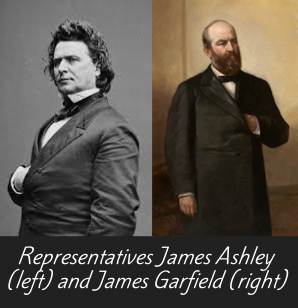
     Within the committee, James Mitchell Ashley (R; OH) was the ringleader, but in early-1867, his was a voice that was still in the political wilderness. Colleagues such as James Garfield  refused to seriously consider impeachment if Ashley was involved.  Garfield also knew that that in early-1867, there weren’t close to enough votes in the Senate to remove Johnson. Ashley acted rashly, not taking into consideration the political price he might have to pay, yet his best service to the nation was to be the first to officially call for the impeachment of Johnson. The problem was at that particular time, Ashley as not viewed in a charitable fashion by the majority of his Congressional colleagues. Moderate and conservative Republicans believed, like Seward, that the Judiciary Committee would quash the whole thing, but Ashley succeeded in getting impeachment into the Congressional bloodstream. 
     Johnson was livid that the word impeachment was even used towards him. However, Johnson was very pleased with the Supreme Court’s ruling in ex parte Milligan, in that the decision did not allow military courts to function if civilian courts were open. In the South, that meant that rebel civilian courts were the rule, which would be at the extreme expense of Af/Am’s. The Court’s decision in ex parte Milligan was used by Johnson to exonerate numerous Southern whites that had murdered Af/A’s as if they had killed a bug. A young French journalist by the name of Georges Clemenceau commented that anyone that hoped the Radical Republicans would idly stand by while the nation was going to ruing under Johnson were badly mistaken; however, impeachment was still seen as too extreme by most Republicans.

Picture
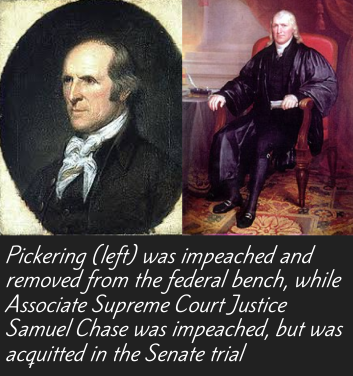
     Over the previous decades, the House had started impeachment proceedings only four times, and the Senate had only convicted twice. Two of those four were the impeachments of federal district court judge John Pickering and Associate Supreme Court Justice Samuel Chase in 1804. Ironically, the most recent instance of impeachment involved a district judge in TN, who became a Confederate judge without resigning as a federal judge; it was Johnson as the military governor of TN that called for impeachment. 
   Making matters murky for impeachment was the huge gray area of what was considered legal and Constitutional and what was moral and political. To many, Johnson had long ago flunked the moral test, but it was highly questionable as to whether Johnson had violated any law(s); in other words, Johnson hadn’t broken a law. Also murky was the questions of whether the President would be required to leave the office during the removal trial, or would he remain in office as a functioning President, and would the President be able to testify in the Senate on his own behalf. 
     Republicans in Congress knew of these obstacles and thorny questions, and they viewed impeachment as a last resort to deal with a calamity. At the same time, to many impeachment offered a glimmer of hope, a new beginning. Johnson’s refusal to bend on his opposition to the 14th Amendment as well as his regular obstinancy and his insistence on white supremacy, started to wear thin with even his friends and acquaintances. All the Southern states except TN refused to ratify the 14th Amendment, and during the process, Grant had been watching Johnson with mute disgust. As a result of the ten Southern states refusing to ratify the 14th Amendment, both moderate and Radical Republicans became far more galvanized in that they agreed that Johnson needed to be corralled.


Addendum: The Tenure of Office Act and the Battle for Reconstruction . . . 
2 Comments

The Impeachment & Attempted-Removal of President Andrew Johnson, Part Two

5/10/2021

0 Comments

 
                               Source: Brenda Wineapple. The Impeachers -
            The Trial of Andrew Johnson and the Dream of a Just Nation (2020)
Picture
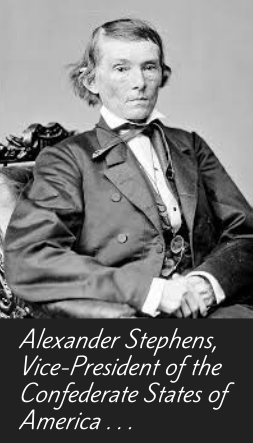
     For eight months, Johnson had in effect been ruling by Executive Decree, which changed on 4 December 1865 when the 39th Congress gaveled into session. Under House rules, the House managers could refuse to seat anyone they chose. The Radical Republicans wanted to bar from entry such ex-Confederates as Alexander Stephens in the Senate, who was the Vice-President of the Confederate States of America. The atmosphere was so charged that Seward actually arranged, via Welles, to sail to Cuba in order to avoid the sturm and drang. 
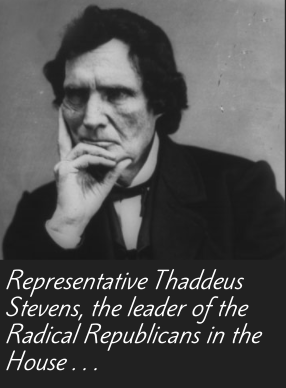
     Most moderate and conservative Republicans agreed with the view of the Radical Republicans, in that for every state that had seceded, none of their representatives or Senators would be seated. The first Southern representative that was “skipped over” and not recognized from from TN. After Schuyler Colfax was elected Speaker of the House, Thaddeus Stevens made sure to suspend the rules to end debate. Stevens then proposed the creation of a Joint Committee on Reconstruction (9 from the House, 6 from the Senate) which would investigate the situation in the South. The resolution easily passed both houses, and a moderate Republican was selected as the chair of the committee, while the three Democrats were the loud contrarian minority on the committee. 
     Stevens brought up the reality that with the 13 Amendment, the 3/5’s Compromise was no longer in effect, which meant that former slaves would count the same as white citizens for representation in the House. Stevens made it very clear to all that the result would be increased allocation of representatives from the Southern states, which he viewed as grossly unfair since Af/Am’s could not vote in those states.

Picture
     Stevens also brought up that Johnson and others had repeatedly and publicly stated that the US government was a ‘White Man’s Government”, which appalled Stevens, who had been an Abolitionist long before the movement became organized. Stevens was elected to the House as a Whig in 1849, lost his seat for a term, and then won it back in 1858 as a Republican, very soon becoming the Chairman of the House Ways and Means Committee. In the “World According to Stevens”, justice was for all as was equal opportunity. Stevens was a mix of practical and an idealist, depending on the situation, but Sumner was a Puritanical perfectionist who was a pompous schoolmaster, doctrinaire, arrogant, and a longe-talker. Sumner shared with Stevens and Phillips the rightness of his views, and Sumner, and like the other two, he saw himself as a political knight ready to engage in battle, inspiring respect but not love. 
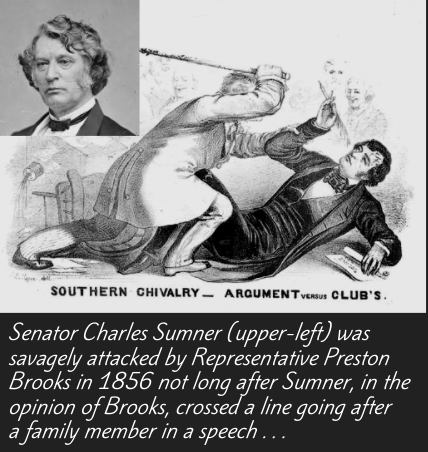
     In 1851, Sumner joined the Free Soil Party, and was soon elected Senator from MA. Sumner often misjudged, or didn’t even consider, the reactions to his tirades, which led to “The Caning” in 1856, which took Sumner over three years to recover.  The result was that Sumner became even keener and sharper in the desire and pursuit of equality and justice. Sumner saw Johnson as pigheaded, ignorant, and perverse. Sumner wanted to chair the Reconstruction Committee, but he wasn’t even asked to be a member. Sumner then acted on his own, introducing bills to advance the cause of the former slaves. Sumner publicly challenged Johnson, saying that if the President wasn’t going to be Moses, at least he should not be the Pharaoh. By the end of 1865, the 13th Amendment was ratified when the 27th state (out of 36) voted yes; it was the conclusion of a process that had been started by Lincoln earlier the same year.

Picture
    At the same time, Seward was still in agreement with Johnson that Reconstruction was unnecessary, and that Af/Am suffrage was not a concern of the federal government. The Freedman’s Bureau created the idea of what became known as “40 Acres and a Mule” for Af/Am’s, which Stevens used as his opening in order to start the process of transferring property to Af/Am’s. What wasn’t clear was whether Af/Am’s had any legal rights to that land, in that did the land still belong to the those that abandoned it. Would the land be confiscated, or were the Planters still full-fledged citizens with property rights after they were pardoned by Johnson, as the President claimed. 
     Johnson ordered that all confiscated lands be returned to the original owners. Land ownership was political power, which all parties involved in Reconstruction understood. When pressed by Frederick Douglass and other Af/Am Civil Rights leaders, Johnson’s response was the same, in that the federal government should not impose Af/Am voting rights on the people of any state. Johnson simply ignored the fact that most of South Carolina’s citizens were Af/Am. Johnson didn’t like it one bit when he was lectured to by Af/Am idealists, whom he believed hadn’t sacrificed as he had in terms of property loss and death threats. Johnson either didn’t know, or he ignored the fact, that Douglass was a former slave that risked his life and had for too many lost years. Johnson’s prejudices and arrogance struck many as reprehensible, and before long he vetoed both the Freedman’s Bureau bill and the Civil Rights bill, not wanting to have anything to do with legislation he thought was was from the Radical Republicans. 

Picture
      When Johnson vetoed the Freedman’s Bureau bill on 19 February 1866, there was no more mistaking his position, and no more pretending he might change. Johnson viewed the Freedman’s Bureau as nothing more that a patronage scheme that favored Af/Am’s, and he ignored all the information of the benefits that had already occurred. Johnson believed that each state could take care of itself, and he stated that the bill’s passage in both houses would be unconstitutional., since Southern representatives and Senators were still not seated. Johnson wanted Congress to do his bidding, denying the legitimacy and authority of a Congress that hadn’t included the South. Democrats and conservative Republicans were giddy with delight with the policies of the President. 
     Johnson and Seward branded the Radical Republicans as obstructionists and extremists, hoping to lure conservative Democrats and Republicans, and even moderate Republicans, into a new Union Party, which would be headed by the President and the Secretary of State. Both men believed that once the Union Party was a reality, the nation would follow their lead. When Johnson spoke to crowds, his speeches became even more venomous, seeing his speeches as a chance to unload all the vitriol that had been stored up, settle scores, and to justify his authority and policies. 
      It was during the first part of 1866 that some in Washington, D.C. believed that impeachment was on the table since it appeared that Johnson was unfit to fulfill the duties of President of the United States. SecWar Stanton remained in office, wanting to protect the military, seeing Johnson as unhinged. Stanton also was firm in his stance that if the President wanted him out as SecWar, then Johnson would have to remove him from office.


Picture
      There was no reason to believe that the Civil Rights bill in 1866 was objectionable, controversial, or that it would prevent the healing of the nation . . . or that Johnson would veto the bill. The bill said nothing about suffrage or anything else controversial, in that its intent was reconciliation, which was seen as sensible and in vogue. The bill granted citizenship to anyone born in the US (excluding Natives), and as such had the same rights as any other citizen. The bill was popular, and it seemed to be uniting a fractured Republican Party Even Wendell Phillips endorsed the bill, although it lacked the right to vote for Af/Am’s. The bill sailed through both houses in March 1866, but Johnson simply didn’t want to sign it. 
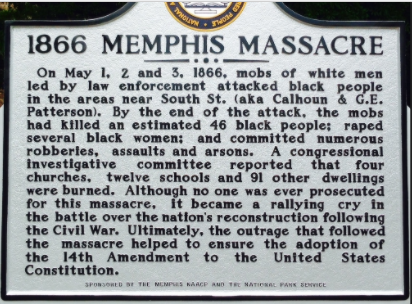
     By Spring 1866, Johnson’s political instincts were failing, and his demagoguery, orneriness, and malice, if useful before 1866, were no longer useful or productive at that point. On 27 March 1866, Johnson vetoed the Civil Rights bill, labeling it “fraught with evil”. Johnson’s veto electrified and stupefied the nation, and the Republican Congress was livid. On 9 April 1866, both houses overrode Johnson’ s veto, making the bill the Civil Rights Act of 1866. Johnson had succeeded in alienating moderate Republicans with his veto, as well as unifying the various factions of the Republican Party against the President. Johnson’s veto emboldened the South to ignore its provisions, and within a month the Memphis riots occurred. In Memphis, a white mob, believing that Af/Am soldiers were rioting and shooting anything/anyone in sight. That mob shot Af/Am men, women, and children in plain sight in daylight, and worse came at night; the mob’s cheered Johnson and the “White Man’s Government”.

Picture
     The widespread false reports of an Af/Am armed insurrection, the Great Southern White Fear going back many decades, kept fueling the fire over the next days in Memphis. When the horror was over in Memphis, 46 Af/Am’s were killed, with at least 5 Af/Am women raped and 53 wounded. Over 70 A/Am homes had been torched, as well as Af/Am schools, and every single Af/Am church, and 93 robberies were reported. The Civil Rights Act of 1866 was treated as a dead letter which had never been delivered. 
     Clerks in the bureaucracy of the Executive branch knew they would be terminated if they didn’t do Johnson’s bidding. Those in the bureaucracy that publicly shared different views that Johnson were sacked, especially those who were involved with newspapers that advocated viewpoints that Johnson didn’t support As far as Johnson was concerned, there was not reason why the federal government needed to keep traitors on the payroll. 
     In 1837, the destruction of Elijah P. Lovejoy’s printing press (and his murder) led to national outrage, and the view by millions that Lovejoy was a martyr. When the same thing occurred in 1866, minus the murder, the female publisher was dismissed as as a traitor/crackpot, and there was zero national uproar. 
     Colonel George Armstrong Custer reported to the Joint Reconstruction Committee of the atrocities occurring in TX, such as Union men being murdered on sight for simply being Union men. Custer stated that over the last few months the number of murders of Af/Am’s and whites were increasing in the state. The committee listened to other horrifying accounts of unrestrained and unrepentant Southern whites on the rampage, and it became clear to most members in Congress that something needed to be done. to curb the violence. Also, the Republicans in Congress knew that although they were able to override Johnson’s veto of the Civil Rights bill, their advantage would vanish if the Democrats regained the majority in the upcoming Congressional Elections. As a result, many more Republicans realized that the 13th Amendment needed another amendment in support.

Picture

​
      Adding to the desire to propose and ratify an amendment was the unintended consequence of the 13th Amendment, in that without the 3/5’s Compromise, an Af/Am was counted as a “full” white person for representation, which would ad 1.5 million Southerners in the next census. The South would add 20 more seats in the House as well as 20 more Electors in the Electoral College. To many Republicans then, if Af/Am’s were denied the right to vote, then it was guaranteed that the former ex-Confederates would return to power. Moderate Republicans still believed that there should be specific qualifications for suffrage, such as property ownership and literacy; the thinking was that if Af/Am’s had fewer qualifications in order to become eligible to vote, then the bar should be lowered for whites. The constitutional question was this: could the federal government mandate suffrage in part of the nation in opposition to the states deciding the matter. 
     The Reconstruction Committee proposed an amendment that among other features stated that if men over the age of 21 were prevented from voting due to race, then the state’s total number of citizens to consider for representation would be reduced by that very number. Sumner tried to kill the proposition at the head, arguing that there should be no denial of rights, civil or political, based on race in any state, not just in the South. Sumner’s attack killed the committee’s proposition, thrilling the three Democrats, but also to the relief of the committee’s Republicans, who didn’t want to mess with Af/Am suffrage in the first place. 
     Stevens was infuriated, saying that the proposal was killed by self-righteous Republicans and unrighteous Copperheads. Stevens and others believed that Sumner acted out of pure vanity, and at best he was a magnificent fool. To many, Sumner was seen as every bit of an obstructionist as Johnson, and Sumner’s opposition also fed the view that the Republicans couldn’t get their act together.

Addendum: The 14th Amendment and the New Orleans Massacre . . .  
0 Comments

The Impeachment & Attempted-Removal of President Andrew Johnson, Part One

5/9/2021

0 Comments

 
                                         Source: Brenda Wineapple. The Impeachers -
                       The Trial of Andrew Johnson and the Dream of a Just Nation (2020)
Picture
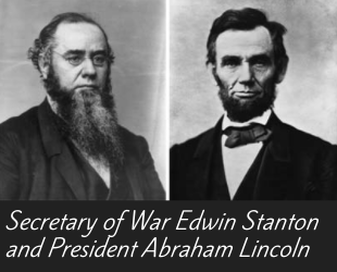
     Towards the end of his Presidency, James Buchanan nominated Edwin Stanton to be part of his inner circle as his new Attorney General. It was Stanton that leaked the details about Buchanan’s lackadaisical intentions towards Fort Sumter to William Seward. In doing so, Stanton’s list of enemies increased and intensified, feeling that the new Attorney General was disingenuous, or even duplicitous. Such was the baggage Stanton carried when Lincoln named him Secretary of War, and he became the “Favorite Villain” in Lincoln’s Cabinet.  Stanton was “pantherlike” in his pursuit of who he considered to be evildoers. Adding to that level of distrust was that Stanton had switched his party affiliation from Democrat to Republican, and his eventual unwavering support of LIncoln and his policies led Stanton to be labeled a traitor by the Democrats. 
      It was Secretary of State Seward that recommended Stanton as SecWar in 1862, and once he was at the helm, the War Department actually moved forward. Stanton was a workaholic, a hard-driver, and a learner, reading volumes on warfare. Stanton combined efficiency and his genius, taking control of the Union telegraph lines to make the War Dept. the center-of-all-things communications-wise, which also allowed Lincoln to know what was going on and to issue orders. Stanton therefore was in a position censor information to the public, and he even tried to censor newspapers. When Lincoln suspended habeas corpus (e.g. Baltimore), Stanton was the government figure that ran point. Due to the Assassination of Lincoln and the vicious attack on Seward on 14 April 1865, Stanton in effect became the federal government in the days/weeks that followed. Stanton was viewed as the indispensable man by the Republicans on Capitol Hill, who asked Stanton to stay at his post as SecWar. 

Picture
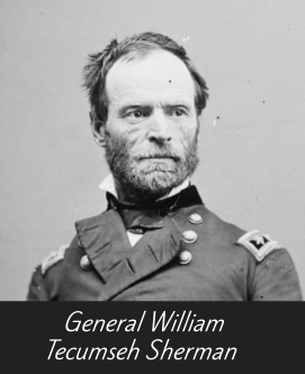
     Union General William Tecumseh Sherman granted very generous terms to Confederate General Joseph Johnston’s army, calling it a “General Amnesty", which provided terms far too generous for the South in the opinion of the vast majority of Republicans. Sherman, politically naive, thought he was doing the right thing along the lines of what Lincoln would have wanted if he was still alive. At the other end frm Sherman was Charles Sumner, the Radical Republican Senator from MA, wanted African-American suffrage, and to hell with the politics. Stanton was apoplectic with Sherman, and not as gung-ho as Sumner and the Radical Republicans, or as Frederick Douglass. The word “Radical” was meant to be derogatory in nature (e.g. Radical Abolitionists); overall the Radical Republicans wanted to punish the South and to advance Civil Rights for the newly freed slaves. 
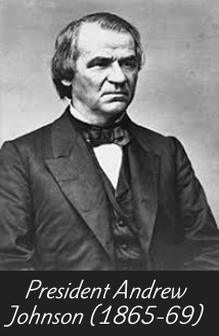
     In the immediate aftermath of Lincoln’s Assassination, Stanton was not yet a Radical Republican, but he did include Af/Am suffrage in his plan for Reconstruction, per Sumner’s urging. President Andrew Johnson refused to call Congress into a Special Session, in no way wanting to reduce the Presidential powers he inherited from Lincoln. Johnson wanted to use that power to frame Reconstruction on his own terms, bypassing Congress. Wealthy Southern whites that believed that Johnson would punish them were proven wrong, and Af/Am’s that thought that the new President would be in their corner were also proven wrong. 
    On 1 May 1865, Johnson authorized a military trial for the eight accused conspirators that were believed to be in league with John Wilkes Booth. Johnson before that day had already authorized huge cash rewards for the apprehension of former Confederate President Jefferson Davis and other rebel leaders. Johnson defended his decision on a military trial, stating that LIncoln was still in effect the Commander-in-Chief when he was assassinated. Johnson ordered the military trial to be held behind closed doors, and that the press would be told what had occurred at the end of each day, but the decision regarding the press was not carried out.

Picture
     On 9 May 1865, Johnson had been President for less than a month when on that day he issued an Executive Order  restoring Virginia as a loyal state with a Unionist provisional governor. The Radical Republican leader in the House of Representatives, Thaddeus Stevens, worried that Johnson might do so much damage that Congress would have a devil of a time dealing with the President when it convened in December 1865. Stevens told Johnson that Reconstruction was a legislative, not an Executive, matter, and that he should call Congress in for a Special Session. Very soon after that discussion, Johnson issued other Executive Orders that in essence turned back to clock in the South, in favor of Southern whites and at the expense of Af/Am’s. Johnson also forced the Planter class to directly petition him to request a Presidential pardon, wanting the to in essence grovel in his presence. By the end of the Summer of 1865, Johnson had granted nearly 3000 pardons.
     Johnson then created a provisional government in North Carolina; the Radical Republican thought Johnson had surrendered to the demands of yet another Southern state and that the President was consolidating power at the expense of Congress . . . but the didn’t know what to do about the situation. Moderate Republicans finally thought Johnson went too far when he created a provisional governments first in Mississippi, and then in South Carolina, all the while ignoring and bypassing an out-of-session Congress. And while Johnson was ignoring Congress, he was also ignoring Af/Am Civil Rights and suffrage.
Picture
     As far as Johnson was concerned, individuals rose up against the nation in the Civil War, states had not. Johnson went further in his argument, saying that those Southern states hadn’t actually seceded since it was against the law, so therefore those states never left the Union, so therefore those states still had their right to sovereignty under the Constitution. In other words, Johnson simply didn’t think there was such thing as Reconstruction. The Radical Republicans, as well as many moderate Republicans, thought Johnson’s position was absurd, even dangerous. 
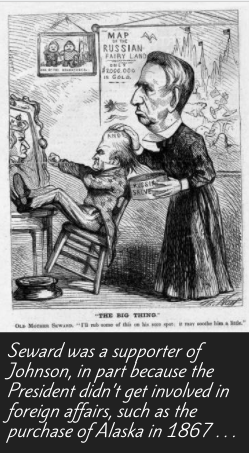
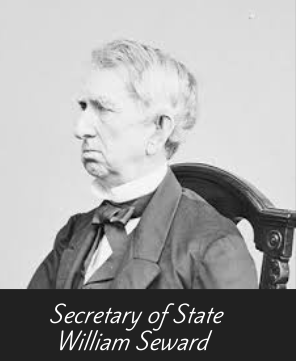
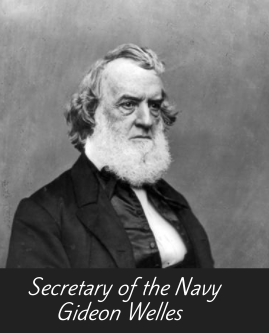
     Johnson had an ally in the Cabinet with Secretary of the Navy Gideon Welles, who also wanted quick “readmission” and no Af/am suffrage. SecState Seward, it seemed, had very few allies in the government. The Democrats wanted him out of the Cabinet, placing him at near the same level of villainy as Stanton, and the Radical Republicans distrusted Seward, seeing him as an opportunist and “soft” on the South. When Seward returned to active duty as SecState (after surviving Lewis Powell’s vicious attack), he was a staunch ally of Johnson, and he echoed Johnson’s desire to curb the power of the federal government. In more than one speech, Seward lauded Johnson, while also claiming credit for giving Lincoln the very idea of reconciliation with the South. Seward argued that since Johnson wanted to pursue the same policies as Lincoln, how could anyone argue with Johnson’s policies. The Democrats were convinced that Johnson was being controlled by Seward and Stanton, and many Dems preferred Af/Am suffrage over Presidential tyranny. The Radical Republicans branded Seward a coward, and all the while Johnson was well on his way to alienating the North.

Picture
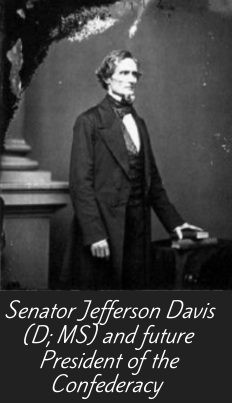
     In 1860, Senator Andrew Johnson (D; TN) loudly proclaimed two things. The first was that secession was unconstitutional, so therefore it was impossible for a state to actually leave the Union. The second was that the Constitution protected slavery, including its spread to the territories, so therefore Lincoln and the Republicans had to be restrained and stopped from WITHIN the government. Senator Jefferson Davis (D; MS) shook his head in disgust, and Johnson was branded a traitor to the South. 
     Johnson produced many ideas to try and find a compromise to avoid Civil War, but to no avail. Johnson was blunt, brash, tenacious, and he believed he represented the Common Man. Johnson was also envious of the wealth and status of the Planter class in the South. Johnson’s politics resonated with millions, in that he was viewed as a “Scrappy Populist” that despised the Plutocrats. Johnson had started to advocate a Homestead Bill as early as 1846, and as late as 1858; even quoting Thomas Jefferson on the merits of expanding agriculture. By April 1861, Johnson’s entire focus was on the Secessionists, in which he branded them as traitors. 
     Johnson never forgot from where he came, and he was never allowed to forget his past from the Planter class, who constantly reminded Johnson of his apprentice days as a tailor. Johnson was perpetually and extremely sensitive to slights, whether real or imagined. The Planter class were his enemy, but so were the slaves and the Free Blacks whom he considered to be beneath him. Johnson also feared slaves and Free Blacks due to their fierce desire to move up the social, political, and economic ladder, which would then force him down a rung or two. During his formative adult years, in part to show he was a “Real Man”, Johnson bought a slave in 1835. Johnson eventually came to own nine slaves, bragging even when he was President that he had never freed a single one of them. 
     Johnson always had enemies among the Democrats, including President James Knox Polk. When a gerrymandered district resulted in his failure to be re-elected in the House, Johnson ran for governor in TN and won in the early-1850s, and he won re-election in 1855. In 1857, Johnson was elected to the US Senate (by the TN state legislature). About the only time Johnson didn’t take immediate offense to the smallest of slights was when he was campaigning; the only political charge that truly bothered him was when he was accused of being born a bastard.

Picture
     Like Richard Nixon, Andrew Johnson’s passion was the desire, pursuit, and accumulation of power, which was his de facto religion of sorts. When Johnson became President, he remained consistent in the views, but during 1865 - 1869, Johnson’s consistency was not a virtue, or helpful to the nation. On 23 February 1862, Lincoln named Johnson to be the military governor of TN, and his assignment was vague as well as dangerous, since western TN was controlled by rebels. Johnson moved forward promoting Unionism and penalizing rebellion however he could, and as a result he was accused by the rebels of conducting a Reign of Terror. By the Spring of 1862, Johnson wired Lincoln that he had arrested seventy rebels, and he kept wiring the War Dept. for military assistance. 
     Johnson and other TN Unionists succeeded in getting TN exempted from the Emancipation Proclamation. Even so, Johnson’s rhetoric for slavery had cooled, in that he believed by that point that emancipation and preserving the Union were intertwined. That stance had far more to do with Johnson’s political ambition, knowing that any shot he had at becoming President was by attaching his star to Lincoln. By the Summer of 1863, Senator Johnson was vocally 100% in support of the Emancipation Proclamation, in that he believed that without slavery, the Southern white man would be free from the yoke of the Planter class. That being said, Johnson’s racial animus towards slaves and Free Blacks never wavered or cooled. 
     As the Election of 1864 approached, Johnson as Lincoln’s VP seemed too good to be true, with even Sumner endorsing Johnson’s bona fides. Lincoln played his cards in a way so that he didn’t have to make an overt powerplay in getting Johnson on the party’s ticket, choosing to work covertly instead. Very overtly, Stevens wondered why the Republicans had to find their VP from a rebel state.


Addendum: President Johnson and Reconstruction -
                    "Rule By Decree" in the Fall of 1865

0 Comments

President Lyndon Johnson: 1963 - 1968, Part Two

4/14/2021

4 Comments

 
​                                  Source: Doris Kearns Goodwin. Leadership -
​                       Lessons From the Presidents For Turbulent Times (2018)
Picture
     LBJ drew a clear line of battle in the Senate, making it clear that unlike in 1957, this time the Civil Rights bill would not be watered down by conservertive Southern Democrats; LBJ had drawn a line in the sand. LBJ started with Senator Richard Russell, telling him that he owed his career in the Senate to him, but if Russell got in the way of the Civil Rights bill, LBJ would run him down. Russell, not budging an inch, countered with the argument that LBJ would lose the Election of 1964 and the South. LBJ admitted that was a possibility, but he was moving forward nonetheless since it was the right thing to do for the nation. Both men understood that the fight to pass the Civil Rights bill in the Senate was for total victory or total defeat, with neither side willing to appease the other. 
     Even before the House passed the bill, Russell mobilized to organize a filibuster, which would turn out to be the longest in history. Russell organized a tag-team filibuster where each “team” would hold the Senate floor hostage for four or five hours, gambling that LBJ could not get the necessary 67 votes for Cloture, which would end the filibuster. So, in effect, the battle over the Civil Rights bill in the Senate was over time, with Russell et al trying to talk the bill to death. 
     LBJ and Senator Hubert Humphrey, the liberal Democrat from Minnesota, had to instill discipline in the ranks, making sure that there were at least 51 Senators in the chamber when a quorum call was made, otherwise the day’s session ended and would recommence the next day. Meeting the quorum call was crucial, in that if the day’s session ended because there weren’t enough Senators on the floor to conduct business as usual, the filibustering Senators were off the hook and could rest. When the first quorum call resulted in only 39 Senators, LBJ lost it, telling Humphrey that he and his liberal Democrats needed to understand the rules, and if they were so passionate about Civil Rights, they wouldn’t miss another quorum call. Humphrey figured out a rotating system of Senators that stayed and those that could be away to campaign in an election year. In this situation, LBJ had identified the keys to success and put aside his ego to accomplish something for the greater good of the nation.

Picture
    LBJ knew that reaching 67 votes in the Senate to invoke Cloture in order to end the filibuster was impossible without the support from the Republicans, given the sectional and ideological split among the Democrats. LBJ told Humphrey that the bill was dead in the Senate unless he enlisted the help of the Senate Minority Leader, Everett Dirksen (R; Ill), and to give the spotlight to the diva Republican Senator. LBJ knew that bipartisan support was required to not only pass the Civil Rights bill, but to also calm the upcoming turbulence after being signed into law.
     As LBJ had done with Byrd and Judge Smith, LBJ had an accurate read on Dirksen, and the President expected that Dirksen would have a laundry list of demands to be met in order to gain his support.  LBJ appealed to Dirksen’s deep desire to be remembered in history as a true patriot, linking Dirksen’s name with Lincoln. That being said, LBJ refused to directly deal with Dirksen in terms of amendments, telling him to work with Humphrey, Robert Kennedy (who was still the Attorney General, but running for a Senate seat from New York), and the Civil Rights leaders on that front. It was at that point that Dirksen announced his support of the bill, and a Cloture petition was filed, citing 9 June 1964 as the date of the vote. 
     On 9 June 1964, Humphrey told LBJ that he had 67 votes, but the President told him to stay on top of the situation all the way to the final vote. In the end, due to extended debate, the final vote on Cloture was taken on 10 June 1964, and with over 67 votes, the longest filibuster in history ended. and there was no stopping the passage of the Civil Rights bill. On
​2 July 1964, after the House accepted the Senate’s version, LBJ signed the Civil Rights bill into law. During the signing ceremony of the Civil Rights Act of 1964, LBJ gave out 75 signing pens, and among the recipients were Dirksen, Humphrey, and Dr. Martin Luther King, Jr. (that day also marked nine years since LBJ’s heart attack, as he reminded Lady Bird). 

     With the passage of the tax cut and Civil Rights bills, LBJ’s Great Society was off-and-running, in that with the passage of the two “JFK bills”, LBJ was able to focus on passing “his bills”. LBJ saw the Great Society as his gift to the nation, and the program that would cement his lofty place in US History.

Picture
      LBJ believed that the Great Society would exceed the New Deal, since the Great Society was based on prosperity whereas the New Deal was centered on getting the nation out of the Great Depression. LBJ viewed the Great Society as an extension of the Bill of Rights, enlarging the definition of freedom. LBJ needed a mandate from the nation, which occurred in his landslide victory over Senator Barry Goldwater (D; AZ) in the Election of 1964. The 89th Congress was a historic success, in part due to LBJ’s ambitious agenda, his temperament, and his knowledge of the legislative branch, especially the Senate. It was the Perfect Storm needed for LBJ to create and proceed with his Great Society, but LBJ hadn’t waited for that moment to act, having already been ready with his long list of items he wanted passed into law. 
     LBJ had at least 14 secret task forces secret task forces getting reports ready by no later than Election Day 1964, and after that date LBJ sent flurries of special messages to Congress urging them to act on specific bills.  Although LBJ won by a historic margin, he knew that the millions of Americans in his corner would slowly disappear over time. Due to that conclusion, LBJ kept pressuring his administration to get going on their part of the Great Society while the going was good, believing that preparation and momentum went together in tandem.  LBJ did his best to not deliver too many bills at the same time for Congress to consider, in large part trying to avoid a bill being taken hostage by a committee. For the education and medical bills (e.g. Medicare), LBJ made sure that long-standing obstacles were dealt with before the bills were introduced, thereby streaming passage.

Picture
     In the midst of all this activity, LBJ made sure that invested stakeholders were able to be involved from the start, which was due to LBJ’s experience as the Director of the NYA in Texas. LBJ involved members of Congress at the starting line, giving them a sense of input and ownership. LBJ made sure that they were briefed via White House dinners and galas. Being involved in those extravaganzas clued them in to what was going on, which meant that Congressmen and Senators looked and sounded smart to their constituents, an added bonus for LBJ.  LBJ remembered what he and other members of the House felt when FDR sent bills down from Mount Olympus without any advance warning. 
     Before Vietnam took LBJ’s attention in the Fall of 1965, his attention was almost exclusively on the legislative process, micromanaging bills through Congress. LBJ used visuals and charts to keep track of the progress of each bill, and who to lobby and pressure to get the bill passed. During his first ten months as President, LBJ invited all the members of the House and the Senate to the White House in a long series of small dinner parties, which at least gave the illusion of access to the President. 
     LBJ had the opinion that the dust had to settle after the Civil Rights Act of 1964 before he could fully pursue a voting rights bill. LBJ wanted to use the time to heal the wounds over the passage of the Civil Rights Act of 1964, and on a practical level, the federal bureaucracy needed tim in order to figure out enforcement. That being said, LBJ’s commitment to a voting rights bill never waned in the least, contrary to what Civil Rights leaders such as MLK, Jr. believed by the Spring of 1965.

Picture
     LBJ asked MLK, Jr. to table voting rights for the short run and to help him with the Great Society bills that had become stalled in Congress. LBJ told MLK, Jr. that 1966 would be the year for passing the voting rights bill. But “Bloody Sunday” on 7 March 1965 in Selma (AL) altered LBJ’s time frame. LBJ gave Governor George Wallace of Alabama a way out, in that if Wallace requested federal troops, then and only then would LBJ federalize the Alabama National Guard to protect the Selma marchers. Seven days passed, and while LBJ and his administration worked on the strongest possible voting rights bill, the aftershock of “Bloody Sunday” had settled across the nation.
     It had been over twenty years since a President addressed Congress in person on the topic of passing a bill, but LBJ decided it was time to ramp up the pressure with a direct address to Congress which would be nationally televised. LBJ gave one of the best speeches ever given by a President, and it proved to create the needed momentum for getting the process started for a voting rights bill. Russell told LBJ that while he couldn’t vote for the bill, he had seen the best speech a President had ever given in his lifetime, which was perhaps the best compliment LBJ could have received. LBJ signed the Voting Rights Act of 1965 into law on 6 August, 623 days after the Assassination of JFK. 
     Among the last of the Great Society bills signed into law was an immigration bill that eliminated the quota system set in place in 1924 that favored white European immigration. With the immigration law, now any part of the globe was able to immigrate to the US, opening the door to Asian and African immigration and increasing the diversity of the nation. It was at this point that LBJ started his decline, showing an epic failure of leadership on the Vietnam War, which compromised his trust and credibility with the nation, tore the nation apart, and forever scarred his historical legacy.

Picture
     So how did LBJ fail so utterly with Vietnam when he had succeeded so spectacularly with his domestic agenda? On domestic affairs, LBJ knew what he wanted to achieve, but with Vietnam, his focus was on knowing what he wanted to avoid, which was failure and humiliation, his greatest twin fears. In other words, his twin fears were not a concern of his with the Great Society, but they dominated his thinking with Vietnam. LBJ kept Vietnam on the backburner while pushing the Great Society, and when Vietnam came to the forefront in 1965, LBJ was reactive instead of proactive. 
     LBJ didn’t have confidence in foreign affairs, which led him to place far too much confidence in JFK holdovers, who simply didn’t serve the President well at all, but LBJ didn’t seek out external perspectives for Vietnam as he had done with the Great Society. LBJ’s decision-making on Vietnam lacked conviction and coherence, which was seen in his decisions to escalate American involvement in 1965. LBJ never recognized the Vietnam War for what it was, a War of National Liberation, in which the US didn’t have the cards in any way (LBJ wasn’t alone in that belief by any means). While bombing North Vietnam with Operation Rolling Thunder on one hand, the other hand offered billion-dollar-plus New Deal-like programs, which of course was a non-starter for Ho Chi Minh and the North Vietnamese government. 
    July 1965 was the crucial month for LBJ’s decision-making concerning US involvement in Vietnam, in that he chose to escalate while at the same time refusing to fess up and inform Congress and the nation of the upcoming national commitment to war. Unlike his honesty in submitting a sub-$100B budget to Senator Byrd, LBJ manipulated the next year’s proposed budget to hide rising defense costs, and he hid his 50,000 troop increase in a mundane press briefing. From July 1965 on, public dissatisfaction with his prosecution of the Vietnam War deepened, and while the protests increased, LBJ further isolated himself, seeing things for what he wished them to be instead of what they really were. The dam broke in early-1968 with the Tet Offensive, which led to a sort of national conclusion that LBJ had betrayed the American citizenry. LBJ believed that he had used up every ounce of his political capital, which led to his surprise announcement on national television on 31 March 1968 that he would not seek another term as President.

4 Comments

President Lyndon Johnson: 1963 - 1968, Part One

3/16/2021

0 Comments

 
​                                  Source: Doris Kearns Goodwin. Leadership -
​                       Lessons From the Presidents For Turbulent Times (2018)
Picture
  During the four days between JFK’s Assassination and his funeral, LBJ understood that he needed to project command as well as continuity, or at least symbolic continuity. LBJ also knew that he needed to show the nation and the world that the US government was not paralyzed. LBJ knew that he needed to take immediate command with the nation, likening the situation to wandering cattle that needed direction. In the short run after taking command, LBJ showed deference to JFK’s Circle of Trust. Unlike TR who had three years before worrying about being nominated/elected in his own right as President, and therefore could take his time, LBJ had less than a year, which meant he couldn’t sweep JFK’s men out of his administration. 
    Again, this time on the grandest stage, LBJ took on the role of humble apprentice that strived to gradually obtain mastery. For at least a little while, LBJ realized that JFK’s Circle was going to struggle with being on the outside while still being on the inside, since now that he was President, LBJ fully intended to use the power he now had. From the moment he took the Oath of Office  on Air Force One, LBJ knew where he wanted to take the nation, which meant that he needed the government to take on a much larger role in the nation, similar to the New Deal. LBJ’s never-ceasing drive combined with his desire to not be alone were of great benefit as the next days, weeks, and months unfolded.

Picture
     Among LBJ’s first goals was to get JFK’s tax cut out of the Senate Finance Committee, where it was being held hostage due to the pending/stalled Civil Rights bill. LBJ didn’t want a watered-down Civil Rights bill, this time wanting to strengthen it from where it stood. LBJ envisioned a real voting rights act as well as educational reform so those in poverty received an education. LBJ also wanted to pass Truman’s medical insurance bill that had become dormant on Capitol Hill. LBJ was already outlining what would become some of the hallmark components of what he would call the Great Society. LBJ truly believed that the role of government was to help those in need, and now he was President with the federal government potentially in tow. 
     LBJ needed to make a dramatic start in order to make his vision a reality, which meant that he had to dispel any doubts and apprehensions that he was not up to the task of being President. All of his life, LBJ realized that getting off to a quick start was crucial in achieving his goals, and he followed the same pattern in this situation (the few times in his life when LBJ chose to not get off to a quick start, it was due to his twin fears of failure and humiliation). LBJ chose to speak to a Joint Session of Congress (he was comfortable on Capitol Hill) and to a national television audience; up to that point in his political career, LBJ had never been an effective orator. LBJ did not want to address the nation from the Oval Office, knowing that he wouldn’t come off nearly as well on television. Adding to the pressure was LBJ’s knowledge that when he stepped off the podium, it was all-or-nothing in terms of how the nation perceived him. 
     LBJ used his speech to triple-dog-dare Congress to pass crucial domestic bills that were introduced when JFK was President but were currently held hostage in committees. At that juncture, LBJ was very fortunate to be President, since it was a relatively tranquil period in terms of global affairs, which meant he could focus on domestic challenges. LBJ did something that JFK should have done (JFK far too often ignored LBJ’s legislative advice), and he did not ask Congress to consider a myriad of bills all at once. Rather, LBJ focused on the stalled tax and Civil Rights bills as his top two legislative priorities.

Picture
    Unlike JFK’s Inaugural Address where he hawkishly focused on international affairs and containing Communism in the Cold War, LBJ in his first speech as President focused on domestic affairs. LBJ argued that passing the Civil Rights bill would be the greatest memorial possible to JFK, intentionally and wisely using the assassination as a guilt trip of sorts to jump-start momentum for the bill. LBJ channeled his inner-FDR during the speech, paraphrasing some of what FDR had stated during his first term. With that first speech, LBJ seized the reins of power while also providing a shared sense of direction for the nation, which was what FDR had done on 4 March 1933. 
     LBJ needed a battle plan to get the stalled Civil Rights bill through the mazes of Congress. After discussions with the most influential figures on Capitol Hill and within his administration, LBJ decided to get the tax bill through first so it couldn’t be held hostage. Of course Theodore Sorensen, JFK’s main speechwriter, disagreed with LBJ’s strategy, since JFK wanted the Civil Rights bill worked through first; but LBJ, not JFK or Sorensen, knew how the legislature truly worked. 
     Senator Harry Byrd (D; VA) was the chairman of the Senate Finance Committee, and he was holding the tax bill hostage, in that government spending had become a crusade for the fiscally-conservative Byrd. Through many phone calls, LBJ found out that if the proposed budget was under $100B, then Byrd would release the tax bill from his committee. LBJ sought to meet that psychological barrier to obtain the necessary votes, even if Byrd wouldn’t vote in favor of the bill in the end; LBJ simply needed the bill to be released by Byrd. LBJ and Byrd met at the White House, and after LBJ promised to propose a budget that was under $100B, the two sealed the deal with a handshake; LBJ knew from his days in the Senate that Byrd was a man of his word. Of course JFK’s men argued that there was no way to get the budget under $100B, but LBJ would have none of that, and soon enough Secretary of the Defense Robert McNamara cut $1B from the Pentagon’s proposed budget.

Picture
     Byrd told LBJ that he needed to see the proposed budget in writing, and to have time for him and his staff to peruse the document. LBJ knew that Byrd would uncover any creative shenanigans, so LBJ submitted a $97.5B budget to Byrd in order to provide some “wiggle room” if Byrd cried foul. LBJ appealed to Byrd’s sense of honor and his desire for a historical legacy, making it clear to Byrd that the Senator from Virginia would go down in history as the first one to force a President to reduce a proposed budget. At that point in time, LBJ didn’t care about who received the credit, he just wanted the bill released from Byrd’s committee. In early-February 1964, Byrd released the tax bill. 
     The battle was now to get the bill passed at a much faster pace than normal, so it was “Go Fever” and then some. LBJ made sure his allies in Congress quashed any amendments being added to water down the tax bill, and he had his Cabinet pressure borderline Senators. On 26 February 1964, the tax bill passed both houses and LBJ signed the bill into law in a publicized ceremony. During that ceremony, LBJ made it clear that he would now have an “Eye of Sauron” focus on gaining passage of the stalled Civil Rights bill.
     Like Lincoln and FDR, LBJ knew that people were more easily influenced by stories, and that they remembered stories far longer than facts or figures. LBJ used his own experiences for stories, varying them depending on the audience, all in order to convince enough members in Congress that the days of Jim Crow were over. In 1964, LBJ knew when to push all his chips to the center of the table on an issue, which was exactly what he did with the Civil Rights bill. On the surface, it seemed that LBJ had everything to lose and nothing to gain by going all-in with the Civil Rights bill, especially since his greatest twin fears were failure and humiliation.

Picture
      JFK was pragmatist, whereas with Civil Rights in 1964, LBJ was passionate. rallying support around his strategic target, which was necessary because in the House, Representative Judge Howard Smith (D; VA) held the bill hostage as the chairman of the House Rules Committee. LBJ decided to use the very rare House procedure of a discharge petition, where with 218 votes the bill would be forced out of the Rules Committee. The tradition in the House was to respect seniority, so discharge petitions were rarely used. LBJ knew that he couldn’t use a charm offensive with Smith (who was 80 yrs old) as he had with Byrd, and that he couldn’t directly pressure for the discharge petition. LBJ enlisted outside groups, such as Civil Rights leaders, to directly pressure Congressmen and Senators. LBJ used the “Johnson Treatment” on the phone to get various outsiders on board, and he secretly taped those phone calls. 
     It soon became clear that 50 to 60 House Republicans would be needed to reach 218 votes. LBJ triple-dog-dared House Republicans to put-up-or-shut-up, in that they were members of the Party of Lincoln, and that they were either for Civil Rights, or they were not. LBJ pressured newspapers, such as the Washington Post, to show photos and write editorials of reluctant members of Congress, especially Republicans. When the number of votes reached 209, it became obvious to all in the House chamber, including Judge Smith, that 218 votes were a foregone conclusion. Smith caved, releasing the bill in order to avoid the humiliation of being overridden with a rare discharge petition. The bill was officially released when Congress reconvened before Christmas 1963, and it reached the House floor for a vote on 31 January 1964. On 10 February 1964, the House passed the strongest Civil Rights bill since 1875.

0 Comments

LBJ: 1941 - 1963, Part Two

2/13/2021

1 Comment

 
                                  Source: Doris Kearns Goodwin. Leadership -
​                       Lessons From the Presidents For Turbulent Times (2018)
Picture
      LBJ converted procedural matters and practical operations into actual power. While doing so was on a much larger scale, it was similar to being the gatekeeper for the president at the teachers college in Texas in the 1920s. As Minority Leader, LBJ was responsible for scheduling bills for floor debate, and he made sure that he came through in that regard, making himself indispensable in the process. LBJ found a loophole in the Senate rules that allowed him to transfer the power of assigning offices to the Minority Leader. Before long, LBJ’s allies had the best office spaces, and those not in LBJ’s favor had lesser accommodations. 
    At the center of LBJ’s success was his ability to read people, to gauge each Senator’s desires, ambitions, needs, and hopes. In short, LBJ memorized people, traditions, and rules. LBJ understood what they had in common, which was the desire for fame and honor, and LBJ discovered for each Senator THE emotion that most controlled him. Like TR, what LBJ learned, he never forgot. As LBJ’s profiles of each Democratic Senator became more detailed, his political instincts became more unerring as well. In 1955, by a single Senator, the Democrats gained control of the chamber, and LBJ became the youngest Senate Majority Leader in history. At the pinnacle of Senate leadership, LBJ started to focus on at least some Republican Senators that could be helpful to his goals and ambitions.


Picture
      On 2 July 1955 while actually taking some time off at a friend’s estate in Virginia, LBJ had a heart attack. A co-traveller recognized what was happening, and LBJ was taken to Bethesda Naval Hospital in Maryland, which was the closest hospital. As Lady Bird worried and waited, LBJ hovered between life and death, and his odds for survival only increased as the next days passed. LBJ was told that his career as a politician was likely over, and LBJ was written off in DC, even by his fellow Democrats. LBJ’s depression became so deep it was as if he was grieving over his own death. Everything he had gained and held dear was, if not gone, at serious risk. Then all of a sudden, LBJ came back to life in his hospital room, turning his room and the corridor into a de facto Senate office. 
    What made LBJ spring out of his despondency were the thousands of letters he received wishing him well. LBJ was bound-and-determined to reciprocate that affection, and he responded to every single letter. Doing so didn’t just reinvigorate him, it rescued LBJ from the abyss. A byproduct of the heart attack was that LBJ learned that he had to slow down his pace, at least a little, given what had happened to his health. Once released from the hospital, LBJ spent the next six months at his ranch in the Hill Country in Texas. LBJ replaced cigarettes for breakfast with healthier options, and he had healthier fare for dinner instead of everything-fried. LBJ exercised (swimming), drank less, and he lost forty pounds. The sharp edges were at least being softened, and LBJ learned to modify his pace at least a little bit, even treating those around him better. Like Lincoln and Nixon, LBJ’s time away from politics reinvigorated and reinvented him, and once again LBJ linked power with purpose and vision, and his desire to use his political power to help people returned.


Picture
      LBJ made his first political appearance after his heart attack at a dedication for a dam in Texas during November 1955. LBJ obsessed about his upcoming speech in the same way that FDR had done for his political  “re-debut” in 1924. Since LBJ was the Senate Majority Leader, the national media was present, and the overall reactions to LBJs speech were very positive. LBJ, and he was back in the saddle. LBJ truly resumed his role as Senate Majority Leader in January 1957, and his focus in large part was on passing a Civil Rights bill. 
     For 82 years, the bloc of conservative Southern Democrats had blocked passage of any Civil Rights bill, usually by using (or threatening to use) a filibuster. LBJ understood that it was time for Congress to act on Civil Rights in the landscape after the Brown decision in 1954, and LBJ’s strategy unfolded in three acts. In the first act, LBJ had to convince Russell that this time a filibuster would prove to be a Pyrrhic victory, since LBJ told Russell that the 2/3s Cloture vote to end a filibuster would be a certainty this time. LBJ also argued that a filibuster would hurt what also needed to be done in terms of working on economic recovery in the South. LBJ was blunt, telling Russell that if Southern Senators blocked the Civil Rights bill, the South would remain an economic backwater. Among the promises LBJ made to Russell, the main one was that the bill’s focus would be on voting rights, not integration. Russell agreed to stay on the sidelines, watching to see if LBJ’s promises were carried out, but he told LBJ that he would not remain off to the side if he believed a promise was broken. 
     The second act featured LBJ focusing on the mountain states of the West, since those Senators had very few African-American voters, and although in favor of Civil Rights in general terms, LBJ feared those Senators could be swayed to join Russell’s Southern block if push-came-to-shove. LBJ hoped that it would be these Western Senators on which he could strongly rely, so LBJ worked  to get the votes for the Hells Canyon Dam, on the border of Idaho and Oregon (it was a larger-scale project of LBJ’s crusade to bring electricity to the HIll Country in Texas in 1935). It was those Western Senators that provided the impetus to delete the most objectionable parts of the Civil Rights bill to appease the Southern bloc, which increased the odds that the bill would pass. All the while, LBJ was omnipresent, personally keeping the bill on track,and with his wheeling-and-dealing, LBJ had drafted the only Civil Rights bill that had a chance to pass since Reconstruction.

Picture
     It was in the third act that LBJ had to convince Northern Senators that passing the watered-down Civil Rights bill was better than not passing a bill at all. LBJ understood that the bill was a preliminary step, not a cure-all, and that the passage of the Civil Rights bill was far more important than its content. On 9 September 1957, LBJ signed the Civil Rights Act of 1957 into law, and it was in the form that LBJ had envisioned seven months prior. If the bill was a steer, then LBJ’s brand was seared on the bill for all to see. There was a general consensus that LBJ had become the most powerful Senate Majority Leader in history, and even Adlai Stevenson and JFK publicly stated that LBJ had Presidential timbre. 
    In 1935 when FDR predicted that LBJ would be a legitimate candidate for President, he qualified his prediction that it would only occur if the balance of power in the nation would shift to the South and West. That political shift didn’t occur to the degree LBJ needed in 1960 to garner the Democratic nomination, and JFK was able to secure the nomination on the first ballot in the Democratic National Convention. Also in play was LBJ’s hesitation to formally announce his candidacy for President, which proved to be politically deadly. LBJ’s plan was to play the “Inside Game” behind the scenes with the delegates at the convention after the first ballot failed to produce a nominee. LBJ also believed, incorrectly, that his stellar record as Senate Majority Leader would carry him to the finish line, but the governors and delegates didn’t have the same perspective. JFK shrewdly offered LBJ the Vice-Presidential slot on the ticket, and to the surprise of most in the know, LBJ accepted. LBJ gambled that once again he could transform a relatively meaningless office into something important, this time on the largest stage. And, in the process, LBJ hoped to enhance his chances of being elected President.

Picture
     Although LBJ tried to reinvent the office of the Vice-President, JFK and RFK would not allow him to do so, and LBJ was forced to sit at the “Kiddie Table” as VP. LBJ was beyond-upset that a motion among the Senate Democrats wasn’t overwhelmingly passed, which would have allowed the VP to be the presiding officer when the Senate Democrats formally met. LBJ took the 46 - 17 vote passing the motion as a personal affront, and he abandoned hope of having an influential role as VP with the Senate Democrats. LBJ’s hissy fit meant that he wasn’t nearly as active on the legislative front as he could and should have been as VP, which was an area, as it turned out, that JFK badly needed LBJ. 
     Once again LBJ became depressed, and he mostly filled his time as VP focusing on the President’s Committee on Equal Employment Opportunity, where LBJ’s tone and rhetoric surpassed that of JFK until early-1963. When LBJ was in meetings, he didn’t say much, choosing to in essence stay on the sidelines and pout, since he felt marginalized. The ceremonial aspects of the Vice-Presidency meant nothing at all to LBJ, and LBJ felt the same way as TR had in 1901, that he had come to the end of his political road.


1 Comment

LBJ: 1941 - 1963, Part One

1/25/2021

0 Comments

 
​                                 Source: Doris Kearns Goodwin. Leadership -
​                       Lessons From the Presidents For Turbulent Times (2018)
Picture
     For a decade, LBJ was 100% “Go Fever”, which meant that he hadn’t developed any hobbies or strategies to relax. LBJ’s goal in life was to simply win, however, in his bid to win a Senate seat in Texas in 1941, LBJ lost the election. Lincoln viewed his first defeat in an election as another disappointment to be overcome, and he also saw a silver lining in that those that knew him overwhelmingly voted for him. FDR viewed his first Electoral defeat in 1920 for Vice-President as a great experience. LBJ, however, saw in loss in 1941 as a referendum on his self-worth, a body blow to his political solar plexus. What should have been an obstacle for LBJ to overcome instead became a life-changing ordeal which changed the focus of his ambitions, and started a period of misery in his life. 
     So then, how did LBJ, despite all of his political and personal advantages, lose the Senate seat that he coveted above all else at that point in his life. As in 1937, it was a death in office that created a special election, this time for the Senate seat in 1941. After meeting with FDR in the White House on 22 April 1941, LBJ announced his candidacy in front of the assembled media. FDR endorsed LBJ, but he made it clear that the decision was up to the voters in Texas, not the President. LBJ made it his mission during his campaign to fuse his political identity to FDR, which had worked well in his first campaign for a seat in the House in 1937. But the three main candidates competing against LBJ in 1941 were political superstars in Texas, including Martin Dies, Jr., and all three were better known and more connected in Texas than LBJ. The vastness of Texas made LBJ’s efforts at making personal connections with voters beyond-daunting, and the short time frame of the campaign ahead of the special election was to LBJ’s disadvantage.

Picture
     Outside of the 10th Congressional District in Texas, LBJ was an unknown, which forced LBJ to speak in formal settings from a stage, which was something that LBJ was not well-suited to do in 1941. LBJ hadn’t yet developed the necessary speaking skills, and crowds started to drift away before he was done speaking at his campaign rallies. The LBJ that could dominate a room or a small group found himself to be an insignificant speck in terms of formally speaking to large crowds. LBJ’s confidence took a further nosedive when polls showed him running trail behind the other three candidates. 
     LBJ again pushed himself too far and had to be hospitalized, but this time it occurred during the middle of the campaign, not towards the end as in 1937. LBJ did his best to cover up his hospitalization, and while bed-ridden, he decided to change his strategies and tactics. On his return to the hustings, LBJ created a more festive circus-like atmosphere for his speeches, where he spoke less and let voters soak up the atmosphere, recreating what he enjoyed as a participant in the Democratic rallies in Texas a decade earlier. LBJ had enough connections with wealthy and powerful Democrats in Texas to raise quite a bit of money for his campaign. LBJ only spoke when the crowd was sufficiently entertained and stoked, and after he spoke, there was a raffle to keep people in attendance. LBJ’s crowds increased and he rose in the polls, and with a week to go before the election, LBJ had a narrow lead. But the polls were not a true indicator of who would win the election, since corruption and politics was a Texas tradition, and LBJ could not match the other three candidates in terms of shenanigans. 
     By election day, LBJ was confident of victory, and the early returns only fed his confidence. LBJ made the mistake of releasing the results of his “purchased” (controlled) precincts instead of waiting until the last moment, which gave the other candidates their opening to delay the release of their fraudulent totals, a la Chicago Mayor Richard Daley in 1960. LBJ lost by 1311 votes. As LBJ returned to DC as a Congressman, he feared that he would not be held in the same high regard, and he felt disappointed and embarrassed, especially since he had lost with the support of FDR.  LBJ even talked himself into believing that he had lost favor with the White House; even after FDR reached out and met with him, LBJ remained despondent.

Picture
      LBJ was no longer the “Boy Wonder”, and he no longer saw an unlimited future for himself, since he was now just one of 435 members of Congress. LBJ had no real choice but to remain in Congress, since politics was his life. After Lincoln lost, he regained his footing by practicing law. Theodore Roosevelt used his family’s wealth to become a cowboy in the Badlands, and in the process transforming himself for the better. FDR focused his energies after getting polio on developing the facilities at Warm Springs. All three turned adversity into positive growth in terms of leadership, but LBJ turned inward, and became angry and distrustful, and his temperament darkened. It wasn’t until LBJ had a massive heart attack that he finally turned the corner as the other three had done. 
     FDR was consumed with other matters, especially World War II, which meant that the President had no time to help an adrift LBJ. It became increasingly clear that LBJ’s personality and temperament were not a good fit in the House. Seniority in the House meant that LBJ’s desire to work harder and to seize opportunities were neutralized; the House was not the place for LBJ, who was in a hurry. LBJ’s fear of dying early exacerbated his sense of urgency, knowing that heart attacks ran in his family. The huge size of the House also made it impossible for LBJ to advance quickly, and LBJ’s lack of oratory skills hampered him as well when he addressed his colleagues from the podium. LBJ still served his constituents, but his ambition was no longer satisfied in doing so. 
     LBJ was in political purgatory from 1941 to 1948. LBJ had fits of depression, and often took out his frustrations on those around him, which didn't help matters. After a brief stint in the Navy during WW II in 1942, LBJ for the first time started to focus on the acquisition of wealth, and he left the day-to-day details of running his Congressional office to his staffers. Within a decade, LBJ had amassed quite a bit of wealth, largely due to the connections of his in-laws. 


Picture
     The cornerstone of his wealth was laid when Lady Bird purchased the obscure Austin radio station KTBC in 1943, which was on the verge of bankruptcy (she used $17,000 from her trust fund). The Federal Communications Commission immediately gave KTBC permission to increase its broadcasting power, allowing  20 hours of programming a day, which in effect crushed the competition. The FCC also allowed KTBC to pursue network affiliations, which led to TV networking and then to real estate transactions, cattle, and purchasing securities. LBJ’s rise in government and his increased wealth were like two twin oaks growing next to each other.  What occurred during those years was that LBJ had refocused his priorities from helping others to helping himself. LBJ lost his sense of purpose and mission that had accompanied his drive for power, something that Lincoln, TR, and FDR all had . . . but for the time being, LBJ did not. 
     In 1948, this me-first version of LBJ once again ran for a Senate seat from Texas. As the state drifted more to the right, so had LBJ, especially after FDR’s death on 12 April 1945. LBJ even went so far as to repudiate the label that he as a “New Dealer” saying to anyone that would listen that government should just get out of the way and let free enterprise do its thing. LBJ (now 40) was beyond-apprehensive for his second run for the Senate, in that there was no safety net this time, since he couldn’t run for the Senate and for re-election in the House. Still, LBJ waited and waited to announce his candidacy, and it wasn’t until LBJ was advised to urge John Connally to run that he finally decided to throw his hat into the ring. 
     The prohibitive favorite to win the Senate seat in 1948 was the very popular and connected two-time Democratic governor of Texas, Coke Stevenson. The real race was for the Democratic nomination, and it would be based on personalities, and that was where LBJ had an advantage. LBJ campaigned using a helicopter, the first candidate in Texas politics to do so, which in-and-of-itself was an attention getter. LBJ combined fun, hokum, and excitement at his rallies, but also featured sophisticated campaign strategies such as poling, radio ads, and advance men.

Picture
    On election day, the results were so close that neither LBJ or Stevenson could declare victory, and both held back their “purchased” precinct totals. This time, it was an overconfident Stevenson that released his tallies early, and with an 87 vote final margin, LBJ won the election, and was immediately given the derisive moniker “Landslide Lyndon”. LBJ had gained entry to the Senate which was a perfect fit for his personality, skills, and ambitions. In the Senate, LBJ would be able to do what he did best, deal with colleagues in small groups, or even individually if desired or necessary. It would be in the Senate where LBJ would attach himself to another powerful mentor and to learn everything about the workings of the Senate, and to move up to the upper-echelons of power in the chamber. 
     LBJ entered the Senate at the perfect time in terms of his skills and abilities making an immediate impact. Gone were the days of oratory in the Senate (e.g. Daniel Webster), since the game was now about behind the scenes deals and getting votes for bills. LBJ quickly figured out that the power in the Senate resided in an informal circle of Conservative Southern Democrats and Conservative Republicans, a coalition that had been formed in opposition to FDR’s Court Packing scheme in 1937. The undisputed leader within that circle was Senator Richard Russell (D; GA), who commanded the respect of all his colleagues. LBJ recognized that Russell was the key Senator that would help him achieve his ambitions. LBJ was not alone in seeing Russell in that manner, but LBJ was unmatched among the freshman Senators in ingratiating himself with Russell in order to be sure that he had “access” to the respected Senate leader.

Picture
     LBJ succeeded in being placed on the Armed Services Committee, since he was a WW II veteran (kind of), and he had been very active in Congress on military matters. While they were very different personalities, both LBJ and Russell were workaholics, and LBJ made sure that he made the same type of connection with Russell that he had made with Rayburn. Russell, like Rayburn, was a bachelor, and LBJ made full use of that fact. LBJ loved, served, respected, and thoroughly exploited both mentors, in that he took advantage of their loneliness. Russell arrived early and left late, wanting company, and LBJ made sure that his hours matched Russell’s hours. The loneliest day for LBJ, Russell, and Rayburn was Sunday, and LBJ made sure he filled that void for both men, for example inviting them for Sunday breakfast and newspapers. 
     LBJ, an expert in turning an insignificant job into something more, pursued the post of Minority Whip, which was not a position that many Senators pursued since it meant being in essence trapped in the chamber, needing to be focused on counting and gaining votes for a bill. LBJ “beseeched” Russell for the position, and with his mentor’s support, he became the youngest whip in Senate history in 1951. In 1953, LBJ pursued and won the position of Minority Leader for the Democrats in the Senate. LBJ knew that he needed to make an impact right away as Minority Leader, so he changed how committee assignments were doled out. LBJ persuaded Russell and the Circle of Power to allow freshmen Senators one plum committee assignment instead of being relegated to the minor leagues. LBJ argued that doing so would improve the Senate, and in the process LBJ became the political patron saint of the freshmen Senators. 
    LBJ made sure that he catered to the needs of the senior members of the Senate, showing them lavish respect and doing what he could to assist them in their political endeavors. LBJ intuitively knew that the older a Senator was, the more afraid of humiliation they were, and that they craved more attention. LBJ bent over backwards to shield them from the former, and to provide them the latter in generous doses.

0 Comments
<<Previous

    Archives

    May 2021
    April 2021
    March 2021
    February 2021
    January 2021
    December 2020
    November 2020
    October 2020
    September 2020
    August 2020
    July 2020
    June 2020
    May 2020

    Categories

    All
    19th Century
    20th Century
    History

    RSS Feed

Powered by Create your own unique website with customizable templates.