Mr. Jensen's U.S. History Website
  • U.S. History Blog
    • U.S. History Blog (May 2026 - May 2027)
    • U.S. History Blog (May 2025 - May 2026)
    • U.S. History Blog (May 2024 - May 2025)
    • U.S. History Blog (May 2023 - May 2024)
    • U.S. History Blog (May 2022 - May 2023)
    • U.S. History Blog (May 2021 - May 2022)
    • U.S. History Blog (May 2020 - May 2021)
    • U.S. History Blog (May 2019 - May 2020)
    • U.S. History Blog (May 2018 - May 2019)
    • U.S. History Blog (May 2017 - May 2018)
    • U.S. History Blog (May 2016 - May 2017)
    • U.S. History Blog (May 2015 - May 2016)
    • U.S. History Blog (May, 2014 - May, 2015)
  • About

General MacArthur in Japan: 1945 - 1949

5/3/2022

0 Comments

 
                 Source: H.W. Brands. The General vs. The President - 
                      MacArthur and Truman at the Brink of Nuclear War (2016)
Picture
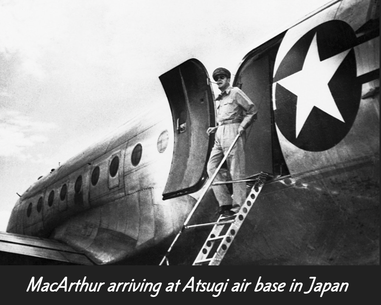
     General Douglas MacArthur landed at Atsugi air base in Japan in August 1945 armed only with his courage, and the knowledge that the Asian way-of-thinking would be more impressed with one man entering the fray as opposed to being escorted/protected by a mass of military might. There were over 20k Japanese soldiers on standby, with Kamikazes ready to go. High-ranking Japanese officials in the government and military had the propellers removed from the Kamikaze planes, as insurance, a fact of which MacArthur was told not long after arriving at Atsugi. According to Winston Churchill, who knew a thing or two about courage, Atsugi was the bravest thing MacArthur had ever done. 
    Japanese troops lined the way after MacArthur deplaned, looking away, which was the utmost sign of respect, something that was also done during an arrival of  Emperor Hirohito. The mystique of MacArthur was never greater than at that moment. In truth, many US personnel,  from high-ranking officers to mere musicians, had preceded MacArthur, but the Japanese were beyond-smitten with the general. MacArthur’s first orders were that US soldiers were to stick to their rations so no serviceman consumed food intended for the Japanese. That was the first in a long series of orders, decisions, and actions from MacArthur that allowed Japan to “save face”.
Picture
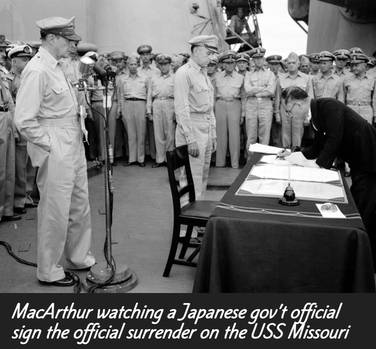
 MacArthur had received no instructions for Washington, D.C. for the official surrender of Japan, which would take place on the USS Missouri. MacArthur, in his own way, made it clear that in would be a different kind of “conquering”, focusing on peace and a combination of maintaining tradition but also monumental change for Japan. The nation of Japan couldn’t believe that they had not been humiliated on the international stage; instead, MacArthur pleaded for freedom, tolerance, and justice.  Unlike the horrific Treaty of Versailles that ended World War I, this surrender was not about punishment. 
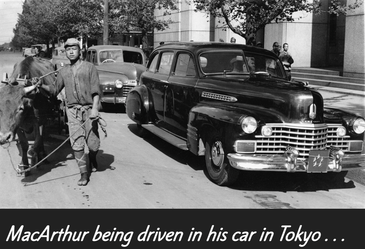
     MacArthur and his family resided in the US Embassy, and his office was in a relatively undamaged insurance building. MacArthur was driven around in Tokyo in a black Cadillac (provided by a Filipino benefactor), which featured US military adornments, so there was no mistaking who was in the vehicle. MacArthur was driven around Tokyo with no armed escorts; the general maintained his route and routine despite there being at least one credible threat to his safety. MacArthur truly felt that he wasn’t in any danger, but he also acted in that manner for effect, knowing that repeated acts of fearlessness increased his stature in the eyes of the Japanese.
Picture
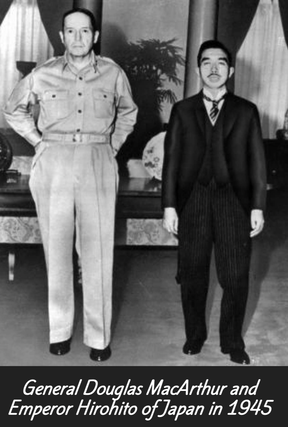
   MacArthur made no effort to see Emperor Hirohito, knowing that he needed to wait until the Emperor in effect granted him an audience. MacArthur believed that the patience of the East was paramount compared to the impatiences and haste of the West. Before too long, via minions, Hirohito asked to meet MacArthur at the general’s convenience. MacArthur gave orders that Hirohito be treated with the highest levels of respect and dignity upon his arrival at the US Embassy. 
     Once in the US Embassy, Hirohito was told that only his interpreter could accompany him to see MacArthur; there was palpable panic in the Emperor’s entourage, but only Hirohito and the interpreter were allowed to proceed. MacArthur knew that there was at least some support in DC (and the US) for the Emperor to be tried as a war criminal, and then to be executed, but MacArthur knew that Hirohito was far more valuable and useful if he remained as Emperor. Hirohito told MacArthur that he was solely responsible for Japan’s military and political decisions before-and-during the war, which impressed MacArthur greatly. What greatly impressed the Japanese was how MacArthur treated their Emperor with dignity and respect. 
Picture
 At that moment, while Hirohito remained Emperor, MacArthur actually was the ruling power, and he wasted no time in starting the amazing transformation of Japan from a feudal nation into a modern democracy. MacArthur had a long checklist of things to accomplish in a short period of time, such as destroying the military, write a new constitution, form a new framework of national government, promote capitalism, and develop a free press. Freeing farmers meant that Japan had to make a total break from feudalism, which took more time and effort, and Japanese women getting the right to vote was also a seachange. 
     As far as the new national constitution, when the existing Japanese government (the Diet) didn’t cooperate, MacArthur wrote the changes himself, including a “no war” clause, which meant that Japan could no longer use war as a tool as a sovereign nation. The Japanese Diet accepted "MacArthur’s Constitution", as it commonly became to be known, and the first elections were held in April 1946: 13m women voted, and 38 women were elected to some level of public office.
Picture
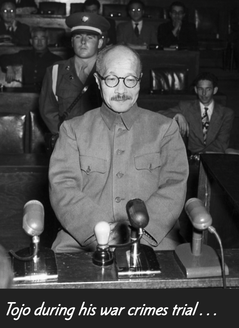
      When famine became a serious threat, MacArthur commandeered three million tons of food from the US Army, shrugging off as irrelevant the resulting Congressional hearings in DC.  MacArthur oversaw the War Crimes Trials, which included Tojo, who was convicted and sentenced to death. MacArthur refused to grant permission for government and media requests from the US to witness the executions.
   MacArthur became in institution in Japan, and the general’s “Spartan Lifestyle” was celebrated. For example, the entire nation knew what MacArthur had for breakfast: fruit, cereal, eggs, toast, and coffee, and for lunch and dinner, MacArthur had soup, salad, and coffee. MacArthur worked every day, including holidays, and he never took a vacation. The general’s daily escape was watching movies every evening in his favorite rocking chair.
     MacArthur’s energy seemed unlimited, and within a few years, most Japanese couldn’t envision their nation without MacArthur, since he had spared them from disgrace and humiliation while also guiding the way to a better future. Considering what the Japanese people had to endure under his predecessors, most hoped that the general would never leave. Although MacArthur is one of the most famous generals in US History, serving as a high-ranking officer in World War I, and a field commander in World War II and the Korean War, the greatest service he gave to his nation was rebuilding Japan from 1945 to 1950.
0 Comments

Malcolm X: 1963 - 1965, Part Four

4/3/2022

0 Comments

 
   Source: Les Payne. The Dead Are Arising - The Life of Malcolm X (2020)
Picture
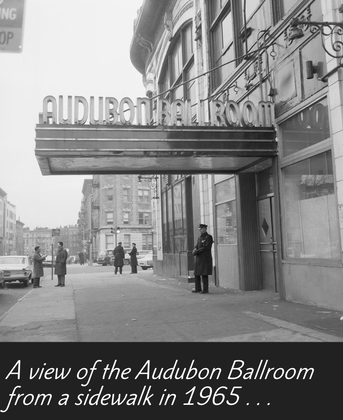
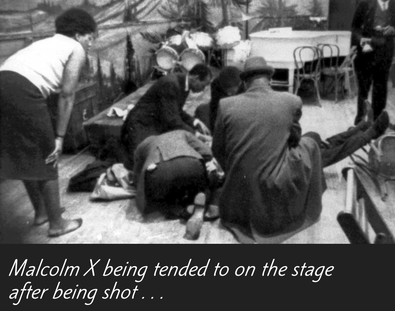
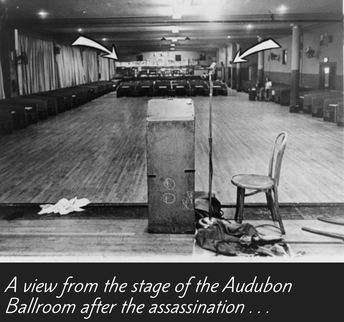
     Malcolm X’s security detail, other than Roberts, reacted poorly and in a disorganized fashion, but one of them hit Hayer in the thigh with a gunshot. Two bystanders were shot, one in the foot and another in the leg, and one of those bystanders was whisked away in a police car, which led to false reports that two gunmen had been taken into custody by the NYPD. After being knocked down by a chair by Roberts, Hayer was separated from his .45 caliber handgun, and the assassin was exposed to the crowd. The injured Hayer went through the door straight into an angry crowd that started to beat him mercilessly. The assassin begged for mercy and assistance, at which point a NYPD car came to his rescue and took him to a nearby hospital. In addition to being shot, Hayer’s head had been severely bloodied. 
     Among the phone calls made in the Audubon Ballroom were two reporters, and one was working for the FBI, which meant that Hoover was informed very soon after the assassination. Worse yet, Hoover and the FBI had advance knowledge of the assassination attempt and did nothing to prevent it; Hoover had come to believe that Malcolm X was more dangerous after leaving the NOI, due to his international travels and successes. The FBI, the CIA, and other government agencies were in competition to get the best intelligence concerning Malcolm X, especially by the Summer of 1964. It was those same agencies that worked very hard in the aftermath of the assassination to make sure their assets remained unknown.

Picture
     Roberts was among the very few that were on the stage trying to help a dying Malcolm X. Roberts, a medical corpsman in the Navy, ascertained that Malcolm X had several chest wounds, but not exit wounds. Roberts started to give mouth-to-mouth, ministering him as him he was a true disciple, taking special care to memorize the nearby faces that were not on the stage. However, Roberts was NYPD, and he looked for the names that Malcolm X claimed to have, the names of those he had warned that he would publicly identify, but Roberts didn’t find anything of value in that regard. Roberts’ supervisors chastised him for trying to save Malcolm X’s life; the NYPD bent over backwards to make sure that Roberts role as an undercover cop and that he tried to save the life of Malcolm X never saw the light of day. Worse yet, the NYPD never heeded the repeated warnings from Roberts that an assassination attempt was going to happen.  Roberts witnessed the deathroes of Malcolm X, and not wanting to be the one to tell Betty that her husband was dead, feigned dizziness and asked for someone else to take over; Betty, with her nurse’s training, took his place. 
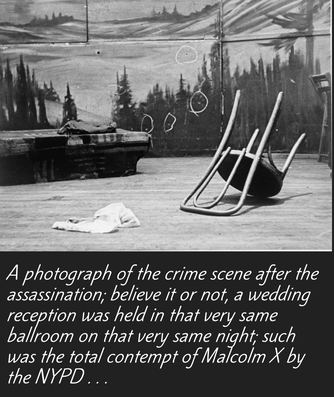
  In the aftermath of the assassination, justice was not served, largely due to official cover-ups. One of Malcolm X’s security guards had given him an unregistered handgun, and while Roberts gave mouth-to-mouth, that bodyguard took the gun from Malcolm X, since the gun had the bodyguard’s fingerprints. Roberts, focused on saving the life of Malcolm X, didn’t notice the removal of the handgun (but CBS archival footage show the bodyguard approaching the stage). Had Roberts noticed, it would have been good for his career, and a bonanza for the government agencies arrayed against Malcolm X.

Picture
     NYPD officers searched the apartment of that bodyguard for the handgun, which they missed since it was hidden in a box of Corn Flakes; soon thereafter, the bodyguard destroyed the gun. Cheated out of being able to declare that Malcolm X had been illegally armed, the missing gun meant that the authorities had to solve a murder of an African-American martyr they hated. Roberts was never called to testify, which would have been very specific and effective, since the NYPD wanted to cover up their undercover man. 
     The only shooter that was convicted was Hayer, while the other two skated; two that weren’t involved, however, served long prison sentences for the assassination. Those other two assassins, as well as the two that created the distraction in the audience and the smoke bomb person, never stood trial. The trials that did occur were not about justice, but about covering the tracks of the NYPD, the FBI, and other government agencies. The hit order by EM and the “Royal Family” on Malcolm X had FOI temples competing to assassinate Malcolm X, but in the end, it was Malcolm X’s reduction in security that actually opened the door to his assassination. As it turned out, it was Captain Joseph and Harlem Temple #7 that carried out the assassination. Before Malcolm X reduced his security, his security detail was stronger and better armed that the Harlem FOI.

Picture
     The Newark FOI (w/ Philadelphia’s FOI) was the toughest, and William Bradley (a former Green Beret) was the toughest FOI guy in Newark, thoroughly enjoying his reputation on the streets as a “lethal man”. Malcolm X’s truth-telling of EM angered the Newark temple and the FOI, since they had seen Malcolm X as a rival and potential enemy. The Newark temple was all-in with EM, even more so when Malcolm X went public with his anti-EM statements. The Newark FOI believed that they would receive a guarantee that they would never be prosecuted, given certain “assurances” by the temple minister. Other than Hayer, captured at the scene with witnesses seeing him use a gun, none of the other Newark conspirators were arrested. 
     In the days after the assassination, Malcolm X was portrayed as gifted-but-evil by the mainstream media, a twisted bitter fanatic who glorified violence, and now the “chickens had come home to roost” on him. The NY Times said that someone came out of the darkness that he spawned and killed him.

Picture
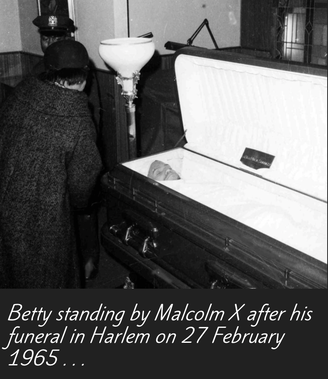
       Malcolm X was buried with the name El-Hajj Malik El-Shabazz, and he was mourned as much as he was reviled. The funeral was held on 27 February 1965, and Malcolm X was eulogized by the actor/activist Ossie Davis. The MMI and the OAAU faded into obscurity without the leadership of Malcolm X. Two days after his assassination, Harlem Temple #7 was firebombed and destroyed. On Saviour’s Day in Chicago, 26 February 1965, 2500 listened to praises for EM; among those in the crowd were Malcolm X’s brothers, Wilfred and Philbert. 
     Soon thereafter, Wilfred looked to find ways to get out of the NOI, but he had to move very slowly and easily since he was Malcolm X’s oldest brother. Wilfred started by ceding his position as minister in Detroit Temple #1 to a true-believer of EM. Both Wilfred and Philbert successfully left the NOI and worked in the public sector for many years. Philbert died at the age of 70, and Wilfred died at the age of 78. 
     Ella organized the annual pilgrimages to Mecca and to Malcolm X’s grave, which continue to this day; she died at the age of 82. Hilda was the last of the family to die at age 93 in 2015. Betty eventually became Dr. Betty Shabazz, working years at Medgar Evers College. Betty’s twelve year old grandson set fire to her apartment, and she suffered 3rd degree burns on 80% of her body, dying three weeks later at the age of 63. Betty was buried next to Malcolm X in Hartsdale NY. 
     Elijah Muhammad lived to the age of 77, dying in 1975. Wallace then transformed the NOI into an orthodox Sunni Muslim group, which eventually became known as the American Society of Muslims, with Wallace taking the official Islamic title of Imam. Wallace also disbanded the Fruit of Islam, and among those that joined Wallace into Islamic orthodoxy was Muhammad Ali. Louis Farrakhan (Louis X) kept the NOI going. He was not part of the assassination conspiracy, but he knew what was going on and was in effect a replacement form Malcolm X in the NOI. All of which Farrakhan refused to admit until 25 years after the assassination.

0 Comments

Malcolm X: 1963 - 1965, Part Three

3/4/2022

2 Comments

 
   Source: Les Payne. The Dead Are Arising - The Life of Malcolm X (2020)
Picture
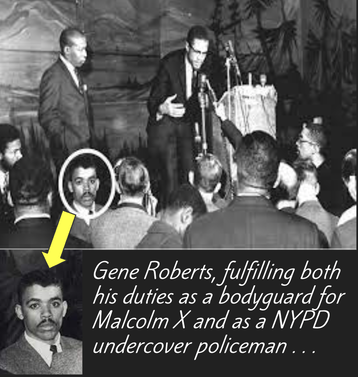
    Gene Roberts had become one of Malcolm X’s bodyguards by the time of his assassination. Long before Roberts reached that position, the NOI had tried to kill Malcolm X in Boston, Los Angeles, Chicago, New York City, and Philadelphia. EM and the “Royal Family” drew a line in the sand, ordering that Malcolm X had to be assassinated by 26 February 1965, which was Saviour’s Day (honoring the birthday of Wallace Fard Muhammad, the founder of the NOI). The hit-order was the worst-kept secret in Muslim circles, but the deadline remained a secret. Meanwhile, Malcolm X reduced his level of security around him, contrary to given advice. 
    On 14 February 1965, the NOI firebombed the very home (which was vacant) in Queens that had been the target of eviction for Malcolm X and his family. Roberts had joined the OAAU during the Spring of 1964, but even ten months in the organization, he was kept outside of the Circle of Trust, since he wasn’t a Muslim and hadn’t earned the trust of those close to Malcolm X. Roberts worked his way into the Circle due to his expertise in martial arts, and he became even more expert under the training of James 67x, and accomplished black belt and Malcolm X’s to “Go-To-Guy”. It was due to James 67x that Roberts was one of the very few security men for Malcolm X. That being said, James 67x was leery of Roberts from the start, even though he couldn’t exactly say why. One reason was that the Muslims around Malcolm X were open with each other, but Roberts remained circumspect.

Picture
     Roberts was in fact an undercover NYPD officer. The NYPD had recruited Roberts out of the military, so he would be an unknown. Roberts dutifully reported what he had observed with Malcolm X and those around him to his handlers in the NYPD, who then forwarded that information to FBI Director Hoover, who by then was far more focused and interested in Malcolm X. 
   During a speech in the Audubon Ballroom in Harlem on 15 February 1965, Malcolm X exposed EM’s secret meeting with the Ku Klux Klan, stating that EM had struck a secret deal with “White America”. Malcolm X went further, saying that EM was using the same tactics as the KKK, such as the firebombing of the house in Queens the previous night. Also, Malcolm X promised more precise information on EM in the coming weeks, even specifically naming individuals. After the speech, Malcolm X understood that the target on his back for assassination became much larger. Captain Joseph was the leader of the FOI, and he admitted that EM and the “Royal Family” ordered the assassination of Malcolm X. Jeremiah X, on his deathbed in 1998, confirmed the NOI deadline of 26 February 1965 for the assassination. 
     During Malcolm X’s speech on 15 February 1965, Roberts was on high alert as a bodyguard as well as an undercover cop gathering intelligence. Roberts told his handlers that he had witnessed a dry run to assassinate Malcolm X, and that measures needed to be taken; his intelligence and advice were ignored. It became crystal clear to Roberts that 15 February 1965 at the Audubon Ballroom in Harlem was a rehearsal for assassination, but his superiors in the NYPD drastically scaled-down the police presence in the area surrounding the Audubon Ballroom. After Malcolm X was shot many times and lay dying on the stage, Roberts would be horrified to witness the inordinately long time it took the NYPD to respond to the emergency call to take Malcolm X to Columbia Presbyterian Hospital, basically within easy walking distance of the ballroom.  

Picture
    On 21 February 1965, as Malcolm X once again made his way to the Audubon Ballroom, a sense of dread enveloped his entourage. By then, James 67x was basically fed up with Malcolm X reducing security in the face of legitimate threats to his life, and tendered his resignation, which Malcolm X reluctantly accepted. Even so, James 67x was at the Audubon Ballroom, finishing his year of service that he had promised to Malcolm X. 
     James 67x was very frustrated at the lack of organization and discipline in the MMI and the OAAU, as well as their rivalry. Adding further to his stress level was the myriad of irritating inquiries from Malcolm X’s wife, Betty. Malcolm X had in effect shut out his wife from his non-domestic life, and the only way she could get any information about her husband was to badger James 67x and the other members of the entourage. So then, it had reached the point where James 67x didn’t know if his relationship with Malcolm X would even last the day.
    On 21 February 1965, the initial four man roster of bodyguards, with Roberts at the flank, moved into position for its 30 minute shift before being replaced. Benjamin 2x, now Malcolm X’s right hand man, spoke first to warm up the audience. While doing so, he noticed two Muslim men that had their coats folded over their arms, and he felt a very bad aura coming from them. During his 20 minute introduction, his eyes kept coming back to them, but he didn’t recognize either man.

Picture
     When Malcolm X rose to speak, he insisted that Benjamin 2x not sit on the stage, but instead check on some details off stage; that meant that the space behind Malcolm X on the stage was empty. The last words Benjamin X uttered in his introduction before Malcolm X rose to speak was a “man who would give his life for his people”. Malcolm X greeted the audience by saying “As-Salaam-Alaikum” (Peace To You), and then “Wa-laik-um Salaam” (Peace Be Unto You). After those two greetings, two men rose in a scuffle four rows back and to the left, with one screaming “get your hands out of my pocket”, making it seem to be the rantings of a couple of drunks. Then a man in the back lit a strip of film in a sock (a homemade smoke bomb) and threw it forward, as it fizzled smoke. Two of the four security men in front of the stage moved forward towards the disturbance, leaving their posts. 
     Malcolm X moved out from behind the podium, raising his hands trying to restore order. At that instant, William 25x, a member of the Newark temple, charged the stage from the fourth row in a light crouch and aimed a sawed-off shotgun dead center on the chest of Malcolm X. After hesitating a fraction of a second, William 25x pulled the trigger, and Malcolm X’s arms folded over his chest and he fell off to his right over two wooden chairs. One of the seven shotgun pellets that entered Malcolm X’s body punctured the wall of his aorta. Malcolm X hit the floor so hard that the jarring loosened his folded arms, with one of them kind of hooked in his belt. William 25x had also leveled a shotgun blast at the podium, which destroyed the tape recorder, but not the tape that had recorded the second shotgun blast.

Picture
      Two other men with drawn pistols (the ones that had their coats over their hands) rushed to the stage, knowing that their part of the assassination plan was not necessary, but they had their orders. The two men fired their 9 mm Beretta and .45 caliber handguns as “insurance”. William 25x dropped his shotgun wrapped in a brown suit jacket on the stage, and the Beretta gunman dropped his weapon, which was part of the plan. The .45 caliber gunman, a very nervous Thomas Hayer, held his handgun long enough to be identified. The three assassins  then tried to melt into the panicked-and-scattering crowd. All three remained in a crouch and headed towards the rear exit 200 feet away. 
     As they worked their way to the exit, Hayer fired off a few shots, and someone with a .32 caliber handgun was returning fire. Roberts, who was not one of the four bodyguards in front of the stage when the shooting started (since it wasn’t his shift), was near the rear exit, and it was an unarmed Roberts that blocked the rear exit, keeping his head while the three assassins were losing theirs. As Hayer came toward the exit with his gun raised, Roberts turned sideways, keeping his eyes on Hayer. Hayer fired from about four feet away, and missed. Roberts threw a chair at Hayer which knocked him down; Roberts quick reaction with the chair was due to the rigorous martial arts training he had recently gone through, ironically not from the NYPD, but from the Muslims of which he was ordered to spy. It had been a close call for Roberts, since the bullet went through his suit.

2 Comments

Malcolm X: 1963 - 1965, Part Two

2/6/2022

0 Comments

 
  Source: Les Payne. The Dead Are Arising - The Life of Malcolm X (2020)
Picture
      Not long after Malcolm X left the NOI, he and similar-feeling now-ex NOI members formed the Muslim Mosque, Inc. (MMI), which was almost immediately viewed by the NOI as a rival, and an additional reason to want Malcolm X dead. Malcolm X’s vision of the MMI was to no longer be constricted/limited by the NOI, and to explore and learn about the REAL the World of Islam. March 1964: Malcolm X started to organize another group, the Organization of Afro-American Unity (OAAU), which would allow him to enter and engage in the Civil Rights arena, where in the NOI he hadn’t been allowed.  
     The OAAU was designed to be a purely secular/political: its goals was to ink the African-American struggle for equality with Colonialism. The OAAU wanted to encourage African-Americans to identify with Africa, not the Middle East or Asia, as the NOI had touted. During the 1920s, almost all of Africa had been colonized, but by the mid-1960s, more than 20 African nations had won independence. Malcolm X argued that the struggle for African-American equality had to be globalized in order for the oppression in the US to be seen as an international violation of basic human rights. Malcolm X wanted at least one African nation to charge the US with human rights violations in the United Nations.

Picture
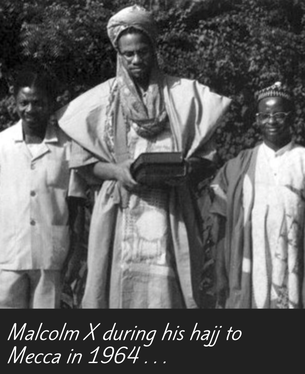
     Slowly, Malcolm X was realizing that he didn’t know very much about the religion of Islam, so he started to have discussions with people who did, in particular Sunni Islam, the predominant form of Islam in the world. In addition to reading REAL sources about REAL Islam, Malcolm X was encouraged to make the hajj, the pilgrimage to Mecca. Ella, who had left the NOI in 1959, was fifty years old and still living in Boston; she gave Malcolm X the money she had been saving for her hajj. A prominent Muslim doctor paved the way for Malcolm X to enter Mecca itself (where only Muslims were allowed), and also provided some high-level contacts.
     Malcolm X knew his life, and even his family, were at risk of being attacked or killed by the NOI, so he vacated the NOI home in Queens (he had been ordered to vacate by the NOI many months prior). Malcolm X flew out of NYC using the name Malik El-Shabazz on 13 April 1964. Once in Saudi Arabia, Malcolm X was not treated as a real Muslim, so using one of his high-level contacts (who was actually the brother-in-law of Prince Faisal), he didn’t have any more problems on that front. Malcolm X’s interactions with Muslims from all races showed him that true Islam was color-blind, which to say the least was a revelation after all the NOI brainwashing.

Picture
     Malcolm X  had broken with a major tenet from 10+ years of preaching in the NOI, but he denied that he was giving all whites an automatic pass. Malcolm X’s strategy with the media, when asked about his changed views of whites, was that he now knew that all whites weren’t devils, so now real discussions can take place. 
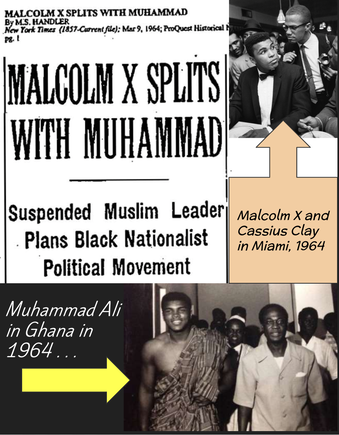
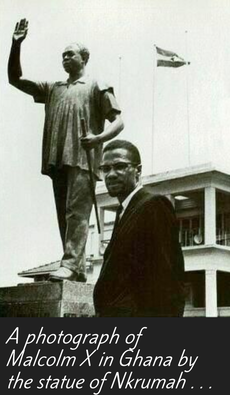
     After leaving Ghana, which was the first African nation to gain independence from colonial rule (Britain) in 1957, and even meeting with President Nkrumah, Malcolm X experienced a harsh personal rebuke from Muhammad Ali. While Malcolm X had been suspended for 90 days after his comment on the JFK Assassination, he had gone to Miami at the invitation of Cassius Clay as he was preparing to fight Sonny Liston for the heavyweight championship. On 25 February 1964, after winning the title, Clay announced that he had joined the NOI, and that his name was now Muhammad Ali, days before Malcolm X left the NOI. As Malcolm X was leaving his hotel on the way to the Miami airport, he came across Ali, the neophyte NOI true-believer. Malcolm X greeted Ali, but Ali walked on, ignoring him. Years later Ali admitted that he regretted the snub, since he figured out many years later, as had Malcolm X, that the NOI was a dangerous cult. Ali had also figured out many years later that Malcolm X was a visionary, and right about so many things, whereas the NOI was wrong on virtually every front. 
     Malcolm X arrived back in NYC on 21 May 1964, and seven weeks later he traveled to Africa. During the seven weeks in between sojourns, his dealings with the NOI became radioactive, since Malcolm X decided it was time to expose the behavior and shenanigans of EM for all to see; after doing so, Malcolm X started to receive death threats.

Picture
    Malcolm X tried to make a connection to the nonviolent Civil Rights groups by taking human rights violations to the UN, although he still advocated for self-defense. Once he left for Africa, Malcolm X remained abroad for over four months, even though he received reports of growing dissatisfaction within the MMI. It was during this time abroad in which Malcolm x was certified to teach Islam and to spread the faith, something that EM could never come close to achieving (assuming that he was interested in doing so). While abroad, Malcolm X sent letters back to the US denouncing EM as a “religious faker”, and in contrast, bragging about his new certification and identity as an internationally recognized orthodox Muslim. 
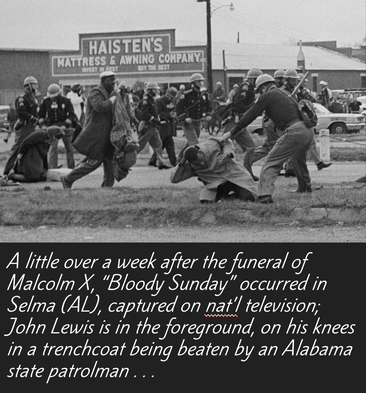
     On 4 October 1964, the NY Times printed long excerpts from Malcolm X’s letters, which served as an ax blow on EM and the NOI. After certification, Malcolm X focused on the political arena, meeting with as many African national leaders as possible, as well as giving as many interviews as his schedule allowed. John Lewis, traveling with a SNCC (Student Non-Violent Coordinating Committee) delegation in Africa at the same time, found out that young Africans had no idea about SNCC or the Civil Rights Movement in the US, but they sure knew about Malcolm X. While Malcolm X never did convince an African nation to charge the US with human rights violations in theUN, the US State Department was very nervous about the actions of Malcolm X.

Picture
    Malcolm X increasingly viewed capitalism as the main enemy arrayed against African-Americans, stating that it was impossible for a white person to believe in capitalism and not believe in racism. Malcolm X went further, arguing that if one came across a non-racist white person, that white was a Socialist. Again, coming across John Lewis in Africa, Malcolm X told Lewis that he was being watched, followed, and was convinced that there were forces that wanted to kill him. 
     Malcolm X returned to NYC on 24 November 1964. While Malcolm had been abroad, LBJ and Congress (with the strong assistance of mainstream Civil Rights leaders such as MLK) had passed the Civil Rights Act of 1964. Also, a judge had ruled that the NOI had won a ruling that Malcolm X and his family had to be out of the NOI residence in Queens by January 1965. Also, due to his extended absences, there was disorganization and disarray in the MMI and the OAAU. Even so, Malcolm X kept speaking and traveling in North America, and even in Great Britain.
     On 4 February 1965, he spoke to young Civil Rights activists in Selma (AL) to demonstrate support and solidarity in the movement, even fitting in a brief private discussion with Coretta Scott King (at the time, MLK was in jail). Malcolm X left for what would be his final trip abroad on 5 February 1965, heading to London and then Paris. Once at the Paris airport, he wasn’t allowed to enter France; French officials told him that his presence in the nation was “undesirable”. By the time he returned to London, Malcolm X was convinced that more than the NOI wanted to assassinate him. Malcolm X arrived in NYC on 13 February 1965, and he was scheduled to speak in Detroit on Valentine’s Day.

0 Comments

Malcolm X: 1963 - 1965, Part One

1/1/2022

8 Comments

 
   Source: Les Payne. The Dead Are Arising - The Life of Malcolm X (2020)
Picture
     After almost twelve years of loyalty to Elijah Muhammad, Malcolm X started to have serious doubts concerning the leader of the Nation of Islam. As early as 1959, when he was with EM in Mecca, doubts surfaced, but Malcolm X prayed, fasted, and ramped up his defenses of his religion. Despite the surfacing doubts, the NOI had been a key factor in Malcolm X reinventing himself and changing his life for the better.  After his release from prison to 1963, Malcolm X had a strategic approach to everything in his life, except when it came to EM. It proved to be far easier for Malcolm X to deal with opposition outside of the NOI, such as the media and African-American Civil Rights Leaders. 
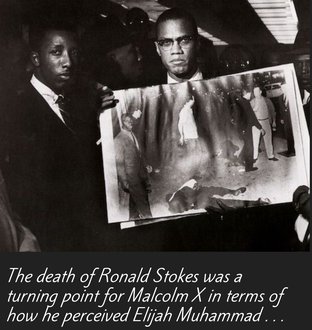
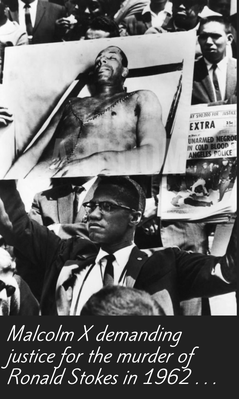
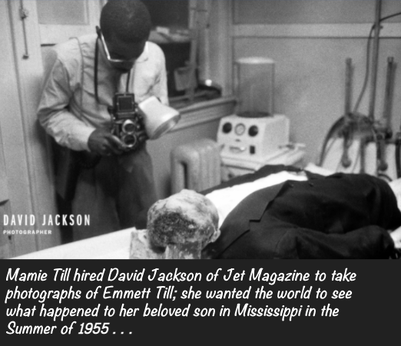
     The Ronald Stokes Affair in 1962 left an indelible mark on Malcolm X. On 27 April 1962, two LAPD officers confronted two Muslim men near Temple #27, which escalated into a battle between dozens of police officers and Muslims from the temple. Police shot seven Muslims, and killed Ronald Stokes, a NOI stalwart and friend of Malcolm X. The decision of the coroner’s inquest was justifiable homicide, even though some witnesses testified that Stokes had his hands up in the air when he was shot.

Picture
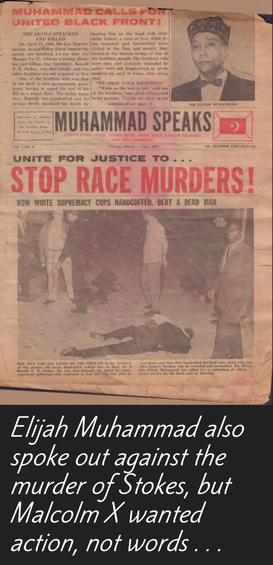
     Malcolm X wanted some sort of direct action in response that at least would somewhat match the harsh rhetoric of the NOI, and the Fruit of Islam (FOI) was that arm of the NOI for that kind of action. However, the FOI goon squad had to that point almost entirely been used for internal discipline within the NOI, e.g. spousal abuse, shenanigans with NOI money, violation of temple rules, etc. The FOI expected to be called into action after the killing of Stokes, plus the many injured NOI at the hands of the LAPD. But EM never issued any orders to the FOI to act; EM even ordered Malcolm X to refrain from harsh rhetoric as a response. The result was that Malcolm X lost face with the FOI due to EM. 
     Malcolm X didn’t know if EM was indifferent or a coward, but he held his tongue and soldiered on. The Stokes Affair rankled the young members of the NOI who wanted to back up the harsh rhetoric with action. A very frustrated Malcolm X kept up his public loyalty, but he strongly sympathized with those in the NOI that wanted to act but were held back by EM. The Stokes Affair was the turning point in terms of Malcolm X moving away from EM; he was no longer blindly loyal and unquestioning.


Picture
     February 1963, Chicago: Malcolm X had a long discussion with one of EM’s sons, Wallace D. Muhammad. While he was in Chicago, Malcolm X picked up gossip and chatter about the luxurious lifestyles of EM and the “Royal Family” in Phoenix. Malcolm X brought up questions, rumors, and suspicions about EM with Wallace. Malcolm X really wanted Wallace’s perspective of EM, since he was the heir apparent. Wallace confirmed some of EM’s philandering, especially with one “secretary” of which Malcolm X had a previous interest. 
     Under Malcolm X’s questioning, Wallace was very forthcoming with his revelations, confirming that EM had many illegitimate children with his “secretaries”. To Malcolm X, Wallace’s revelations were a “Smoking Gun”, and action was required. Chances are strong that in his autobiography, Malcolm X exaggerated EM’s infidelities, which makes sense since the very loyal to the other way when they feel betrayed. Also, finding out at least some of the truth of Fard Muhammad (that he wasn’t “all that”) rocked Malcolm X to his core as well. Malcolm X discovered that Fard wasn’t Allah, and therefore EM wasn’t “The Messenger”; Wallace had shown Malcolm X that EM was a religious and secular failure/hypocrite.

Picture
    Malcolm X then found out that EM had expelled from the NOI those “secretaries” with which he had illegitimate children under the charge of adultery. Basically, Malcolm X had the wind knocked out of his sails, and he tried to figure out how he could have been taken in by EM so easily. Malcolm X vented his spleen to Wilfred, who said he knew all about the actions of EM and the “Royal Family”. Malcolm X wanted to know why Wilfred didn’t tell him, and Wilfred said that if he did, Malcolm X would have gone straight to EM and “ratfinked” on his older brother; Malcolm X reluctantly admitted that probably would have been the case. 
     Malcolm X wrote EM about the illegitimate kids and “secretaries”, even mentioning Wallace’s name (but not Wilfred). As far as Malcolm was concerned, EM had transitioned from blasphemy to heresy. Malcolm X was not entirely circumspect about his feelings about EM, and chatter started to spread in the NOI network. The external competition with MLK yielded to the internal struggle with the NOI. The NOI HQ targeted Malcolm X, the very person that made the NOI what it was, and the person that was the source of the luxurious Phoenix lifestyle.


Picture
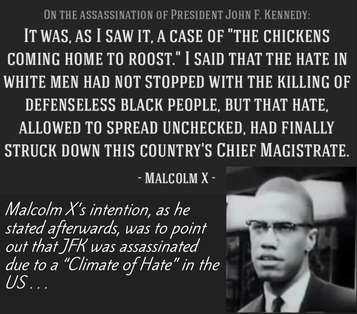
  22 November 1963: JFK’s Assassination. On 1 December 1963, after speaking, Malcolm X was asked as he was leaving the podium, what he though of the assassination. Malcolm X’s “chickens coming home to roost” quote (he thought he was “off the record”) referred to JFK’s involvement in the assassination of Diem in early-November 1963. EM had absolutely forbidden NOI temple leaders from saying anything about JFK’s Assassination - EM “silenced” Malcolm X for ninety days. Even at this point, Malcolm X was confident he could salvage his relationship with EM and the NOI HQ.
     However, the NOI HQ had no intention of allowing Malcolm X back in , and several members within EM’s “Royal Family” stated that they wanted Malcolm X dead. In effect, Malcolm X was in exile from the NOI. Wilfred visited him in Queens, telling Malcolm X that he sure took his sweet time to figure out that the NOI HQ wanted him dead. Wilfred criticized Malcolm X for writing EM to say that if he ordered his “Royal Family” to leave him alone, he would leave EM alone. EM never issued that order, and during March 1964, Malcolm X announced that he was leaving the Nation of Islam.

8 Comments

Malcolm X: 1947 - 1963, Part Five

12/18/2021

0 Comments

 
  Source: Les Payne. The Dead Are Arising - The Life of Malcolm X (2020)
Picture
     By the Spring of 1963, Malcolm X was waging a two-front campaign for the hearts-and-minds of African-Americans, criss-crossing the nation being much-in-demand on radio and television. Malcolm X had all the ingredients of being a folk hero, except that he didn’t have the folks behind him; Martin Luther King, Jr. did. Despite a lack of cohesion, the mainstream Civil Rights Movement went viral in the South, with Civil Rights peaceful protesters becoming more organized and confrontational in the face of over 300 years of racism and segregation. 
     Not only was MLK trying to change decades of de facto and de jure segregation, but also apartheid-like practices, such as an African-American stepping off a sidewalk when a white person approached. Added to that were varying and unique Southern state laws, such as in Alabama white nurses could not work in a hospital that had even one African-American patient. Georgia had a law banning establishments from serving alcohol if there were whites and African-Americans in the same room. By the Spring of 1963, MLK and the mainstream Civil Rights Movement was basically trying to force a change in the behavior of Southern whites, since far-too-many Southern whites believed that segregation was ordained by God, and that the “mongrelization” of the white race would never be allowed to happen. 
     Thirty-three states still outlawed mixed-race marriages, and obviously not all those states were in the South. Where MLK downplayed mixed marriages, Malcolm X hyped it up, preaching that race-mixing was the white man’s worst nightmare; Malcolm X repeatedly pointed out centuries-old hypocrisy in the South, bringing up Jefferson and Sally Hemings. MLK wanted to erase segregation via integration, gaining access to full citizenship and economic opportunities.

Picture
   Malcolm X and the NOI totally dismissed the possibility of integration, wanting instead a separate society for African-Americans, with the land/property paid for via reparations. Malcolm X argued that African-Americans could take it from that point in their separate societies. Malcolm X was very harsh in his rhetoric against Civil Rights leaders and celebrities that were married to white women, but he never made his arguments personal
     On a 7 March 1962 debate, Malcolm X faced off against James Farmer of CORE (Congress of Racial Equality), who was married to a white woman. During the debate, Malcolm X scoffed at the predominant belief among Southern whites that segregation was a religious thing, saying that it was a “white man thing”. In effect, while MLK was trying to change the behavior of whites, Malcolm X and the NOI were trying to do so with African-Americans. 
     Even as MLK was reaching the pinnacle of the Civil Rights Movement, there was growing dissatisfaction and a lack of patience with his nonviolent methods in the face of increasingly violent opposition from white mobs and law enforcement in the South. As the storm of opposition increased against the Civil Rights Movement, the thunder outside was Malcolm X. 
     The rise of the NOI and Malcolm X made MLK all the more appealing to the mainstream white power-brokers, which was not lost on Malcolm X. Adding to Malcolm X’s frustration was that his lecture tours and media coverage hadn’t won over the African-American masses; while many African-Americans liked Malcolm X, the NOI, and particularly the Fruit of Islam (FOI), were not appealing in the least. Malcolm X became increasingly frustrated in that he seemed to be winning over recruits to the NOI, but when he mentioned  Elijah Muhammad’s name, attention and momentum was lost.

Picture
   Elijah Muhammed simply didn’t care about anything else at that point other than his luxuries and the massive revenues coming his way, mostly due to Malcolm X. By the Summer of 1963, EM was spending most of his time away from Chicago. EM did not have the same vision for the NOI as Malcolm X; EM was happy with a sect that gave him a spotlight and wealth, and that was it. EM had to desire for popularity across racial lines or media attention.. By the time Malcolm X reached the age of 37, he had outgrown the NOI. Since 1959, Malcolm X had rarely passed up a chance to be on television, and his fame and influence fed the coffers of the the NOI (and EM), far beyond their dreams. Malcolm X bristled at the growing negative perspective of the NOI in the media, as well as the media’s praise for MLK and his methods. 
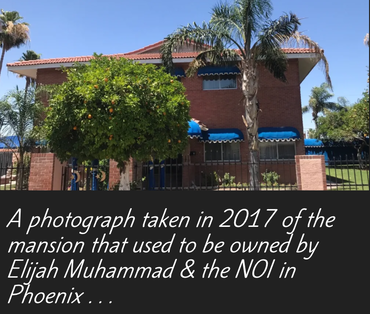
     To achieve his vision of the NOI, Malcolm X wanted to drastically reorganize and reorient Chicago’s HOI HQ, and to get EM “on board”, not to replace him. By the Summer of 1963, Philbert was “snitching” on his Malcolm X to EM, after Malcolm X bragged to his brother what he accomplished and what he was trying to do. A hornet’s nest of opposition to Malcolm X existed in NOI’s Chicago HQ, especially among EM’s sons, since no matter how many times Malcolm X invoked EM’s name, that attention remained on Malcolm X. The blood relatives of EM simply saw themselves as a “Royal Family” within the NOI, and viewed Malcolm X as a dangerous threat. EM’s respiratory ailment meant that he was spending most of his time in his mansion in Phoenix, and with that distance from Chicago came the belief among the “Royal Family” that Malcolm X might leapfrog one-or-all-of-them in the NOI hierarchy and replace EM. 

Picture
 When EM gave Malcolm X permission to be interviewed by Playboy, which was conducted by Alex Haley (who helped Malcolm X with his autobiography), who wrote a glowing introduction of Malcolm X before the interview, stating that in effect Malcolm X ran the show in the NOI. Despite his efforts to give EM credit, the scurrilous-hoohaw in Phoenix reached new levels. Haley’s “heir apparent” reference in the introduction was the main thing that fueled their fears/suspicions.  Increasingly, Malcolm X would need to address his eroding position within the NOI; the FBI was fully aware of the dissension and tried to fuel it even more to weaken the NOI from within. Malcolm X told Wilfred that he had underestimated the poison in NOI HQ, and was trying to find an antidote. 
     Malcolm X had come to realize that he was living a Spartan lifestyle while EM and the “Royal Family” were living in luxury, provided for mostly by his actions. Malcolm X harbored deep-and-suppressed reservations about EM’s judgment and instincts. However, at such locations at Hartford, Malcolm X stayed verbally loyal to EM, but in effect Malcolm was offering himself, not the mystic/exotic EM, as a viable option to those that had doubts about Dr. King and the mainstream Civil Rights Movement. By this point, EM had prohibited Malcolm X from joining any Civil Rights protest or to assist protest organizers/demonstrators; for example, Jeremiah X had received the same directive, and he watched from the sidelines during the Birmingham Protests in 1963.

Picture
  Malcolm X came to realize that the NOI talked tough, but would not follow through on anything unless one of their own was involved. There were even instances when one of their own had been brutalized, but EM ordered the FOI to stand down. The contradictions and hypocrisy of EM and HQ had started to wear on Malcolm X, and his influence over the FOI was waning, entirely due to EM and the “Royal Family”. 
     Malcolm X’s greatest appeal was among non-religious African-Americans, which was estimated between 20% - 25% of the African-American population; MLK appealed to the balance of the African-American population. Malcolm X went deeper into his apocalyptic tones, while MLK’s bright optimism shined through far more. On 3 January 1964, Time Magazine named MLK its Man of the Year for 1963, and soon thereafter, MLK was awarded the 1964 Nobel Peace Prize, the youngest to be so honored at the time. 
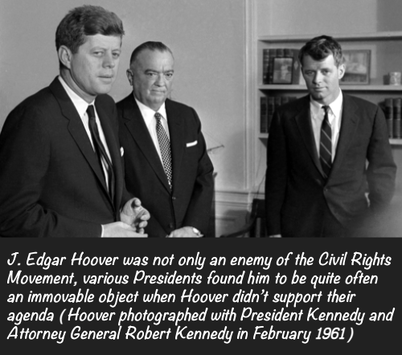
     Separately, both Malcolm X and FBI Director J. Edgar Hoover as a common enemy, with MLK being investigated even more since he had committed the cardinal sin of publicly criticizing Hoover’s FBI. The last straw for Hoover was MLK winning the Nobel Peace Prize, since Hoover (in his fantasy land) had actually believed he was in line for the prestigious award. Hoover did all he could, short of arresting MLK, to try and keep him from reaching Oslo (Norway) to accept the award.

0 Comments

Malcolm X: 1947 - 1963, Part Four

11/30/2021

0 Comments

 
  Source: Les Payne. The Dead Are Arising - The Life of Malcolm X (2020)
Picture
       Malcolm X was beyond-concerned that the meeting with the KKK in Atlanta would haunt him forever in the NOI. That being said, he was excited by the idea of being the vanguard of the NOI heading to Atlanta, with the role of Jeremiah X to observe and report back to Chicago. Malcolm X and Jeremiah X were also instructed to keep the entire affair secret, which ended Malcolm X’s hopes of a “Harlem Hey Day”.  Jeremiah X made the necessary phone call to set up the secret meeting with the Georgia Ku Klux Klan, and the lead KKK negotiator agreed to meet on 28 January 1961 at the home of Jeremiah X. 
     On that day, a motorcade of ten cars of at least 30 white men stopped in front of the home of Jeremiah X. After police officers briefly spoke with the head of the motorcade, they left, and shortly thereafter the motorcade revved their engines and left in the same direction as the patrol car. Malcolm X and Jeremiah X thought the meeting had somehow been canceled, but then the ten car motorcade returned. A middle-aged white man knocked on the door and once he ascertained that both NOI men were present, he said that if he wasn’t out of the house in 15 minutes, the house would be burned down. The man at the door in the “Witch Hat” was W.S. Fellows, the leader of the Georgia KKK. Both NOI men addressed Fellows as an equal with no deference, and Fellows showed zero respect for the NOI men. After about twelve minutes, Fellows went outside to tell the motorcade that all was well, and he returned with other KKK men in tow. 
     At least one of the assembled KKK men was an FBI informer; that fact was unknown to the other men in the room. That informer filed an official report on the meeting on 30 January 1961. Some of the KKK men in the house which were actually in the kitchen being fed by Jeremiah X’s wife, which loosened Fellows up in his discussion with Malcolm X and Jeremiah X.  Fellows made it very clear that hatred of the Jews was something that both groups had in common, even bragging about being a ringleader of a spectacle lynching of a Jew in 1915.

Picture
     Malcolm X was able to finally get the conversation steered to separation and reparations, per EM’s orders. Malcolm X argued that African-Americans would need a “Nest Egg” of their own in order to create their separate society, which meant that assistance with reparations was needed from the KKK. In completing EM’s directives, Malcolm X stated that the goal of the NOI was separation, not segregation. To the KKK, that distinction simply didn’t resonate, and if it did, they didn’t seem to care, with Fellows saying “it’s all the same thing to us”. 
     Malcolm X delighted in debating circles around the uneducated KKK, but he held back to keep withing the spirit of EM’s instructions; all the while, Jeremiah X was taking notes. The mission of the NOI men was not to score debating points or to humiliate their adversaries, which meant that Malcolm X had to engage in “limited warfare”. The KKK simply felt that they represented the sovereign state of Georgia as well as the entire South in that living room. Fellows went so far as to offer the NOI a partnership (e.g. auxiliary) in the KKK, even offering purple robes instead of white. 
     Technically violating EM’s orders, Malcolm X stated that sometimes violence was necessary to defend against hypocrites who tried to lead the group astray, and that in the NOI, that role was assigned to the Fruit of Islam (FOI). That statement got the attention of the white men in the room, including the FBI informant. Malcolm X moved on to try and find out why the telegram was sent, and Fellows said that he wanted the NOI to help the KKK fight the “scourge of integration”. Then Fellows let loose with his concerns over MLK, which shifted the entire mood in the living room. Fellows could barely contain his rage, since MLK represented a clear and present threat to the KKK and their reactionary world order.


Picture
     Fellows directly asked both NOI men if they knew where MLK lived, and also if they would supply him with MLK’s real-time movements when he returned to Atlanta. Fellows believed that the Ku Klux Klan and the NOI both had MLK as a common enemy. The requests by Fellows embarrassed Malcolm X, as well had disheartening and shaming him. What made Malcolm X feel even worse was that the KKK simply did not see the NOI as a threat like MLK. Worse yet was that Fellows saw the NOI as a potential ally; neither EM or Malcolm C had anticipated this development. 
     Malcolm X made it very clear to Fellows and his cohorts that the NOI would in no way assist the KKK in that regard. Fellows, not used to any direct resistance from African-Americans, reassured both men that the dirty work would be done by the KKK, and that nothing would be traced back to the NOI. Fellows flat-out said “You don’t have to kill him”. The issue was left unresolved, since neither Malcolm X or Jeremiah X had the authority to made a decision on behalf of the NOI, so the meeting transitioned to other topics. 
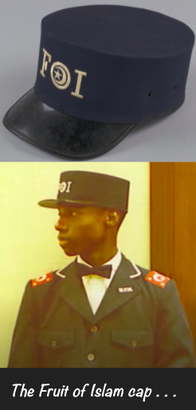
     During the 2+ hour meeting, Malcolm X came to realize that the only part of the NOI that the KKK respected was the Fruit of Islam (FOI), which had garnered the kind of reputation with it methods earned by secret police forces, such as the 
Spetsnaz and mafia goon squads. Unknown to the 2nd KKK, the FOI only attacked African-Americans, not whites. One of the klansmen with Fellows produced a card, identifying himself as a member of the “Brothers KLAW”, the rough equivalent of the FOI. Jeremiah X was able to get one of those cards from Fellows, which proved useful in avoiding a speeding ticket as he traveled in Alabama. Malcolm X and Jeremiah X were caught off guard by the respect shown the FOI by the KKK, but they were also pleased that the FOI had earned their respect.  Jeremiah X placed that item concerning the FOI in the back of this mind to use, thinking he would be the one paying the price for this meeting in the NOI.

Picture
     Jeremiah X believed it would be at least somewhat beneficial to establish an informal non-aggression pact with the KKK, since he lived in Atlanta. Unlike Malcolm X at that point in time, Jeremiah X would intentionally lapse into his “Uncle Tom” persona in order to ingratiate himself with even the most aggressive whites, which he did during the meeting with the KKK. As the meeting closed, Fellows suggested that they create an ID code for future meetings. Malcolm X suggested 121 for the NOI, and he convinced the KKK to take 666, the number of the beast from Revelations. 
     Fellows and the rest of this entourage went straight to a movie theater where they conducted an anti-integration event. One speaker at the rally indicated that it was okay to help African-Americans relocate to segregate themselves from whites. In private with the Imperial Wizard, the meeting with the NOI was discussed (with the FBI informant present), and plans were made to follow up with Jeremiah X at the very least. 
     In Chicago, EM seemed satisfied with Malcolm X’s verbal account of the meeting and with this written report, but EM did pick up on Malcolm X’s resentment at being limited in what he was allowed to do. EM made it very clear that the meeting with the KKK needed to remain a secret, even inside the NOI. Jeremiah X, with EM’s support, developed long-term contacts from the 1961 meeting with the KKK that allowed him to negotiate with white business owners and farmers, which didn’t exactly inspire confidence with most of the areas African-Americans as the Civil Rights Movement gained momentum. 
     The NOI’s crossover connections with the KKK became a sort of tragi-comedy, with Jeremiah X actually taking photos (and being photographed) with members of the KKK, with none other than MLK present. MLK advised Jeremiah X to not cross the street to engage members of the KKK; Jeremiah X’s response was to dismiss MLK as ignorant.

Picture
     While continuing to make commercial ties with the KKK, Jeremiah X developed a relationship with such Civil Rights leaders as Medgar Evers; yet Jeremiah X attended a daylight KKK rally in 1962 in Atlanta, and was even positively singled-out in the crowd by a speaker. Malcolm X believed that the NOI had betrayed the very constituents it claimed to support and protect. Malcolm X’s eyes finally started to open in terms of seeing who EM really was; it was the secret cooperation with the NOI and the KKK that let Malcolm X to that epiphany, and his repulsion was primal.  EM noticed the change in Malcolm X, and he didn’t involve him in future NOI dealings with the KKK, even banning Malcolm X from going to the South, since that was Jeremiah X’s realm for the NOI. 
     The only thing the FBI was interested in was the potential for NOI violence, never really believing the KKK was much of a threat in comparison. The FBI informant in the KKK did not feature the death threats towards MLK in his report of the NOI meeting; it’s also possible that Hoover made sure that if there was a reference, it wasn’t included in the official report. The more Malcolm X learned from his confidential sources about EM’s “Southern Strategy”, the more Malcolm X doubted and distrusted EM. EMs disciples told him that Malcolm X was asking probing and sensitive questions, and he became increasingly wary. Throughout EM’s overtures and deals with the KKK, the NOI always came out on the short end of the stick, which was the ultimate goal (and thrill) of the KKK. 
     Malcolm X never did describe or chronicle the meeting with the KKK, not even in his autobiography. Willing to talk about any other risky venture in his life, Malcolm X refused to do so regarding the KKK. It was only after his total break with the NOI that Malcolm X talked about the meeting, seeing it as a shameful breach and a huge error in his judgment.

0 Comments

Malcolm X: 1947 - 1963, Part Three

10/13/2021

0 Comments

 
       Source: Les Payne. The Dead Are Arising - The Life of Malcolm X (2020)
Picture
   Malcolm X was visiting/preaching at the NOI Atlanta temple in the Fall of 1960. Security at the temple was quadrupled due to Malcolm X’s visit, and he was being recorded in order to play it back on the radio where several cities aired the weekly broadcast “Mr. Muhammad Speaks”. Trips to the “Bible Belt” stimulated the crusader in Malcolm X, and his first official task in the South was to inaugurate the Atlanta temple (#15). During Malcolm X’s sermon, Jeremiah X (the Atlanta temple’s minister) was given a telegram from the Georgia Ku Klux Klan, requesting a meeting with the NOI. Malcolm X was handed the telegram after his sermon, and he was caught totally by surprise, wondering what the real motive was behind the request. 
     Unknown to Malcolm X was that the FBI was fully aware of the cable, monitoring the communications of the KKK and the NOI. As it turned out, J. Edgar Hoover had around 2000 paid FBI informants in the KKK. It was possible that the telegram was actually a move by Hoover to discredit Malcolm X and the NOI, and to even get informants inside the NOI. The original telegram was destroyed long ago, and the KKK kept the telegram secret for decades. However, very much like Ida Tarbell researching Rockefeller’s actions in the 1870s, where documentary evidence was scant, the author pieced together what most likely occurred, interviewing many that were in-the-know. 

Picture
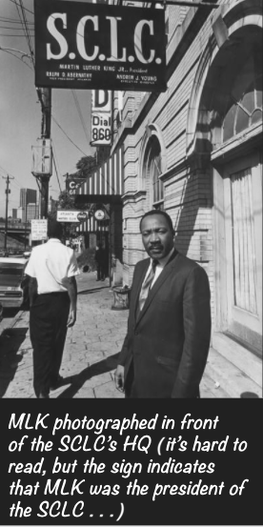
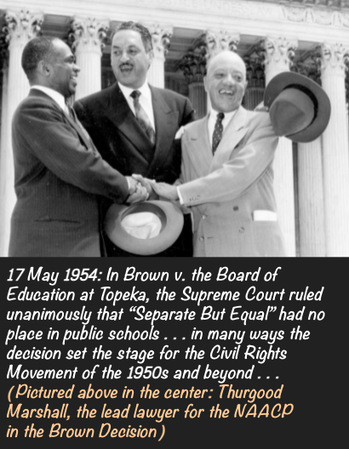
     The Brown v. the Board of Education at Topeka decision in 1954 directly led to existing Civil Rights organizations to work harder to end segregation, and new groups were formed, such as the Southern Christian Leadership Conference (MLK’s organization). Those efforts were met with increased opposition by whites, not only in the South. The KKK had stepped up its terror after the Brown decision by several-fold. That racist terror was intended to derail the Civil Rights organizations that were trying to end segregation. The NOI operated as a sort of “3rd rail”, in that it opposed integration on the African-American side of the equation. EM had long stated that African-Americans needed to withdraw from the de facto segregation in the North, and the de jure segregation in the South. To the NOI in the mid-1950s, the Brown decision simply didn’t matter or register on their radar. 
     Adding to the likelihood that the KKK telegram was a Hoover creation, few whites in the South even remotely cared about the NOI, seeing it as a relatively harmless Northern group, whereas MLK was a Southerner. Malcolm X was fully aware that Marcus Garvey had met with the 2nd KKK in 1922, and he was also aware of the price Garvey paid among Civil Rights groups. Needless to say, Malcolm X wanted to avoid a similar disaster. But the risk-taker in him had never gone away from his criminal past, and Malcolm X believed he would score big with the media in Harlem if he played his cards right with the KKK. 
     Malcolm X telephoned EM with the news, per protocol, and “The Messenger” was very circumspect on the phone, aware of the possible eavesdropping (the procedure was 3 minutes or less on the phone). Matters of any significance were to be personally reported, but these security procedures were very often ignored, even by EM. As it turned out, on 4 January 1957, four telephone bugs had been planted by the FBI in EM’s palatial compound in Chicago, with additional wiretaps in other NOI locations by 1960.

Picture
      EM summoned Malcolm X and Jeremiah X to make their way to Chicago as soon as possible. On the way to Chicago, Malcolm X tried to figure out a way to influence, if not control, the NOI response to the KKK telegram. Jeremiah X was EM’s overseer for the entire South, and he refused to assist Malcolm X with his planning, saying that EM was to be the decider in the matter. Conventional wisdom had Jeremiah X being selected as the NOI representative that would meet with the KKK, but Malcolm X had other ideas on that front. Without any evidence, EM concluded that the telegram was an Olive Branch from the KKK, yet to Malcolm X it seemed unsettling that the KKK didn’t take the harsh rhetoric of the NOI very seriously. Malcolm X was comforted, at least somewhat, that the telegram had found its way to him, albeit by accident. Malcolm X would have been insulted by a direct appeal, since he had made his hatred for the KKK very clear for quite some time. 
     Malcolm X was holding out to craft an aggressive response that would play well in Harlem, and with the media. Malcolm X told those assembled in Chicago that there should be no assistance from the KKK in terms of separating from white society, it had to be on the African-American side of the coin. There was consensus in the meeting that the Brown decision had undercut, at least somewhat over the last few years, their appeal/demand for separatism, since the unanimous Supreme Court decision convinced millions of African-Americans that it was possible to achieve integration.  The tide seemed to be turning away from the NOI to mainstream Civil Rights leaders and organizations, especially MLK, who as a Civil Rights leader was gaining serious momentum in the Fall of 1960. 
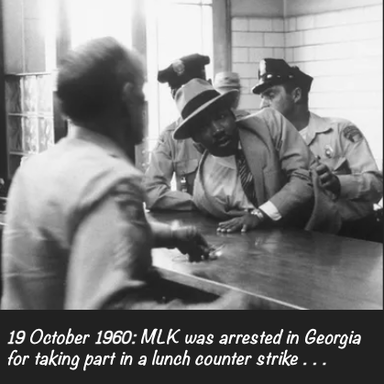
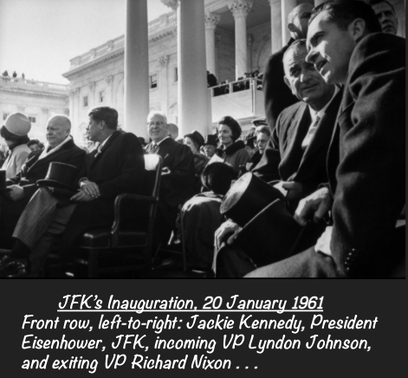
     MLK’s arrest in Georgia in October 1960 proved to be a turning point in the Election of 1960. Despite advice from such pillars as Jackie Robinson, Vice-President Richard Nixon refused to make a telephone call to Coretta Scott King to at least express his concern. JFK (and soon enough RFK) realized the political advantage the phone call would have on their campaign, and it was Senator Kennedy that called Coretta Scott King. That phone call was a spark that caused a political seachange in African-American voting behavior in 1960. In 1956, 60% of the African-American vote went to President Eisenhower, but in 1960, 70% of that vote went to JFK, which in effect turned five states to Kennedy, and the election. 

Picture
     In Southern states, the KKK did its best to whip up a frenzy of hate and fear against JFK, with his Catholicism a contributing reason. JFK’s election and inauguration led to a boom in KKK membership nationwide. The Civil Rights Movement believed that the power of the vote was the key to integration, and by 1960, it was MLK, not EM, that had caught the fancy of millions of African-Americans, while at the same time striking fear and extreme hatred among Southern whites, and murderous rage in the KKK. By 1960, Malcolm X was increasingly being challenged that the separatist rhetoric of the NOI exactly mirrored that of the KKK. Another factor in play was that, unlike the NOI, the Civil Rights Movement was aimed at both African-Americans and whites. Malcolm X had started to chafe at EM’s insistence that no organized form of self-defense (retribution) would occur. 
     In the meeting in Chicago, trying to figure out what to do with the KKK telegram served to show the differences between Malcolm X and EM. The key question was this: should the NOI bargain or challenge the KKK; or in other words, “Fight or Flight”. Malcolm X favored fight (retribution), whereas EM favored flight (separatism). Malcolm X at least hoped that EM would publicly state that irreconcilable differences existed between the NOI and the KKK, for example the KKK’s belief in racial superiority. By 1960, the KKK had become marginalize, on the fringe of society, compared to the 2nd KKK of the 1920s, which was mainstream. 
     Malcolm X hoped that there would be a public debate between the NOI and the KKK, and that he would be the NOI Debater-in-Chief.  Malcolm X believed that in crushing the KKK in public debate, he would become more famous, as would EM and the NOI. Such a display of NOI fearlessness, Malcolm X believed, would also lead to a surge in recruiting, taking some of the momentum away from MLK et al. 

Picture
      EM appeared to have entirely different ideas on the topic compared to Malcolm X. EM knew all about the racist terror in the South, growing up in Georgia, but at his core, EM was “Flight”, not “Fight”. While Malcolm X was loyal to EM, his desire for conflict ran counter with EM’s wishes. Malcolm X almost seemed to be hardwired for conflict, as was seen in his criminal days. At the end of the meeting, EM calmly instructed a frustrated Malcolm X, and a resigned Jeremiah X, to meet with the KKK. EM told them that “they want what we want”, but he wanted the two to make it clear to the KKK that the NOI was for separation, not segregation. 
     Malcolm X now faced a major conflict of conscience. His hopes of a resounding victory in a public debate were crushed, replaced instead with what Malcolm X though of as  “Begging Bowl” plea instead of an aggressive assertion. Malcolm X accepted the assignment, knowing that EM could not be budged from his stance. In the back of Malcolm X’s mind was the possibility that EM was exploring an unholy alliance with the KKK, and if so, how that would affect how he was perceived. The Chicago meeting about the KKK proved to be the first string that was pulled that started to unravel Malcolm X’s unquestioned loyalty to EM.
     Malcolm X decided to exploit every inch of wiggle room available with the upcoming secret meeting with the KKK under EM’s instructions; the unquestioningly loyal disciple had started to doubt EM. Elijah Muhammad told both Malcolm X and Jeremiah X to tell the KKK that in effect White America owed reparations to African-Americans, and that the KKK should assist in that endeavor, or at least not interfere. Also, both men were to bargain for free movement of African-Americans throughout the South. It was as if EM was totally naive, or tone-deaf to the Civil Rights landscape of 1960. Malcolm X was concerned that EM had made a tactical mistake, conceding advantage to the KKK, in that he would not be allowed to negotiate as an equal. Malcolm X believed that EM simply assumed that the extreme hatred of the KKK towards African-Americans would actually cause them to assist with the NOI’s goal of separatism. Worse yet as far as Malcolm X was concerned, there wasn’t any incentive or threat to the KKK if the didn’t assist the NOI. 

0 Comments

Malcolm X: 1947 - 1963, Part Two

9/5/2021

0 Comments

 
     Source: Les Payne. The Dead Are Arising - The Life of Malcolm X (2020)
Picture
     By 1955, Malcolm X was 30 years old, and his charm instilled a steely resolve in men, and titillated women. For the time-being, Malcolm X was still celebrated in NOI HQ, because he was bringing in recruits and a lot of revenue, while also running the Harlem temple and overseeing the temples in Boston and Philadelphia. Malcolm X was also looking for “emerging markets” for the NOI in such locations as Springfield (MA) and Hartford (CT). 
     Relevant demographics for Hartford: From 1940 to 1960, the white population in Hartford had increased by 44%, while the African-American population increased 229%. Rosalie Bey Glover, a mother of nine, was one of those African-American migrants to Hartford. Soon after the Brown Decision in 1954, she started to visit Springfield whenever Malcolm X preached, and during one of those trips, she invited him to Hartford. By 1955, Mrs. Glover had become entirely disenchanted with white Christians (and most African-American Christians as well), due to her experiences in Florida. Mrs. Glover wasn’t a fan of EM, but she was a total fan of Malcolm X, and she also wanted to rub EM’s nose in the fact that he had failed to establish a NOI temple in Hartford years before. Unlike EM, Malcolm understood the mentality of New Englanders, both white and African-American, due to his time in Boston.

Picture
     Malcolm X asked EM for permission to at least explore the possibility of establishing a NOI temple in Hartford, and EM gave him permission to do so, while also telling him it was a waste of time. Since Hartford had dismissed EM out-of-hand in the 1940s, he believed that Malcolm X would get the same reception, and that challenge was not lost on Malcolm X. When Malcolm X addressed those assembled in Mrs. Glover’s living room, he was strict but not intimidating, which was the right way to approach that specific audience in Hartford. Malcolm X had come to realize that African-Americans that served whites tended to be very receptive to his lectures (e.g. “No man is a hero to his valet”).
     Malcolm X started to regularly address groups in Hartford every Thursday, and it was after the second such Thursday that an FBI agent stopped an African-American teen that had been to a meeting, asking questions about what had been going on in Mrs. Glover’s house. Unlike in Philadelphia, Malcolm X knew that he couldn’t be too harsh with his rhetoric in Hartford, and he basically ignored EM’s mysticism. Malcolm X badly wanted to succeed in Hartford, knowing that the potential recruits needed milk, not meat, in terms of digesting the tenets of the NOI. 
     Malcolm X had to ignore the cigarette smoking in Mrs. Glover’s living room, as well as pork chops (he refused when offered), which severely tested his patience. Persevering, Malcolm X’s called for African-American resistance to white oppression that best resonated in Hartford, far more than any religious angles. Malcolm X knew it would be the socio-political message, not the religious, that would attract recruits in Hartford. 

Picture
     During a Thursday meeting, Malcolm X brought up the murder of Emmett Till (28 August 1955), and Mrs. Glover broke down in tears, telling those assembled about her nightmare in FL that drove her to come to Hartford. An innocent African-American young man (A.C. Williams) had been taken from jail (like Will Brown, he had been falsely accused of rape), and was beaten and shot. He actually survived, and worked his way back home, and then was taken to Mrs. Glover’s home, where she naively called the police. The sheriff arrested the African-American man on the spot, never dealing with those that kidnapped and attempted to murder him, and sent him in an ambulance to Tallahassee. That ambulance was forced off the road by members of the KKK, and his body was displayed on a bridge in 1941. This example was just one of the far too many instances, even in the North, where the vague charge of “Attempt to Assault” led to an arrest, and lynching (or spectacle lynching). 
     Malcolm X treated Hartford as his most precious jewel, thinking that if he succeeded, he would be 100% accepted and solidified in the NOI, especially in Chicago. In part, Malcolm X wanted the achievement, but he also wanted praise from EM. In short, Malcolm X viewed Hartford as his defining moment. 
     Another level Malcolm X was able to push was racist covenants. African-Americans had been locked out of the growing suburbs, and Malcolm X wasted little time telling those assembled what happened to his family in Omaha, Milwaukee, and Lansing. Even though the Supreme Court had ruled that racist covenants were illegal, localities kept up the practice, triple-dog-daring the federal government to make them stop. Malcolm X pointed out the injustice, but he provided no solutions, believing that was the job of such organizations as the NAACP.

Picture
     Malcolm X made it very plain: the behavior of the “white devil” needed to be forced to change, but that could only begin when African-Americans changed their mindset towards whites. He also argued that African-Americans had to change their mindset about themselves as well, which was the key to unlocking the gates blocking upward mobility. Malcolm X stated that EM wanted separation, not integration. Malcolm X was up against a large obstacle, in that Hartford was an “oasis” for African-Americans compared to most other areas in the US, and it was a hard-sell for Hartford African-Americans to buy into the white man is the “blue eyed devil” point-of-view. However, Malcolm X’s charisma was strong, in many cases overcoming the resistance of potential recruits. 
     Malcolm X was very clear about self-defense being the way to go, and he basically mocked nonviolent protests as cowardly. Malcolm X outlined the role of the Fruit of Islam, which was to react in kind, which appealed to the men on those Thursday evening meetings. In effect, Malcolm X was creating his own version of a NOI temple in Hartford, using what he knew was palatable from EM, and mixing in what he knew would work in Hartford, featuring self-defense and self-help (economic uplift). Malcolm X knew he didn’t need 100% buy-in to be successful in Hartford, since he mentioned many facets of the NOI, and a Harford recruit only had to be interested in one. Many attendees had experienced the toxic blending of religion, racism, and terror from Southern whites, and for those that didn’t have those experiences, Malcolm X’s rhetoric of fellowship, redemption, moral discipline, and social/economic uplift was captivating. 


Picture
     Malcolm X created a barracks-like dormitory cocoon, which was almost cult-like. Hartford didn’t have the big-city attractions for potential distractions/defections, so Malcolm X knew the cocoon would keep the focus intact. The main rule in the barracks was that all men must work, and their behavior was monitored (e.g. no drinking, smoking, etc.); women were not allowed in the barracks. Malcolm X visited the barracks often, and spoke more about his background, going into his criminal activities in order to show what the NOI could do for them if they followed the tenets; and he always gave credit to “the Honorable Elijah Muhammad”. 
     What became a common pattern in the African-American male recruits was that they became proud of being an African-American, and most gave Malcolm X credit for seeing themselves as a man for the first time in their lives. Malcolm X’s success in Hartford emboldened him to ask EM for permission to, in effect, “revitalize” the temples in Detroit and Chicago. Malcolm X was oblivious to the already simmering and festering resentment towards him, not only in Chicago, but in the other original NOI temples. 


Picture
     Malcolm X was trying to make himself indispensable in the NOI, something he had a habit of doing, even back in his “Sandwich Red” days. Everytime Malcolm X visited Chicago, EM chastened him, saying that he was moving too fast . . . Malcolm X thought EM was moving far too slow. EM was too narrow-minded, provincial, and uneducated to keep up with Malcolm X’s far more open-minded ambitions to make the NOI a truly national organization. 
     The FBI was fully aware of the discord between Malcolm X and EM, and tried to find ways to exacerbate the fissure between the two. Malcolm X was totally unaware of the FBI surveillance on him as well as his communications with Chicago. Malcolm X’s efforts in Hartford, however, paid off, with EM granting temple status for Hartford (Temple #14). Towards the end of 1956, Malcolm X wrote EM that the East Coast, despite many challenges, was going well, and in the letter he used the phrase “but overall the dead there are rising” . . .

0 Comments

Malcolm X: 1947 - 1963, Part One

8/29/2021

0 Comments

 
     Source: Les Payne. The Dead Are Arising - The Life of Malcolm X (2020)
           Addendum: The Birth of the Nation of Islam . . . 
Picture
     In 1947, both Philbert and Reginald wrote Malcolm in prison (the Concord Reformatory), urging him to join the Nation of Islam (NOI). They couldn’t provide many details, not even the name of the NOI, since they knew prisoner’s letters were read by prison authorities before they were delivered. The initial stumbling block for Malcolm was the NOI tenet that he white man was the Devil.
   Ella’s persistence paid off, in that Malcolm was transferred to the Norfolk Prison Colony in March 1948. Soon thereafter, Reginald visited Malcolm to tell him far more about the NOI. Reginald started to convince Malcolm that whites weren’t nearly as benevolent as Malcolm believed. Reginald used such examples as what the New Haven Railroad did, showing Malcolm that African-American employees only received the “crumbs” from what Malcolm thought was revenue sharing. 
    After several visits from Reginald, Malcolm started to receive, almost every day, letters and literature about Elijah Muhammad (EM) and his “True Knowledge”, arguing that whites had rewritten history to the point where African-Americans simply didn’t know about their origin and identity, especially that the came first, long before whites. Malcolm thought about all of this, and encouraged by his family, directly wrote EM, who responded with far more information than had been previously sent. 

Picture
     Malcolm soon reached the point where he became very frustrated that he couldn’t properly express himself about what he was feeling with the written word, so he joined the prison’s debate team, which actually competed against MIT, Yale, and Harvard. In the process, Malcolm developed world-class debating skills which would power his rise in Harlem, then in New England, then in the US, and then globally. Malcolm started to protest for better Muslim prisoner’s rights, such as food, and cells that faced East. In 1950, Malcolm was transferred back to Charleston, and back to hard time in a maximum security prison.
    During June 1950, Malcolm drew the attention of the FBI when he directly wrote President Truman in opposition to the Korean War, while also claiming to be a Communist that tried to join the Japanese army during WW II. It was during this timeframe that he started to sign his letters to Reginald “Malcolm X Little”, for the first time using the NOI’s “X” as a partial substitute for his last name. Malcolm (and Jarvis) was up for parole, and he asked Wilfred for advice on how to pass muster with the parole board. Wilfred told Malcolm to read the book “How to Win Friends and Influence People”, so he would know the kinds of things the white parole board wanted to hear. Jarvis read the book, Malcolm refused, not even taking a glance at the book, planning on “telling those folks off”; Jarvis was paroled, Malcolm was turned down, having to serve at least another year in prison.

Picture
     During the next year, Wilfred convinced Malcolm to let the book (“How to Win Friends . . .”) serve as a supplementary Bible for awhile, advising Malcolm that if he wanted out of prison (and to be successful afterwards), he’d have to learn how to deal with and talk to people. The difference in the external shell of Malcolm was a “180”; those in the prison that dealt with him were pleasantly shocked, and he was paroled in August 1952. 
     Wilfred arranged to have Malcolm live with him and his wife, and he arranged for a sales job for Malcolm where he worked. Soon after, Malcolm and his brothers drove to Chicago to see EM preach, and Malcolm returned to Detroit, determined to recruit new members to the NOI. When his parole ended in 1953, Malcolm became an assistant minister in the Detroit temple. Malcolm soon was working for the temple full-time, and he frequently traveled to Chicago to be “instructed” by EM. 
     Malcolm X (I’ll now start to refer to him by that name) had a lot of energy, which attracted some, and turned others against him, especially at NOI HQ in Chicago. Malcolm X had a habit of “calling out” those that didn’t adhere to the strict standards of the NOI, and he was wildly successful in recruiting new members, making others in the NOI look bad in comparison. Malcolm X would automatically tell anyone that had violated a rule that they had done so, which was off-putting to say the least. It reached the point in late-1953 that many in the Detroit temple complained to EM about Malcolm X that “The Messenger” (EM) told Malcolm X to leave Detroit.  EM didn’t want Malcolm X to speak in any of the first seven “Founding Temples”, since they were started by EM and his people, and those temples would not take kindly to Malcolm X’s ways. 


Picture
     The seven NOI temples on the East Coast were disorganized and undisciplined, including Boston, NYC, and Philadelphia. Reginald had been the minister in the Harlem Temple #7 until EM removed him for adultery, which would drip of irony and worse in the upcoming years given the behavior of EM. Elijah Muhammad gave Malcolm X his choice of any of those seven East Coast temples, and he chose Boston, and by December 1954, EM dubbed Boston as Temple #11 in the NOI, and soon, under Malcolm X’s guidance, Philadelphia became Temple #12. 
     In 1954, Malcolm X became the minister of the Harlem Temple #7, and although Harlem was his base, he traveled often to the temples in Boston and Philadelphia, as well as other cities with “developing temples”. When recruits for the “Fruit of Islam" (FOI), the NOI’s security force, approached fifty in a temple, that meant that EM could use them to extract as much revenue as possible to be sent to HQ in Chicago. EM just sat back and watched the profits roll in while Malcolm X was doing the heavy-lifting to make that happen. 
     The rise of the NOI was greeted with alarm in the FBI, with each NOI temple was registered as a hate group, and preparations made for infiltration and disruption . . . and Malcolm X was to be under surveillance.  To FBI Director J. Edgar Hoover (and city police forces), groups like the NOI represented a threat to the peace in inner-cities as well to white dominance. On 10 January 1955, Malcolm X was summoned for a personal interview by the FBI, and he denied that he was a leader of any of the NOI temples. Malcolm X told subordinates to stonewall the FBI by saying that Islam was a a religion of peace. 

Picture
    Malcolm X increased his rhetoric and commitment against lynching and for self-defense. Where EM just used the “Big Picture” (generalizations) in his rhetoric against lynching, Malcolm X used history and statistics, using an airtight intellectual approach, which at the very least made Malcolm X more palatable and believable to middle class African-Americans and intellectuals. EM was not educated and preferred low-verbal communication, and compared to Malcolm X, he appeared to be an illiterate of sorts. Malcolm X took his recruiting efforts to another level by attracting more educated members. 
     Rumors (which were 100% accurate) were already spreading that “The Messenger” (EM) was a regular violator of the very NOI tenets he preached, such as not eating pork, but he had bacon for breakfast every morning. EM engaged in the same behaviors that led to the ouster of temple leaders/members, such as Reginald. In contrast, Malcolm X was universally viewed as the best example of the NOI aesthetic, and he was 100% loyal to EM (which would start to change in 1961). 
     Malcolm X directed “high value” recruits to Chicago to see EM, and “The Messenger” in effect brainwashed them to be in his fold, which would eventually lead to negative consequences for Malcolm X. Educated African-American women, recruited by Malcolm X, were kept in Chicago, where as early as 1955, EM had extramarital affairs with his personal “secretaries”, in direct violation of NOI principles.  Malcolm X simply dismissed the rumors and charges as heresy against EM. To Malcolm X, EM was a surrogate father, and he simply wouldn’t see EM in any other perspective than with rose-colored glasses. Years later, Malcolm X admitted that he totally and absolutely ignored his own intelligence concerning Elijah Muhammad. At that point in time, though, Malcolm X’s insane workload kept him too busy to even think about the rumors of EM’s behavior.


Picture
     Malcolm X’s success in building up NOI temples had already attracted the notice (and competitive ire) ofDr. Martin Luther King, Jr. (MLK). Malcolm X was also going up against all of mainstream Islam globally, which viewed the NOI as blasphemous, not real Islam. EM was desperate to keep secret that the original founder (Fard) was a white man, so he kept weaving a tapestry of mysticism designed to misdirect. 
     During July 1959, Malcolm X became known outside of the NOI when he was featured in a NYC TV channel documentary titled “The Hate That Hate Produced”, which was produced by Mike Wallace. EM agreed to be featured on the documentary, but only if African-American TV reporters asked the questions. Malcolm X was interviewed after EM, and by then he was in effect the NOI spokesperson. Malcolm X asserted that whites had never done anything but “evil” to African-Americans. The documentary also featured the menacing quasi-military Fruit of Islam (FOI) undergoing defense training. All of what the documentary featured was beyond-shocking to white viewers in the late-1950s. 

Picture
    Malcolm X also excoriated such nonviolent Civil Rights groups as the NAACP in the documentary. Where whites were shocked, African-Americans felt uplifted after Malcolm X’s interview. Malcolm X’s charisma and debating skills came through the black-and-white TV, and he became a magnet for the media, and was in huge demand as a campus speaker. 
     In the aftermath of the documentary, more-and-more African-Americans that were recruited to the NOI saw through EM’s mysticism and fabrications, and by 1960, EM viewed Malcolm X as a threat to him and the NOI. EM was angered when Malcolm X warmly welcomed Fidel Castro (and his beard) when the Cuban leader was in NYC to address the UN. Malcolm X was one of Castro’s first visitors in the Theresa Hotel in Harlem; it was most likely Malcolm X’s idea to have Castro stay in the heart of Harlem, which proved to be a public relations bonanza for both men. EM was already insanely jealous of Malcolm X’s fame in the media, as were his “royal” family; ignored was the reality that Malcolm X was a financial boon to the NOI, from which Em and his family siphoned of money to live like royalty, in violation of the very tenets they espoused.

0 Comments
<<Previous

    Archives

    May 2022
    April 2022
    March 2022
    February 2022
    January 2022
    December 2021
    November 2021
    October 2021
    September 2021
    August 2021
    July 2021
    June 2021
    May 2021

    Categories

    All
    20th Century
    History

    RSS Feed

Powered by Create your own unique website with customizable templates.