Mr. Jensen's U.S. History Website
  • U.S. History Blog
    • U.S. History Blog (May 2026 - May 2027)
    • U.S. History Blog (May 2025 - May 2026)
    • U.S. History Blog (May 2024 - May 2025)
    • U.S. History Blog (May 2023 - May 2024)
    • U.S. History Blog (May 2022 - May 2023)
    • U.S. History Blog (May 2021 - May 2022)
    • U.S. History Blog (May 2020 - May 2021)
    • U.S. History Blog (May 2019 - May 2020)
    • U.S. History Blog (May 2018 - May 2019)
    • U.S. History Blog (May 2017 - May 2018)
    • U.S. History Blog (May 2016 - May 2017)
    • U.S. History Blog (May 2015 - May 2016)
    • U.S. History Blog (May, 2014 - May, 2015)
  • About

The Year in the US After Pearl Harbor, Part Seven

5/15/2020

0 Comments

 
                          Source: William K. Klingaman. The Darkest Year -
                           The American Home Front, 1941 - 1942 (2019)
Picture
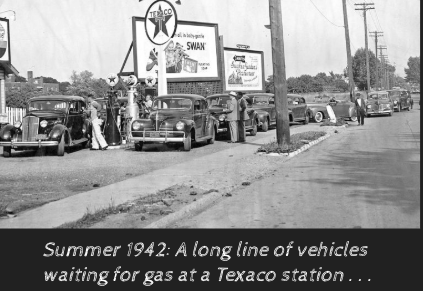
     A full nine months after Pearl, US cities remained totally unprepared for enemy bomber attacks, with virtually every city struggling to create an effective warning system. So sad were preparations on the Atlantic Coast that U-Boats were able to get several spies/saboteurs into the US on Long Island in September 1942. Those German spies were eventually rounded up by the FBI; their goal had been to among other things sow panic by poisoning NYC’s water supply. Suddenly, in a precursor to the 2nd Red Scare after the war, Americans saw spies and saboteurs everywhere. The FBI rounded up about 200 German aliens suspected of being up to no good and sent them to Ellis Island. 
     By the Fall of 1942, a fair metaphor for the level of attention and involvement of the US public towards the war was that the US was “ankle deep” so far. More and more citizens came to the conclusion that as close to full mobilization as possible for war was needed for the nation. The U-Boat attacks alone in the North Atlantic meant that the US would not reach the number of merchant ships in the fleet before Pearl until mid-1943 at the earliest. In effect, most Americans believed that the level of war production was at a very high level, but the truth was that, while improved from Spring 1942, production was just crawling along by August 1942. 
     Ford’s defense production actually declined during the Summer of 1942. The WPB knew that factories struggled to produce more since raw materials were still scarce (e.g. hoarding); overall production fell 14% in August 1942. The main problem was the lack of discipline on the part of military authorities and industry leaders to turn the necessary corner. It wasn’t until the Fall of 1942 that the Navy and the War Department decided on which type of weapons, and how many, US forces most urgently needed. Before that point, procurement officers ordered a smorgasbord of everything, and defense industries continued to hoard raw materials and skilled workers.

Picture
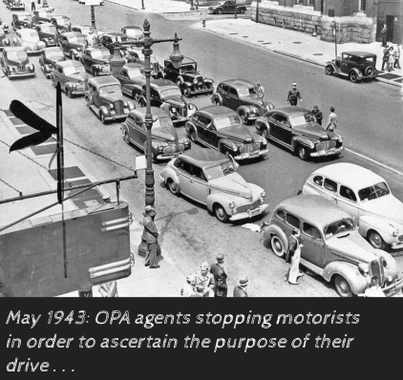
     The most pressing challenge was the manufacturing of steel. The WPB lost track of 20 million tons of steel, most if that amount was hidden away in various defense plants. Steel mills couldn’t meet military demands due to the shortage of scrap steel. The government pleaded with Americans to come up with metal in a scrap metal drive, with the goal of 17 million tons by the end of 1942. Confusion and ineptitude were beyond-common with government collection efforts, so local authorities took control of the scrap metal drive. Even so, by October 1942, the government asked Americans to donate old door keys. 
     Severe shortages in skilled manpower in defense plants plagued war production; Congress refused to fund what it considered to be yet another unnecessary additional bureaucracy from FDR to try and solve the labor shortage. Deteriorating housing conditions and/or shortages tightened the labor supply further. Detroit needed 170k additional workers by mid-1942, but there was no place to house them. 
     The largest drain on the pool of skilled workers remained the draft, since the Draft Board, which had exhausted Classification 1-A, moved on to lower classifications, taking men with physical problems, such as being blind in an eye or missing a finger(s). The War Department announced that by the end of 1943, the military would need 7.5 million men, which meant that potentially a few million war workers would be drafted, which would mean that men with irreplaceable skills would be drafted. FDR was advised by some of his top men, such as Baruch and the Truman Committee, that the President needed to protect war industries by at least immediately abolishing volunteer enlistments. Overtime was rising as well as absenteeism, which reached 9% by November 1942, and as high as 18% in some shipyards. Overwork was part of the reason for the absenteeism, but so was looking for other jobs, nursing hangovers, or hunting for gas; Mondays and the day after payday were the most “absent” days.    
Picture
     During November 1942, the Truman Committee reported that absenteeism had reduced war production by as much as 10% is some defense plants (it was 25% at the Willow Run bomber plant outside of Detroit). By the Fall of 1942, more occupations had opened to women than ever before, replacing men that were off to war. Nearly 13 million women worked outside the home by the Fall of 1942, which war about 25% of the women of working age, and about 25% of all workers. That number/percentage had steadily increased since Pearl, but not spectacularly so. At the start of 1942, 500k women were employed at defense plants, which was about 10% of the war production labor force. As more women were hired for unskilled labor, defense plants absolutely refused to consider women for highly skilled vacancies.
     The aircraft defense industry led the way in hiring women, since many of the jobs didn’t require a great deal of physical labor, and that many male workers had been drafted. Aircraft production supervisors noted that women workers required much less supervision, had fewer accidents, damaged fewer tools, and increased overall productivity . . . and they were less likely to be absent or quit compared to male workers. By the Summer of 1942, an airplane plant in Baltimore employed 5000 women workers and planned to hire thousands more. 
     On the other end of the spectrum, former automobile plants resisted hiring women as long as possible until  no other real options existed. By February 1942, only 5000 women were employed in defense plants in the Detroit area, with Ford hiring less than 100. Shipyards were even less welcoming towards hiring women, with less than 1% of their workforce women by the Summer of 1942. The real concern for labor unions in shipyards was that women were a cheap replacement for unskilled jobs.

Picture
     The war production worker crisis worsened in August/September 1942, which led to resistance weakening for hiring women under the age or 25. By late-September 1942, 2.5 million women were employed in war related jobs, which was about 20% of the total war production workforce. The government stated that by the end of 1943, 3.5 million more women would need to be hired. During a Fireside Chat on 12 October 1942, FDR told defense plants that they had no choice but to hire millions of women, and also African-Americans, and to get past their negative opinions on both groups. 
     The government predicted that five million women would need to be hired in the next 12 months. The vast majority of women hired were for tedious unskilled jobs, and by November 1942 turnover for women workers became a concern. Government recruiting campaigns and higher wages helped, but women started skipping work like men, with married women doing so at a higher rate since in essence that had to do 2+ jobs. 
     Many rural towns delayed the start of school, thinking it patriotic, and as a result the rate of juvenile delinquency skyrocketed. The FBI stated that arrests of kids under the age of 21 increased by 17% during 1942, even though the overall population of that age group had dropped due to the draft. Enrollment in colleges and universities had dropped by 14% by the Fall of 1942, and America waited for the inevitable, when the government would start to draft 18 and 19 year olds, which was something the military had wanted to do since Pearl. Gallup conducted a poll in June 1942, and 52% were against drafting teens, with 42% in support. During that summer, Congress simply refused to deal with the military requests to lower the draft age, as did FDR, undoubtedly since the Congressional Elections of 1942 were on the horizon.  
      By Columbus Day 1942, FDR publicly admitted that it would be necessary to lower the draft age. Soon afterwards the House voted 345 - 16 to do so, but the bill became stalled in the Senate, which simply didn’t want to act before the midterms. The Senate delayed long enough where when it passed its version, the Conference Committee bill would be delayed until after the Congressional Elections of 1942.
Picture
     The shortage of cargo shipping space and the unrelenting attacks on Brazilian cargo ships off the coast of South America further decreased the supply of coffee in the US. On 21 August 1942, the WPB reduced the civilian consumption of coffee further to 65% of prewar consumption (8 cups/week). Predictably, Americans once again engaged in panic-buying to hoard as much coffee as possible; consumers didn’t know that long term storage of roasted and/or ground coffee would make the beverage at least somewhat unpalatable. Nothing grocery stores did to slow down the pace of buying coffee worked. On 26 October 1942, the government announced that coffee rationing would begin on 28 November 1942, which meant that an American over the age of 15 would only be able to buy one pound of coffee every five weeks (1 cup of coffee a day). 
     On the heels of coffee rationing came meat rationing. The per capita consumption of red meat in America rose 10% in 1941 to 3 pounds per week. The rise in red meat consumption was largely due to the increased number of war workers. Millions of Americans were able to afford red meat since the grip of the Great Depression had been tremendously lessened. Although farmer/ranchers produced unprecedented amounts of red meat, increasing domestic demand combined with the demand from the military led to a sharp shortage.

Picture
     As with sugar, gas, and coffee, despite reminders, encouragement, and even triple-dog-dares by the government (e.g. “Meatless Tuesdays”), the buying drain on red meat continued. By August 1942, the government announced that it would start meat rationing in early-1943. The government asked that the 114m “Carnivorous Adults” in the nation limit themselves to 2.5 pounds or red meat per week. Chicken and fish were not restricted, but there wasn’t enough poultry to make up the difference, in large part because the government had purchased nearly all the (below-normal level) salmon, tuna, and sardine catches. 
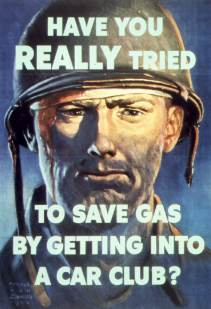
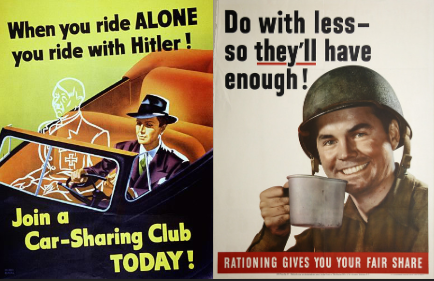
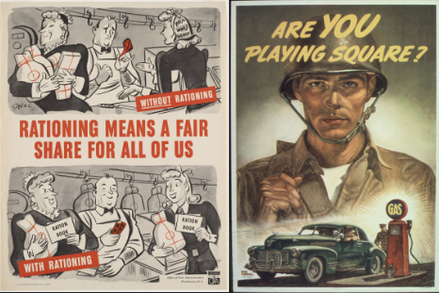
     Americans were stunned that there could be anything resembling a food shortage in the nation, and once again, the government had to go down the road of coercion in order to change behavior. Before long, consumers had to find substitutes for red meat (e.g. liver), and many restaurants in effect started to serve child portions for adults. On 2 December 1942, the government announced that meat rationing would go into effect in early-January 1943. The government reminded Americans that nationwide gas rationing would begin on 1 December 1942; those west of the Appalachian Mountains continued to ignore government pleas to drive less to conserve rubber and gas, with highly-paid war workers simply not caring about minimizing their driving. 
     The government gave the power to local authorities to take gas ration books from speeders. All car drivers had to have their tires inspected every four month to check for wear-and-tear; a motorist could only legally drive if he had an approved tire-check certificate. Car owners were limited to only one spare tire per vehicle. Nationwide opposition to gas rationing and tire restrictions grew as the 1 December 1942 deadline drew near, with some critics comparing FDR to Hitler in terms of crushing liberties. Leading figures in the FDR administration labeled the scofflaw behavior as “ignorant” or “intentionally traitorous”. Many war workers threatened to walk away from their jobs if nationwide gas rationing was enacted and enforced.

Picture
     The rationing of heating oil was next, since that petroleum product was the #1 way to heat homes in 1942, and the supply of heating oil was low for the same reasons gasoline supplies were low. On 1 August 1942, FDR told Americans to be prepared for heating oil shortages in the upcoming winter. Fewer than 1% of the US population changed from heating oil to coal burners, even though coal was plentiful. Half of the home furnaces in America had originally burned coal, but had been converted to heating oil. Millions of Americans, especially in the East, simply dismissed the announced heating oil shortage as yet another myth fabricated by DC. Millions just watched/waited for their neighbors to convert their furnaces to coal so they didn’t have to. 
     On 15 September 1942, the government announced that the rationing of heating oil would begin on 1 October 1942 in 30 states, including most of the East Coast and much of the Midwest, as far west as Nebraska and the Dakotas. Government officials hoped to be able to supply 75% of normal amounts of heating oil so Americans could keep their thermostats at 65 degrees; transportation problems with heating oil led the government to lower the target to 67%. And (of course) the government formula for allocating heating oil left Americans frustrated and confused, in that filling out government forms for heating oil was like completing a complicated tax return. 
     By late-September 1942, wood burning stoves had disappeared from US stores, and firewood suppliers were almost out, and there wasn’t enough manpower to cut down enough trees or to transport firewood. Coupon books for heating oil were not even scheduled to be issued by the government until late-November 1942, and further transportation problems with heating oil led the government to again lower the percentage allotted. Government officials told Americans that the nation had yet barely begun to feel the effects of the war at home. H.L. Mencken stated that at last the nation was in the process of figuring out that the war might actually affect them, and for quite some time.

                                 Addendum: The Rest of 1942 . . .  

0 Comments

The Year in the US After Pearl Harbor, Part Six

5/14/2020

0 Comments

 
                         Source: William K. Klingaman. The Darkest Year -
                           The American Home Front, 1941 - 1942 (2019)
Picture
     FDR wanted a name for the war, and he was not happy with World War II or the Second World War, so he asked journalists to invite readers to submit suggestions. The Washington Post stated that FDR had reduced the war to the equivalent to naming a brand of soap or breakfast cereal. Submissions poured in, with the vast majority ridiculous, such as “The Righteous War”. FDR, very dissatisfied with the submissions, suggested “The Survival War”, but that didn’t resonate at all with the public. 
  Prominent Americans, such as General George C. Marshall and Wendell Willkie, opined that it was time that America took to the offensive instead of trying to defend positions. On 18 April 1942, the Doolittle Raid occurred; 72 of the 80 crew members (on 16 B-25’s, the “Mitchell”) survived, and made their way back to the US. Americans first learned of the Doolittle Raid from Japanese media sources that were carried by US newspapers. For almost a month, the government refused to confirm that the Doolittle Raid had even taken place. Even inaccurate accounts of the Doolittle Raid raised national morale, but soon enough the reality that the raid had only been a pinprick began to take hold. The true significance of the Doolittle Raid was not apparent to the US: Tokyo overreacted to the raid, and that overreaction led to the decision to send a vast force to Midway, which proved to be a major turning point in the Pacific in early-June 1942. 
     On 6 May 1942 came the Fall of Corregidor, and the end of the war stretched further into the future. May 1942 also featured the Battle of the Coral Sea, where Japan failed to gain a foothold on moving towards Australia. Neither nation’s navies saw each other, rather it was a massive battle with aircraft carriers and planes. When the battle was over on 9 May 1942, the US had lost more ships, but Japan had lost more men and aircraft; more importantly, Japan had suffered its first serious setback in the war.

Picture
  The initial military communiques far exaggerated Japan’s losses in the Battle of the Coral Sea, and some civilians actually believed that the war was over. Newsweek predicted that the war would end before 1942 was over, and Time also stated that the war would soon end. But most Americans realized that the war would not be over soon, which caused continued apathy and complacency, since there wasn’t any immediate direct danger, and that someone else would do the fighting for them. Supreme Court Associate Justice William O. Douglas believed that citizens viewed the war as a 200 meter sprint instead of the marathon in really was. Douglas believed the expectation of a sprint was due to the belief that US war production would eventually overwhelm the enemies, basically by default. 
     For seven months after Pearl Harbor, FDR and his administration hid arms production statistics from the public, arguing that if it did so it would only aid the Axis. The government used descriptive words instead to convince the public that war production was progressing as scheduled (e.g. “vast”, “huge”, “enormous”, “tremendous”, “magnificent”, and “immense”). Journalists were taken on tours of defense plants, but were only shows areas where the factory was doing very well. On April 1942, the government announced that it was “oer the hump” on war production. VP Wallace stated that by late-Summer 1942 the US would be out-producing every other belligerent nation, and in May 1942, FDR declared that US shipyards were performing at a “near-miracle” level.

Picture
   Finally, later in May 1942, FDR provided specific war production information for the month: 4000 planes, 1500+ tanks, 2000 artillery, and 50k machine guns. By August 1942, the US was out-producing Britain, and the auto industry had converted more rapidly to war production than the government predicted, while also increasing efficiency/productivity. That being said, the US failed to properly mobilize after Pearl, which cost billions of dollars and lost time, adding at least months to the war and far more KIA/WIA. While it was true that civilian consumption hampered government efforts at mobilization, another significant hurdle was that scarce materials were hoarded by competing industries in order to improve their chances a meeting government quotas and to rake in lucrative government subsidies. US industries had mountains of stockpiles which were useless since the WPB didn’t know about them (e.g. steel plates). Shipyards reported rising absenteeism, reaching as high as 10% - 15%, and sheer loafing on the job was a major problem as well, since labor unions encouraged slow-downs. 
     Ernie Pyle noted that ships could have been built much faster, but shipyards weren’t able to operate at full capacity. Although large strikes didn’t occur in 1942, smaller strikes were a primary reason for the 225k lost man-days during the year. A Gallup poll showed that 86% of Americans wanted strikes in defense plants to become illegal. A soldier was not able to lay down his rifle and simply say “not today”, but a worker in a defense plant sure could, and did for many days which added up to weeks, thumbing his nose at the war in the name of organized labor. A majority of Americans favored drafting defense workers that didn’t show up for work.

Picture
     By the Summer of 1942, most war laborers were working 40 - 50 hours/week, and the debate became whether or not to honor overtime past 40 hours a week. FDR, not wanting to alienate one of his stout political bases, stated that workers deserved overtime pay. Some wanted the 40 hour work week to be abolished during the war, fearful that labor unions would insist on higher regular hourly wages. A majority of Americans favored a 40 hour work week with time-and-a-half for overtime hours, as did most of Congress. The agricultural sector complained that labor unions were being babied, since farmers and field workers didn’t have the equivalent overtime benefits. 
    Management seldom made a fuss about paying overtime, using overtime as an incentive to increase production. War plants played dirty pool, in that factories offered sweeter packages for skilled workers in competing plants to lure them away (“Labor Piracy”). The government used propaganda to try and get laborers to work harder and more efficiently/longer, using such strategies as motivational posters in the plant. Haste in defense plants invited accidents. In the first six months of 1942, 4300 workers were killed in industrial accidents which was a 13% increase from the first half of 1941, leading to more lost man-hours/days.
     Housing for war workers continued to be a problem. In one month during 1942, Ford hired 2900 workers, but 3100 left that month out of sheer frustration at the lack of housing or substandard housing. Months after Pearl, no one had figured out how to transport workers from Detroit to Ford’s Willow Run defense plant 25 miles outside the city. In the midst of all this, Americans were betting more on sports than ever before, with horse racing the clear #1; racetrack after racetrack broke records in terms of money bet, and all of that was in the face of gasoline rationing. Coastal resorts on the Atlantic (e.g. Atlantic City in NJ), were feeling the pain of noticeably fewer tourists.

Picture
    The Battle of Midway occurred during the first week of June 1942. Japan lost four aircraft carriers, a heavy cruiser, and 3057 men, hundreds of them pilots. Japan only had two aircraft carriers remaining in their fleet, and the nation didn’t have the industrial capacity to replace them. The US Pacific Fleet lost the aircraft carrier USS Yorktown, but still had three aircraft carriers in service, and the US had the industrial capacity to produce dozens of much larger/improved aircraft carriers, the Essex Class (The USS Essex sailed into Pearl Harbor in the late-Spring of 1943). 
     News of the victory at Midway was again blunted by Navy censors, and Americans had to wait weeks for the barest of details of what would be a major turning point in the War in the Pacific. Americans instead heard far more about Japan’s attacks on the Aleutian Islands and parts of the Alaskan coast, which occurred at the same time as the attack on Midway. Japan’s goal was to make sure the US couldn’t have island bases from which to try and bomb Japan. The presence of Japanese troops in Alaska led to an overreaction by the US public; Midway was the crucial battle, but the West Coast again freaked out since Japanese troops were on the Aleutians. The Navy made the situation worse by (of course) not providing accurate detailed information concerning what was really going on in the Aleutians. The Navy claimed that Japan executed a raid on the Aleutians in order to save face from the Doolittle Raid. 
     Throughout the Spring/Summer of 1942, the spectre of inflation haunted FDR and his administration, who knew that high inflation could very well interfere with the war effort. Since September 1939, the cost of living had increased 15%. The main reason was the gap between the increasing purchasing power and the shrinking supply of consumer goods; that gap reached $17B by the Summer of 1942.


Picture
     During the Spring of 1942, SecTreas Morgenthau asked Congress for a tax increase which would add up to $7.68B, which would not only help pay for the war, but to also help curb inflation. When Congress proved reluctant to act, FDR doubled-down by asking Congress to impose a 100% levy on all individual incomes over $25k/yr, and on married incomes over $50k/yr. That “supertax” would have only affected about 11,000 Americans and only produced about $200m in revenue, and its effect on curbing inflation would have been laughably negligible. FDR stated that the overall goal of the tax was to curb profiteering, and that it was a morale-building policy. The business sector roundly and loudly condemned the President’s proposal. 
     The main part of FDR’s anti-inflation program was the General Maximum Price Regulation (“General Max”), which sought to freeze prices on about 200 ke consumer goods such as clothing, shoes, fuel, and tobacco. But FDR’s refusal to also freeze wages doomed General Max from the start. Congress did its part ot sabotage General Max by failing/refusing to effectively control food prices. Between September 1939 and the Summer of 1942, agricultural prices rose 50%, fueled by Lend-Lease, supplying the US military, and the working class American’s desire for an improved (read more expensive) diet. Food costs represented about 20% of the average American household’s budget. Congress ignored FDR’s “supertax” proposal and did its best to drag its feet on the tax increase proposal from SecTreas Morgenthau, with special interest groups entering the fray. James Reston commented that Congress was far too focused on settling old scores from the New Deal than doing the right things for the war.


Picture
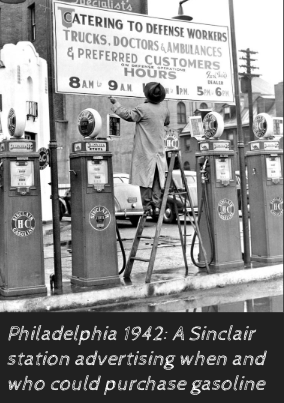
    During July 1942, the OPA announced that it had discovered widespread fraud in the gas rationing program among motorists and service stations, using among other strategies sting operations. So many service stations provided service with a wink-and-a-nod, never demanding gas ration cards. As a result, gasoline supplies drained away even faster, and service stations up and down the Atlantic Coast ran out of gas to sell. Motorists began to stalk gasoline delivery trucks and follow them to their destination. War workers took days off in order to hunt for gas, and then defense plants put gas stations near their factories, which exacerbated the gas shortage. 
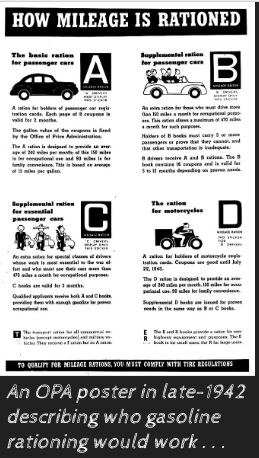
     On 22 July 1942, the permanent gas rationing program went into effect. The OPA tried to plug the worst holes by issuing coupon books instead of ration cards. An “A” coupon book had eight coupons, each good for four gallons of gas; the entire “A” coupon book had to be used within 60 days, and there was no carry-over. To get additional coupons during that period, a person had to fill out a detailed four page form. Extra gas was only granted to workers that drove more than 150 miles each month to work, and for those that carpooled with at least four other workers; this time, two-thirds of car owners in the East received “A” gas coupon books, 18% “B” coupon books, and 14% “C” coupon books (e.g. doctors and members of Congress).
     Each car had to display a color-coded sticker for their rationing status. The OPA hoped that constant public scrutiny would hold people in line this time. Service stations were required to collect a coupon(s) for each sale of gas, and then to redeem those coupons for gas deliveries. There were no guarantees made by the government that if a motorist presented a coupon that there would be gas waiting for them, and the government also reserved the right to further restrict gas rationing. By early-August 1942, motorists in the East had reduced their driving to 50% - 60% less than before Pearl. However, in the rest of the nation, mileage was only down 15% - 20%, in that gas was still plentiful west of the Appalachian Mountains, especially west of the Mississippi River . . . but all that driving spelled huge trouble for tires.

          Addendum: The Rubber Crisis Worsens and Guadalcanal . . .  


0 Comments

The Year in the US After Pearl Harbor, Part Five

5/10/2020

0 Comments

 
                         Source: William K. Klingaman. The Darkest Year -
                           The American Home Front, 1941 - 1942 (2019)
Picture
  People and goods were disappearing across the nation, and more and more new faces became part of a new routine, e.g. bank tellers and grocery clerks; those small breaks in virtually everyone’s routine was a reminder of the war. In some quarters, replacements could not be found (e.g. beauticians), and the shortage of domestic workers meant that their employers had to pay them a higher wage in 1942. For well-off Americans that were used to at least one servant, it was an adjustment on multiple fronts. 
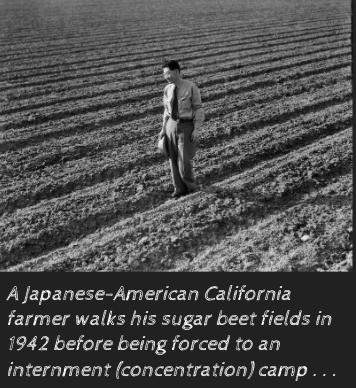
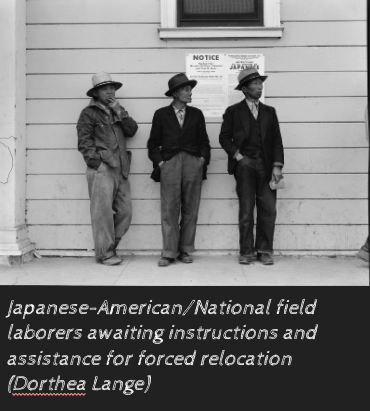
    For farmers, the shortage of field laborers was potentially crippling; the government forecast a decrease in the rural workforce of 10% for 1942. At the same time, FDR and his administration expected the agricultural sector to increase production by at least 15% for the war. Making the worker shortage in the agricultural sector worse on the West Coast was the internment of Japanese-Americans/Nationals. In that era in the agricultural sector, hired hands represented about 25% of the work completed, with the balance of work completed by the farmers themselves plus their families. In early-1942, the draft had already started to curtail the number of boys/men in the fields. The Department of Agriculture predicted that the worst farm labor shortage in US History would occur during the Summer of 1942. 
     By that summer, women comprised 15% of the rural agricultural labor force, which was ten times greater than 1941. Under the direction of the War Production Board, by March/April 1942, there were no more new appliances being manufactured, such as radios, refrigerators, mixers, as well as lawn mowers, TV antennae, sewing machines, and a plethora of plastic goods.

Picture
     The WPB also issued a veiled “or else” threat to major industries, in that each area was expected to convert and maximize production. The New Yorker implored the government to never announce an impending shortage, but the government kept doing exactly that, which in every case led to panic-buying (an exception was the shortage of razor blades; unshaven faces became a sign of patriotism). On 3 March 1942, the WPB issued a directive that changed the designs of men’s suits in order to save wool/cotton, such as no more frills on pants (e.g. pleats). Before the war, few women outside the South or on college campuses wore slacks in public, but by the Spring of 1942, women of all sizes/ages started to do so. 
     Surveys showed that Americans spent 30 minutes more each day reading newspapers, and the news from the war remained beyond-grim. For example, in February/March 1942, the combined Allied fleet of the US, Britain, and the Netherlands were decimated by Japan at Java, which was the most serious US naval defeat since Pearl Harbor. The government censors left Americans wondering about what other awful shoes were about to be dropped on them. Early on in the war, heavy-handed propaganda did not play well with the US public, but the government nevertheless decided on using ballyhoo, which proved to be a failed strategy by the FDR administration. Artless/Useless patriotic slogans emerged, such as “Let’s Go to Tokyo”, and “We’re in it, let’s win it”. By the Spring of 1942, a significant segment of Americans remained complacent and disconnected from the war effort.


Picture
     FDR and his administration acted as if the war was their own private affair, which risked alienating the public further, which led to more complacency. Critics pounced on FDR and his administration, saying that the government needed to wake up, not the citizenry. The declining sales of war bonds illustrated the public’s attitude with the war: $1.075B in January 1942, followed by $711m in February 1942, and then $565m in March 1942. Americans weren’t investing in stocks either, and the overall price value of stocks plummeted to the lows last reached in April 1933. 
     Currency had been flying out of bank accounts wince the war in Europe began, and increased rapidly after Pearl. The Federal Reserve concluded that the main reason was far too many Americans were hoarding cash; rentals of safe-deposit boxes soared. The New York Branch of the Federal Reserve stated that hoarded dollar were “slacker dollars”, which amounted to sabotage. But the withdrawals from banks continued, and by mid-August 1942, Amerians were hoarding between $500m and $1B in cash. 
     The Office of Price Administration (OPA) had delayed the rationing of sugar for several months so they could have a better idea of the amount allotted for consumers, retail, and industry. The OPA also needed the time to print the ration books needed, which would have formed a tower 15 miles high. The rationed amount per person came to eight ounces a week, which equaled 42 ordinary lumps of sugar. Restaurants received 50% of what they usually used, and bakers et al received 70%. 
     During the first week of May 1942, Americans registered for sugar ration books at their local elementary schools. Those that admitted they had six pounds or more of sugar at home did not receive a ration book until their “household hoard” dropped below five pounds. Those dispensing the sugar ration books were astounded that no one had any sugar at all at home. The supply of tea and coffee was dwindling like sugar; victories by Japan cut tea imports by one-third, which led to panic-buying of tea. The nation’s tea reserves were down to three months, which led the OPA to slash deliveries of tea to merchants.

Picture
     Americans drank ten times more coffee than tea, and half the US supply of coffee was from Brazil, with another 25% from Colombia. The Army’s increasing demand for coffee, 5 large mugs for each soldier each day,started to crowd out the consumer. U-Boat sinkings of Brazilian freighters carrying coffee in the Atlantic made supplies even tighter. Brazil decided to keep as many of their freighters as possible in home ports, and US cargo ships couldn’t pick up the slack since they were used elsewhere for the war. The War Production Board (WPB) ordered 25% less shipments of wholesale coffee, which soon led to a limit of one pound of coffee per customer per visit at grocery stores. 
     While U-Boats sank cargo ships carrying coffee, it was their sinking of oil tankers that hurt the most; petroleum shipments to the Atlantic Seaboard decreased 45%. In the midst of this shortage, Americans were driving MORE often in 1942; the biggest reason were workers driving to work in a defense factory, but an additional reason were tourists that were bound-and-determined to have “Super Happy Fun Time”.  Some states started to lower speed limits on their highways in an attempt to conserve oil as well as wear and tear on tires. 
     Some government officials lived in a fantasy land, such as Vice-President Henry Wallace, who pronounced that synthetic rubber would save the day. The reality was that the development of synthetic rubber in the US was going nowhere, in large part due to government bureaucratic bungling and red tape. During March 1942, Congress was informed that tires from civilian cars may need to be confiscated to be used in vehicles deemed essential for the war. 
     On 14 March 1942, Secretary of the Interior Harold Ickes announced that gasoline shipments to 17 Eastern states (and DC, WA, and OR) would be reduced by 20%, starting on 19 March 1942. It was estimated that 87% of the cars used by defense workers would be out of use by the end of 1942 due to worn tires. In every city, public transportation was being stressed beyond its limits.

Picture
      By mid-February 1942, the sales of bicycles had doubled, and by the second week of March 1942, rare was the store that had a bicycle to sell. On 2 April 1942, the WPB issued an immediate “freeze” on the sale, shipment, and delivery of new bicycles, since the vast majority of people that had purchased bicycles were not using them. The government was trying to find a way for defense workers that wanted a bicycle (and would use it) to be able to get their hands on one. 
    On 9 April 1942, US resistance on Bataan collapsed, with the initial number of US troops that surrendered in the range of around 9000 (the eventual total would exceed 70k, the largest surrender of US troops in American History), with thousands of US troops escaping to Corregidor. News of the Fall of Bataan was in essence the reality check that was needed, in that Americans refused to believe what Pearl Harbor, Wake Island, and Guam told them about the war; Bataan carried far more emotional impact than even Pearl. 
     By April 1942, 10% of US men between 21 and 35 years old were in the military, with the Army inducting 300k a month; experts predicted that the percentage would reach 17%. By February 1942, nine million had registered for the draft, including Charles Lindbergh. The Army wanted as many 18 - 23 year olds as possible, and widened the pool by easing the physical standards (e.g. vision). War production suffered, in that the Army kept taking workers from defense factories, which meant the Army was taking highly-skilled workers and turning them into infantry. 
     Soon enough, it became obvious that 10 to 13 million additional workers would need to be added during the next twelve months, while at the same time the Army would need to draft between two and three million. AS of the Spring of 1942, the government and military had no clear guidelines for determining whether a worker should remain on the job or be drafted. On 18 April 1942, FDR created the War Manpower Commission (WMC) in order to try and sort out the competing needs between the military and industry.

Picture
     FDR gave Major League Baseball the green light to continue play during the war, and two-thirds of Americans agreed with the President. Owners, on the other hand, were apprehensive about attendance and profits; in the spirit of sacrificing for the war effort, Major League Baseball owners slashed player payrolls. The owner of the Detroit Tigers slashed all player salaries even though his factory was making millions manufacturing tanks. 
      Joe DiMaggio held out for $42.5k, and increase over his 1941 salary of $37.5k. DiMaggio received his desired salary, but in the process he went from a very popular player to being among the most despised. One of the factors for DiMaggio’s decreased popularity was his Italian heritage, which by the Summer of 1942 was held against the Yankee Clipper. The “Star Spangled Banner” was heard at ballparks far more frequently, and more night games were scheduled in order to increase attendance; most owners scoffed at that development, believing that baseball was a “Day Game”. 
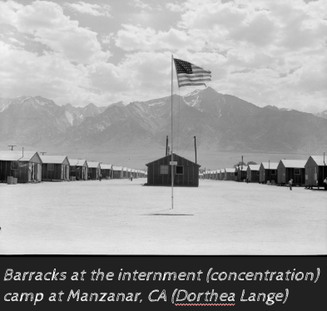
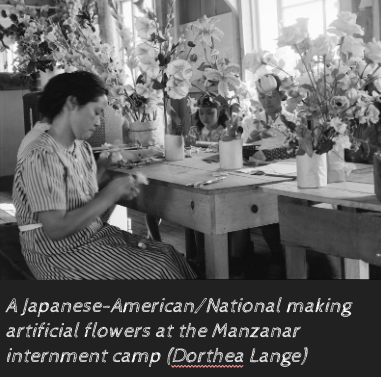
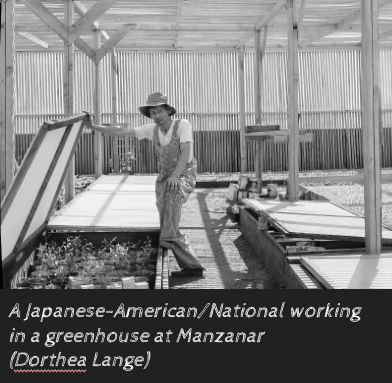
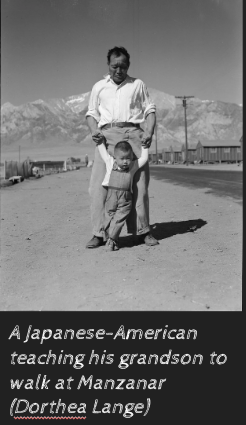
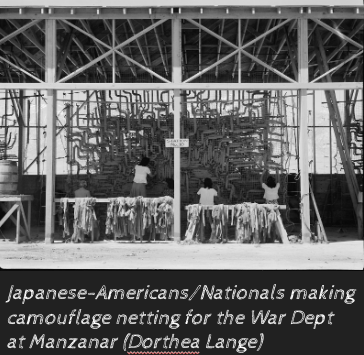
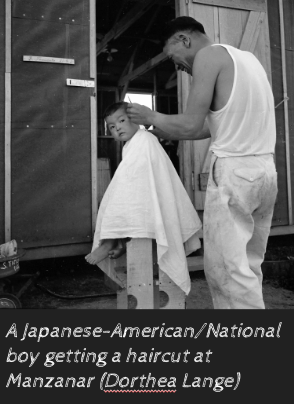
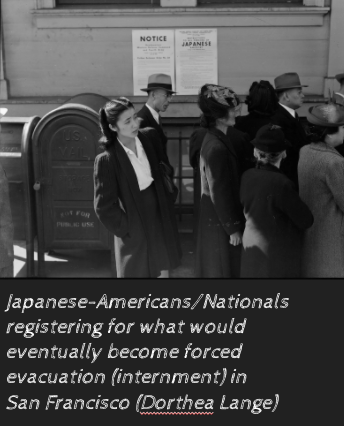
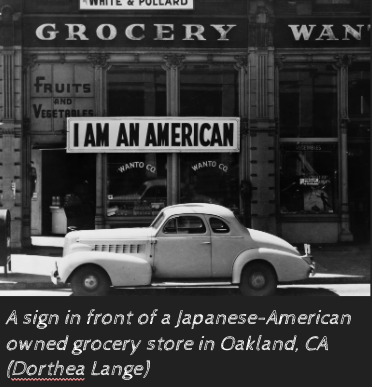
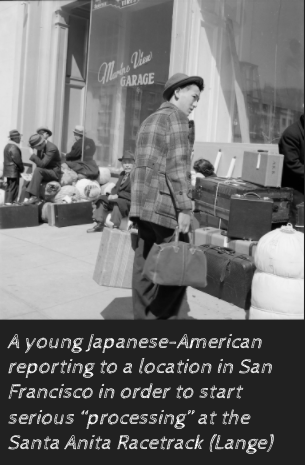
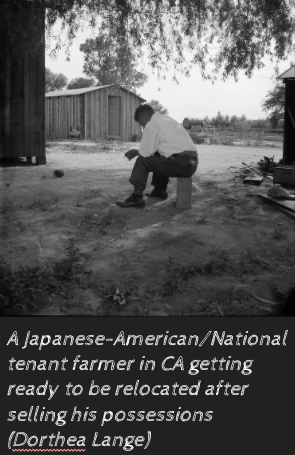
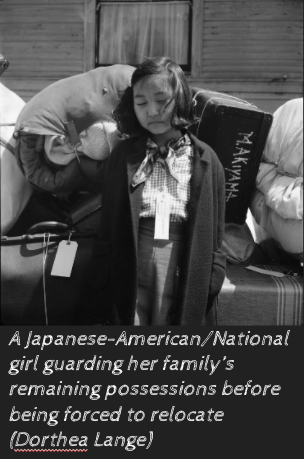
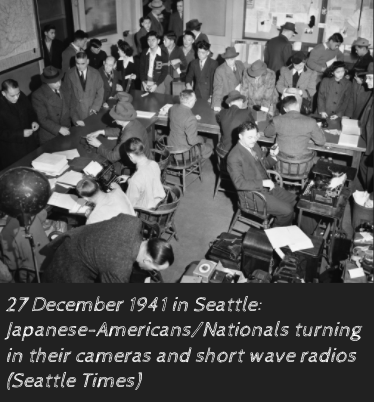
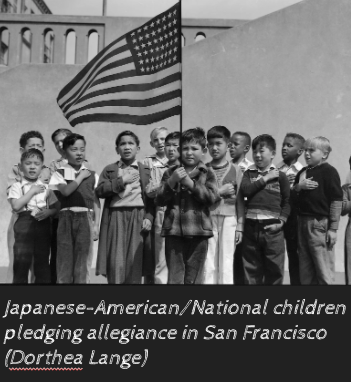
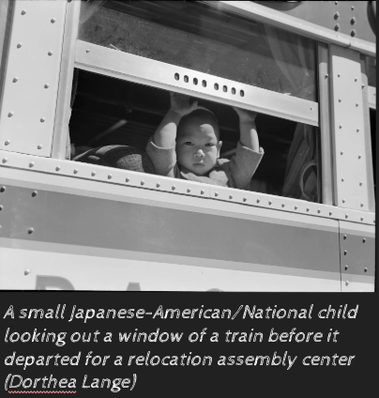
     In the midst of all the delays, complacency, bureaucratic bungling, and lack of action, it only took three months for the government to remove 100,000+ Japanese-Americans/Nationals from their homes on the West Coast and start to relocate them to concentration camps. Another creation from FDR, the War Relocation Authority, did the work the military either could not do or didn’t want to do; 3750 Japanese-Americans/Nationals were each day were taken from their homes and taken to “Assembly Centers” (e.g. racetracks), where they waited for the WRA to send them to a specific location. The WRA failed to get CA, OR, and WA to cooperate and resettle the Japanese-Americans/Nationals within their predominantly white areas, which forced the WRA to build what in essence became concentration camps.The Army finished the first stage of forced evacuations in early-June 1942, and then shifted its focus to “Military Area Number Two”, which was the rest of CA.

Picture
      One of the casualties of the war on the domestic front was the disastrous Broadway season of 1941-42. Of the 66 plays, only 6 were deemed hits by Variety magazine, and none of those were released after Pearl. It was obvious to the critics and patrons that the war had a paralyzing effect on playwrights, who didn’t know how to factor in the war in their plays. One of the main problems was that the efforts to feature the war focused on the big picture and not on how the war was affecting people. Vaudeville however showed no signs of slowing down, since more-and-more Americans wanted to lose themselves in laughter for a little while. 
     Still, by the Spring/Summer of 1942, far too many Americans didn’t close their shades and follow blackout protocols, which meant that cargo ships were sunk at an alarming rate along the Atlantic Coast. The Navy, meanwhile, kept up their policy of heavily censoring the real casualty rates from the U-Boat attacks. Despite the horrific casualties, local authorities were slow to enforce the blackout/dimout protocols, and civilians were even more reluctant to obey those directives. A sailor on a merchant ship that was passing a New Jersey beach resort thought the lights looked like Coney Island, since the beach was all lit up for the tourists’ enjoyment. In New York City, Times Square glowed in the distance like a gigantic furnace. 
     On 30 April 1942, Secretary of War Henry Stimson decided that the Army would take on the responsibility for blackouts/dimouts, and new and tougher regulations were enacted all along the Atlantic Coast to the Canadian border. Civilians still resisted, and three weeks later frustrated Army officials introduced tougher regulations. In the Gulf of Mexico, German  U-Boats had sunk 15 ships in May 1942 alone, and U-Boats had come as close as two miles from the Mouth of the Mississippi River.

               Addendum: The Beginning of Gasoline Rationing . . . 

0 Comments

The Year in the US After Pearl Harbor, Part Four

5/3/2020

0 Comments

 
                       Source: William K. Klingaman. The Darkest Year -
                        The American Home Front, 1941 - 1942 (2019)
Picture
     Edward R. Murrow had been traveling across the US during January 1942, and he concluded that most Americans viewed the war as a mere spectacle and an inconvenience. Morrow’s perspective was that far too many Americans were ready to accept suppression and even slavery. Murrow was not alone in his views, with charges coming from all quarters that Americans were complacent in the face of overseas disasters. 
    Capitol Hill tried to get their constituents to realize that they had surrounded themselves with a false sense of security. Some members of Congress simply chalked up the lack of urgency to simple smugness. After touring defense plants on the West Coast and in his native Texas, Congressman Lyndon Johnson concluded that most Americans simply didn’t know what the war was about, which led to the general level of unconcern. 
     Perhaps the greatest reason for complacency was the continued government effort to suppress what was really going on with the war, especially in the Pacific, in terms of the staggering successes of the Axis Powers and the corresponding defeats of the US and the Allies. The government policy of censorship, with the tone set from FDR himself, was idiotic and harmful. FDR argued that Americans were getting more realistic about the war as every day passed. James Reston stated that Anglo-Saxons would not make revolutionary sacrifices that were necessary until they truly understood that the situation was desperate. How frustrated Reston must have been when he saw that the media still touted the smallest development in the war as a huge success in misguided attempts to boost the nation’s morale.

Picture
      In the midst of the sugar shortage, the media engaged in far too much sugar-coating which only fueled the overconfidence of most Americans. There was a major misconception that one American soldier could whip ten Japanese soldiers or five German soldiers; such was the sense of national/racial superiority which led to the lethargy. More sugar-coating occurred with the media, which grossly overstated and exaggerated the level of wartime production in the US, all of which led to a national assumption of victory. The truth was that the US hadn’t had to really engage in a serious war against a foreign enemy where its actual security was threatened since the Revolutionary War and the War of 1812, so there was zero “living memory” of what was necessary on the domestic front. 
     The War Production Board (WPB) challenged Americans to change their way of thinking in 1942 from what the US was going to do against the enemy to what the US was going to to in 1943. Secretary of the Treasury Henry Morgenthau suggested that a great way to show that shift of thinking would be for Americans to buy a lot more war bonds. By the end of January 1942, Americans had purchased $1B in war bonds and stamps, but that was far too little as far as Morgenthau was concerned, in that only 1 in 7 wage earners had bothered to purchase war bonds. Also, the percentage of war bonds sold in denominations under $100 meant that the working class had not yet been activated into action.
     The working class was the crucial segment of the US population that needed to buy war bonds, in that it was the fastest-growing employment sector during the war. An added benefit to buying war bonds was that it would help keep the level of inflation low. The federal government relentlessly promoted war bonds in early-1942, which in a way clearly showed the high level of complacency of most Americans after the Japanese attack on Pearl Harbor that had occurred only several weeks prior.

Picture
     Instead of war bonds, Americans were buying more stuff in a record-setting buying spree. The panic-buying shifted to clothing after the government released news that the Army would soon get 50% - 75% of the nation’s wool supply. A typical soldier needed 270 pounds of wool a year compared to just 9 pounds for a civilian. Panic-buying spread to other goods, some of which the military did not need, such soap, radios, blankets, rugs, and carpets; department stores were jammed with hoarders. 
     The Federal Reserve noted that during the first week of January 1942, department store sales were 26% above January 1941. By the end of January 1942, the department store sales were up 32%, and the buying wave appeared to have no end. In the District of Columbia sales were up 66% from 1941, in Cleveland they were up 45%, and in Boston, 40%. It was clear to merchants that the buying wave was for “stocking up” (hoarding), not for immediate consumption. That behavior was exactly what FDR and the administration had hoped to discourage and avoid, going so far to say that foolish buying equaled sabotage, and that hoarding equaled treason.
     In New Orleans due to the war, Mardi Gras was canceled for only the third time in 85 years. The population in DC grew far faster than the district could accommodate the new arrivals, the vast majority of whom were going to work in the government sector. Housing was the main problem, and there was no quick solution to the overcrowding and overpricing, which led to more slum conditions as well as an increase in contagious diseases (e.g. tuberculosis and syphilis). The DC systems network of services was severely stressed to almost the breaking point in the weeks following Pearl Harbor.

Picture
     FDR,who had just celebrated his 60th birthday, stated that anyone in DC that was not directly supporting the war effort needed to leave. Predictably the President’s directive was ignored since everyone in DC saw themselves as instrumental and integral, and that everyone else was a parasite that needed to leave. FDR even used the word “parasite” to that effect, which didn’t help matters. Critics stated that FDR should relocate the thousands of New Deal bureaucrats who were doing nothing helpful with the war. 
     Congress got into the act, looking for ways to downsize the federal government, starting with the OCD and its hiring/spending. It appeared that the FDR administration eschewed the kind of sacrifices that it had demanded from Americans. FDR and Eleanor countered that it was the same criticism from the same groups that had opposed the New Deal. Pearl Harbor didn’t really change the attitudes of the Isolationists, or the anti-FDR / anti-New Deal crowd; Pearl only delayed the desire, especially the Republicans, to get back to the attack against FDR and the Democrats. Whatever remained of the post-Pearl Harbor political truce ended in February 1942 when Alf Landon (the Republican Presidential candidate in 1936) on NBC radio used Lincoln’s Birthday to accuse FDR of incompetent and unskillful leadership as a wartime President
     Other prominent Republicans chimed in, arguing that FDR was using the war to consolidate even more power to the Executive branch. By mid-February 1942, the Democrats and Republicans were back to their normal political war against each other, with the Republicans far more concerned about taking back control in the House of Representatives than helping turn the tide of the war.

Picture
     Tourism in California in 1942 dropped by nearly half, due to the rationing but also the never-ending belief that cities along the Pacific Coast in CA would be attacked by Japan. The already-existing divide between whites in CA, OR, and WA concerning Japanese-Americans/Nationals became extreme enmity in the weeks/months after Pearl Harbor. Fueling the fire were completely undocumented/unverified reports from Hawaii that a Japanese 5th Column was mostly responsible for the attack at Pearl. Anti-Japanese feelings were most intense and clustered among the low income / poorly educated whites, but it was spreading to other social class fast. 
     The Attorney General for CA, Earl Warren, was a member of the influential xenophobic fraternity known as the Native Sons of the Golden West. That group viewed Japanese-Americans/Nationals in California as the state’s Achilles’ Heel concerning civil defense efforts. California’s governor was fearful that the hostility of whites towards Japanese-Americans/Nationals would reach a dangerous level, with white Californians believing that they were living among enemies. 
     The War Department persuaded the reluctant Attorney General of the US to order an evacuation of Axis nationals from 88 designated military zones by 24 February 1942, which included such locations as Los Angeles Harbor, the San Francisco Waterfront, and land surrounding nearly every airport, dam, power station, and defense plant. The Attorney General dragged his feet since he possessed accurate information/intelligence that showed that the threat of sabotage the public believed to be present was at a significantly lower level.


Picture
     J. Edgar Hoover blamed the whole fiasco on public hysteria (the FBI had provided the Attorney General the information). The Attorney General believed it would be beyond-unwise to persecute Axis nationals, which would perhaps create the very 5th Column that was believed to be in place. California simply that the US Attorney General didn’t have a clue what was going on in the West Coast in terms of the domestic threat.  Drew Pearson craned up the pressure further saying that the government was not even close to recognizing and acting upon enemy 5th Columns that were a clear-and-present danger, and that far too many in Congress were concerned about civil liberties instead of security. 
     The House Un-American Activities Committee chairman, Martin Dies (D; TX), decried FDR’s “maudlin attitude” towards 5th Columnists. Those that had previously dismissed Dies as a crackpot were not convinced that he knew what he was talking about. Eighty percent of the Nisei population (Japanese-Americans) that were in CA were concentrated on Southern California. Whites in that region of CA were in panic-mode when Earl Warren stated that all of California was wide open for sabotage. Local governments immediately started to demand that the federal government begin to relocate Japanese-Americans/Nationals into internment areas.
     Enrollment in the nation’s colleges and universities sharply declined, in many cases as much as 20% when the next semester started in February 1942, due mostly to military enlistments and the Selective Service. Colleges and universities tried all sorts of tricks to keep students on campus, such as condensing four years into three (and sometimes two) years, and providing summer courses. Professional schools followed suit, trying to keep those pursuing medical degrees to finish. 
     There was an overall sense that academia was an out of touch “Ivory Tower”, and what was really needed were skilled  technical training and research and development. Curriculum changes hit higher learning as well as public schools, which an increased emphasis on science and math, as well as foreign language and history. As course offerings increased, the number of qualified teachers decreased, with a forecast that half of rural American’s teachers would be gone by the end of 1942.


Picture
     In locations were there were large defense plants, and therefore a huge influx of workers, the social welfare agencies were swamped. While no longer called Hoovervilles, shanty communities appeared outside cities with defense plants. H.L. Mencken watched the inflow of new workers that descended into his beloved Baltimore, most of them hillbillies from Appalachia and the Southern Tidewater, calling them “true savages”. 
     On 13 February 1942, an ad hoc collection of members of Congress from the West Coast met, all of them “hot” to relocate Japanese-Americans/Nationals, and they passed a resolution that demanded that FDR relocate all persons of Japanese lineage. The US Attorney General Francis Biddle and Secretary of War Henry Stimson stated that there was no threat by Japanese-Americans/Nationals, which only deepened the suspicions of West Coast whites and increased their fears. Earl Warren actually argued that the very lack of sabotage was in and of itself an ominous sign, and that CA was being lulled into a false sense of security.  After visiting the West Coast in early-February 1942, Walter Lippmann agreed with Warren, stating that the region was prime for an attack from within and from without. Lippmann, like Warren, believed that Japanese-Americans/Nationals were waiting to unleash another Pearl Harbor in California. New raids conducted by the FBI in CA on Japanese-Americans/Nationals uncovered enough “evidence” that more Americans believed Warren and Lippmann. 
     Inflaming tensions further were the first published photos of what happened to the USS Arizona at Pearl Harbor. On 15 February 1942, the supposedly impregnable Singapore was taken by Japan, which in effect meant that Jaan controlled the entire Western Pacific. Very soon thereafter, Japanese forces from Singapore were sent to the Philippines to end the resistance from the trapped US forces under the command of MacArthur. Two days later Senator Thomas Stewart (D; TN) introduced legislation to imprison all Japanese-Americans/Nationals for the duration of the war. The following day, Congress authorized $300,000 for a federal investigation in the West Coast concerning Japanese 5th Column activities. In the aftermath of the Fall of Singapore, on 19 February 1942 FDR signed Executive Order #9066, ordering Japanese-Americans/Nationals on the West Coast to internment camps; news of doing so was delayed for 24 hours.

          Addendum: FDR, the Government, and War Production . . . 

0 Comments

The Year in the US After Pearl Harbor, Part Three

5/2/2020

0 Comments

 
                          Source: William K. Klingaman. The Darkest Year -
                            The American Home Front, 1941 - 1942 (2019)
Picture
      On 6 January 1942, FDR gave his State of the Union Address to a Joint Session of Congress. FDR’s basic message was that while the going was awful in the early stages of the war, the nation would develop the necessary strength and might to strike back and hard until victory was won; FDR also mentioned more than once that the war would be long and costly. FDR asked Congress for $568B in military spending for the next fiscal year, which would require 15 million workers in war industries, which was triple the current level. FDR also asked for a substantial increase in taxes and the purchase of war bonds. 
     The reality of any meaningful offensive lay far into the future, and an increasingly impatient and frustrated public wanted some kind of good news on the military front. War production was bottle-necked due to the confusion and lack of preparation by corporations for the transition to defense manufacturing, and many Americans wondered and worried if it was a case of too-little-too-late. Criticism increased over the following weeks concerning the war production bottle-neck debacle, and in the process there was quite a bit of wasted government spending and energy.

Picture
   Confusion and petty jealousies ran rampant in the federal government, which was a direct result of FDR’s decision to let each Executive department/office do their own thing. Senator Harry Truman’s  (D; MO) first report from the committee he chaired investigating defense production blasted the Office of Production Management (OPM) as “shortsighted” and “lackadaisical”. Truman’s report also castigated the defense industry for far too much carelessness, negligence, and inefficiency. Truman’s committee was especially critical of the mess that was aircraft production. The overall summary of Truman’s report was that millions of government dollars had been spent with not much to show.
     Four weeks after Pearl, the OPM still didn’t have a specific inventory of US industrial resources. On 5 January 1942, the head of the OPM admitted that he had no idea which companies could produce specific war equipment, materials, or weapons. That admission was the final nail in the coffin for the OPM since it showed for all to see how poorly FDR and his administration had coordinated the war effort; giant media figures such as Walter Lippmann let FDR and the government have it in terms of their performance. 
     On 13 January 1942, FDR responded to demands for change by creating the War Production Board (WPB), which would be run by a “Czar”; the WPB was the 19th major government defense agency created since May 1940. What was different about the WPB was that Donald Nelson (the “Czar”) would have full authority over everything under the agency’s umbrella. Even with that smart move by FDR, the sense of national unity that had occurred after Pearl had already started to unravel due to the overall dissatisfaction with how the government had responded/acted after 7 December 1941.

Picture
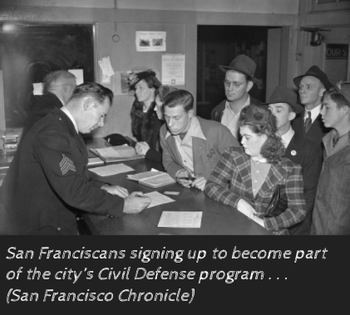
      FDR was forced to relegate La Guardia to a figurehead role within the Office of Civilian Defense since the NYC mayor kept finding ways to make things worse in his assigned area. However, San Francisco proved to be the worst-managed civilian defense city of them all, and it soon became clear that the Bay City was in no better shape than it was five weeks prior, due mostly to the incompetence by city officials.  On 12 January 1942, the US Surgeon General told the US Council of Mayors that the enemy had planned and would use bacteria warfare,, and that local governments needed to take every precaution; now Americans were afraid of their milk. 
     The movie industry had to adjust to the war effort by starting and ending filming sooner, while also featuring far fewer car chases. Hollywood also could not film in US harbors, ports, airports, bridges, or railroad tunnels. Film productions had to recycle old sets due to lumber shortages, and cap pistols were used for guns. The rubber shortage and tire rationing pretty much ended shooting on location, and some movies in production had to make changes to scripts on the fly when receiving new information from the war. The desire to feature Japanese villains in movies ran high, but there were very few actors/actresses of Japanese descent, and no white actor/actress wanted  to play a “Jap”. 
     Soon enough, the major studios, such as Warner Brothers, started to churn out patriotic movies that featured characters that were soldiers as well as war production workers. Hollywood stars kept disappearing to serve in the military, such as James Stewart, Robert Montgomery, Douglas Fairbanks, Jr., and director John Ford (as well as many behind-the-scenes workers). 
     On 16 January 1942, due to pilot error and incompetence, a military plane that was flying through the mountains near Las Vegas (NV) crashed, killing 15 servicemen as well as the famous actress Carole Lombard (who was married to Clark Gable; Lombard had just raised over $2 million in war bonds while in her home state of Indiana). Gable made plans, once he got past at least some of his grief, to join the Army Air Corps, even though he was too old to be a pilot.

Picture
  On 14 January 1942, a Navy spokesman warned the US public that German U-Boats were operating up and down the Atlantic Coast. Within hours of that announcement, a German U-Boat sank a Norwegian tanker sixty miles from Long Island, The Navy was reluctant to provide accurate information about the damage done on US and Allied shipping by the Kriegsmarine, only saying that the attacks had become “increasingly serious”. Initially, there were only five U-Boats that were reeking havoc along the Atlantic Seaboard (“Operation Drumbeat”), and the goal was to sink such ships as slow-moving oil tankers. 
     Oil and gasoline supplies noticeably decreased in the Eastern US since many oil tankers had been sunk leaving ports from the Gulf of Mexico. On 31 January 1942, the Navy confirmed that ten American and Allied ships had been sunk by U-Boats, with nearly 100 sailers KIA/MIA. Cities along the Atlantic Coast still struggled with executing their blackouts, which silhouetted tankers at night, making them easy targets for the U-Boats. The belief that eventually took hold was that a German 5th Column (spy network) was the real reason for the easy sinking of ships; the result of that belief eventually became the Navy catchphrase “Loose Lips Sink Ships”. 
     On 16 January 1942, the Office of Censorship issued new directives that were designed to curtail inadvertent radio broadcasts that could assist the enemy. Among those restrictions were no interviews at train stations or airports, and stations were to “steer clear” of dramatic programs that brought home the horrors of the war. Also, radio stations were to avoid such traditional items as birthday announcements that could be seen as carrying hidden messages for enemy spies.

Picture
     The media struggled to get any accurate information about the war since the government controlled the information and publication of what war really going on; in essence, the truth was deemed forbidden fruit. The most common phrase from the government was “no comment”, and the news that was released for public consumption was far too optimistic and/or exaggerated, and when accurate, focused on the trivial successes. The government chose to paint a picture of daffodils and daisies in the midst of gloom, so Americans went about living their lives unaware of the impending disaster faced by 80,000+ US soldiers in the Philippines as Japan tightened its noose. 
     A full page ad in Newsweek in early-1942,  paid for by a Cleveland defense firm, stated “In Heaven’s Name, Let’s Get Mad” and “Don’t You Want Vengeance?”. At the same time, the Detroit Free Press hoped for “greater realization” to hit the general public as to how long and difficult the war would be. The New York Times used the phrase “the valor of ignorance” to describe the same phenomenon. Once again, Americans waited for FDR to take the lead and to run point, but as was his pattern in recent years, the President refused to do so, not wanting to get ahead of public opinion. Tire rationing was off to a very rocky start, in that the driving public had a very hard time adjusting (the Teamsters Union had freaked out about the restrictions). While seemingly every American understood the need for rubber rationing, a very high number demanded exemptions from rubber rationing, and cities competed against each other for the scarce finished good.

Picture
     Every governor was besieged with demands from citizens to loosen the noose on tire restrictions. Those that wanted retreads experienced long delays and shortages as well as high prices; the prices became so high that on 11 January 1942 the government placed a price ceiling on retreading services. Most Americans had little idea why there was rubber rationing was to be a long term prospect, and far too many Americans simply believed that the restrictions on rubber didn’t apply to them (e.g. if they paid enough, they would get new tires). 
    Time magazine declared that tire rationing presented the greatest opportunities for bootlegging since Prohibition, and tire thefts soared across the nation.  On 18 January 1942, the Los Angeles Times provided evidence of tire hoarding in the region. States soon increased punishments for stealing tires, in essence equating stealing tires with stealing horses in the Old West. Firestone started to brand the customer’s initials on the very few new tires they sold. The government released information that accentuated the positives of rubber rationing, claiming that the consumption of gasoline would decrease by at least 35%, and that Americans would get more physically fit. Automobile rationing had been enacted on 2 January 1942, with sales of new cars were prohibited until until the permanent car rationing rules were released on 15 January 1942; used car prices promptly increased by 10%, and the price of new cars went up 25%.

Picture
     By the end of January 1942, the last vehicles that could be purchased by civilians rolled off the assembly lines, leaving at least 400k unemployed (2/3’s of that number in Michigan) at least temporarily. The Congress of Industrial Organizations (CIO) blamed the delay on  industrial conversion to war to administrative and executive selfishness and incompetence, and demanded an equal say in the process of converting to war production. The Big Three (GM, Ford, Chrysler) countered that the CIO was really trying to get “certain groups” in charge of the converted factories. At least automobile assembly line workers had the necessary skills for war production, but little was done about the displaced car salesmen. The government hadn’t realized the need for finding new jobs for displaced white collar workers. The 650k new cars in hand were for government use, including the Allies via Lend-Lease. Increasingly, more Americans realized that traveling for fun/leisure was out, which hurt roadside services. 
    During the first week of January 1942, the FBI had detained about 3000 enemy aliens that were suspected of being spies or saboteurs (out of the 1.8 million enemy aliens in the US), and the “Super Patriots” decided that all aliens residing in the nation were fair game. A growing number of men in the US were getting married in order to avoid military service. For the first 15 months of the Selective Service Act (October 1940 - December 1941), deferments were given in a man was married, due to the assumption that the wife depended on the man’s income. Overall, 7.5 million men had received “dependency” deferments, but after Pearl, every state noticed that far too many men used marriage as a way to avoid the draft. Most states simply didn’t grant dependency deferments after Pearl Harbor. 
     Another problem was that there were too many men in the Selective Service that had a venereal disease, with syphilis being #1; already, 50k had been rejected by the Army. The problem was exacerbated due to the shortage of doctors in the civilian population. In early-1942, there were only 186k doctors in the US, with 13k entering the military. The military needed about 20k additional doctors by the end of 1942, and there was also a shortage of nurses.


              Addendum: The Sugar Shortage in January 1942 . . .  
0 Comments

The Year After Pearl Harbor in the US, Part Two

4/19/2020

0 Comments

 
                              Source: William K Klingaman. The Darkest Year -
                               The American Home Front, 1941 - 1942 (2019)
Picture
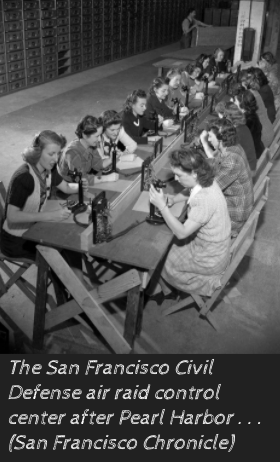
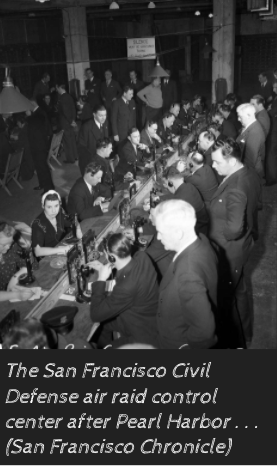
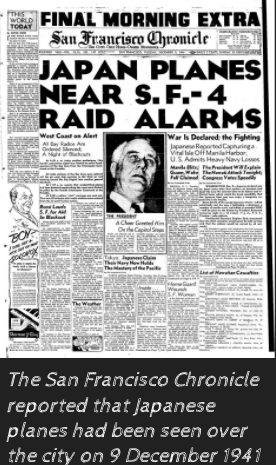
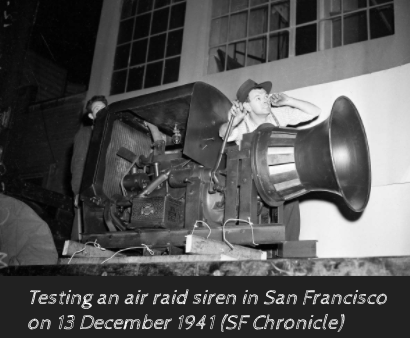
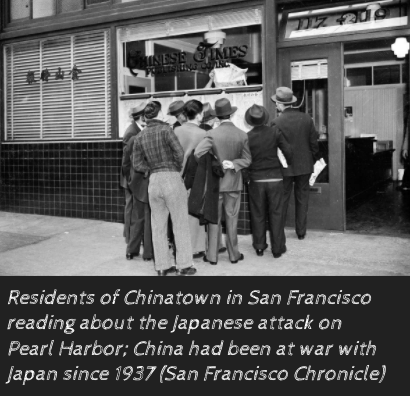
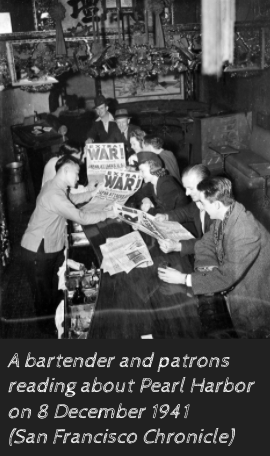
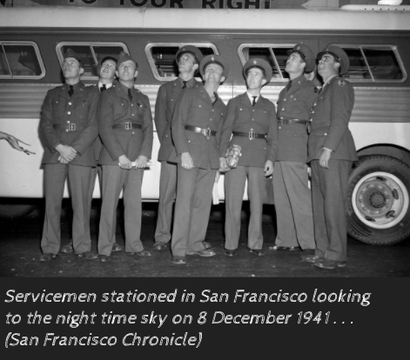
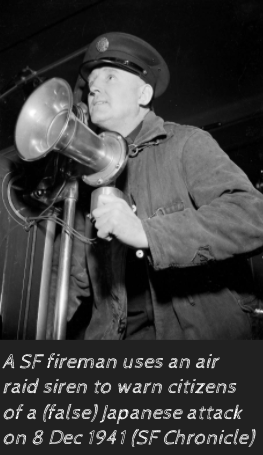
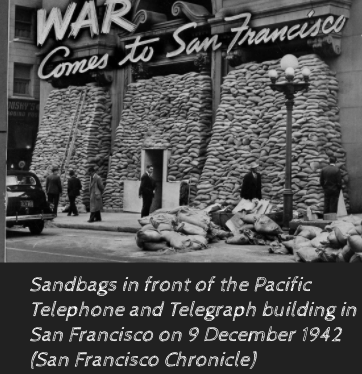
     On 8 December 1941, all hell broke loose in San Francisco, whose white residents for the last two days had expected Japanese planes to bomb their city. By noon that day, the white citizens of San Francisco had worked themselves into a panic; rumors of Japanese submarines/bombers heading their way convinced city leaders to close the schools. Just after sunset, Army posts around San Francisco picked up signals on their radar which were mistakenly interpreted as Japanese planes 100 miles west of the city. At about that same time came unverified reports of a Japanese submarine near the Golden Gate Bridge. Army commanders ordered all radio stations in the city to shut down so the Japanese planes couldn’t home-in on their signals. 
     All of a sudden at dinnertime in San Francisco, radios went dead and puzzled/confused residents waited for any information, but there was none forthcoming. San Francisco was still ablaze with its lights, since there was no way for power company technicians to turn off all the lights at once.. Even though airplane spotters didn’t see a single plane that night, Army officials from the Western Defense Command announced that two squadrons of Japanese planes (30x) had been launched from Japanese aircraft carriers 500 miles west of San Francisco.
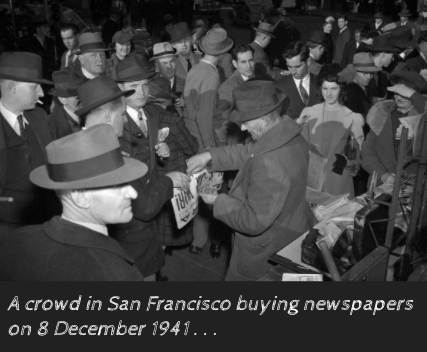
     San Francisco police ordered a city blackout by 7:30 pm, and at that point the vigilante tradition of the city was ignited. Citizens destroyed as many lights as possible (e.g. with rocks) and trolley cars were stopped, and thousands of San Franciscans screamed “The Japs are coming”.   Rumors were rampant that the Golden Gate Bridge had been bombed. Civilian sentries fired on innocent civilians, killing a man who didn’t hear the commands to stop. Rumors kept spreading, such as that The Presidio had been taken by Japanese forces. On the morning of 9 December 1941, the residents of San Francisco flocked to newstands to find out what really happened overnight.

Picture
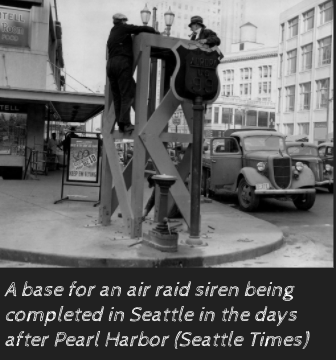
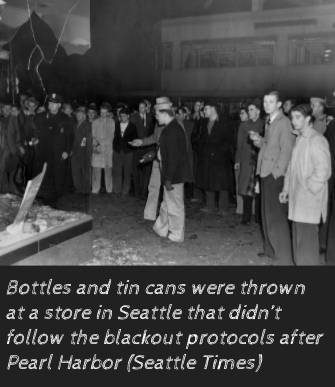
   Seattle experienced its own nightmare when military authorities mistakenly thought they had detected Japanese planes heading their way. During the ordered blackout, over a thousand Seattle citizens ran amok in the city’s center, smashing storefronts and looting stores. The mob was lead by a 19 year old wife of a Navy sailor, who proudly announced that it was her patriotic duty to make sure there were no lights on during the blackout. It took a contingent of Army soldiers and British sailors to restore order in the city. On 9 December 1941, Ernie Pyle arrived in San Francisco and found a city that still expected to be bombed at any moment, but at least that night there wasn’t any repeat of the previous night’s panic. 
     A thorough search by Navy ships and planes off the coast of northern California revealed zero Japanese ships, planes, or submarines. Lt. General John DeWitt, the leader of the Western Defense Command, refused to admit any error in his actions or judgments (DeWitt also thought that those that didn’t honor the blackout deserved what the mob did to their businesses).  A couple of days later Los Angeles city leaders ordered a full-scale blackout. Army observers during the first night of the blackout reported unidentified aircraft in the vicinity of the city, which spurred military officials to extend the blackout from Bakersfield to the Mexican border and eastward to the border with Nevada. Los Angeles radio stations stopped broadcasting, and mobs the first night in Los Angeles ran roughshod over parts of the city as mobs had done in San Francisco and Seattle. One columnist from the Los Angeles Times labeled the first few days after the attac on Pearl Harbor as the “Era of the Grand Bungle”.

Picture
     Military authorities kept finding ways to make situations worse by making dangerous errors. On 12 December 1941, a 2.5 hour blackout in San Francisco was due to an erroneous military claim of unidentified planes flying over the city, and it was mob rule again in the city. On the evening of 13 December 1941 in Los Angeles, anti-aircraft artillery opened fire on phantom enemy planes. California’s governor declared a state of emergency and condemned the marauding gangs of self-appointed “wardens” masquerading as patriots. 
     At 11 am on 9 December 1941, New York City had its first air raid alarm from the Army stationed at Governor’s Island; soldiers there had received a call from the War Department, and were told that reports of unidentified planes approaching Manhattan were being checked out. The contingent of soldiers on Governor’s Island misinterpreted the phone call and took it as a warning, and ordered planes stationed at Mitchell Field in Long Island into the air. All radio stations within 100 miles of NYC went silent, and civilian planes were grounded and incoming flights were diverted. Unlike San Francisco, Seattle, and Los Angeles, NYC citizens were just confused, not panicked. Across New York City,  movie theaters kept running their films. Predictably, the only panicked part of the city was the New York Stock Exchange; the stock market suffered its worst decline since the Fall of France in 1940. 
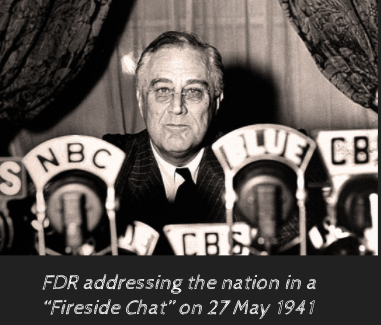
     On 10 December 1941, President Franklin Roosevelt addressed the nation by radio, speaking for 90 minutes. FDR assured the nation of eventual victory, but he stated that the road ahead would be very long and arduous. On 12 December 1941 Germany and Italy declared war on the United States. In his diary, Lindbergh wrote that the US was at war all over the world and totally unprepared materially and spiritually.

Picture
   Gradually, radio networks resumed their normal programming while also starting to issue information on the war via bulletins that featured far more than facts, even if the made-up information was bad. Alarmed by the distressing ignorance of Americans not being able to tell the difference between a person of Japanese or Chinese ethnicity, Time and Life magazines published a photo spread on how to “tell the difference” (which by today’s standards were not scientific, and basically ignorant and racist). 
     After Pearl there was a growing sense that the nation needed to make up for lost time and opportunities. Every federal government office had a visible sign that said “Time is Short” in block letters a foot high. Local residents in the District of Columbia stocked up on pistols and rifles, presumably to fend off enemy parachutists. The first “Shelter Craze” hit parts of the US, with some of them traditional bunker shelters, while others were a kind of zig-zag trench with sloping sides using plywood as a roof. Critics loudly shouted that spending money on worthless bomb shelters took money away from the nation’s war effort. 
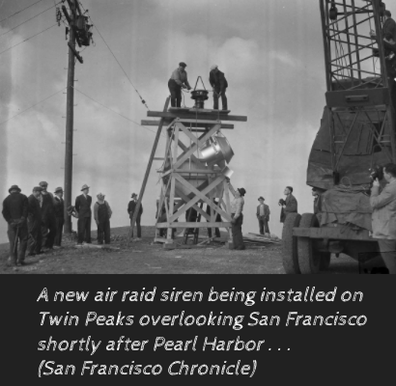
     The idea that Japan or Germany would attack cities (by plane or submarine) on the Atlantic and Pacific Coasts didn’t go away in the weeks/months following the attack on Pearl Harbor; the demand for the materials to build bomb shelters as a result didn’t drop by much. While many Americans saw the panic as irrational war jitters, few citizens deemed their city “un-bomb worthy”. It soon became clear that almost every city was unable to defend their citizens, and it started to slowly dawn on Americans that they needed to fend for themselves in order to do so.

Picture
    As a result, vigilante groups rose in order to pick up the slack. For example, 40 Chippewa women in Pontiac (MI) formed a rifle brigade in case of an Axis attack. In San Diego County a group formed, calling themselves the Minute Men Rifle Corps, and outside Arlington (VT) local patriots prepared for Hitler’s panzers by patrolling and blocking Route 7. The vast majority of Americans knew in their gut that they weren’t in any immediate danger of attack from the Axis powers, but in the back of their minds, the whisper “so you’re telling me there’s a chance” of an attack wouldn’t go away. 
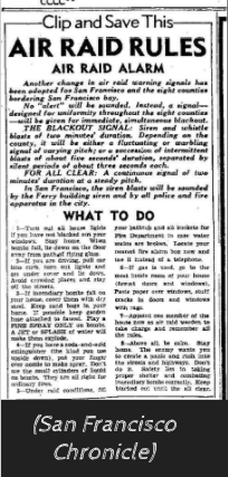
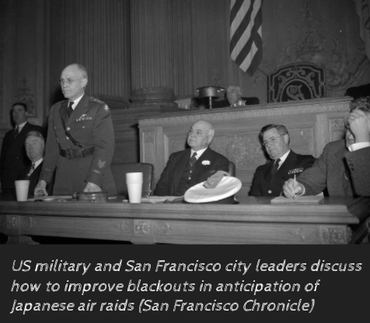
     Coastal cities started to issue organized instructions for blackouts, which included a detailed list of what needed to be purchased for the home, such as any kind of black cloth to cover windows. Also on the list for what was needed were candles, flashlights, radios, and garden hoses. Of course supplies recognized a great opportunity, and increased their prices given the increased demand. Merchants advertised specific items for purchase that were beyond-wonderful for a home blackout, convincing many consumers that it was essential to buy high-priced luxury items (or that the consumer would be much better off buying a more expensive version). Con men went door-to-door, taking advantage of the gullible.


Picture
      The War Department was alarmed at how many Americans took civilian defense warnings seriously, in that far too many flashlight and batteries were purchased by consumers that were needed for the military; the Office of Price Administration (OPA) froze the prices on both items. The OPA also tried to get Americans to use cloth they already owned to cover their windows instead of buying new cloth that was needed for uniforms. When that failed, the OPa tried to enlist the help of the Better Business Bureau to try and convince Americans that there was no such thing as “official” materials for blackouts, but to no avail. 
     On 21 December 1941, the New York Times reported that sales of blackout cloth remained strong nationwide and that supplies were scarce. By the third week after Pearl on the West Coast, most Americans were waiting for something to happen, which only increased the level of irrational fear of an imminent attack of some sort. Army officials discouraged any gathering of people on the West Coast that exceeded 10,000, fearing that large crowds would attract Japanese bombers and that highways would be clogged. The War Department even insisted that the Rose Bowl (Oregon State vs. Duke University) be canceled or relocated. Very reluctantly, the Rose Bowl Committee agreed to hold the game at Duke’s stadium, even though it would cost California at least $1.4m in lost tourism revenue. Any sporting event in the US that attracted decent-sized crowds would soon face the same dilemma as the Rose Bowl.


Picture
On 15 December 1941, Secretary of the Navy Frank Knox released in initial report of the American losses at Pearl Harbor. Knox’s report stated that one battleship and three destroyers were sunk, and that there had been 2731 KIA and 656 WIA. The report was only released due to threats of Congressional investigations, and for most Americans, the numbers in Knox’s report were not as bad as expected. The FDR administration made a concerted effort to keep as much of the reality of what happened at Pearl Harbor in the shadows, not wanting to deal with why the Navy was so unprepared for Japan’s attack on 7 December 1941. One of FDR’s methods to do so was to authorize each department in the Executive branch to analyze and release news from the war, which only added to the overall confusion. The press didn’t help, in that they published stories that far overstated US achievements in the war to that point.
     In explaining the losses at Pearl, SecNav Knox exaggerated the impact of intelligence provided by Hawaii’s Japanese-Americans/nationals to Tokyo, stating that government/military authorities in Hawaii had been “much too generous” in their treatment of the two groups. Knox’s baseless charges added fuel to the hysteria on the West Coast, which now fully focused on innocent Americans of Japanese ethnicity, as well as legal Japanese nationals. Already in California there was a conspiracy theory that ran rampant that all whites just knew was true: Japanese-American farmers had poisoned the produce sold to whites. Not one example was uncovered to show a scintilla of truth to the conspiracy theory. 

                     Addendum: Closing Out December 1941 . . . 
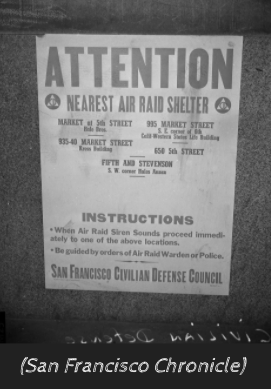
0 Comments

The Year After Pearl Harbor in the US, Part One

4/19/2020

0 Comments

 
                            Source: William K. Klingaman. The Darkest Year -
​                               The American Home Front, 1941-1942 (2019)
Picture
   By Christmas 1941, the US was coming out of the Great Depression, in large part due to the government’s increased defense spending over the previous 18 months. Never before had Americans had that much money to spend; proof came with the largest-ever (to that point) consumer spending spree, which was confirmed just one week into the holiday shopping season. 
   Three million new workers were added in 1942, making the overall national total 42 million workers, which was the highest number to that point in US History. Fewer Americans were receiving unemployment benefits since that federal program had started. Agricultural prices rose, and agricultural income was up $2 billion from 1940, and corporate profits in the industrial sector greatly increased. More new homes were built in the US from January through October 1941 since 1929. In short, in 1941 Americans were living better compared to any other previous year. 
     In the midst of all of this was FDR’s preparedness program, with many businesses trying to increase their profits by showing how patriotic they were (e.g. buying a car = greater national defense). Anne Morrow Lindbergh (Lindbergh’s wife, and also an Isolationist) was appalled at the link between crass materialism and the appeal to patriotism.

Picture
     From 1 September 1939 to 6 December 1941, 80% of Americans polled opposed US entry into the war in Europe. Since World War I, America had done its best to politically ignore the rest of the world, since most Americans believed that the US decision to declare war on Germany was a colossal mistake never to be repeated. That being said, as war raged in Europe, most Americans favored the cause of the Allies (Britain/France) over Hitler, since most believed that Hitler may eventually turn his attention across the Atlantic. 
     The “Sitzkrieg” gave the US a false sense of security, which was shattered in the Spring of 1940 when Germany defeated Norway, Denmark, the Netherlands, Belgium, and by June 1940, France fell. In the US, there were very serious discussions concerning the level of US preparedness (or the lack thereof). Congress approved $3 billion for military spending, and soon, in essence, Congress gave FDR a blank check in terms of military spending with a House vote of 391 - 1. While most Americans didn’t want troops in Europe, Isolationists and Internationalists both wanted a strong military. For the Isolationists, the military build up was for defense, while the Internationalists wanted to be prepared for the inevitable US involvement in Europe.

Picture
     Any consensus that had existed fell apart in 1940 in terms of whether Britain (and what was left of France), should be the recipient of any direct US aid. That debate intensified during the Battle for Britain, and then the Blitz, with Life magazine in particular providing photographs of the suffering in Britain for Americans to see and read. And fear rose in America of a Fifth Column, a.k.a. German spies working in the US, since most German nationals and many native-born Americans were pro-Nazi (the most famous: Charles Lindbergh). 
     The US Army was beyond-woeful due to 20 years of neglect after World War I, being the smallest and worst-equipped army of the world’s major nations by 1938. The German blitzkrieg during 1939 - 40 showed how far behind the US Army was compared to the Wehrmacht. Both General George C. Marshall and General “Hap” Arnold (the US Air Air Corps commander) knew they only had perhaps months to try and make up for years of no real military preparation. With the Fall of France, the US had to not only focus on new and additional weapons, but also conscription. The Army would need at least 1.2 million men, but with only 250k in the ranks with soldiers leaving due to enlistments being up, there was no way to reach that necessary figure without a draft . . . but the US had never before instituted a draft in peacetime. Despite the virulent protests, Americans became more supportive of conscription by the Fall of 1939 based on polling conducted by Gallup (October 1939: 39%; July 1940: 66%).
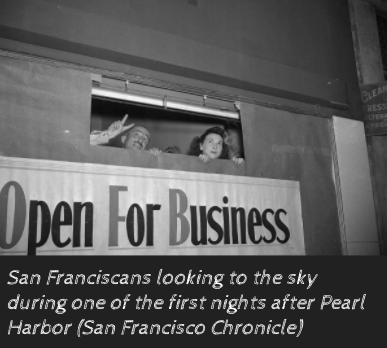
Picture
   On 15 September 1940, Congress passed the Selective Service Act which required all US male citizens between the ages of 21 and 35 to register for a possible draft. That being said, there was an Isolationist streak in the Act, in that the 800k draftees called in that first year of the draft were prohibited from serving outside of the Western Hemisphere, except in US territories. By October 1940, over 16 million had registered for the draft without protest, including James Stewart and Henry Fonda. By December 1940 those initial draftees were on their way to camp with the second wave of the draft coming up in January 1941. 
     During that time, government spending that subsidized defense contractors started to decrease unemployment. In the Spring of 1941, the Lend-Lease Act was passed, and the US became formally allied with Britain against Nazi Germany. That spring also featured confusion, uncertainty, and growing tension between the two goals of keeping Britain from surrendering while also keeping US soldiers from Europe, since those two impulses were at odds with each other. There was also the increasing dread that the US would be forced into the conflict in Europe, with 85% believing that to be the case by May 1941. By any measure, the US was nowhere near ready for global war much less involving itself itself in a war in Europe again. 

Picture
      Among the obstacles was FDR and his administration, who was not yet sure how to allocate US resources between the military and civilian sectors, and they had to overall strategic plan in place in case of war. Making matters worse was that FDR created various war boards whose responsibilities overlapped. Businesses were reluctant to manufacture things for the military, preferring instead to focus on civilian products to maximize their products and to hire more workers. By the Fall of 1941, there were far more consumer goods produced, which was at the expense of military production. And then came numerous and vicious labor strikes in 1941, the largest occurring in the steel and bituminous coal industries. 
     During a time when the US needed to be more united for the inevitable upcoming conflict, US society instead was splitting apart. Also in play was FDR’s lack of leadership and direction, since he didn’t want to move ahead of public opinion on US involvement in the war in Europe. FDR also lent far too much credence to the power of the Isolationists in Congress. On 27 May 1941, FDR gave a radio address (a “Fireside Chat”) concerning the massive British losses in the North Atlantic to German U-Boats. FDR told the 65 million listeners that the Nazis wanted more than Europe, and would eventually head across the Atlantic. FDR stated that he had strengthened the US naval presence in the North Atlantic in order to increase the chances of the Allied convoys reaching Britain. 

Picture
     FDR used the phrase “national emergency” which added to the level of confusion. FDR backtracked, saying that what he stated did not mean that US ships would escort British ships (which was of course occurring out of necessity, at least in some instances); once again FDR refused to move past public opinion in terms of direct involvement in the war in Europe and on the Atlantic. For the next six months, in essence the US simply waited for something awful to happen. 
     When Operation Barbarossa started on 22 June 1941, the situation in the US became even more confused and muddled, in that Britain was off the hook, but would the US partner in any way w/ Stalin and the USSR. Japan wasn’t pleased with the Nazi invasion of the USSR, in that Japan wanted the British to be unable to defend their possessions in Asia and the Pacific. 
     During September 1941, Japan formally allied itself with Germany and Italy by signing the Tripartite Pact, and even Isolationists wanted to find a way to rein in Japan. During July 1941, in part for raw materials but also for a springboard to attack US and British possessions, Japan moved into Indochina. Not long afterwards, the US froze Japanese assets in the US. Overzealous US officials in the FDR administration went further, refusing to sell oil or scrap steel to Japan, which was seen as an act of war by the Japanese military, and many in the government. US officials, especially in the State Department, simply assumed that Japan would modify its behavior as a result of those sanctions.

Picture
  During the Summer of 1941, US consumers had purchased more gasoline compared to any prior period. By November 1941, 25% of US production capacity was geared towards military production. Prices for consumer goods increased due to shortages and the inflation that was caused by economic expansion. From September to early-December 1941, Congress was in session, working around the clock as relations between the US and Japan deteriorated. China proved to be a stumbling block, with FDR wanting Japan to leave China, and Japan refusing to give up what it had taken, especially over the last four years. By October 1941, Hideki Tojo had been elected Premier, and it was clear to even Secretary of State Cordell Hull that Japan was gearing up for war in the Pacific. During November 1941, FDR informed his Cabinet that war with Japan was inevitable. 
     Starting on 1 December 1941, FDR spent most of his time with his military and diplomatic advisors. It was still believed that Japan would attack Thailand, Burma, or the Malay Peninsula, which would provoke the US into a similar situation in the Pacific as in the North Atlantic with Germany, as well as embargoes and blockades. Most Americans simply dismissed Japan’s ability to fight a war with the US, given the vastness of the Pacific and that they were non-whites, and therefore not the equal of the US.

            Addendum: Pearl Harbor - The Immediate Aftermath . . . 
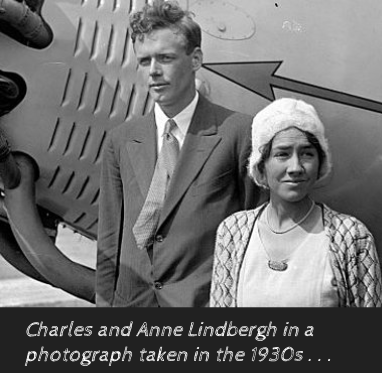
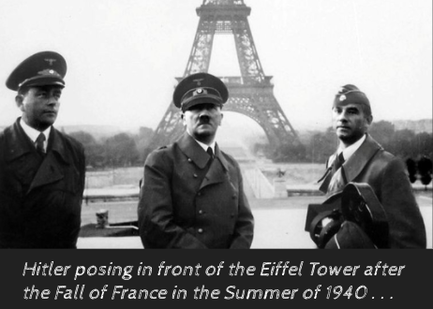

0 Comments

The Election of 1960: Nixon vs. Kennedy, Part Two

4/10/2020

0 Comments

 
                      Source: John A. Farrell. Richard Nixon - The Life (2017)
Picture
      Both Nixon and JFK entered the last weeks of the campaign trying to finesse their way through the issue of Civil Rights. On 19 October 1960, MLK, Jr. was arrested in Atlanta during a sit-in strike in an upscale segregated department store. Four days later a judge used an old unpaid traffic ticket to sentence MLK, Jr. to four months of hard labor at the state penitentiary in Reidsville. MLK was transferred from the jail to the prison at night, and his wife (Coretta Scott King) feared that he may be killed in transit. 
    Nixon had a clear opportunity to intervene, and among others, Jackie Robinson urged Nixon to call Coretta Scott King. Nixon, thinking politically with tunnel vision, simply didn’t want to make the personal phone call, and instead tried to get Ike’s Attorney General to intervene behind the scenes . . . but Ike and his Circle of Trust nixed his request. Nixon remained publicly mute, writing Robinson that making the phone call would be a “grandstand play”. It simply didn’t register to Nixon, for all his political acumen, insight, and expertise, that a phone call to MLK, Jr.’s wife would be the political game changer for which he had been looking. As a result of not making that phone call, Nixon’s entire pro-Civil Rights record would be erased.
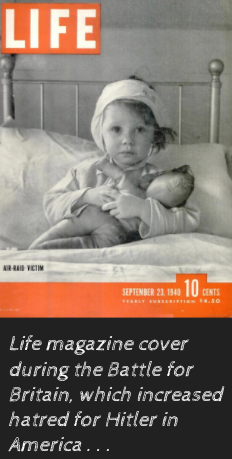
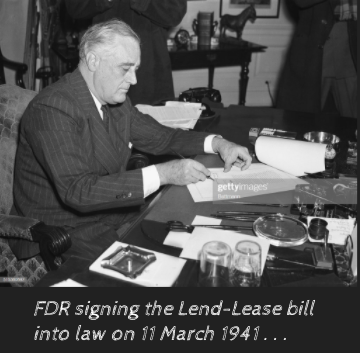
Picture
    JFK was the candidate that called Coretta Scott King, but only after being prodded in private by Sergent Shriver, who had been prodded by a lower-ranking aid. When RFK found out that his brother had made the phone call, he went ballistic, but soon enough he calmed down, and he made a phone call. RFK called the governor of Georgia, who laid the groundwork for RFK to call the judge that had sent MLK, Jr. to Reidsville (the promise that sealed the deal was that the judge would be welcome at the White House with Kennedy as President). 
     On 27 October 1960, MLK, Jr. was released (and interviewed), and as a result there was a seachange among African-American voters, in that hundreds of thousands voted for JFK instead of Nixon. So then, it wasn’t the disastrous first televised debate that cost Nixon the Election of 1960, but the fact the he didn’t make the phone call that JFK made. By making that phone call, and then naming LBJ as his running mate, JFK did more on the Civil Rights front during the campaign than had Nixon. Few remembered Nixon’s brave political actions as Vice-President in helping get the Civil Rights Act of 1957 passed. After the election , MLK, Jr. formed a new opinion, viewing Nixon as a moral (and political) coward.

Picture
     Nixon kept compounding his problems when he decided that he didn’t want President Eisenhower involved in his campaign. Nixon wanted to be the star of his own campaign for political and personal reasons; Nixon, always one to hold a grudge, deeply resented how he was treated by Ike and his administration as Vice-President. Almost too late, Ike offered to do more on Nixon’s behalf, but Nixon in essence spurned his offer (rejecting the offer of the most popular end-of-his-second-term President was beyond-unwise). All of Nixon’s worst character traits were in play, especially his insecurity and resentment. 
     Nonetheless, Ike campaigned on Nixon’s behalf for a brief spell, but health reasons severely limited his time on the hustings. It cost Nixon dearly not having Ike fully in his corner, a political visual of a living popular beloved historical figure could have done nothing but help Nixon’s campaign. JFK was very concerned that Ike would steal the election from him, but that concern vanished when Ike disappeared from Nixon’s campaign.

Picture
    And then there were the shenanigans, some of which involved how votes were counted in the Election of 1960. J. Edgar Hoover had the FBI provide information about JFK to Nixon, and then there was the continued cover-up of JFK’s health (JFK’s back was a mess, and he had Addison’s Disease). Nixon, in order to fulfill his promise to campaign in all 50 states, actually went to campaign in Alaska in the closing days of the campaign, a state that was solidly in his corner (JFK wisley focused on campaigning in battleground states in the last days). 
   Nixon became the only Republican candidate to win Ohio and yet lose the Presidential election. Even with the shenanigans of Mayor Richard Daley in Illinois, and LBJ in Texas, Nixon could have forced the election to the House of Representatives by winning Minnesota, but he failed to win that crucial Midwestern state. With the loss of Minnesota becoming official, Nixon conceded, even though he had lost the popular vote by less than 1%. If 12,000 more voters in Illinois, Nevada, New Mexico, Hawaii, and Missouri had cast for Nixon, he would have been elected President. Nixon was haunted by “what-ifs”, such as what if he didn’t bump his knee before the first televised debate, or what if he had called Coretta Scott King, or what if the Republican Party had guarded polling locations in Illinois and Texas.

Picture
     JFK won Texas by 43,000 votes, but Texas Republicans had reason to doubt the final tally. In one Texas precinct, “Box 13”, JFK had 1145 votes to Nixon's 45; it was the same precinct that in 1948 came up with 200 mysteriously new votes which meant that LBJ won a seat in the House of Representatives by 87 votes (for many years afterwards, LBJ was labeled “Landslide Lyndon”). A precinct north of Houston had JFK with 147 votes to Nixon’s 24. In Texas, illegal ballots for Nixon were thrown out, but illegal ballots for JFK were counted. JFK won Illinois by only 9000 votes, and it was entirely due to Chicago’s mayor, Richard Daley. Daley waited until every other Illinois precinct declared their totals, and then he announced his fabricated 320,000+ margin, handing JFK the crucial Electoral Votes. 
     It was one thing to know about the shenanigans, but proving them was an entirely different affair. If only one state had decided the election, Nixon and the Republican Party would have almost certainly demanded a statewide recount under supervision. But with two states being the difference, and with accurate supervised recounts in both Illinois and Texas problematic (and unrealistic), there was little Nixon and the GOP could do. Also, the Democrats were ready to challenge the results from California, where Nixon had barely defeated JFK by a margin less than JFK’s advantage in Texas. So, for the good of the nation and for the transition of power (and to be sure he didn’t destroy his political future since he was only 47), Nixon graciously let things drop. Nixon knew that being branded a poor loser would be tantamount to political death.

Picture
     For the first time, Nixon had lost an election, but like with other challenges, he did his best to absorb the pain, and he trudged ahead. Losing seared Nixon, mostly because he knew that JFK/RFK cheated badly and were rewarded handsomely (some historians trace Watergate back to Nixon's frustration in 1960). By the end of 1960, Nixon had the highest amount of resentment in his life so far (sadly, far worse was coming), and an all-consuming desire to never again let the opponent have the advantage in terms of cheating. 
     Nixon fumed over JFK’s manipulation of religion during the primaries and general campaign. Nixon was angry about African-American voters abandoning him despite his pro-Civil Rights credentials. Nixon shared Ike’s view that African-Americans were mostly Democrats due to being addicted to social programs, and as a result, Nixon’s ardor and support for Civil Rights waned considerably. 
     Nixon firmly believed, not without reason and evidence, that the media had been firmly skewed in favor of JFK and against him. A huge number of supposedly impartial figures in the media basically went head-over-heels ga-ga over JFK (due mostly to television). It wasn’t just that in Nixon’s view that the media worshiped JFK, but that the media treated Nixon with extraordinary hostility (the “New Nixon” would actually try and make forced effort with the media in the late-1960s). By the end of 1960, Nixon’s hatred and enmity towards the media was intense, and it would boil over when he lost California’s gubernatorial election in 1962.

0 Comments

The Election of 1960: Nixon vs. Kennedy, Part One

3/13/2020

0 Comments

 
                   Source: John A. Farrell. Richard Nixon - The Life (2017)
Picture
     The campaign of 1960 was Nixon’s fifth in nine years (1952, 1954, 1956, and 1958). Conventional wisdom had the Election of 1960 being a barn-burner like Truman vs. Dewey in 1948. Nixon’s most appealing attribute was experience, yet he was only 47 years old (JFK was 43), and the increased tensions from the U-2 Incident to many meant that Nixon’s seasoned leadership was necessary.  However, America was slowly approaching the brink of major political and social change, and to an increasing number of Americans, Nixon represented the past, while John Kennedy seemingly represented the future. 
     JFK kept using and touting the word “change”, and Nixon was largely forced to go with the status quo that was associated with President Eisenhower. Complicating matters for Nixon was that there were only 14 Republican governors, which meant that the state political machinery in the other 36 states were in the hands of the Democrats; no Republican candidate for President had faced that particular obstacle since the FDR era.  The Republican Party remained pro-business, and that didn’t resonate particularly well with working class families. The Democrats had a 3 : 2 advantage in registered voters, which would make a huge impact at the grassroots level in favor of the Democrats. Added to the mix, the Sun Belt was growing in importance in terms of the Electoral College (e.g. Texas and California), but the Rust Belt still mostly held sway with states such as Illinois, Pennsylvania, Ohio, New York, and Michigan.

Picture
    While Nixon didn’t have to worry about a challenger for the Republican nomination, JFK kept getting headlines since he was in a series of competitive primaries, with LBJ lurking in the background. In the end, both Nixon and JFK garnered their nominations on the first ballot. During the Campaign of 1960, JFK received the kind of breaks from which Nixon had benefited against Voorhis (1946) and Gahagan Douglas (1950). Political and physical disaster struck Nixon when he was in the hospital for twelve days after banging his knee on a car door and getting a staph infection (Nixon was a colossal klutz). 
     It was during his stay in the hospital that Nixon agreed to the first-ever televised debates with JFK. The economy was not in Nixon’s favor, and Ike et al were content to finish out their time in the White House sitting on the sidelines, not trying to do much at all to boost the economy in an election year. In the last weeks before the election, 450,000 jobs were lost; Nixon saw the lack of government spending (to try and minimize the economic downturn) as just plain stupid politics in an election year.

Picture
     The general campaign played out in stages, with the month of August being a draw since Nixon was hospitalized and JFK was still working in the Senate. September 1960 marked JFK’s confrontation with Houston Protestant ministers which was covered by the media. JFK and RFK (his campaign manager), took clips from the showdown, edited them to their liking, and made sure they played all over the television dial. In the end, Nixon only received 22% of the Catholic vote, at the time a record low for a Republican Presidential candidate. 
     Making everything worse for Nixon was his decision to be his own campaign manager. Nixon’s decision was driven in large part by his desire to receive all the credit for winning the Presidency, and also to shove his victory right up Ike’s nose (that decision also provided the opening for H.R. Haldeman to enter the Nixon's Circle of Trust). As Nixon became mired in details as his own campaign manager, his campaign of course suffered as a result. Nixon claimed that he couldn’t delegate campaign responsibilities since he didn’t have people with the necessary expertise to do so. Nixon would pay a dear price for no longer having Murray Chotiner in his circle; there would have been no doubt that Chotiner would have confronted Nixon about his decision-making. 
     Nixon chose to constantly meddle in the minutiae of the workings of his campaign, constantly striving to keep control . . . and therefore the future credit. As a result of losing himself in the campaign’s details, Nixon didn’t do a good job communicating who he was or what he wanted to accomplish as President, and it started to show in the campaign for all to see. Nixon’s constant apprehensiveness led to a public perception that the Republican nominee vacillated, was weak, and timid.

Picture
     The first-ever televised debates between Presidential candidates occurred in Chicago on 26 September 1960. By 1950, 11% of Americans had a television, but by 1960, 88% had a TV. The audience for the first debate was between 70 and 80 million in a nation with a population of 107 million adults. During that first debate, both Nixon and JFK displayed knowledge and command of the debate topic, which was domestic affairs. 
      However, as television had saved Nixon’s political career with his “Checkers Speech” in 1952, television turned on Nixon during this first debate. Nixon simply looked awful on television during the first debate, and there were reasons. Nixon’s frenetic campaign schedule that he organized had left him exhausted and unprepared. Nixon spurned makeup, thinking it would make him look feminine instead of masculine. Nixon came off poorly when the camera was on him when he wasn’t talking (another of the shenanigans arranged by the Kennedy campaign). Nixon was still recovering health-wise, and sure enough, the klutzy Nixon banged the very same knee on a car door while heading into the studio for the debate. All that being said, that televised debacle didn’t lose the election for Nixon, but he certainly didn’t help himself out at all that evening.

Picture
    The significance of the first debate was that millions of Americans concluded that JFK was Nixon’s equal, and it was from that new starting point that the general campaign continued. JFK went into the four televised debates with nothing to lose, and Nixon went in with much to lose.  The last televised debate was on 21 October 1960, and afterwards Gallup showed a slight lead for JFK, and a fawning media predicted a landslide. Nixon campaigned like a berserker in the last two weeks, and the Republican Party rallied around him, with Ike finally chiming it at last. JFK was very worried that he would lose the election which was his for the taking  just like Dewey in 1948. 
    Nixon almost certainly would have won if he had made a phone call. Neither candidate wanted to alienate voters in the South (not counting TX, there was a bloc of 104 Electoral Votes in the South). At the same time, neither candidate wanted to alienate voters in the North, which had far more Electoral Votes. Nixon’s track record on Civil Rights was stellar and unmatched by any other major Republican over the last several years (and very few liberal Democrats), and Nixon figured that he would win at least one-third of the African-American vote. Also, Nixon had MLK, Jr. and Jackie Robinson in his corner, which could only help adding votes in a tight election.

0 Comments

VP Nixon's Pursuit of the GOP Nomination in 1960, Part Two

3/1/2020

0 Comments

 
                  Source: John A. Farrell. Richard Nixon - The Life (2017)
Picture
    The USSR and the US had agreed to host “World’s Fair” style exhibitions of each nation’s cultural and scientific achievements. Very high-ranking USSR officials attended the Soviet exhibition in New York City in the Summer of 1959, and Vice-President Nixon was sent to Moscow to be the American official for the US exhibition. Ike gave Nixon no authority to negotiate (Khrushchev had recently met with such high-ranking US politicians as Senator Hubert Humphrey), but to Nixon, it was an opportunity to appear Presidential. What worked in Nixon’s favor was a series of strange circumstances that provided high drama and comic opera. 
     Khrushchev was a proud, insecure, and emotional man, and his unpredictability was designed to keep the US simultaneously on edge in many spots around the globe, which included the US exhibition in Moscow. Eventually Nixon and Khrushchev were taken to the color television exhibit by a young TV executive, and quite by accident, Nixon had a great opportunity while Khrushchev hammed it up for the Russians in attendance; Nixon’s focus was on the global audience. Khrushchev mockingly waved bye-bye to Capitalism, and Nixon didn’t have any direction from Ike to fall back on in that instance, other than he was there to cut ribbons, not to get into a political brawl.

Picture
     Nixon understood that his reputation he had cultivated over the years of being a tough negotiator with the USSR was about to be ruined. While Nixon held his own with Khrushchev in front of the color television exhibit, he felt like he had been clobbered. And when their roving “discussion” meandered in front of a kitchen exhibit, Nixon didn’t do that much better in dealing with Khrushchev, as far as he was concerned. However, the US media in tow portrayed the encounter in front of the kitchen exhibit as a resounding victory for Nixon, with photographs sealing the verdict. One photograph in particular showed Nixon pointing his right index finger on Khrushchev’s chest while making a point during their “discussion”. Nixon had no idea that in the eyes of the US media, he had won the “Kitchen Debate” (Nixon truly felt he had not done very well at all). 
     The next day, Khrushchev took Nixon boating on the Moscow River, and they stopped every now-and-then to mingle with the crowds. During his time with Khrushchev, he concluded that the Soviet Premier’s temper was his servant, not his master. Khrushchev, meanwhile, concluded that Nixon’s political skills were such that he made it his goal (and it became the USSR’s goal when he was no longer the Soviet Premier), to do what he could to keep Nixon from being elected President. Nixon was taken for a grand tour of the USSR, which included Leningrad and the Urals. Nixon was also given 30 minutes on Soviet television to address the Russian people. Nixon resisted the urge to be combative/vindictive during his televised address, knowing that hecklers had been placed in the crowd by Khrushchev to try and get him worked up.

Picture
     When Nixon returned to the US, he had established serious bona fides in foreign relations, in that Nixon was the first major politician from the Western nations that stood up to Khrushchev. Rockefeller was jealous of Nixon’s success, so much so that Ike felt the need to play puppet master / peacemaker. Ike suggested that Rockefeller take the Vice-Presidential slot, and then he suggested to Nixon that he publicly promise to only serve one term, and then support Rockefeller in 1964. The Eastern media and elites adored Rockefeller, and his political organization was even more impressive than that of the Kennedys. 
     Rockefeller “tested the waters”, and during Christmas Break in 1959,  he announced his withdrawal as a candidate for the Republican nomination (he would do the exact same thing in 1968). It had finally dawned on Rockefeller that Nixon had a monstrous six year head start as Vice-President in terms of building political capital within the Republican Party as well as with voters. Rockefeller needed to soundly defeat Nixon in the Republican primaries to gather momentum for the convention, and when Rockefeller decided that wasn’t in the cards, he quit. The result of Rockefeller’s decision was that Nixon didn’t have any serious rivals for the GOP nomination. The growing conservative wing of the Republican Party had their man ready to go, Senator Barry Goldwater (AZ), but the conservatives weren’t organized or numerous enough to make an impact in 1960 (but they certainly would in 1964).

Picture
    There was serious competition for the Democratic nomination, but JFK (with RFK as his campaign manager) had by far the best organized and hardest-working campaign machine in the primaries, as well as with the traditional political Inside Game. LBJ assumed that he could point to his outstanding legislative record and win the nomination in a brokered convention, but JFK secured the nomination on the first ballot. 
     LBJ surprised most everyone when he accepted the VP slot; Nixon knew that was bad news for him, since he had planned on “stealing” Texas and other Southern states as had Ike. LBJ’s main patron within the Democrats was Speaker Sam Rayburn, who still loathed Nixon for his “traitor” comments years ago that were directed at him and President Truman. What Nixon needed was for Rockefeller to do for the Republicans what LBJ did for the Democrats, but Rockefeller, unlike LBJ, could not act for the good of the party, but only for himself. 
     The U-2 Incident on 1 May 1960 was a setback for Nixon, in that it gave JFK’s clamor for “change” additional momentum and credence. And (the diva) Rockefeller had a change of heart, announcing that he was back in the race for the Republican nomination. Rockefeller’s strategy (hope) was to stampede delegates into his corral using the Inside Game (which had been LBJ’s strategy), but his plan went nowhere fast. All Rockefeller succeeded in accomplishing was that he spent all his political capital which he needed to maintain and build upon for 1964 (the result was predictable/logical, since Rockefeller was only concerned about himself, not his party).

Picture
   Rockefeller issued some demands to Nixon on the eve of the Republican National Convention, including more military spending, something that Ike didn’t want. Goldwater and the conservatives were alarmed that Nixon would even entertain a hint of a suggestion from the liberal Rockefeller. In the end, Goldwater remained classy, and he refused to split the Republican Party over the matter, and he wholeheartedly endorsed Nixon. After garnering the GOP nomination, Nixon named Henry Cabot Lodge, Jr. as his VP (Lodge was the Senator that JFK defeated in an upset in 1952). 
   Just before Labor Day as the General Campaign started, Nixon was again a victim of Ike’s thoughtlessness. When asked by a reporter if Vice-President Nixon had made an important contribution to the Eisenhower Presidency (Nixon’s list of accomplishments as VP was very long indeed), Ike stated that if he had a week, he could probably come up with one. It was a painful rejection by a still-popular President, and a fresh round of discord started between Ike and his insecure Vice-President. Ike never deliberately snubbed Nixon, but Nixon could never be convinced of that fact.

0 Comments
<<Previous

    Archives

    May 2020
    April 2020
    March 2020
    February 2020
    January 2020
    December 2019
    November 2019
    October 2019
    September 2019
    August 2019
    July 2019
    June 2019
    May 2019

    Categories

    All
    18th Century
    19th Century
    20th Century
    History

Powered by Create your own unique website with customizable templates.