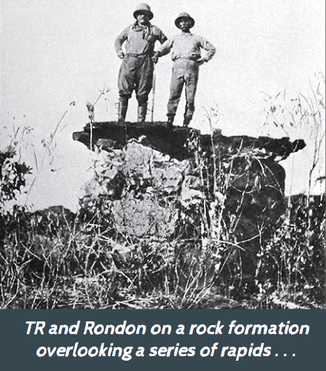
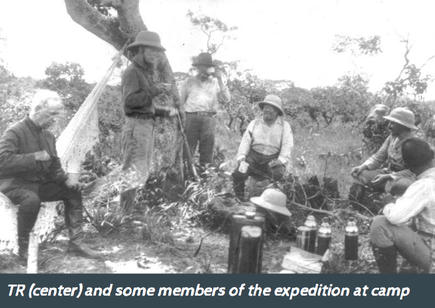
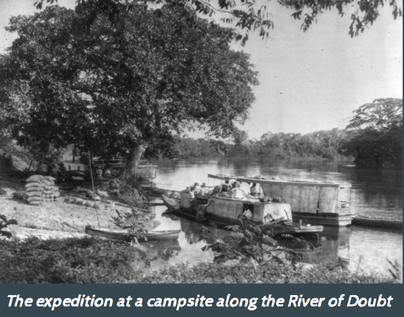
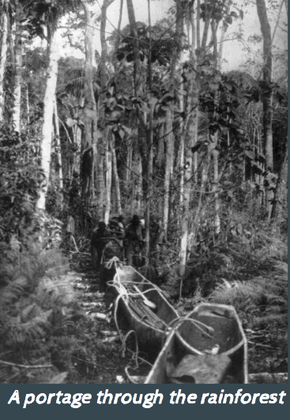
Mr. Jensen's U.S. History Website
  • U.S. History Blog
    • U.S. History Blog (May 2026 - May 2027)
    • U.S. History Blog (May 2025 - May 2026)
    • U.S. History Blog (May 2024 - May 2025)
    • U.S. History Blog (May 2023 - May 2024)
    • U.S. History Blog (May 2022 - May 2023)
    • U.S. History Blog (May 2021 - May 2022)
    • U.S. History Blog (May 2020 - May 2021)
    • U.S. History Blog (May 2019 - May 2020)
    • U.S. History Blog (May 2018 - May 2019)
    • U.S. History Blog (May 2017 - May 2018)
    • U.S. History Blog (May 2016 - May 2017)
    • U.S. History Blog (May 2015 - May 2016)
    • U.S. History Blog (May, 2014 - May, 2015)
  • About

George Herbert Walker Bush: Chairman of the R.N.C.

6/19/2017

0 Comments

 
                         Source: Jon Meacham. Destiny and Power:
            The American Odyssey of George Herbert Walker Bush (2015)
Picture
      After Nixon's epic re-election in 1972, Nixon wanted to permanently include disaffected Democrats into the Republican fold, and he needed an attractive, reasonable face to be the Chairman of the Republican National Committee (RNC). Nixon turned to Bush, meeting with him at Camp David. Bush had hoped to be the Deputy Secretary of State, then SecState . . . and eventually President. Nixon wanted Bush to chair the RNC because he believed Bush would be respectable AND manageable. To Nixon, Bush was still the eager to please supplicant of 1970; had Nixon known about Bush's stubborn streak (e.g. standing up to Kissinger on China in 1972 when Bush was Ambassador to the U.N.), he most likely wouldn't have insisted that Bush take the post.
      The Chairman of the RNC was expected to strike back at Nixon's enemies without showing any mercy. Bush knew of that expectation, and it worried him. Bush wanted to have options, his options, to carry out the job as he saw fit. Bush told Nixon that he wasn't all that excited about running the RNC, but he would do it nonetheless. Barbara thought the press would say that Bush was being demoted to the RNC after screwing up as Ambassador of the United Nations . . . Bush didn't disagree with his wife's assessment.

Picture
      Bush became the Chairman of the RNC just as the Watergate Scandal started to heat up; when Bush agreed to run the RNC, the scope of what would become Watergate hadn't yet been clear. Bush was in charge of the fortunes of the Republican Party at a time when the party's fortunes would be at their dimmest; and Bush needed to protect his future as the party descended to its nadir. 
      On 23 January 1973, Bush took command of the RNC. Bush was loyal to Nixon, but not blindly so; Bush declined to allow the RNC to become a Nixon tool to attack his enemies. When Bush found out about Nixon's secret taping system, he decided that duty required that he remain at the RNC. But the revelation of the 18.5 minute gap was too much for Bush, telling Barbara that this "job is no fun at all". Yet Bush remained publicly loyal to Nixon during the Spring/Summer of 1974, but cautious support was all the more Bush was willing to offer. 
      On 31 July 1974, Bush met with Chief of Staff Alexander Haig in the West Wing. Bush told Haig if Nixon was thinking about resigning the Presidency, the time was now with the mid-term elections coming in November. As the Chairman of the RNC, Bush was thinking about the party's fortunes, not Nixon's. 
 ​

Picture
​     On 5 August 1974, Bush was privy to the "Smoking Gun" tape, which proved that Nixon ordered the cover-up of the Watergate break-in, and Bush wrote his letter resigning from his post at the RNC on 7 August 1974. Nixon didn't respond to the resignation letter, preoccupied as he was with his personal/political troubles. Bush talked with Vice-President Gerald Ford before Nixon resigned; while not politically close, they had a lot in common. Bush, after recommending that Henry Kissinger be cut loose, said he thought it would be a good idea if Ford found someone else to lead the RNC. But Ford wanted Bush to remain at his post, telling Bush that he had total confidence in him and his abilities. 
      After Nixon resigned as President, Bush contacted Ford about the vacant Vice-Presidency. On 11 August 1974, Bush and Ford met for 31 minutes in the Oval Office to discuss the matter, while James Baker III was working behind the scenes to increase Bush's chances. After Ford asked for Bush's bona fides as Vice-President, he mentioned Barry Goldwater and Nelson Rockefeller as possible choices, but Bush was cool to both men for Vice-President, in that neither was moderate (Goldwater was very conservative, while Rockefeller was the leader of the liberal wing of the Republican Party). To Ford, the choice for VP came down to Bush, Rockefeller, or Donald Rumsfeld. 
      On 18 August 1974, Bush's chances for VP took a hit when media outlets started to speculate that Nixon had used "dirty money" to help Bush win the Senate race in Texas in 1970. Bush would be cleared, but during the toxic emotional atmosphere after Watergate, Bush was out of the running for VP. Bush met with President Ford (after Rockefeller had been chosen) to discuss how Bush could serve the new administration.
     Bush suggested Secretary of Commerce, but Ford was lukewarm to the idea. Bush mentioned two diplomatic posts, Ambassador to the Court of St. James (Great Britain), or U.S. Envoy to China. Bush told Ford that he was very interested in foreign affairs, even telling Ford that his goal was to be Secretary of State by 1980. Their meeting on 22 August 1974 ended without any decision being made about Bush's future role in the Ford administration.

Picture
     On 26 August 1974, after Ford had talked with Kissinger, Ford called Bush, telling him the best diplomatic option was China, and Bush agreed. Bush raised the possibility of being Chief of Staff, but Ford was firm with his offer for China. Bush would later claim that he wanted to go to China all along, but the reality was that he had asked to be VP, then SecCommerce, then Chief of Staff, before accepting the position of U.S. Envoy to China, which by any political definition meant that Bush had to settle for a lesser position.
      In Bush's mind, he had risked everything for the Republican Party, and his reward was being passed over for VP and other high-profile positions, and his integrity had been anonymously attacked in the media. To make matters worse, Bush didn't even have Ford's confidence that he could be Chief of Staff. (Ford chose Rumsfeld for the job) So, given his run of bad luck, why not broaden his foreign policy knowledge/image and be seen as a rising statesman instead of a professional partisan politician. Bush came to understand the political reality . . . at that point-in-time, he needed to be the U.S. Envoy in China. Kissinger told Bush that in China, there would be substantive work from time-to-time, but mostly, Bush would be "bored beyond belief". Bush was more than happy to take that chance given his experiences as Chairman of the RNC during the end of the Watergate Scandal.

0 Comments

George Herbert Walker Bush: U.N. Ambassador

6/13/2017

0 Comments

 
                         Source: Jon Meacham. Destiny and Power:
           The American Odyssey of George Herbert Walker Bush (2015)
Picture
     Representative George Bush had President Nixon's support in running for a seat in the U.S. Senate from Texas in 1970 (sidenote: Bush was the only Republican member of Congress to personally say goodbye to LBJ on 20 January 1969 as the former President boarded his plane to go to his ranch in Texas). Bush's opponent was Lloyd Bentsen, who was backed by John Connally and other very prominent Texas Democrats. There was actually little difference in the political philosophies of the two candidates, but the state of Texas was still strongly Democratic. 
     Bush, as he did when campaigning for Congress, ran an "image campaign", highlighting his engaging personality and overall trustworthiness, and all signs seemed to point to a Bush victory, including Nixon's popularity rating of 74% in Texas. But Bush lost to Bentsen 53.5% to 46.5%; rural Democrats in East Texas voted in large numbers for Bentsen. Bush, though crushed, had lost before, and he was mulling over whether he should stay in politics or go back into the oil business.
      Before the election, Nixon had developed a political "man-crush" on John Connally, and involved him in his Republican administration. Doing so confused Texas Republicans to no end, and despite a very positively reviewed campaign for U.S. Senator, Nixon's connection with Connally dearly cost Bush. Bush felt shunned, overlooked, and even betrayed by Nixon. Then, in early-December 1970, Nixon announced to those closest to him that Connally would be the new Secretary of the Treasury.
       Nixon and Connally both understood that Bush needed to be "taken care of" in a positive way before the nomination of Connally as SecTreas was made public. Bush hadn't forgotten about the serious suggestion from November 1970 that he could serve as the U.S. Ambassador to the United Nations. The more Bush thought of the position, the more he liked it - he could learn diplomacy on the Big Stage without having much operational responsibility.

Picture
​     However, Bush was offered (eventually) a post in the White House working for Chief of Staff H.R. Haldeman; it was a start to a series of appointments during the 1970s that would be entirely dependent on Presidents and their political allies. On 9 December 1970, Bush reported to Haldeman in the West Wing of the White House, where Haldeman made it official: Bush would be named Assistant to the President. Nixon personally offered the post to Bush in the Oval Office during a 40 minute conversation. Bush told Nixon that he would do a good job presenting the positive side of issues.
     Before leaving the Oval Office, Bush made his case for the appointment to become the U.N. Ambassador. Bush said he would put forth an image that would be very beneficial to the Nixon administration. Nixon hadn't considered the appointment in that manner; the President decided to keep bush in the White House for the time-being, but had Haldeman put a hold on nominating a replacement in the United Nations. Then, very quickly, Nixon thought things over again, and realized that he didn't have any political allies in New York City (the Eastern Establishment, since the Hiss Case, absolutely hated Nixon), so why not send the affable Ivy Leaguer to Manhattan to defend the President in the salons on the East Side. Bush's career as Assistant to the President of the United States lasted less than one day.

Picture
      Like the oil business and Congress, the job in the United Nations was one in which relationships mattered. Bush was genuine and a natural, mixing the personal and the professional to great effect. On 26 February 1971, Bush was sworn in as the Ambassador to the United Nations in the State Dining Room with many dignitaries in attendance, including Vice-President Spiro Agnew, most of the Cabinet, members of Congress, and Bush's political soulmate/campaign advisor, James Baker III.
       Before the end of the month, the George and Barbara Bush were in NYC in the Ambassador's Residence at the Waldorf Towers. Ironically, Bush, who was from Connecticut and Texas, as well as being a Republican, privately complained about the Elitism in NYC, calling it "Center-Left Groupthink". To Bush, Elitists often failed to take opposing views into account, dismissing those POV's as uninformed, prejudiced, or just plain wrong. To Bush, being politically close-minded was a liability, not an asset. 
      As U.N. Ambassador, Bush learned about how to deal with the USSR, as in knowing when Russia was serious as opposed to merely posturing. Bush also learned that in order to deal with those from the USSR careful cultivation and signs of respect were required. To Bush, the best way to have a friend was to be one. The USSR Ambassador to the U.N. was Yakov Malik, who was the first Soviet that Bush knew well. Malik often made Bush's life difficult in the U.N., with the most difficult issue being Taiwan. Taiwan held China's seat on the U.N. Security Council, and the U.S. was committed to defending Taiwan's placement/role in the United Nations. During Bush's term as Ambassador to the U.N. in the early-1970s, many countries in the United Nations General Assembly wanted to expel Taiwan in favor of Communist China.

Picture
     Bush advocated dual membership, with China on the U.N. Security Council, and Taiwan in the General Assembly of Nations. Bush was surprised as everyone else when Nixon, in early-1972, announced that he was going to China. Bush kept trying to pass his solution of dual membership, which would promote China's status while protecting Taiwan's dignity. Nixon's trip actually strengthened China's position in the U.N. relative to Taiwan, in the view of many of the world's governments. 
      Nixon instructed Bush to "win the vote", and Bush, ever the competitor, upped his game. However, as Bush soon discovered, he was in a situation of presenting the wrong-issue-at-the-wrong-moment; Bush was even hissed by fellow ambassadors as he spoke in favor of dual membership. Taiwan was expelled by a vote of 59 - 55, with 15 nations abstaining. Bush was even hamstrung by Nixon and Secretary of State / National Security Advisor Henry Kissinger in how he could respond to China's anti-American rhetoric in the United Nations (Bush favored much stronger diplomatically-worded responses). During a meeting with Bush, Kissinger didn't cool down until Bush explained that his motivation in taking on China in the U.N. was based on patriotism, not protecting his reputation. Bush adjusted to his new reality in the United Nations, even inviting Chinese delegates to his residence for dinner parties and entertainment, all to foster more collegial relations.

0 Comments

Theodore Roosevelt & the River of Doubt, Part Five

6/1/2017

0 Comments

 
                               Source: Candice Millard. The River of Doubt:
                        Theodore Roosevelt’s  Darkest Journey (2009)
Picture
     Rondon and TR locked horns over de Lima, and it was a ferocious argument. TR wanted to abandon de Lima to his fate in the rainforest. To TR and the other Americans, if de Lima was found and brought back to the group, not only would it take a toll on the limited manpower to constantly watch him, but once again the limited provisions would be in danger of being looted/consumed. But TR knew it wasn't his decision to make, and he stepped aside. Rondon ordered two camaradas to go and locate de Lima, and as TR and Kermit predicted, Rondon surveyed the river while de Lima was being sought. 
     TR wanted men to scout ahead for rapids, but Rondon dismissed that idea as a waste of time and effort, even though (according to Cherrie) a distant roar could be heard ahead. Sure enough, more difficult rapids awaited, but at least a large catfish (a pirarara) was caught for dinner. To the surprise of those cutting open the catfish, the head and arm of a monkey was seen. And then the two camaradas sent to find de Lima returned . . . alone. They never caught sight of Julio de Lima, who faced "Jungle Justice" after all. 
The 19 remaining members of the expedition knew they weren't much better off than de Lima.

Picture
     On 8 April 1914, the men encountered so many rapids that they only traveled three miles that day. And 9 April 1914 was even worse, with only a maximum of 15 minutes of calm water between rapids. And to make matters even more dire, by that point the men were only eating enough to stay alive; the idea that they would die became a corrosive burden for all.
     Then Kermit and TR decided to spend a day looking for Kermit's lost dog, to whom he'd become beyond-attached. The dog had disappeared into the rainforest the day before; even Cherrie believed that it was a mistake to spend a day searching for the dog. The camaradas must have been very confused, in that TR and Kermit didn't want to spend a day searching for de Lima, but had no problem doing so for an animal. 
     Then two pieces of good news arrived. First, camaradas returned with Kermit's dog, but the news that had the potential benefit for all the men was that evidence was discovered that rubber tappers had been in the area. That meant that people had come upriver to tap trees for rubber sap; it was the first sign of civilization the men had encountered since starting down the River of Doubt.

Picture
     While encouraging, the discovery of the presence of rubber tappers meant that the men were most likely in a "No Man's Land" between unmapped rainforest and the edges of pioneer civilization downriver. Days passed, but the men saw no additional signs of any rubber tappers, and they kept facing rapids. 
     15 April 1914 was what TR called a "Red Letter Day", in that after traveling on the river for over three hours, the men saw a simple house with a small rubber-smoking hut right next to it. Joaquim Antonio and his wife & child were not there, and Rondon refused to give his men permission to raid their stores. A mile downriver the men saw a canoe with one man, but Raymundo Marques fled to the banks of the river. However, when he heard Rondon call for him, Marques came back. Marques stated that he had been shocked to see any boats coming downriver, fearing the Cinta Larga.
     But the expedition was still far from civilization, and TR was barely clinging to life. TR was so sick that he couldn't even sit up in his dugout, but neither could he lie down, due to a lack of space. If TR didn't reach help soon, he would die: his right leg was still (potentially lethally) infected, with a deep pus-filled abscess in his right lower thigh.

Picture
​   TRs blood pressure dropped and his heart rate had increased along with his temperature. It was impossible to tell if his chills were due to malaria or to infection. TR kept delaying any surgery, not because of a lack of anesthetic, but that the operation would have to be conducted in perhaps the least-safe environment on Earth. 
     Joaquim Antonio found TR and Rondon in his hut while starving men made dinner over a fire his wife had started for them. Antonio agreed to sell provisions and two large canoes to the expedition, and even offered to help them hire a guide. More importantly, Antonio told the men of their exact location on the river. Along with the joy in receiving that news came the realization why they had made it that far: the Cinta Larga had let them live. In the end, the Cinta Larga favored concealment and flight over attack, taking the certainty of staying hidden over the uncertainty of engagement. As long as the expedition kept moving through their land without posing a threat, the Cinta Larga chose to not attack. For their own reasons, and on their own terms, the Cinta Larga let Theodore Roosevelt and the other men live.

Picture
​     According to their hosts, it would take the expedition another 15 days on the River of Doubt to reach the confluence of the Aripuana, where Rondon and the rest hoped Lt. Pyrineus and his men were waiting. If the expedition needed additional food or a canoe, they could purchase them from their hosts. But TR needed a hospital immediately, not in 15 days. No one on the expedition was healthy, with the exception of the seemingly invincible Rondon. TR continued to fight for his life for Kermit's sake; TR completely understood that he was in grave peril. TR's pain reached the point where he finally allowed Dr. Cajazeira to operate on 16 April 1914. While the doctor cut open and drained the infected wound, TR never complained. 
     Due to the generosity of the rubber tappers, especially Marques who provided a canoe and food for no payment, and a guide that knew that part of the river, the expedition was ready to go. Speed was now paramount, in that TR's infection had spread to his right buttock. And while there was now plenty of food, TR didn't want to eat; Kermit was obsessed with the thought that he might not be able to bring his father out of the river alive.

Picture
     The expedition encountered another series of rapids, and for TR, what lay ahead was simply deliverance or death. The expedition had the extreme good fortune to cross paths with the main rubber tapper in that part of the river, Jose Caripe, who was in essence the overall boss of the tappers. Caripe took over as the expedition's guide, and exchanged a dugout for a canoe. With three new boats and Caripe's guidance, it took only a day-and-a-half to navigate the rapids. Caripe showed not only where to go on the river, but also where to portage while on land.
      The only casualty was Kermit's dog, who once again wandered off into the rainforest, never to be seen again; Kermit was devastated, but TR was the priority. On 26 April 1914, the expedition passed through a stretch of rainforest that had been partially submerged during the rainy season. In the distance, the men saw a row of neat tents lined up on one of the banks of the river - Lt. Pyrineus and his six men had been at that location for six weeks, with their fears rising every day that Rondon hadn't made it through the River of Doubt.

                    TR and Kermit after returning from South America . . .
0 Comments

Theodore Roosevelt & the River of Doubt, Part Four

6/1/2017

1 Comment

 
                               Source: Candice Millard. The River of Doubt:
                       Theodore Roosevelt’s  Darkest Journey (2009)
Picture
​     On 17 March 1914, the men of the expedition awoke to the grim reality that they couldn't get back on the River of Doubt, nor could they just stay where they were. They were down to four dugouts, 21 men, running out of rations, and surrounded by the Cinta Larga. Most of the men (13) would have to walk, with the remaining 8 manning the dugouts. The four dugouts were tied together to form two balsas for more stability, and TR, who had been battling a fever, was in one of the balsas. 
     Rondon, Kermit, Cherrie, plus 10 others were on land, and the food item they were most interested in finding were Brazil nuts, which were high in fat and protein. It had been a mystery to them as to why it was so difficult finding any of the plentiful nuts. Their difficulty in finding Brazil nuts, as well as other nuts and fruits, had more to do with the complex reproductive/availability factors of the Amazon Basin. In addition . . . even Rondon had difficulty recognizing what was edible. It seemed that the expedition, in terms of food from the rainforest, would have to do without. TR and the men were starting to feel the effects of a near-starvation diet, and all started to obsess about food. The men feared for their lives, but they hadn't yet lost hope.

Picture
​     The men saw a large tributary, which eliminated at least one possible destination of the River of Doubt, as well as confirming to all that they were on an important river. Rondon knew that the River of Doubt would have a prominent place on the map of Brazil, and he named the tributary Rio Kermit. That night the men miraculously found two boxes of provisions, and a camarada actually caught two fat fish (pacu), which usually did not travel up heavy rapids. All the men hoped that was a sign that there were no worse than manageable rapids downriver. 
     On 18 March 1914, Rondon proclaimed that the River of Doubt would be renamed Rio Roosevelt. The expedition started out that day with high hopes, and the 13 men traveling on land soon found a well-worn Indian path. The 13 heard-and-felt the Cinta Larga everywhere around them, and their dogs were constantly on edge. Increasingly, the Cinta Larga didn't bother to hide their presence from Rondon and the other 12. While remaining hidden, the Cinta Larga left fresh footprints in the mud, and let themselves be heard; their disembodied voices were terrifying. 
     The relationship between Rondon and TR started to fray, with TR wanting to proceed as quickly as possible to try and minimize the dangers for all. Rondon, on the other hand, didn't have any problem dying in the rainforest as long as his death was in pursuit of science and his ideals.

Picture
​     Finally, the right type of tree was found in order to build dugouts, which would take a few days. And among the trees, Rondon and the camaradas chose those with the most buoyant features over size. It was at this point that it was suspected that the least trustworthy/reliable of the camaradas, Julio de Lima, had consumed far more of the provisions than any other member of the expedition. It was determined that he could no longer be trusted, and de Lima was watched by as many as possible at all times. 
    TR discovered that Rondon had slowed-down the construction of the new dugouts so he could survey the river more carefully, which delayed their departure by one day. On 22 March 1914, the expedition got back on the river in six dugouts, and after six miles, reached a series of rapids; the day was once again lost to the river. Unknown to TR and the others, the Cinta Larga had stripped bark from couratari trees for their wide (war) belts. TR wanted Rondon to abandon his fixed-survey measurements for good, and Rondon compromised a bit, but in his mind, Rondon refused to sacrifice his mission to save lives. 
     On 23 March 1914, at 7 am, the 21 men and their 6 dugouts were back on the river, with the landscape obscured by a white mist. As the mist cleared, the men saw a dispiriting sight: a quartzite canyon so narrow that it squeezed the River of Doubt into a rushing torrent. No one bothered to argue that they could go through that obstacle in their dugouts; another long portage loomed. Rondon had the expedition move across the river in order to provide more security against the Cinta Larga, and the portage was difficult, but thankfully uneventful. At 4 pm, the expedition decided to keep going downriver instead of making camp, as was their custom at that time of day.

Picture
​     TR had fallen ill with malaria, and was also suffering from dysentery; the River of Doubt was one of the worst places in the world to be sick. Unless the men were too weak to walk, they worked to keep the expedition moving forward. The accumulation of disease, hunger, exhaustion, and fear began to take its toll, and everyone's "true self" started to show, for better or worse. 
     Kermit and the camarada Lyra had become the "dynamic duo", a team that kept coming through in the clutch. The bond between the two had occurred on its own, without any encouragement from Rondon or TR. Despite his privileged background, TR never shirked any of the duties that were expected of him, always willing to do his share. TR and the naturalist Cherrie became much closer, in part because TR wanted to learn as much as possible from the famous naturalist; Cherrie came to know TR as few men ever had. 
     Over the next four days, TR and the men only managed to travel four miles downriver. All day on 23 March 1914, the men were haunted by a distant roar of rapids, but the sound disappeared the next day. However, one of the camaradas told the others that based on what he was hearing, they were heading for the worst series of waterfalls/rapids yet . . . even that camarada underestimated the fury of the upcoming nightmare.

Picture
​     On 24 March 1914, after just 30 miles on the river, the expedition reached the first series of rapids, and for the next two days, they never had more than 15 minutes of smooth water at a time. The expedition spent far more time out of the water than on the river. There was also a range of hills in front of them, which meant even more rapids ahead. The bad news: Cherrie calculated that they only had 25 days of rations in their possession . . . the good news: a bushel of Brazil nuts had been gathered. 
     Once the expedition reached the hills, it was decided to carry the provisions on land and let the empty dugouts navigate the river. TR's balsa was caught in a narrow channel, and was mostly under rushing water. Terrified of losing two more dugouts, TR was the first of the men that jumped in the water to try and rescue the balsa. For the last 12 years, after his near-fatal trolley/car accident, TR's only strong leg had been his right; his left leg/shin had almost been crushed in the incident. TR was told that even the slightest injury to that part of his body could cost him all-or-part of that leg, or even his life.

Picture
​     So, TR was risking it all when he jumped into the river to try and save the balsa with the others. Finally, after cutting the ropes that tied the dugouts together (which formed the balsa), Kermit and others were able to drag the dugouts to an island in the river. And then TR lost his balance, and struck his right shin against a sharp edge of a rock, and it started to bleed. TR understood that an injury like that could be fatal in the rainforest; Cherrie stated that from that time on, TR became a very sick man.
     On 28 March 1914, after a dreary and rainy night, the expedition was back on the River of Doubt, and after only a mile the men saw more rapids. TR's wound had already started to show signs of infection, and his rising temperature indicated another attack of malaria was coming. Kermit came back from his efforts to see that his father had become an invalid. TR was so adamant that he not become a burden to the rest of the expedition that he had actually brought with him a lethal dose of morphine (something TR had done on previous adventures). Kermit and Cherrie agreed to take turns watching TR, whose condition continued to worsen. The next morning, TR told Kermit and Cherrie that they should go on and leave him where he lay.

          TR's seriously-declining health and the saga of Julio de Lima . . .
1 Comment

    Archives

    May 2018
    April 2018
    March 2018
    February 2018
    January 2018
    December 2017
    November 2017
    October 2017
    September 2017
    August 2017
    July 2017
    June 2017
    May 2017

    Categories

    All
    18th Century
    19th Century
    20th Century
    Biography
    History

Powered by Create your own unique website with customizable templates.