Source: David Halberstam. The Fifties (1997)
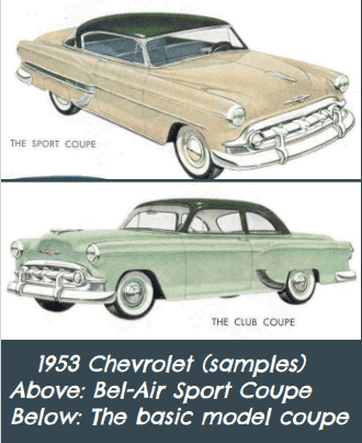
By the early 1900's, the American Worker also became the American Consumer. The "Oil Man", unlike his predecessor, the "Coal Man", was the beneficiary of his own labor. With the advent of mass production and lowered prices, the working man of the early-1900's could afford what was produced. The "Oil Century" began in earnest in 1949, and the U.S., with its accessible and inexpensive domestic oil sources, was the first nation to truly cross the threshhold.
During WW II vast systems networks were created for oil production, transportation, and refineries, and all were in place operating at full capacity in 1949. And the price for oil remained low, and oil drove the U.S. economy to great heights in all sectors. From 1949 to 1972, U.S. consumption of oil went from 5.8 million barrels/day to 16.4 million. In 1949, coal represented 2/3's of the world's energy, but by 1972, it was oil at 2/3's. World War II had diverted the American economy away from the consumer to the military, but after the war, the consumer was not to be denied.
During WW II vast systems networks were created for oil production, transportation, and refineries, and all were in place operating at full capacity in 1949. And the price for oil remained low, and oil drove the U.S. economy to great heights in all sectors. From 1949 to 1972, U.S. consumption of oil went from 5.8 million barrels/day to 16.4 million. In 1949, coal represented 2/3's of the world's energy, but by 1972, it was oil at 2/3's. World War II had diverted the American economy away from the consumer to the military, but after the war, the consumer was not to be denied.
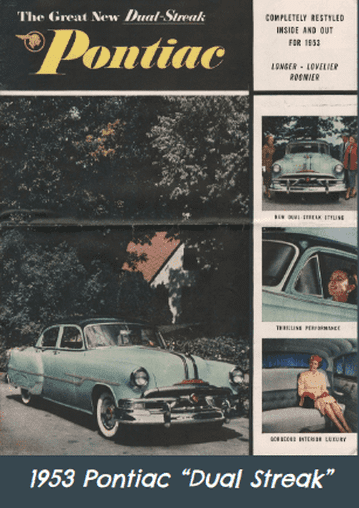
In the years immediately after WW II, a great seller's market existed, and there was also a desperate hunger by consumers to buy things after the Great Depression and WW II. A major symbol of U.S. economic might was General Motors (GM), a company so powerful the word corporation really wasn't all that accurate a description. GM was the largest/richest corporation in the world by far: GM was the first corporation to gross $1B. Ford, by comparison, was near bankruptcy after WW II due to the erratic-and-paranoid behavior of Henry Ford. GM actually helped Ford by basically giving top management executives to Henry Ford II so GM wouldn't have to deal with anti-monopoly charges from the federal government.
During the 1950s GM made more cars than its competitors combined. The only thing that could possibly throw a monkey wrench into GM's colossal success was the possibility of labor unrest. During 1945-46 a bitter strike over low wages at GM lasted over 100 days. GM wanted to teach the United Auto Workers (UAW) a lesson, and held firm with only 0.01/hour separating the two sides. Charles Wilson, the CEO of GM, saw the fantastic future in terms of absolutely massive profits, and was also sympathetic to the workers.
During the 1950s GM made more cars than its competitors combined. The only thing that could possibly throw a monkey wrench into GM's colossal success was the possibility of labor unrest. During 1945-46 a bitter strike over low wages at GM lasted over 100 days. GM wanted to teach the United Auto Workers (UAW) a lesson, and held firm with only 0.01/hour separating the two sides. Charles Wilson, the CEO of GM, saw the fantastic future in terms of absolutely massive profits, and was also sympathetic to the workers.
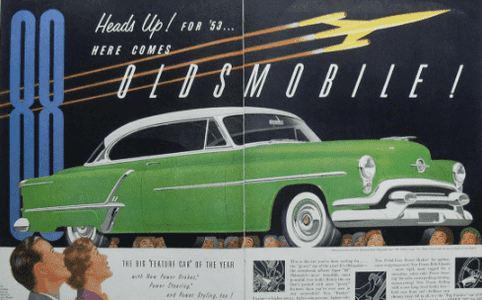
In 1948, Wilson agreed to an historic contract, knowing that virtually unlimited sales and profits were in the offing. Wilson offered an acceptable wage increase plus a cost-of-living index, which matched wages to inflation. The UAW was made, in effect, a junior partner of GM, since wages were tied to productivity . . . for a generation, GM had no labor unrest. Wilson also knew that he could pass the at least most of the burden of higher labor costs to the consumer.
GM decided to manufacture big cars since they generated far more profits than smaller cars. Production costs stayed the same no matter the size of the car, so it was a no-brainer for GM to build big cars. GM had waited a long time for this "Market of Abundance", and GM wanted to take full advantage. Therefore, the yearly model change was crucial for GM, in that the goal was to make car owners restless with the cars they owned, and eager to purchase anothe GM vehicle.
GM decided to manufacture big cars since they generated far more profits than smaller cars. Production costs stayed the same no matter the size of the car, so it was a no-brainer for GM to build big cars. GM had waited a long time for this "Market of Abundance", and GM wanted to take full advantage. Therefore, the yearly model change was crucial for GM, in that the goal was to make car owners restless with the cars they owned, and eager to purchase anothe GM vehicle.
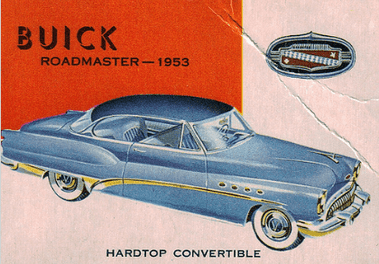
GM's categories were the core of its success, making car owners restless by appealing to their broader aspirations in life. Chevrolet was for the blue collar worker and young adults in their 20's.
Pontiac was for those that felt successful/confident and that wanted something sportier. Oldsmobile was for the white collar manager or bureaucrat, and Buick was for the elite of the professional class (e.g. doctor/lawyer). The Cadillac was for the top executive or owner of a factory. A Cadillac signaled that a person had joined the proprietorial class; a Cadillac cost around $5000 ($49,745 in 2015 dollars), but it held its value, especially if it was traded in after a year or two.
Pontiac was for those that felt successful/confident and that wanted something sportier. Oldsmobile was for the white collar manager or bureaucrat, and Buick was for the elite of the professional class (e.g. doctor/lawyer). The Cadillac was for the top executive or owner of a factory. A Cadillac signaled that a person had joined the proprietorial class; a Cadillac cost around $5000 ($49,745 in 2015 dollars), but it held its value, especially if it was traded in after a year or two.
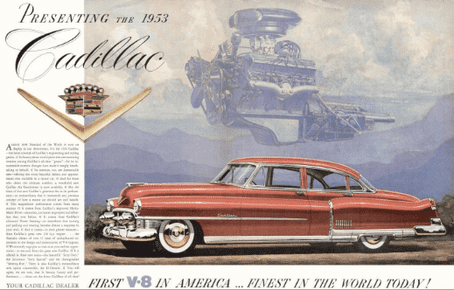
This was the 2nd Stage of the Automobile Era, in which the car was not only for transportation, but also for status. A car was not a permanent possession, but an economic benchmark signaling rising status. After WW II, GM decided that Americans wanted the following: Most important was design/style, second was an automatic transmission, and third was high compression engines. GM put out models that encouraged dreams at a time when most Americans believed their future would be nothing but grand. GM led the charge in terms of making design more important than engineering, which created a vicious cycle in the automobile industry: worship of the new at the expense of the old, even if the old was better.
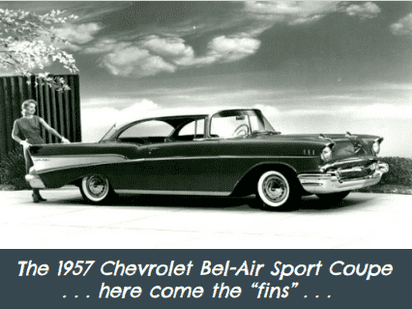
GM, Ford, and Chrysler were forced to opt for less effecient/attractive cars just for the sake of exterior design changes. Among the consequences was that GM didn't extend its initial technological lead versus foreign competitors (e.g. the Volkswagen Beetle). GM fiddled with styles and design details, especially the "fins", which became the most famous-and-visual automobile detail of the era . . . the fins represented zero technological advance in GM's cars. A fin was "visible prestige", nothing more than an illusion of a more powerful car. That approach by GM, Ford, and Chrylser would come back and haunt the Big 3 in the 1970s during the Arab Oil Embargoes of 1973 and 1979. While GM was selling an incredible number of cars in the 1950s, the corporation, without knowing so, was speeding towards "Dynamic Obsolescence".
GM, Ford, and Chrysler were forced to opt for less effecient/attractive cars just for the sake of exterior design changes. Among the consequences was that GM didn't extend its initial technological lead versus foreign competitors (e.g. the Volkswagen Beetle). GM fiddled with styles and design details, especially the "fins", which became the most famous-and-visual automobile detail of the era . . . the fins represented zero technological advance in GM's cars. A fin was "visible prestige", nothing more than an illusion of a more powerful car. That approach by GM, Ford, and Chrylser would come back and haunt the Big 3 in the 1970s during the Arab Oil Embargoes of 1973 and 1979. While GM was selling an incredible number of cars in the 1950s, the corporation, without knowing so, was speeding towards "Dynamic Obsolescence".
But in the 1950s, Bigger was Better, and Americans wanted bigger cars with every passing model year. High compression engines and higher octane gasoline was the key to producing those huge cars . . . those two developments took off in 1946. The major component of the high compression engine was confining the vapors of gas in the cylinders before exploding, driving back the pistons with greater force, but that would only be possible with higher octane gas. In 1947, high octane gas was developed separately from the non-responsive oil companies by a GM high compression engine specialist. The new V-8 high compression engine with high octane gasoline was first put in the 1949 Cadillac. While the GM engine specialist envisioned greaty efficiency, the GM execs envisioned bigger cars with more-and-more accessories, such as power brakes/steering and air conditioning.
Dwight D. Eisenhower was the first Republican President in 20 years, and GM was no longer worried about being accused of monopolistic practices with more than 50% of the market share. The attitude of GM's execs was that if the federal government wanted to stop GM, they would have to find a way to stop GM. In 1953, GM had 45% of the industry's market share, and by 1956 it reached 51%, and that wasn't enough for the GM execs, whose goal was actually 75% of the total market of cars sold in the U.S. by 1958.
Dwight D. Eisenhower was the first Republican President in 20 years, and GM was no longer worried about being accused of monopolistic practices with more than 50% of the market share. The attitude of GM's execs was that if the federal government wanted to stop GM, they would have to find a way to stop GM. In 1953, GM had 45% of the industry's market share, and by 1956 it reached 51%, and that wasn't enough for the GM execs, whose goal was actually 75% of the total market of cars sold in the U.S. by 1958.
 RSS Feed
