Cameron McWhirter. Red Summer:The Summer of 1919
and the Awakening of Black America
and the Awakening of Black America
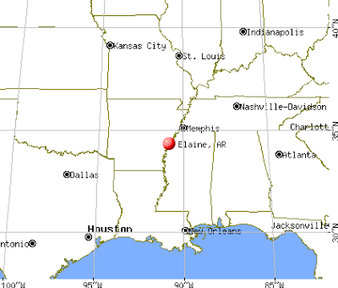
In the immediate aftermath of World War I, most whites, liberal to conservative, viewed African-American self-defense in asserting their Constitutional rights as a threat to the existing social order. During "Red Summer" (1919), there were many race riots, most notably in Washington, D.C., Chicago, Knoxville, and Omaha; the last, and worst, of the race riots that summer occurred in eastern Arkansas in Phillips County (Elaine was the major river town). Whites insisted that the riot was a result of African-American insurrection, but it was the area's white citizens that massacred innocent African-Americans on a scale that shocked the nation.
Life for African-Americans in Phillips County was better compared to nearby areas. Much like a city, Phillips County attracted a high number of African-Americans in search of a better life. But in the 1890s, "Jim Crow" came to eastern Arkansas (it was the onset of the "Nadir of U.S. History" for African-Americans, 1890-1940), and then the Great War. Cotton prices were up, but African-American sharecroppers didn't receive much of the financial windfall as did white cotton growers. The only reason why African-American sharecroppers received even a sliver of the revenues from cotton was mostly due to the fact that there were fewer African-American sharecroppers in the county; many had migrated to northern states.
The population of Phillips County during World War I was 45,000, with 75% of that population African-American; African-Americans made up 27% of the total population of Arkansas. While there were many sharecroppers, there was also a thriving African-American middle class. While African-Americans were the clear majority in terms of population, the county's whites controlled the politics, economics, and the law.
Life for African-Americans in Phillips County was better compared to nearby areas. Much like a city, Phillips County attracted a high number of African-Americans in search of a better life. But in the 1890s, "Jim Crow" came to eastern Arkansas (it was the onset of the "Nadir of U.S. History" for African-Americans, 1890-1940), and then the Great War. Cotton prices were up, but African-American sharecroppers didn't receive much of the financial windfall as did white cotton growers. The only reason why African-American sharecroppers received even a sliver of the revenues from cotton was mostly due to the fact that there were fewer African-American sharecroppers in the county; many had migrated to northern states.
The population of Phillips County during World War I was 45,000, with 75% of that population African-American; African-Americans made up 27% of the total population of Arkansas. While there were many sharecroppers, there was also a thriving African-American middle class. While African-Americans were the clear majority in terms of population, the county's whites controlled the politics, economics, and the law.
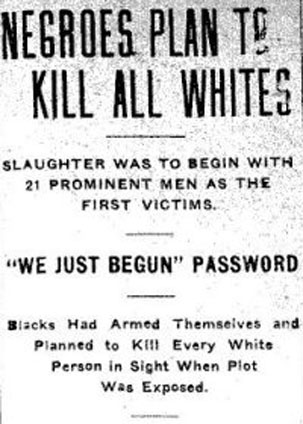
Ed Ware, a fairly prosperous African-American farmer in Phillips County, thought whites had tried to cheat him; he refused to sell them his cotton at below-market prices, and he hired a lawyer to assist him. This situation wasn't unusual at all during the "Nadir"; most whites across the nation did everything possible to limit freedom and opportunities for African-Americans. Ware was a member of an African-American lodge (ostensibly a farmer's union), and the county's whites thought the lodge was really a branch of the International Workers of the World (IWW; a.k.a. "The Wobblies").
Ware was at his lodge meeting at a country church, and there was ample security around the building. Two hours after the meeting started, a car with a white deputy, a white railroad detective, and an African-American passenger stopped. Although all in the church claim that the two whites started firing on the building, that didn't stop the area's whites from assuming that the African-Americans fired their weapons first. During the exchange of fire, the railroad detective was killed, and the deputy was wounded in the knee. The wounded deputy and the African-American passenger ran away from the car.
Another car driven by a white citizen came by, and it was fired upon; just thirty minutes later, many whites arrived at the scene. They saw that the railroad detective was shot through the stomach, and the car was riddled with bullets. Two days later, a white mob burned down the church, which also eliminated the proof that the church was severely damaged by gunfire. The shooting set off a panic among the whites of Phillips County; to them, a "Negro Plot" was being hatched. They called for help from whites from adjoining counties, as well as the Arkansas militia. As a result, a large number of armed-and-angry whites invaded Phillips County.
Ware was at his lodge meeting at a country church, and there was ample security around the building. Two hours after the meeting started, a car with a white deputy, a white railroad detective, and an African-American passenger stopped. Although all in the church claim that the two whites started firing on the building, that didn't stop the area's whites from assuming that the African-Americans fired their weapons first. During the exchange of fire, the railroad detective was killed, and the deputy was wounded in the knee. The wounded deputy and the African-American passenger ran away from the car.
Another car driven by a white citizen came by, and it was fired upon; just thirty minutes later, many whites arrived at the scene. They saw that the railroad detective was shot through the stomach, and the car was riddled with bullets. Two days later, a white mob burned down the church, which also eliminated the proof that the church was severely damaged by gunfire. The shooting set off a panic among the whites of Phillips County; to them, a "Negro Plot" was being hatched. They called for help from whites from adjoining counties, as well as the Arkansas militia. As a result, a large number of armed-and-angry whites invaded Phillips County.
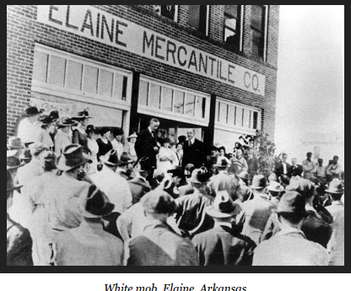
White mobs roamed the countryside and the town of Elaine, looking to shoot-and-kill any African-American on sight. This went on for three days; some African-Americans were shot despite trying to surrender. The Governor of Arkansas, Charles Hillman Brough, made the situation worse by asking for federal troops to suppress the African-American insurrection. Authorization was given by the Secretary of War, Newton Baker, and federal troops were dispatched from nearby Camp Pike. The commander of the federal troops, Colonel Isaac Jenks, declared martial law, and issued orders to look for African-American "agitators". After a skirmish where a soldier was killed, federal soldiers hunted (and killed) African-Americans for thirty-six hours. First, second, and third-person accounts claim that the federal soldiers killed many helpless African-Americans with machine guns; Colonel Jenks contended that federal troops only killed two African-Americans.
In the aftermath, forced confessions "revealed" a planned rebellion against the white citizens of Phillips County. Even though the riot was packaged as a Nat Turner-like revolt, there was no evidence at all in support, despite all major U.S. newspapers clamoring otherwise.
In the aftermath, forced confessions "revealed" a planned rebellion against the white citizens of Phillips County. Even though the riot was packaged as a Nat Turner-like revolt, there was no evidence at all in support, despite all major U.S. newspapers clamoring otherwise.
The truth was that a massacre of African-Americans at the hand of whites occurred in Phillips County in early-October, 1919. To this day, nobody truly knows how deadly it was; probably in the hundreds with unspeakable atrocities committed. Federal troops didn't stop a riot, they went on a "Crusade of Death", killing hundreds of African-Americans; Colonel Issac Jenks went to his grave believing that he had stopped a Revolution. Predictably, all white investigators in-and-out of Arkansas fudged the number of deaths to very low numbers.
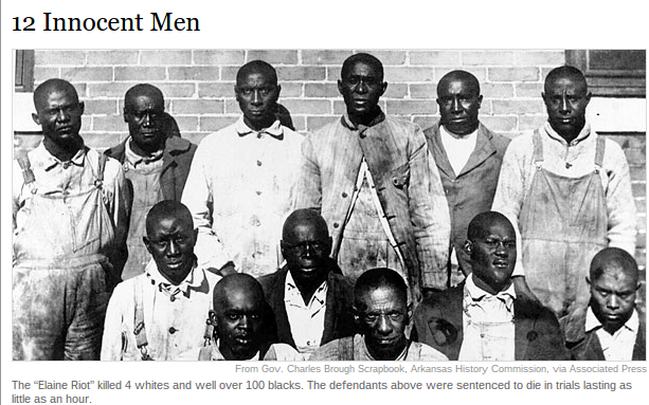
Ed Ware escaped to Louisiana, but was extradited back to Arkansas where he was executed. Dozens of African-Americans had their basic Constitutional rights violated when they were convicted in "Show Trials"; maximum sentences were given, including eleven executions. The planned African-American "Insurrection" was a figment of the Phillips County's white citizens. "Show Trials" such as these became the tool for whites to try and contain the freedom of their African-American neighbors.
Ed Ware escaped to Louisiana, but was extradited back to Arkansas where he was executed. Dozens of African-Americans had their basic Constitutional rights violated when they were convicted in "Show Trials"; maximum sentences were given, including eleven executions. The planned African-American "Insurrection" was a figment of the Phillips County's white citizens. "Show Trials" such as these became the tool for whites to try and contain the freedom of their African-American neighbors.
The NAACP used the media as well, claiming that whites started the massacre in Phillips County, Arkansas. The civil rights group also cited whites as the main source of tension, since they kept trying to subjugate African-Americans.
At least white politicians in big Northern cities learned a lesson from "Red Summer", June-October, 1919. After early-October, any hint of white mobs trying to incite a riot against African-Americans were put down hard by police and/or state militia. But in the Rural South, nothing changed; the lynching of African-Americans continued unabated.
There was one reaction from the federal government to "Red Summer": Congress overrode President Woodrow Wilson's veto on the Volstead Act (Prohibition) . . . their conclusion was that if there was less liquor, there would also be less "trouble" from African-Americans . . .
Below: a short documentary on the massacre, hosted by Ossie Davis . . .
At least white politicians in big Northern cities learned a lesson from "Red Summer", June-October, 1919. After early-October, any hint of white mobs trying to incite a riot against African-Americans were put down hard by police and/or state militia. But in the Rural South, nothing changed; the lynching of African-Americans continued unabated.
There was one reaction from the federal government to "Red Summer": Congress overrode President Woodrow Wilson's veto on the Volstead Act (Prohibition) . . . their conclusion was that if there was less liquor, there would also be less "trouble" from African-Americans . . .
Below: a short documentary on the massacre, hosted by Ossie Davis . . .